Peking Union Medical College Hospital Respiratory Medicine: A Guide for International Patients
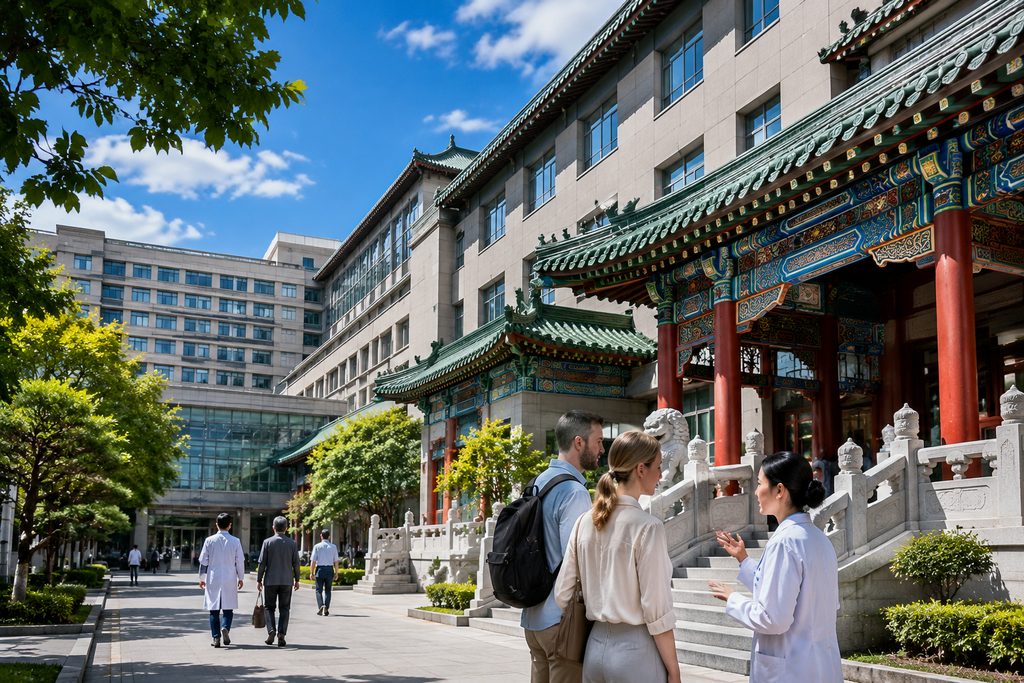
Respiratory disease ranks among the top three reasons international patients contact our team. The questions are always specific: what does Peking Union Medical College Hospital respiratory medicine international patient price actually look like? Can a foreigner realistically get an appointment? Is the diagnostic standard the same as what I would receive in Germany, the UK, or the US? These are fair questions. And the answers are more nuanced than a simple price list.
According to the World Health Organization’s 2023 Global Health Estimates, chronic obstructive pulmonary disease (COPD) alone affects over 392 million people worldwide and remains the third leading cause of death globally. For many patients, the barrier is not the lack of a diagnosis. It is the wait to see a specialist, the cost of a comprehensive workup, or the months of uncertainty while a condition progresses. That is where a structured approach to care in Beijing becomes worth serious evaluation.
Key Takeaways
- Peking Union Medical College Hospital (PUMCH) operates a dedicated international medical department, with respiratory specialist consultations typically costing between $150 and $400 depending on seniority and complexity.
- PUMCH is consistently ranked among the top three hospitals in China’s Fudan Hospital Rankings, and its respiratory and critical care division handles some of the highest volumes of complex pulmonary cases in the country.
- Foreign patients cannot simply walk in and see a named specialist the same day. The process requires advance coordination through the hospital’s international department, with documentation review before scheduling.
- You should understand the difference between the standard public outpatient pathway and the international/VIP pathway before committing to travel. The two systems have different prices, different wait times, and different service levels.
The Problem: Waiting Months for a Definitive Respiratory Diagnosis
A 2022 survey by the British Lung Foundation found that 1 in 5 patients with suspected lung disease waited more than six months from first GP visit to specialist referral. In Canada, the median wait time from general practitioner referral to respiratory specialist consultation reached 11.6 weeks in 2023, according to the Fraser Institute. For a patient with unexplained dyspnea, a persistent nodule on imaging, or a chronic cough that has resisted three rounds of antibiotics, those months are not neutral. They are months of anxiety, repeated emergency visits, and in some cases, disease progression.
Now consider the cost side. A comprehensive respiratory workup in the United States — pulmonary function testing, high-resolution CT, bronchoscopy with biopsy, and specialist interpretation — routinely exceeds $8,000 to $15,000 for an uninsured or underinsured patient. Even with insurance, the out-of-pocket maximums and deductibles can push thousands of dollars onto the patient. For a self-paying international patient, the economics are often worse.
That combination of long waits and high costs creates a specific kind of patient: someone who has imaging results in hand, an unresolved clinical question, and a willingness to travel if the value proposition makes sense.
Why Peking Union Medical College Hospital Delivers Results
PUMCH is not a new entrant. It was founded in 1921 by the Rockefeller Foundation and has operated continuously as a teaching hospital and national referral center for over a century. It is the hospital other hospitals in China send their difficult cases to. That matters when you are talking about interstitial lung disease, pulmonary hypertension, or atypical infections that have stumped two or three previous physicians.
Clinical Volume Drives Diagnostic Speed
PUMCH’s respiratory and critical care medicine department handles over 120,000 outpatient visits annually, according to hospital-reported data. The bronchoscopy unit performs more than 8,000 procedures per year, including endobronchial ultrasound-guided transbronchial needle aspiration (EBUS-TBNA) and navigational bronchoscopy for peripheral lesions. A pulmonologist at PUMCH may see in one month the volume of complex cases that a Western specialist sees in a year. That pattern recognition is not a marketing claim. It is the direct result of a hospital that serves as the tertiary referral center for a population of over 1.4 billion people.
Technology and Efficiency at Scale
The hospital operates 10 Tesla MRI, dual-source CT, and a dedicated respiratory endoscopy suite with same-week scheduling for international patients. But the real difference is workflow. In the international department, a patient can typically complete pulmonary function testing, high-resolution CT, and specialist consultation within two to three days of arrival. The same sequence in the UK or Canada might take four to six weeks spread across multiple appointments. That compression of the diagnostic timeline is the single most cited reason our patients give for choosing Beijing.
Cost Advantage Without Quality Compromise
Let us address the obvious objection directly. Lower cost does not mean lower quality. The structural reasons are straightforward: physician salaries in China are a fraction of those in the US, hospital construction and operating costs are lower, and the volume of patients spreads fixed costs across far more encounters. A pulmonary function test at PUMCH international department costs roughly $80 to $150. A bronchoscopy with biopsy runs $1,200 to $2,500. The same procedures in the US would cost three to five times as much. Meanwhile, PUMCH’s diagnostic accuracy for complex respiratory disease is not inferior — it is the reference standard for much of Asia.
What the Peking Union Medical College Hospital Respiratory Medicine International Patient Price Actually Looks Like
The question every patient asks first deserves a direct answer. The Peking Union Medical College Hospital respiratory medicine international patient price is not a single number. It is a range that depends on the seniority of the specialist, the complexity of the diagnostic workup, and whether you are seen through the international department or the standard public pathway.
| Service Item | Estimated Cost (USD) | Notes |
|---|---|---|
| Initial specialist consultation (international dept.) | $150 – $400 | Professor-level consultations are at the higher end |
| Follow-up consultation | $80 – $200 | Varies by specialist seniority |
| Pulmonary function testing (full panel) | $80 – $150 | Includes spirometry, diffusion capacity, lung volumes |
| High-resolution chest CT | $150 – $300 | Contrast-enhanced studies cost more |
| Bronchoscopy with biopsy | $1,200 – $2,500 | Includes sedation, pathology, and facility fees |
| EBUS-TBNA (lymph node sampling) | $2,000 – $3,500 | For mediastinal staging and diagnosis |
| Comprehensive respiratory workup package | $3,000 – $6,000 | Consultation, PFT, CT, bronchoscopy, and written report |
These figures are indicative ranges based on our coordination experience and hospital-published fee schedules. The final bill always depends on the individual case. A patient with a straightforward asthma evaluation will land at the low end. A patient requiring navigational bronchoscopy for a peripheral nodule with molecular testing will exceed the high end.
For comparison, the same comprehensive workup in the United States would typically run $12,000 to $25,000 for a self-paying patient. In the UK private sector, expect £8,000 to £18,000. The gap is real, and it widens when surgical intervention becomes necessary.
How to See a Pulmonologist at Peking Union Medical College Hospital
The process is not as simple as booking a flight and showing up. PUMCH is a public hospital, and its standard outpatient clinics operate on a same-day registration system that is effectively inaccessible to foreign patients without Chinese language skills and a local phone number. The international department operates differently.
Here is the sequence that actually works:
Step 1: Document review before travel. You send your existing medical records — imaging reports, lab results, previous bronchoscopy findings, pathology slides if available — for review by the respiratory team. This step determines whether PUMCH is the right destination for your case. Not every patient is a good fit. If your condition is better served elsewhere, a responsible coordinator will tell you that before you spend money on flights.
Step 2: Appointment scheduling through the international department. Once the department accepts your case, a specific date and time is reserved. This is the critical difference from the public pathway. You are not competing with thousands of local patients for a same-day queue number. Your slot is held.
Step 3: Arrival and consolidated testing. The international department coordinates your pulmonary function testing, imaging, and specialist consultation into a compressed timeline. In most cases, the core diagnostic sequence is completed within two to three working days.
Step 4: Written report and treatment plan. You leave with a written summary in English, including the diagnosis, recommended treatment, and any surgical or procedural options. If you need ongoing care at home, the report is structured to be actionable by your local physician.
This is the answer to the question “how to see a pulmonologist at Peking Union Medical College Hospital.” It is not a walk-in process. It is a coordinated, document-first process that respects both the hospital’s constraints and the patient’s time.
Is Respiratory Care in Beijing Good for International Patients?
The honest answer is: yes, with specific caveats. The clinical quality at PUMCH’s respiratory division is excellent by any international standard. The hospital participates in multinational clinical trials, publishes in leading journals, and maintains diagnostic protocols aligned with GOLD, ATS/ERS, and CHEST guidelines. The physicians are trained in evidence-based medicine, and many have completed fellowships in the US, Europe, or Japan.
But the experience is not the same as a private hospital in Singapore or Bangkok. The public areas of the hospital are crowded. The international department is calmer, but it is still a Chinese hospital, not a five-star hotel. English proficiency among physicians is generally good in the international department, but nursing staff and technicians may have limited English. That is where a bilingual medical companion becomes valuable — not as a luxury, but as a practical necessity for navigating registration, payment, specimen collection, and result pickup.
So the question “is respiratory care in Beijing good for international patients” has a two-part answer. The medicine is excellent. The logistics require support. If you have that support, the experience is efficient and professional. If you do not, the friction can be significant.
Practical Considerations: Documentation, Visas, and Payment
Before you travel, there are specific things to prepare. For visa purposes, foreign patients coming to China for medical treatment apply for an S2 visa, which is the short-stay category used for private affairs including medical treatment. The hospital’s international department can issue an invitation letter and treatment confirmation to support your application. Family members accompanying you apply for the same S2 visa category. Processing time varies by embassy but typically ranges from four to ten business days.
Payment at PUMCH international department is by prepayment or deposit. The hospital does not do direct billing with most international insurers, meaning you pay upfront and seek reimbursement from your insurance company afterward. Some major insurers with China operations may arrange direct settlement, but this must be confirmed before arrival. Bring a credit card with a sufficient limit, or arrange a wire transfer in advance. Cash in large amounts is impractical and discouraged.
Medical records should be translated into English or Chinese before submission. If your records are in German, French, Arabic, or Russian, a certified translation is required. The hospital will not translate your records for you. This is a common point of delay for patients who arrive unprepared.
After you return home, follow-up is handled through written correspondence or scheduled video consultations. The hospital’s international department supports remote follow-up for established patients, though the scheduling process is less formalized than the initial visit.
Frequently Asked Questions
Not through the standard public system. The public outpatient clinic requires in-person registration on the day of service, and the queue is competitive. The international department accepts advance scheduling for foreign patients, but this is done through the hospital’s international office or a coordination service that has an established relationship with the department. Direct email inquiries to the hospital sometimes go unanswered for weeks, which is why most international patients use a structured referral pathway.
In most cases, no. PUMCH requires a face-to-face outpatient consultation before any surgical admission can be arranged. If surgery is indicated, you would typically return home, plan the timing, and come back for the procedure. The hospital does not guarantee same-trip surgical scheduling, and any service that promises this should be treated with caution. The realistic timeline is: diagnostic trip first, surgical trip second.
You are entitled to your records, and the international department will provide a written report that you can take to any other physician worldwide. PUMCH physicians are accustomed to their diagnoses being reviewed by international colleagues. If you want a second opinion within Beijing, there are other top-tier respiratory programs in the city, and the coordination process is similar. No reputable physician will pressure you to accept a recommendation without independent review.
The physicians are the same. The difference is in service delivery: dedicated appointment slots, English-speaking administrative staff, shorter wait times, and private consultation rooms. The clinical decisions are made by the same respiratory specialists who run the public clinics and the inpatient wards. You are not getting a different tier of medicine. You are getting a different tier of logistics.
Your Next Step
If you have been living with an unresolved respiratory question — a nodule that needs characterization, a cough that will not resolve, a lung function decline without a clear cause — the path forward is to get your records reviewed by the right team. Our organization helps international patients navigate the PUMCH system: document preparation, appointment coordination through the international department, and on-the-ground support during your visit. We are not a hospital and do not provide diagnoses or treatment. We are the bridge between your medical records and the specialists who can interpret them. If a structured evaluation at one of China’s top respiratory centers would resolve your uncertainty, start with a free consultation to discuss your case and whether PUMCH is the right fit for you.
Respiratory symptoms do not improve by waiting. Whether you pursue care in Beijing or closer to home, the goal is the same: a definitive answer, a clear plan, and the confidence to move forward. If China Medical Services can help you get there, we will tell you honestly. If we cannot, we will tell you that too.
For more medical information and treatment options in China, visit chinamedservices.com (China Medical Services).
