Radiation Therapy in China: Costs, Top Hospitals, and How Foreigners Book Treatment
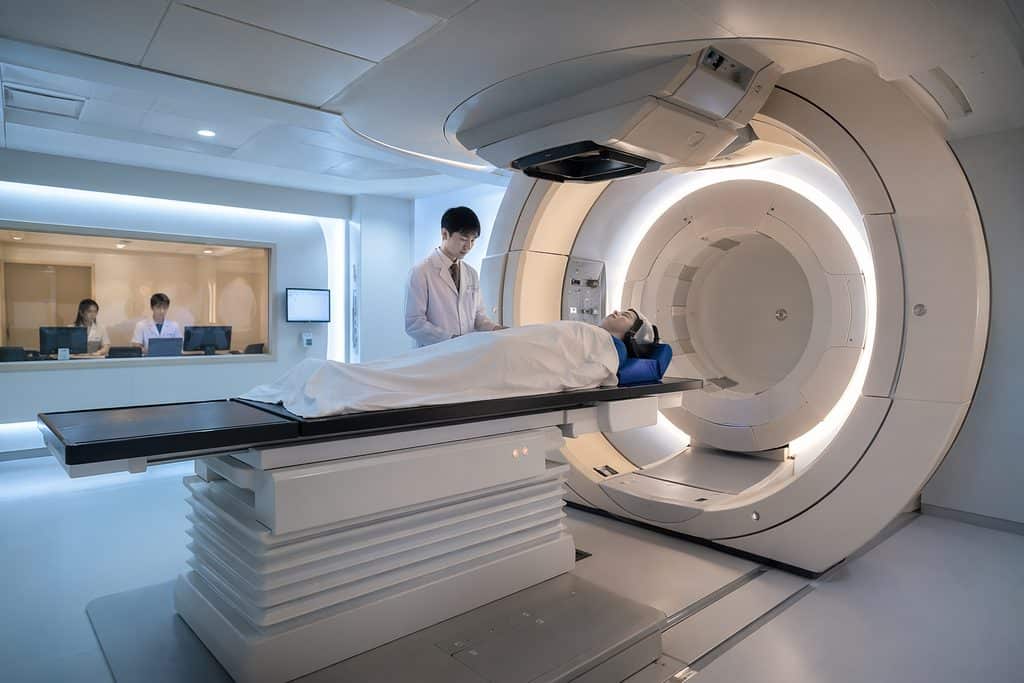
You have probably heard that getting medical care in China means long waits, language chaos, and questionable quality. For radiation therapy, the reality is different. China now operates some of the world’s highest-volume radiotherapy centers, and the radiation therapy cost China hospitals quote often runs 60–80% below comparable U.S. or U.K. pricing. But “cheap” means nothing if the machine is outdated or the treatment plan is sloppy. So the real question is not whether you can get radiation therapy in China. It is whether you can get it at a center that matches or beats Western clinical standards while paying a fraction of the price. That is what this guide covers, with specific numbers and hospital names you can verify.
Key Takeaways
- China has over 1,500 radiotherapy centers; top-tier hospitals run TrueBeam, Halcyon, and proton systems comparable to leading U.S. cancer centers.
- Radiation therapy cost China typically ranges from $8,000 to $35,000 for a full course, versus $50,000–$150,000+ in the United States.
- Foreign patients cannot simply walk into a public hospital’s general outpatient clinic and book radiotherapy the same week — remote evaluation and international department coordination are required first.
- Language, medical records translation, and hospital navigation are the biggest practical barriers; they are manageable with preparation or a bilingual coordinator.
The Problem: Radiation Therapy at Western Prices Is Breaking Patients Financially
Cancer care in the United States routinely pushes families into medical debt. A 2022 study published in the Journal of Clinical Oncology found that approximately 40% of cancer patients deplete their entire life savings within two years of diagnosis. Radiation therapy is a major driver. A standard course of intensity-modulated radiation therapy (IMRT) in the U.S. bills between $50,000 and $150,000 depending on the body site, number of fractions, and whether image guidance is used. Proton therapy — increasingly recommended for pediatric and skull-base tumors — can exceed $200,000.
In the U.K., the NHS provides radiotherapy free at the point of care, but waiting times are a different kind of cost. The 62-day cancer waiting time standard has been missed for years. Some patients wait 8–12 weeks between diagnosis and first radiotherapy fraction. In Canada, the median wait for radiotherapy after referral is roughly 4–6 weeks, longer in Atlantic provinces. For aggressive tumors, that is clinically dangerous. Patients are now looking abroad — not because they want to travel, but because staying put is too slow or too expensive.
Why China Delivers Results for Radiation Therapy
Clinical Volume Creates Technical Proficiency
Radiotherapy is a numbers game. The more cases a center treats, the more refined its protocols become. China’s top oncology departments treat enormous volumes. Fudan University Shanghai Cancer Center delivers radiotherapy to over 10,000 new patients annually. Sun Yat-sen University Cancer Center in Guangzhou handles a similar caseload. Compare that to a typical U.S. community cancer center, which might treat 300–500 radiotherapy patients per year. The difference in accumulated clinical experience is not trivial. Radiation oncologists at high-volume Chinese centers see rare presentations, complex re-irradiation cases, and challenging anatomical sites on a weekly basis. That volume translates into treatment planning skill — and treatment planning, not the machine itself, is where outcomes are won or lost.
Modern Hardware at Scale
The equipment gap between China and the West has closed dramatically. Major centers now operate Varian TrueBeam, Elekta Versa HD, and Halcyon linear accelerators — the same platforms used at MD Anderson and Memorial Sloan Kettering. China also invested heavily in proton and heavy-ion therapy. The Shanghai Proton and Heavy Ion Center treats over 1,000 patients annually with particle therapy. Wuwei Heavy Ion Center in Gansu Province runs a domestically developed carbon-ion system. These are not experimental machines. They are clinical workhorses treating real patients every day. If you want to see which hospitals rank highest for oncology, our specialty department rankings break down the top 10 by cancer type.
Cost Advantage Without Quality Compromise
Lower prices in China are not a sign of lower quality. They reflect structural economics: lower physician salaries, lower facility overhead, and a hospital system built for volume. A full IMRT course at a top-tier Chinese hospital typically runs $8,000–$20,000. Stereotactic body radiation therapy (SBRT) for early-stage lung cancer costs roughly $10,000–$25,000. Proton therapy in Shanghai runs $35,000–$60,000 — still far below U.S. proton pricing. The machines are the same. The physics is the same. The clinical protocols are often adapted directly from NCCN guidelines. What differs is the bill.
Radiation Therapy Cost China vs. the United States and Europe: A Real Comparison
Patients searching for radiation therapy cost China want hard numbers, not vague reassurances. The figures below reflect typical self-pay charges at top-tier Chinese public hospital international departments and private international hospitals. U.S. figures come from published hospital chargemaster data and FAIR Health benchmarks. European private rates reflect common self-pay pricing in Germany, Switzerland, and the U.K. private sector.
| Treatment Type | China (Self-Pay) | United States | Europe (Private) |
|---|---|---|---|
| IMRT (prostate, 28–39 fractions) | $8,000–$15,000 | $50,000–$110,000 | $35,000–$70,000 |
| IMRT (head & neck, 33–35 fractions) | $10,000–$18,000 | $80,000–$150,000 | $50,000–$90,000 |
| SBRT (lung, 3–5 fractions) | $10,000–$22,000 | $60,000–$120,000 | $40,000–$80,000 |
| Proton therapy (full course) | $35,000–$60,000 | $150,000–$250,000 | $80,000–$150,000 |
| Whole-brain radiotherapy (10 fractions) | $5,000–$9,000 | $30,000–$70,000 | $20,000–$40,000 |
These ranges vary by hospital tier, case complexity, and whether the patient goes through an international department or a standard public channel. The public channel is cheaper but comes with language and navigation hurdles. International departments cost 1.5–2 times more but provide English-speaking staff and streamlined scheduling. Either way, how much does radiotherapy cost abroad is a question with a clear answer: in China, it costs far less than in the U.S. or Western Europe, and the technology gap is essentially closed at top centers.
Is Radiation Therapy Safe in China? What the Data and Standards Show
Safety in radiotherapy depends on three things: machine calibration, treatment planning quality, and quality assurance protocols. On all three, top Chinese centers meet international benchmarks. Many are accredited by JCI (Joint Commission International) or follow IAEA safety guidelines. Fudan University Shanghai Cancer Center, for instance, is one of the best cancer hospital Shanghai radiation patients can access, and it has participated in international clinical trials with published outcomes comparable to Western centers.
But honesty matters here. Safety is not uniform across all 1,500+ radiotherapy centers in China. A county-level hospital in a rural province will not match the physics QA of a top-tier academic center. That is precisely why hospital selection matters — and why foreign patients should restrict their search to Fudan-ranked oncology departments or JCI-accredited international hospitals. If you want to understand which hospitals make the cut, our guide to China’s top-ranked hospitals explains the Fudan ranking system and how to use it.
Radiotherapy in China is not a free-for-all. Every linear accelerator must pass national licensing inspections. Dosimetrists and medical physicists at major centers are trained in programs modeled on U.S. and European curricula. Treatment planning systems — Eclipse, Monaco, RayStation — are the same software used worldwide. The weak point is not the technology. It is the variability between centers. Choose a top-10 oncology hospital, and safety is comparable to any Western academic center. Choose poorly, and the risk increases. That is the honest answer to “is radiation therapy safe in China.”
How to Book Radiation Treatment Beijing or Shanghai: The Step-by-Step Pathway
Foreign patients cannot book radiation treatment Beijing or Shanghai by simply calling the hospital’s general outpatient line. Public hospital general departments operate on a same-day registration model — you show up, queue, and see a doctor. For radiotherapy, which requires a treatment plan, simulation, and multi-week commitment, that model does not work for someone flying in from abroad. The pathway that does work looks like this.
First, you need a remote evaluation. Send your existing medical records — pathology reports, imaging (CT, MRI, PET-CT), treatment history, and current medications — to the hospital’s international department or a coordination service. A radiation oncologist reviews the case and determines whether radiotherapy is appropriate, what technique is indicated, and whether the hospital will accept the case. This step costs $100–$300 for a standard international department video consultation, or $300–$500 for a written second opinion from a top specialist. Those fees are credited toward on-the-ground coordination if you proceed within 90 days. That is the model, and it protects you from flying to China only to be told you are not a candidate.
Second, once the hospital accepts the case, you apply for an S2 visa. The S2 visa is the correct category for short-term private affairs, including medical treatment. It is not an M visa — that is for commercial trade, and using it for medical purposes is wrong. Your hospital provides an invitation letter and treatment confirmation, which you submit with your visa application. Processing typically takes 5–10 business days. Family members accompanying you apply for the same S2 category.
Third, you arrive and complete simulation. Simulation involves a CT scan in the treatment position, often with immobilization devices. The radiation oncologist and medical physicist then design the treatment plan. Plan approval typically takes 3–7 days. After that, treatment begins. A typical course runs 5 days per week for 2–7 weeks depending on the protocol. During that time, you need someone who speaks Chinese to handle registration, payments, and daily logistics. That is where a bilingual medical companion — from $300 per day — becomes valuable. Not because the hospital is incompetent, but because a single-day outpatient queue at a top Chinese hospital can involve thousands of people. Having someone who knows the system changes the experience entirely.
If you are weighing China cancer treatment packages international patients often ask about, understand that most hospitals do not sell “packages” like a resort. What exists is a coordinated care pathway: remote evaluation, visa support, hospital admission, treatment, and follow-up coordination. Some private international hospitals in Shanghai and Beijing do offer bundled pricing for standard radiotherapy courses. Those bundles typically include simulation, treatment planning, all fractions, and basic follow-up imaging. Prices vary by hospital and case complexity.
Evaluating a Radiotherapy Center in China: What to Check Before You Commit
Not every hospital in China is a good place for radiotherapy. Before you book, verify these specifics.
Check the equipment list. You want a center running linear accelerators from Varian or Elekta, ideally with image-guided radiation therapy (IGRT) capability. Ask for the machine model. TrueBeam, Halcyon, and Versa HD are current-generation platforms. If the hospital cannot tell you what machine they use, walk away.
Check the physics team. Radiotherapy safety depends on medical physicists who calibrate machines and verify treatment plans. Top centers have physicists trained in accredited programs and participate in external quality audits. Ask whether the center has JCI accreditation or has passed an IAEA quality audit. This is not a bureaucratic detail. It is the difference between a precisely delivered dose and a dangerous one.
Check the oncologist’s subspecialty. A radiation oncologist who treats lung cancer every day is not the same as one who treats everything. Top Chinese centers assign oncologists to specific disease sites. Ask which oncologist will manage your case and how many patients with your exact diagnosis they have treated in the past year. If you are looking for the best cancer hospital Shanghai radiation patients recommend, Fudan University Shanghai Cancer Center and Shanghai Chest Hospital both have dedicated thoracic and head-and-neck radiotherapy teams with high volumes.
And check the language pathway. If the hospital’s international department does not provide English-speaking coordination, you will need your own interpreter. This is non-negotiable. Radiotherapy involves daily visits for weeks. You will interact with nurses, technicians, billing staff, and pharmacists. None of them are required to speak English. A bilingual companion or a hospital international department with English support is the difference between a manageable treatment course and a daily struggle.
For patients considering TCM as a complement to radiotherapy for symptom management — not as a substitute — some hospitals integrate acupuncture and herbal medicine for radiation-induced fatigue and nausea. Our traditional Chinese medicine guide explains what is evidence-based and what is not.
Practical Considerations: Documentation, Payment, and Follow-Up
Bring every medical record you have. That means pathology slides, not just reports. Many Chinese radiation oncologists will want to re-review the pathology before treating, especially for a first-time international patient. Bring the actual glass slides or paraffin blocks if possible. Bring a CD or USB with your CT, MRI, and PET-CT images in DICOM format. Bring a written summary of all prior treatments, including chemotherapy regimens, prior radiation doses and fields, and surgical reports. Missing records delay treatment and may lead to an incomplete plan.
Payment is upfront. Chinese public hospitals require prepayment before treatment begins. International departments accept wire transfers and major credit cards. Private international hospitals may bill your insurance directly if you have a policy with a global network. Most patients pay out of pocket and seek reimbursement from their insurer afterward. Ask your insurer before you travel whether overseas radiotherapy is covered and what documentation they require. Some U.S. insurers will reimburse a portion of overseas treatment if the cost is substantially lower than domestic care, but this requires pre-authorization.
Follow-up after returning home is a real issue. Radiation side effects can emerge weeks or months after treatment ends. Your Chinese radiation oncologist will provide a treatment summary and a recommended follow-up schedule. You then hand that to your home oncologist. The two do not need to speak directly, though some Chinese international departments will arrange a follow-up video consultation for $100–$300. Plan for this before you leave. Do not assume your home oncologist will automatically understand the treatment plan — send them the records and schedule a debrief appointment.
Radiotherapy is not appropriate for every cancer stage. Some patients need surgery or systemic therapy first. Others are not candidates for travel due to performance status. A remote evaluation is not a guarantee of treatment — it is a screening step. Do not book flights until the hospital has reviewed your records and accepted your case in writing.
Frequently Asked Questions
Yes. Public hospital international departments accept foreign patients, and many top-tier oncology centers have dedicated international wards. The process starts with remote record review, not with walking into the general outpatient clinic. Once the hospital accepts your case, you proceed through the international department, which handles scheduling, billing, and interpretation.
Most IMRT courses run $8,000–$20,000. SBRT runs $10,000–$25,000. Proton therapy runs $35,000–$60,000. These are self-pay international department rates. Standard public channel rates are lower but require Chinese language capability and navigating the general system. Every price varies by hospital and case complexity.
Top-tier Chinese hospitals manage radiation side effects with the same supportive care protocols used in the West: antiemetics, nutritional support, pain management, and skin care. If a serious complication requires hospitalization, the treating hospital admits you through the international department. Your travel insurance or self-pay covers the additional cost. Before treatment begins, ask the hospital what their complication management pathway looks like — a good center will have a clear answer.
The S2 visa is the correct short-stay category for private affairs including medical treatment. Processing normally takes 5–10 business days after submission. Your hospital provides the invitation letter and treatment confirmation required for the application. The M visa is for commercial trade and is not appropriate for medical travel.
Will my home country oncologist accept a treatment plan from China?
In most cases, yes. Chinese top-tier radiation oncologists document treatment plans using the same international standards — ICRU dose
For more medical information and treatment options in China, visit chinamedservices.com (China Medical Services).
