Rapid Second Opinion in China: How We Arrange a Fast Review
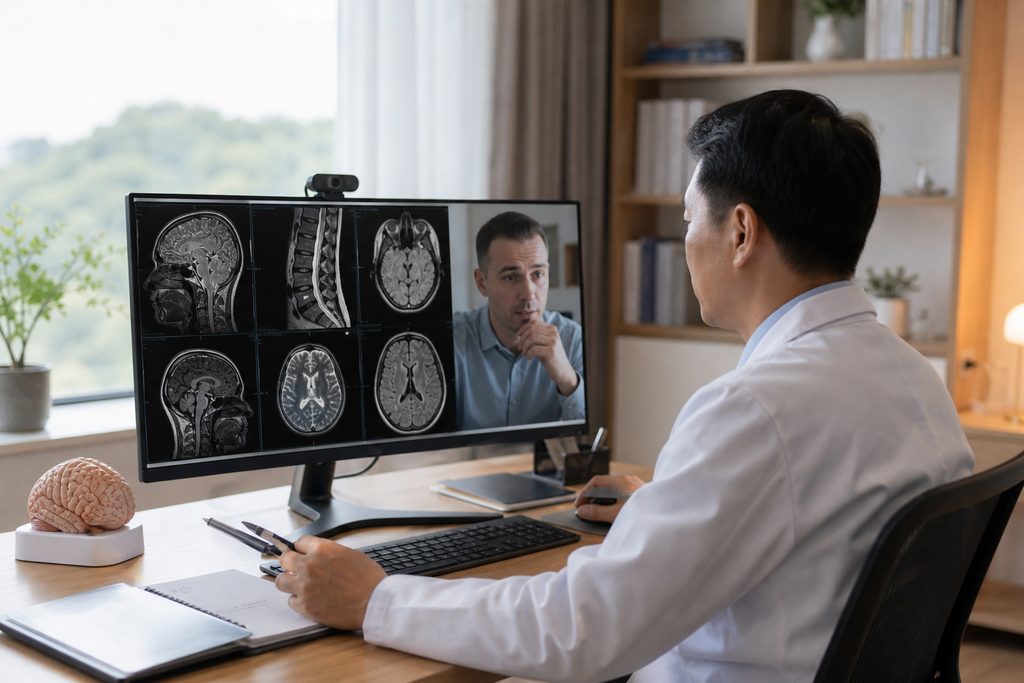
A second opinion is not a rejection of your current doctor. It is a structured review of your existing medical records by a different specialist team, aimed at confirming a diagnosis, refining a treatment plan, or opening up alternatives you had not considered. For international patients, understanding second opinion China cost and the actual mechanics of a fast review removes most of the anxiety around the process. Our team coordinates written reviews, video consultations, and proxy visits across China’s top-ranked public hospitals and JCI-accredited private facilities. The goal is simple: you send records, a relevant Chinese specialty team reviews them, and you receive a documented analysis with concrete direction. No travel required for the first step.
How This Actually Works, Step by Step
You start by sending us what you already have: pathology reports, imaging files (CT, MRI, PET), lab results, discharge summaries, and a brief description of your current situation. We translate these into Chinese where needed, then route them to the appropriate department at a hospital that matches your condition. For oncology cases, that might be a cancer center ranked among China’s top 10 for your tumor type. For cardiac surgery, it could be a center handling over 14,000 open-heart procedures annually. The reviewing team examines your materials, discusses the case internally, and produces a written opinion in English. That document typically covers whether the diagnosis appears consistent with the evidence, what treatment options exist in China, what additional testing might clarify ambiguity, and whether traveling for in-person evaluation is justified. If you choose a video consultation instead, you speak directly with the Chinese specialist team through a scheduled online session. A proxy consultation goes further: you designate a city, hospital, or department, and our staff attends in person with your materials to register, create the hospital medical card, and meet the physician on your behalf. Any subsequent admission remains subject to hospital rules — we never promise admission or treatment outcomes.
What a Fast Medical Second Opinion in China Actually Costs
Pricing for a fast medical second opinion China review depends on which tier you select. A written second opinion from a top-tier hospital expert runs from $300 to $500. A video consultation with a general international department physician costs $100 to $300. If you need a top-specialist video consultation, expect $500 to $800. Multidisciplinary team reviews — where oncologists, surgeons, radiologists, and pathologists weigh in together — range from $1,500 to $2,000. These figures reflect coordination and professional review fees. They do not include hospital treatment charges if you later travel for care. And here is a mechanism worth knowing: any consultation fee is credited in full toward our on-the-ground coordination service if you upgrade within 90 days. That means the second opinion is not a sunk cost — it becomes the down payment on a smoother arrival if you decide to proceed. The credit applies to coordination only, never to hospital treatment bills.
| Service Tier | Typical Cost (USD) | What You Receive |
|---|---|---|
| Written second opinion (top hospital expert) | $300–$500 | Documented analysis, treatment suggestions, direction. For reference only, not a prescription. |
| Video consultation (international dept.) | $100–$300 | Live online discussion with Chinese specialty team. |
| Top-specialist video consultation | $500–$800 | Direct conversation with senior expert in your specific condition. |
| Multidisciplinary team (MDT) video consultation | $1,500–$2,000 | Coordinated review across multiple specialties. |
Every price varies by hospital and case complexity. A rare sarcoma review costs more than a straightforward thyroid nodule assessment. We confirm the final quote before any payment.
How to Get a Second Opinion from a Chinese Hospital Without Traveling
The question behind how to get a second opinion from Chinese hospital specialists is really about logistics. You cannot simply email a professor at Peking Union Medical College Hospital and expect a reply. Public hospital outpatient departments do not accept overseas advance bookings for regular clinics. You must either appear in person on the day of registration, or work through the hospital’s international department or VIP channel. That is where a coordination team becomes useful. We handle the document preparation, translation, department selection, and submission. The hospital reviews the file and assigns an appropriate specialist. You receive the written opinion or schedule the video call. If you need a medical second opinion package Shanghai specifically — combining written review with a follow-up video discussion and coordination of any subsequent in-person visit — we can structure that. Shanghai hosts 18 of China’s Fudan-ranked top 100 hospitals, including Zhongshan Hospital and Ruijin Hospital, so the city offers deep specialty coverage. But the same remote-first model works for Beijing, Guangzhou, Chengdu, or any of the 37 cities in our hospital network.
A Realistic Timeline
People ask whether they can get an international patient second opinion China quick review. The honest answer: yes, but “quick” means days, not hours. Here is what a typical written second opinion timeline looks like.
| Stage | Duration | Notes |
|---|---|---|
| Document collection and translation | 1–3 days | Depends on volume and source language. Incomplete records cause delays. |
| Hospital department assignment and submission | 1–2 days | We match your case to a relevant specialty, not a generic department. |
| Specialist review and internal discussion | 3–7 days | Top experts review between surgeries and clinics. Rushed reviews are shallow reviews. |
| Written opinion delivery in English | 1–2 days after review | Includes translation and formatting. |
| Video consultation scheduling | 3–10 days lead time | Senior specialists have limited slots. MDT panels take longer. |
So a written second opinion typically lands in 5 to 12 business days from the moment you send complete records. A video consultation adds another week or so. Proxy consultations — where our staff physically attends a hospital on your behalf — depend on that hospital’s outpatient schedule and can take 1 to 3 weeks to arrange. If you later decide to travel for surgery, visa processing for an S2 visa (the short-stay category used for medical treatment and private affairs) typically takes 1 to 4 weeks depending on your home country’s Chinese embassy or consulate. Nobody should promise you a surgical date before the in-person evaluation happens. That is not how Chinese public hospitals work.
Can I Get an Online Second Opinion from China Without Flying There?
Yes. The short answer to can I get an online second opinion from China is that written reviews and video consultations are fully remote. You never leave home for the first stage. What you cannot do remotely is receive a definitive surgical plan. Chinese surgeons will not commit to a procedure date without examining you in person and reviewing original imaging on their own systems. The online second opinion tells you whether traveling to China is worth it. That is its real function. It prevents expensive, exhausting trips for patients whose cases are not suitable for treatment in China, and it gives confidence to those whose cases are. Think of it as a filtering mechanism. A $400 written review can save you a $4,000 speculative trip.
What Can Go Wrong — and What Happens Then
Records are incomplete. This is the most common failure point. A pathology report without the corresponding imaging, or imaging without lab values, forces the reviewing team to request more information. That adds days. We mitigate this by checking your file against a condition-specific checklist before submission. But if the hospital sends a query, we relay it to you immediately. You respond, we translate, the review resumes.
The specialist disagrees with your home diagnosis. This is not a failure. It is the entire point of a second opinion. But it can be destabilizing. What we do not do is pressure you to act on the Chinese opinion. We present the written analysis, arrange a video discussion if you want clarification, and give you time. Some patients take the Chinese opinion back to their home oncologist or surgeon for discussion. That is a mature, sensible path.
The hospital declines the review. Rare, but it happens. Some departments refuse cases they consider outside their scope or too advanced for meaningful input. If that occurs, we identify an alternative department or hospital in the network and resubmit. You are not charged for a review that never happens. If we cannot arrange the appointment we committed to, you receive a full refund of the coordination fee.
The opinion is ambiguous. “Further testing recommended” is a legitimate outcome. It means the records you sent are insufficient for a confident conclusion. The next step might be additional imaging at home, or a decision to travel for in-person evaluation. We explain what the ambiguity means and what would resolve it. We do not pretend the opinion says more than it does.
Choosing Between Written Review, Video Consultation, and Proxy Visit
Most patients start with a written review. It is the cheapest, fastest, and least demanding option. You send records, you get a document. If the written review raises questions you want to discuss directly, upgrade to a video consultation. That conversation lets you ask about treatment philosophy, recovery expectations, and what the specialist would do if you were their family member. Some patients skip straight to video when they already know their diagnosis and want a live discussion about options.
A proxy consultation makes sense when you have already decided you want treatment in China but want to avoid a speculative trip. Our staff attends the hospital with your materials, meets the physician, and reports back with the doctor’s verbal assessment and any admission requirements. This is not a substitute for your own in-person evaluation later. It is a reconnaissance step. It works well for patients from the Middle East, Southeast Asia, and Europe who want ground-level confirmation before committing to international travel.
One mistake we see repeatedly: patients request an MDT video consultation as their first step. That is usually overkill. An MDT panel costs $1,500 to $2,000 and involves multiple senior specialists. It is appropriate when you already have a complex, multi-organ condition or conflicting opinions from two different hospitals. Start smaller. The written review often tells you whether an MDT is even necessary.
Practical Considerations: Records, Visa, Payment, and Follow-Up
With complete records, a written second opinion typically takes 5 to 12 business days. Incomplete records, rare conditions, or senior specialist availability can extend that. Video consultations add 3 to 10 days of lead time for scheduling.
You will receive a documented analysis with treatment suggestions and direction. It is not a surgical booking. Chinese public hospitals require an in-person evaluation before scheduling surgery or admission. The remote opinion tells you whether that trip is justified.
That depends on your doctor. We deliver the opinion in English with sufficient clinical detail for a Western physician to evaluate. Some patients use it to open a conversation with their home team. Others bring it to a different specialist in their own country for a third perspective.
You are not obligated to act on it. Review the written analysis, ask questions via video consultation if needed, and discuss it with your treating physician. The purpose is to give you more information, not to pressure you into a decision.
Your Next Step
A remote second opinion from a Chinese specialty team is a low-cost, low-risk way to test whether treatment in China makes sense for you. It costs a few hundred dollars and a week or two of waiting. What it buys is clarity — about your diagnosis, your options, and whether a long trip is worth taking. Our team at China Medical Services coordinates written reviews, video consultations, and proxy visits across 340+ top-ranked hospitals in 37 cities. We do not practice medicine, and we do not promise outcomes. We handle the logistics, the translation, and the hospital communication so you can focus on the medical information itself. If you are weighing a second opinion, start with a conversation. Tell us what you have, what you are worried about, and what you hope to learn. We will tell you honestly whether a Chinese review is likely to help.
Frequently Asked Questions
Yes. The hospitals used for international patients are JCI-accredited and follow the same international safety standards as top hospitals in the US and Europe. Surgical teams perform high volumes of procedures — often more than their Western counterparts — which studies show leads to better outcomes.
Costs vary by procedure and hospital, but international patients typically save 40-80% compared to US prices — even when factoring in travel and accommodation. A consultation with our team will give you an exact, all-inclusive quote with no hidden fees.
Send us your existing medical reports to get started. We handle everything from hospital selection and appointment scheduling to visa assistance and post-operative recovery planning. Your medical records are reviewed by the specialist before you even book a flight.
For more medical information and treatment options in China, visit chinamedservices.com (China Medical Services).
