How to Get a Receipt for Every Payment in Chinese Hospitals
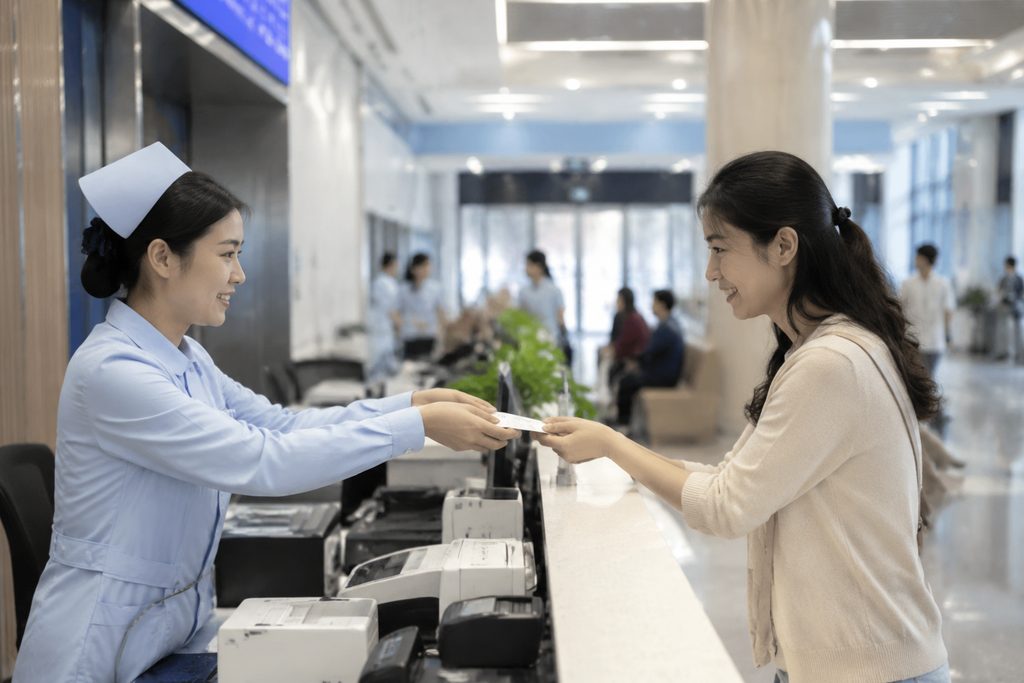
Have you ever paid a hospital bill abroad and walked away wondering whether the crumpled thermal paper in your hand would satisfy your insurer back home? That worry multiplies when the hospital is in Shanghai, Beijing, or Guangzhou and every sign is in Chinese. The short answer: yes, you can get a receipt for hospital payment in China. Every single payment. Registration fees, consultations, imaging, lab work, inpatient deposits, discharge settlements, pharmacy charges — each generates an official financial document. The trick is knowing what to ask for, where to ask, and what the document must contain to survive scrutiny from your insurance company or tax authority.
Our team has walked hundreds of international patients through this exact process. We know which windows to visit, what the receipts look like, and what happens when a machine runs out of paper at 4:45 PM on a Friday. This guide covers the mechanics, the pitfalls, and the specific steps to secure airtight documentation.
How This Actually Works, Step by Step
Let’s trace the real sequence. You register at the hospital’s international department or a public hospital‘s general registration window. You pay. The cashier hands you a receipt. That receipt is your proof. But here’s what most first-time visitors miss: the receipt you get at the point of payment is not always the final invoice your insurer needs.
Here’s the sequence we walk patients through:
Step 1 — Pay and collect the immediate receipt. Every cashier window in a Chinese hospital issues a receipt at the moment of payment. It’s usually a printed document, not handwritten. Look for the red official seal — a circular stamp in red ink. Without that seal, the document has no legal weight.
Step 2 — Identify the document type. You’ll encounter two main categories. The first is the standard payment receipt, sometimes called a “settlement receipt” or “invoice.” The second is the itemized breakdown. They are not the same thing. More on that below.
Step 3 — Request the itemized bill. If your insurer requires line-item detail — every drug, every test, every consumable — you need to ask the billing department for an itemized statement. This is a separate request at most hospitals. It takes time. Sometimes 30 minutes. Sometimes a day.
Step 4 — Verify the details match your passport name. Chinese hospitals register international patients under the name on their passport. If your receipt shows a shortened name, a misspelling, or a name in Chinese characters only, your insurer may reject it. Fix it before you leave the hospital.
Step 5 — Request the official stamp. Some hospitals issue computer-printed receipts that already bear a printed seal. Others require you to take the receipt to a specific window to get the red stamp applied. Ask the cashier: “Where do I get the official stamp?” If you’re working with a bilingual companion, they handle this in seconds.
Step 6 — Keep every receipt, even the small ones. Registration fee, 50 RMB. Blood draw, 180 RMB. Pharmacy pickup, 340 RMB. Each matters. Insurance claims for international treatment often require total documentation, not just the big-ticket items.
Can I Get a Receipt for Hospital Payment in China: The Document Types Explained
So you’ve paid. What exactly should be in your hand? Chinese hospitals issue several financial documents, and knowing the difference saves weeks of back-and-forth with your insurer. The primary keyword question — can I get a receipt for hospital payment in China — really translates to: which document does my insurer actually want?
The standard hospital invoice. This is the official receipt. It shows the total amount paid, the date, the patient’s name, the hospital’s name, and the official red seal. For many insurers, this single document is enough for straightforward outpatient visits. It’s what the cashier hands you automatically.
The itemized billing statement. This is the line-by-line breakdown. Every medication, every lab test, every imaging study, every consultation fee. It’s how you request an itemized bill from a hospital in Shanghai, Beijing, or anywhere else in China. Some hospitals call it a “detailed expense list.” The billing department usually issues it. You may need to show your passport and your original receipts to get it.
The discharge summary with financial annex. For inpatient stays, the discharge process typically produces a financial settlement sheet. This summarizes the entire admission: deposit paid, daily charges, final balance. Your medical expense receipt for insurance from a China hospital often needs both the settlement sheet and the itemized breakdown.
The official tax invoice. Chinese hospitals are now required to issue a special value-added tax invoice, often called a “fapiao,” for medical services. This is the document your tax authority may want if you’re claiming a China hospital payment receipt for tax deduction purposes. It looks different from the standard receipt. It has a unique invoice number and a QR code for verification.
A Realistic Timeline
People underestimate the time involved in getting proper documentation. Here’s what we tell patients to expect, based on hundreds of real cases.
| Stage | What Happens | Realistic Duration |
|---|---|---|
| Day 1 | Pay at cashier, receive immediate receipt | 5–15 minutes at the window |
| Day 1–2 | Request itemized billing statement from billing department | 30 minutes to 2 hours, same day in most cases |
| Day 1–3 | Request official tax invoice (fapiao) if needed | Same day at invoice window; up to 24 hours at some hospitals |
| Week 1 | Verify patient name matches passport; request corrections if needed | Corrections take 1–3 business days |
| Week 1–2 | Submit documents to insurer; respond to any clarification requests | Insurer response varies: 5–15 business days |
| Month 1 | If insurer rejects, return to hospital for supplementary documentation | Varies; often requires a designated representative |
One step people forget: document translation. Your insurer may accept the Chinese invoice, but many require a certified English translation. That adds 3–7 days. The hospital rarely provides translations. You’ll need a translation service or a bilingual coordinator who can prepare a certified version.
And here’s the step almost no one anticipates: the name correction. If your passport says “Jonathan Alexander Smith” but the hospital registered you as “Smith Jonathan,” your insurer’s system may flag a mismatch. Fixing this requires a visit to the hospital’s registration office with your passport. Budget a full morning.
What Can Go Wrong — and What Happens Then
This is where honesty matters. Things go wrong. Here are the failure modes we’ve seen, and what actually happens next.
The receipt printer runs out of paper. It happens. The cashier may hand you a handwritten receipt instead. Some insurers reject handwritten documents outright. The fix: ask the cashier to reprint from the system, or go to the billing department and request a reissued printed receipt with the official seal.
The receipt shows the wrong name. Maybe you registered with a shortened name. Maybe the staff entered your name in Chinese characters. Your insurer won’t match it. The fix: bring your passport to the registration office, request a name correction, then re-request all affected receipts. This can take a day or two.
The itemized bill is incomplete. You requested the breakdown, but it’s missing the pharmacy charges. Or the imaging fees. The fix: go back to the billing department with your original receipts and point out the missing items. They’ll reissue. This is why you keep every receipt — they’re your evidence of what should appear on the itemized statement.
The insurer wants a document the hospital doesn’t issue. Some Western insurers request a “superbill” or a specific claim form. Chinese public hospitals don’t produce superbills. The fix: provide the official invoice plus the itemized statement plus a letter of explanation from your coordinating service. Most insurers accept this combination once they understand the local documentation standards.
You left China without the fapiao. This is the most common and the most annoying. The fix: someone needs to return to the hospital on your behalf. That person needs a signed authorization letter, a copy of your passport, and the original receipts. A bilingual medical companion can handle this. Without a representative, you’re looking at another flight.
How to Request Medical Invoice From Chinese Hospital: The Right Way to Ask
There’s a right way and a wrong way to ask for documentation in a Chinese hospital. The wrong way is walking up to a random window and saying “I need a receipt.” The right way involves three things: the right department, the right phrase, and the right supporting documents.
The right department is usually the billing office or the financial affairs office. At large teaching hospitals, there’s often a dedicated invoice window separate from the payment cashier. At international departments, the front desk staff can direct you — or better, handle the request for you.
The right phrase matters if you’re navigating alone. Here’s what works:
- “I need the official invoice for insurance.” — This gets you the fapiao.
- “I need the itemized expense list.” — This gets you the line-by-line breakdown.
- “Please stamp this receipt.” — This gets you the red official seal if it’s missing.
- “The name on this receipt is wrong. I need it corrected.” — This starts the correction process.
The right supporting documents: your passport, your registration card or hospital card, and your original payment receipts. Without the hospital card, the billing office may not be able to pull up your records. Without the original receipts, they may refuse to reissue.
One more thing. Some hospitals now offer self-service kiosks that print itemized bills and fapiao. These are faster than waiting in line. Look for machines labeled “invoice printing” or “bill inquiry” near the cashier area. You’ll need your hospital card or the QR code from your registration.
Practical Considerations: Records, Language, and Follow-Up
Documentation doesn’t end when you leave the hospital. The practical side of getting a receipt for hospital payment in China extends into your insurance claim, your tax filing, and your follow-up care.
Keep a digital copy of everything. Before you leave the hospital, photograph every receipt, every invoice, every itemized statement. Make sure the red seal is visible in the photo. Save the files to cloud storage. Receipts fade, get lost, get damaged in transit. A clear photo can serve as a backup in some claim scenarios.
Understand what your insurer actually requires. Call your insurer before you travel. Ask specifically: “What documentation do you require for hospital treatment in China?” Some want the fapiao only. Some want the itemized bill. Some want both plus a translated discharge summary. Knowing this in advance means you request the right documents on day one, not week three.
Language is a real barrier. The billing office staff at a major Chinese public hospital may not speak English. The cashier almost certainly doesn’t. If you’re navigating alone, bring a translation app and be patient. If you’re working with a bilingual companion, this is exactly what they’re for — standing at the invoice window, explaining what you need, verifying the document on the spot.
Your international patient hospital billing statement from China serves multiple purposes. Insurance reimbursement is the obvious one. But also tax deductions in some jurisdictions. And personal health spending accounts. And sometimes, legal documentation for medical travel arrangements. Request the most complete version available, even if you think you only need the summary. It’s easier to request everything at once than to return for supplements later.
For patients receiving treatment at top-ranked Chinese hospitals, the documentation standards tend to be consistent and well-organized. These institutions handle international patients regularly and their billing offices are familiar with foreign insurance requirements. Smaller hospitals may need more explanation about what you’re asking for.
Frequently Asked Questions
Yes. Cash payments generate the same official receipts as card payments. The cashier issues the receipt at the time of payment regardless of payment method. Keep the receipt immediately — cash payments leave no digital trail in your own records, so the paper document is your only proof.
You have two options. First, some hospitals have online patient portals where you can download itemized bills using your hospital card number and a registered phone number. Second, you can authorize someone in China to request it on your behalf. That person needs a signed authorization letter, a copy of your passport, and ideally your original receipts. A bilingual medical companion service can handle this for you. Expect the process to take 3–7 business days once the request is submitted.
Most international insurers accept Chinese-language invoices if they include the official red seal and the amount is clear. But many require an English translation, especially for itemized bills where the insurer needs to verify that charges match the treatment. Certified translations cost extra and add time. Some insurers also require the invoice to show the hospital’s full official name and address in English. Ask your insurer about their specific requirements before you travel.
A fapiao is China’s official value-added tax invoice. It carries a unique invoice number and a QR verification code. If you’re claiming your China hospital payment receipt for tax deduction in your home country, your tax authority may specifically request the fapiao rather than the standard hospital receipt. Request it at the invoice window at the time of payment. It’s harder to obtain retroactively than the standard receipt.
Hospitals in China are legally required to provide itemized billing statements upon request. If a billing office refuses, it’s usually a communication issue rather than a policy issue. The staff may not understand what you’re asking for, or they may be directing you to the wrong window. Ask for the “detailed expense list” specifically. If that fails, go to the hospital’s patient services office or complaints department. In our experience, persistence at the right office resolves nearly every case within a day.
Your Next Step
Getting proper receipts from Chinese hospitals is a process, not a single transaction. The documents exist. The systems work. But the details — the right window, the right phrase, the right stamp, the right name — determine whether your insurer pays without friction or your claim bounces back for a third round of corrections.
Our team at China Medical Services handles this documentation work as part of our broader coordination service. We don’t provide medical treatment. We connect international patients with accredited hospitals and handle the practical side: registration, payment, receipt collection, itemized bill requests, translation, and insurance documentation. If you’re planning treatment in China and want the paperwork handled correctly the first time, request a free consultation and we’ll walk you through what your specific case requires.
For more medical information and treatment options in China, visit chinamedservices.com (China Medical Services).
