Refilling Prescriptions in China: What Foreigners Actually Pay and How
Refilling Prescriptions in China: What Foreigners Actually Pay and How
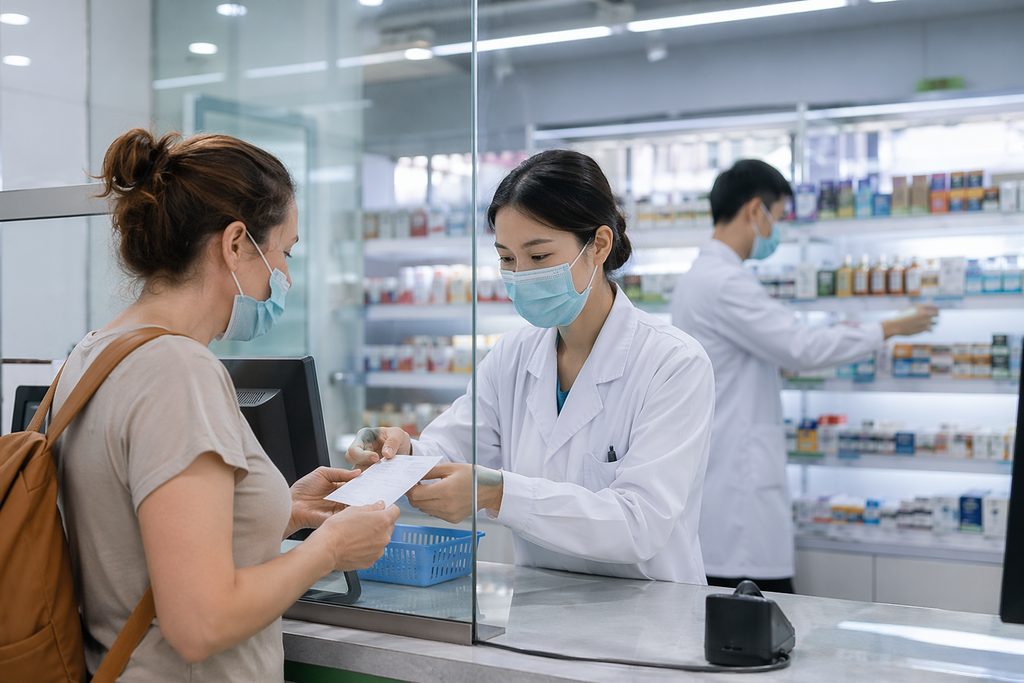
Running out of a daily medication in a foreign country is one of the quieter travel emergencies. Nobody puts it in the guidebook. So let’s define the problem plainly: refilling a prescription in China means getting a licensed Chinese physician to write a new prescription for you, then filling it at a hospital pharmacy or a registered retail pharmacy. Your home prescription is not a ticket to walk into a pharmacy and buy the same pills. China treats most chronic-disease drugs as prescription-only, and the pharmacy counter cannot legally hand them over without a local doctor’s order. That single rule shapes everything else — the cost, the timing, and the paperwork. Understanding the prescription refill cost in China starts with accepting that you are not “transferring” a prescription. You are getting a new one.
How This Actually Works, Step by Step
Here is the real sequence, from the moment you realize you have four pills left.
Step one: identify the drug and its Chinese equivalent. Generic names matter more than brand names. “Lipitor” means nothing at a Beijing pharmacy counter; “atorvastatin” does. Send your medication box, dosage, and your most recent lab work to someone who can read both languages. Brand-name drugs sold in the US and Europe are often available in China under a different trade name, or as a licensed generic from a Chinese manufacturer.
Step two: see a doctor. For a straightforward chronic medication, a hospital outpatient department or an international clinic can issue a prescription after a short consultation. Bring your original packaging, your home prescription, and any recent test results. A physician who cannot verify your history will usually order basic bloodwork before writing for anything with cardiac, thyroid, or psychiatric effects.
Step three: fill it. Hospital pharmacies stock the widest range and are generally the cheapest. Retail chains like those clustered around international districts also carry common drugs. Private international hospitals dispense on-site and often bill insurance directly.
Step four: plan the repeat. This is the part people miss. Chinese public hospitals commonly cap an outpatient prescription at a limited supply — often two to four weeks for chronic medication, sometimes longer for stable patients. You may need a follow-up visit to extend it. If you are staying for months, build that rhythm into your calendar now.
Can Foreigners Refill Prescriptions in China Without a Local Doctor?
Short answer: no, not for prescription-only drugs. And it is worth being blunt about why.
China’s pharmaceutical regulation classifies medicines into prescription and over-the-counter categories. Retail pharmacies can sell OTC products freely — pain relievers, cold remedies, antacids, vitamins. Everything else requires a prescription issued by a physician licensed in China. A prescription written in London, Toronto, or Dubai carries no legal weight at a Chinese pharmacy counter.
So the question “can foreigners refill prescriptions in China” has a two-part answer. Yes, foreigners can absolutely obtain refills. No, they cannot do it without seeing a Chinese doctor first. There is no workaround, and anyone offering one is not being straight with you.
The practical exception is narrow. If your medication is available over the counter in China — and a few drugs that are prescription-only in the US are OTC here, and vice versa — you can simply buy it. Always confirm the active ingredient and dosage yourself. Packaging looks different, and a familiar brand name can mean something else entirely.
A Realistic Timeline
Timing depends on whether you are already in China and whether you need an appointment at a busy public hospital. Public hospital outpatient registration generally cannot be booked from overseas in advance — you queue on the day. International departments and private clinics can often be scheduled ahead.
| Stage | Typical Duration | What Slows It Down |
|---|---|---|
| Gathering records and translating your medication list | 1–3 days | Illegible handwriting, missing lab results, brand names with no generic listed |
| Booking a consultation | Same day to 7 days | Public hospital walk-in queues vs. scheduled international clinic slots |
| The consultation itself | 20 minutes to 2 hours | Whether the doctor wants bloodwork first; translation needs |
| Lab work, if required | Same day to 2 days | Some panels are run in batches |
| Filling the prescription | 15 minutes to 1 day | Whether the hospital pharmacy stocks your specific drug or must order it |
| Total, straightforward case | 2–5 days | — |
| Total, complex case needing labs and a specialist | 1–2 weeks | Specialist availability, repeat testing, drug import timelines |
One more number worth knowing: if you need a drug that is not stocked locally, special-order imports can take considerably longer and cost more. Rare biologics and certain psychiatric medications fall into this bucket.
What Can Go Wrong — and What Happens Then
Most refills go smoothly. Some do not, and you should know the failure modes before you are down to your last tablet.
Your drug is not marketed in China. This is the most common real problem. Some medications approved by the FDA or EMA have no Chinese registration. The recourse is a substitute from the same therapeutic class, chosen by a Chinese physician — or, in limited cases, a special import through a hospital that holds the relevant authorization. Neither happens overnight. If you take something uncommon, research availability before you fly.
The dose strength does not exist locally. Manufacturers often register only one or two strengths in a given market. Your doctor may need to combine tablets or switch you to an equivalent. Do not improvise this yourself.
You cannot communicate your history. This is where refills turn into genuine risk. A physician who cannot read your records is prescribing blind. Translation is not a nicety here; it is the difference between a correct prescription and a dangerous one.
The pharmacy is out of stock. Large hospital pharmacies rarely are. Small retail pharmacies frequently are. Ask before you queue.
Buying Prescription Drugs in China for Tourists: What It Costs
Costs vary enormously by drug, hospital tier, and whether you use a public or private facility. The figures below are typical ranges, not quotes — final pricing depends on the specific medication and the hospital.
| Item | Typical Range (USD) |
|---|---|
| Public hospital outpatient registration | $5–$20 |
| International department or private clinic consultation | $80–$300 |
| Common generic chronic-disease drugs (30-day supply) | $10–$60 |
| Branded or imported equivalents (30-day supply) | $40–$250 |
| Basic lab panel, if required | $20–$120 |
For context, the same generic statin that costs $15 in Shanghai can run $150 or more without insurance in the United States. China’s volume-based procurement program has pushed prices on many off-patent drugs down sharply in recent years, which is why hospital pharmacies here are often dramatically cheaper than Western retail equivalents.
Payment is usually upfront. Public hospitals expect payment at the time of service, and you claim reimbursement from your insurer afterward. Private international hospitals frequently bill insurance directly — worth confirming before you book.
How to Get Prescription Medicine in Shanghai, Beijing, and Beyond
City matters less than facility type, but there are real differences worth knowing.
For how to get prescription medicine in Shanghai, the international clinics attached to major teaching hospitals are the efficient route. They handle English-speaking patients routinely, stock a broad formulary, and can usually see you within days. Beijing works much the same way, and the search for an international pharmacy prescription refill in Beijing usually lands patients at hospital international departments rather than standalone pharmacies — those departments simply have deeper stock and clearer English support.
Outside the largest cities, options narrow. A Tier-3 hospital in a provincial capital will have a competent outpatient department, but English-speaking staff may be scarce. This is exactly where a bilingual companion earns their keep: registering, queuing, translating at the consultation, paying, and collecting the medication.
If you are weighing a longer stay, it is worth understanding how the broader system fits together. Our guide to China’s top-ranked hospitals by city explains how the tier system works and why facility choice changes both cost and access. For patients managing a chronic condition alongside other care, the specialty rankings across 45 departments can help you find the right department rather than the nearest one.
Practical Considerations: Records, Visas, and Follow-Up
Records. Bring more than you think you need. A medication list with generic names, dosages, and frequencies. Recent lab results. A letter from your home physician stating your diagnosis and current regimen. Translated into Chinese if possible — it saves time and reduces error.
Visas. If you are traveling to China specifically for medical treatment, the applicable short-stay category is the S2 visa, which covers medical treatment and private affairs, subject to current embassy and consulate requirements and supporting hospital documentation. Stays beyond 180 days fall under S1. Accompanying family members apply under the same S2 category. Note that the M visa is for commercial and trade activities and has nothing to do with medical treatment. Approval is never guaranteed, and requirements change — always verify with the relevant embassy or consulate before applying.
Supply limits. Plan for the prescription cap. If you are staying three months, expect at least two or three consultations to keep a continuous supply.
Insurance. Check whether your policy reimburses overseas outpatient pharmacy costs. Many do, with receipts and a prescription copy. Keep everything.
Follow-up at home. Ask the Chinese physician for a written summary of what was prescribed and why. Your regular doctor will want it.
Frequently Asked Questions
Not for prescription-only medications. Chinese pharmacies cannot dispense them without a prescription from a physician licensed in China. You will need a consultation, even if it is brief. Over-the-counter products are the exception.
For a common generic chronic-disease drug, expect roughly $10 to $60 for a 30-day supply, plus a consultation fee of $5 to $300 depending on whether you use a public hospital or a private international clinic. Imported brand-name drugs cost considerably more.
Often, but not always. Many global brands are registered in China, and licensed generics cover most common classes. Uncommon drugs, certain biologics, and some psychiatric medications may not be available. Check availability before you travel if your medication is specialized.
For a straightforward refill, two to five days from arrival to medication in hand. If lab work or a specialist consultation is required, allow one to two weeks. Special-order imports take longer.
You need whatever visa your nationality requires for entry. If the purpose of your trip is medical treatment, the S2 category is the applicable short-stay route, subject to current embassy requirements and supporting hospital documents. Approval is not guaranteed.
Your Next Step
Refilling a prescription in China is not difficult, but it is not automatic either. The system requires a local doctor, a local prescription, and a little patience — and the cost is usually far lower than what you would pay at home. Plan for the supply limits, bring your records in both languages, and the process becomes routine.
China Medical Services connects international patients with more than 340 top-ranked hospitals across 37 cities. We do not practice medicine and we do not promise specific appointments or outcomes — our team handles record translation, hospital coordination through official international departments, and bilingual accompaniment so that a language gap never becomes a medical risk. If you would like to talk through your situation, start with a free consultation and we will tell you honestly what is and is not possible.
This article is for general information only and is not medical advice. Always consult a qualified physician about your medications, dosages, and any changes to your treatment.
For more medical information and treatment options in China, visit chinamedservices.com (China Medical Services).
