Rehabilitation in China: What to Bring for a Smooth Recovery
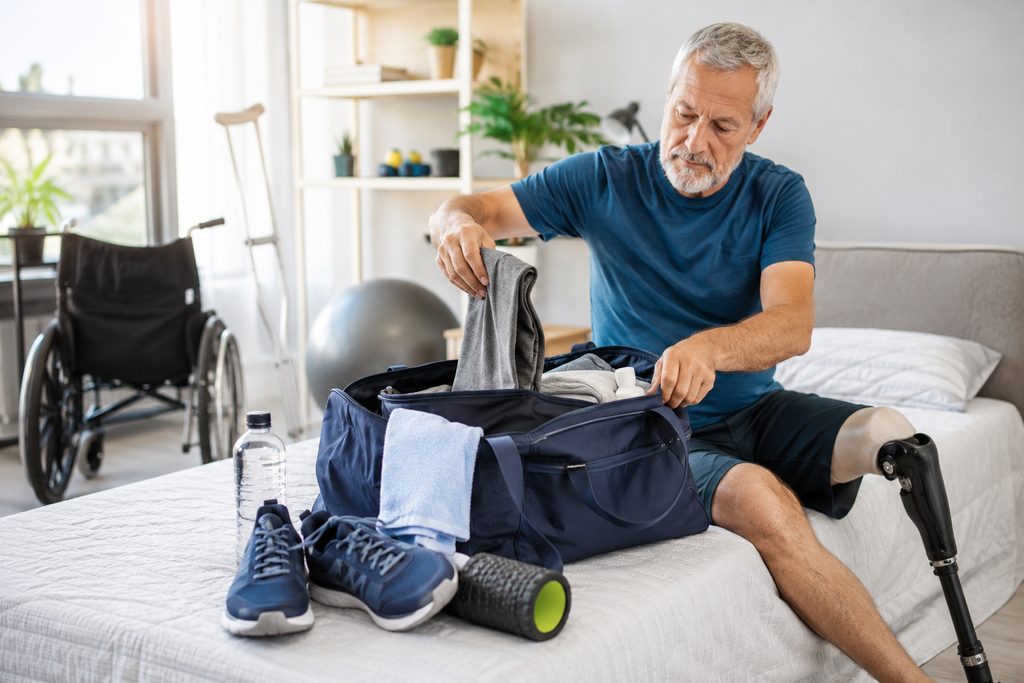
You have probably heard that preparing for medical treatment abroad means drowning in paperwork and packing everything you own. The truth is more straightforward. For rehabilitation specifically, most patients overpack by half and forget the three items that actually matter. We have coordinated rehab stays for patients across 37 Chinese cities, and the packing list is shorter than you think. This guide covers exactly what to bring, what to leave home, how long inpatient rehab typically lasts, and what rehabilitation center cost China looks like in real numbers.
How This Actually Works, Step by Step
Rehabilitation in China usually follows surgery — orthopedic, cardiac, neurological, or spinal. The sequence from your current position to a rehab bed works like this.
First, you send your existing medical records: discharge summary, imaging reports, surgical notes, current medication list. Our team translates these into Chinese and forwards them to the relevant rehab department at a hospital that matches your condition. A specialist reviews the file. That review typically takes 3 to 5 working days. You then receive a written assessment: whether inpatient rehab is appropriate, what the proposed program includes, and how long the stay might be.
If you agree, we handle the appointment coordination. Here is what surprises most international patients: you cannot book a rehab bed months in advance through ordinary public hospital channels. Public hospitals in China operate on a same-day registration system for outpatient visits, and inpatient admission requires an in-person specialist evaluation first. What we coordinate is the international department or VIP pathway, where a specialist has already reviewed your file remotely and agrees to see you on a specific date. That appointment is the gateway to admission.
You fly to China on an S2 visa, which is the correct short-stay category for medical treatment and private affairs. Your accompanying family member applies for the same visa. You attend the in-person evaluation. If the specialist confirms inpatient rehab is suitable, admission typically happens within a few days. Then the real work begins.
What to Bring to Rehab After Surgery: The Actual List
The question “what to bring to rehab after surgery” gets searched thousands of times a month, and most answers online are written for local patients. For international patients flying into China, the list changes. Weight limits matter. What you can buy locally matters. What customs will question matters.
Start with documents. These are non-negotiable:
- Passport with S2 visa
- Original imaging discs (CT, MRI, X-ray) — not just printed reports
- Surgical operation notes and discharge summary
- Complete medication list with generic names, not just brand names
- Insurance documents, if you plan to claim reimbursement later
- Emergency contact card with your home physician’s details
For clothing, think function over fashion. Rehab wards in Chinese hospitals are generally warm, even in winter. Bring loose, front-opening shirts if you have upper body mobility restrictions. Slip-on shoes with non-slip soles. Socks with grip dots. A light jacket for hallway walks. Most rehab units provide patient gowns, but you will want your own clothes for daily therapy sessions.
Personal care items are easy to buy in any Chinese city, but bring a few days’ supply of anything you cannot substitute: prescription toothpaste if you use one, specific skin products, your own razor. Pharmacies in major cities stock Western brands, but not every formulation.
Electronics: bring your phone, a universal power adapter, and a long charging cable. Hospital beds are not always near outlets. A tablet for video calls with family. Noise-canceling headphones help — Chinese hospital wards are busy, sometimes with multiple patients per room in public wings. International department rooms are usually private or semi-private, but noise still travels.
A Realistic Timeline
Patients routinely underestimate how long the pre-arrival phase takes. Here is an honest breakdown based on what we see across our coordination cases.
| Stage | What Happens | Typical Duration |
|---|---|---|
| Week 1 | You send medical records; we translate and submit to rehab department | 3–5 working days for specialist review |
| Week 2–3 | Video consultation with rehab specialist (optional but recommended) | 1–2 weeks scheduling lead time |
| Week 3–4 | S2 visa application at Chinese embassy or consulate | 4–10 working days, varies by country |
| Week 4–5 | Fly to China, attend in-person evaluation | 1–2 days |
| Week 5 | Admission to inpatient rehab (if specialist confirms) | Usually within 2–5 days of evaluation |
| Week 5–9 | Inpatient rehab program | 2–6 weeks, condition-dependent |
| Week 9–12 | Discharge, transition to outpatient or home program | 1–2 weeks transition planning |
Document translation is the step people forget. Medical records in English, German, Arabic, or Russian need professional translation into Chinese before a specialist will review them properly. That adds 2 to 4 days. The video consultation before travel is not mandatory, but it prevents wasted trips. If the specialist says your condition does not require inpatient rehab, you just saved an international flight.
How long is inpatient rehab stay China? The honest answer: 2 to 6 weeks for most post-surgical cases. Stroke rehabilitation can run longer — 6 to 12 weeks in some programs. Spinal cord injury rehab can extend to several months. Chinese rehab departments tend to be more intensive than Western counterparts, with therapy sessions scheduled twice daily in many top hospitals. That intensity can shorten the overall stay, but the specialist will not commit to a discharge date until they see your progress.
What Can Go Wrong — and What Happens Then
The failure modes are real, and you should know them before you pack a suitcase.
First: the specialist reviews your file and says inpatient rehab is not indicated. This happens more often than patients expect. Some conditions are better served by outpatient therapy. If you already flew to China, that is a wasted trip. This is exactly why we recommend the remote video consultation first — for $100 to $300, you get a specialist’s honest read on whether the trip makes sense. If they say no, you stay home.
Second: your visa is delayed. Chinese consulates in some countries process S2 visas faster than others. If your visa takes three weeks and your specialist appointment window closes, we reschedule the appointment. The hospital does not penalize you for this. But you may need to adjust flights and accommodation.
Third: the in-person evaluation reveals something the records did not show. Maybe your surgical site needs more healing time before intensive therapy. The specialist may recommend a short observation period before starting the full rehab protocol. That extends your stay and your budget. We have seen this happen with patients who traveled too soon after surgery. The rule of thumb: most surgeons want 2 to 4 weeks of healing before intensive rehab begins.
Fourth: language friction. Even in international departments, not every therapist speaks fluent English. Our bilingual medical companion handles translation during therapy sessions, but if you decline that service, expect communication gaps. Chinese rehab teams are skilled, but they explain exercises in Chinese by default.
Rehabilitation Center Cost China: What the Numbers Actually Look Like
Let us talk about money directly. Rehabilitation center cost China varies enormously by city, hospital tier, and room type. Here is what we consistently see across our coordination cases.
| Service | Public Hospital (International Dept) | Private International Hospital |
|---|---|---|
| Inpatient rehab, per day | $200–$500 | $500–$1,200 |
| Physical therapy session (1 hour) | $50–$120 | $100–$250 |
| Occupational therapy session | $50–$120 | $100–$250 |
| Specialist evaluation (initial) | $150–$400 | $300–$600 |
| Private room upgrade, per day | $80–$200 | Often included |
| Medical tourism rehab package price Beijing (2-week bundle) | $5,000–$12,000 | $12,000–$25,000 |
These are ranges, not quotes. Your actual cost depends on diagnosis, therapy intensity, and room type. The medical tourism rehab package price Beijing clinics quote often bundles evaluation, accommodation, therapy sessions, and basic nursing care into one number. Always ask what the package excludes: medications, imaging, specialist consultations outside the rehab department, and companion accommodation are frequent exclusions.
Compared to the United States, where inpatient rehab averages $1,500 to $2,500 per day, Chinese programs at top public hospitals run roughly one-fifth to one-third the cost. That gap narrows at private international hospitals, where you are paying for English-speaking staff, Western-style rooms, and direct insurance billing. The trade-off is real: public hospital international departments cost less but feel more Chinese; private hospitals cost more but feel more familiar.
For context on hospital quality, our database covers 340+ top-ranked hospitals across 37 cities, including the Fudan-ranked institutions that run China’s strongest rehab departments. The best physical therapy hospital Shanghai has to offer is typically attached to a major general hospital — Zhongshan Hospital and Ruijin Hospital both run respected rehab units. Beijing’s top orthopedics hospitals, like Jishuitan Hospital, have dedicated rehab floors that handle complex post-surgical cases.
Can I Bring Supplements to Rehab Abroad? And Other Packing Questions
Documents first: passport, imaging discs, surgical notes, medication list. Then loose clothing, slip-on shoes, grip socks, a light jacket. Personal toiletries for the first week — you can buy more locally. Electronics: phone, adapter, long cable, headphones. Bring a 30-day supply of all medications and supplements in original packaging. Leave bulky mobility equipment at home unless it is custom-fitted.
It depends entirely on your policy. Some international health insurance plans cover treatment at JCI-accredited hospitals in China. Most US domestic plans do not. Public hospital international departments typically require self-payment upfront, then you claim reimbursement. Private international hospitals with direct billing agreements can bill your insurer directly — our private hospital directory lists which facilities offer direct insurance billing. Check with your insurer before booking anything.
For most medications, yes. Keep everything in original packaging with the prescription label. Bring a doctor’s note listing each medication and its purpose. Controlled substances — opioids, strong sedatives, some stimulants — require advance approval from Chinese authorities. Contact the Chinese embassy in your country at least 4 weeks before travel if you take any controlled medication.
Public hospital international departments offer access to China’s top rehab specialists at lower cost, but the environment feels more Chinese — shared spaces, less English, busier wards. Private international hospitals offer English-speaking staff, Western-style rooms, and direct insurance billing, at roughly double the price. If your priority is clinical expertise, go public. If your priority is comfort and communication, go private. Both are legitimate choices — our team helps you evaluate which fits your case and budget.
Your Next Step
Rehabilitation in China works best when you arrive prepared: the right documents, the right expectations, and the right hospital for your condition. Packing well matters, but choosing well matters more. We coordinate rehab stays for international patients across China’s top hospitals, handling record translation, specialist review, appointment coordination, and bilingual companionship throughout your stay. We do not provide medical advice and we cannot guarantee admission to any specific facility — what we do is remove the logistical friction so you can focus on recovery. If you are considering rehab in China, tell us about your case and we will give you an honest read on whether it makes sense.
Recovery is hard enough without navigating a foreign healthcare system alone. Bring the right things, ask the right questions, and you will be fine.
For more medical information and treatment options in China, visit chinamedservices.com (China Medical Services).
