Remote Second Opinion: Finding Better Options in China
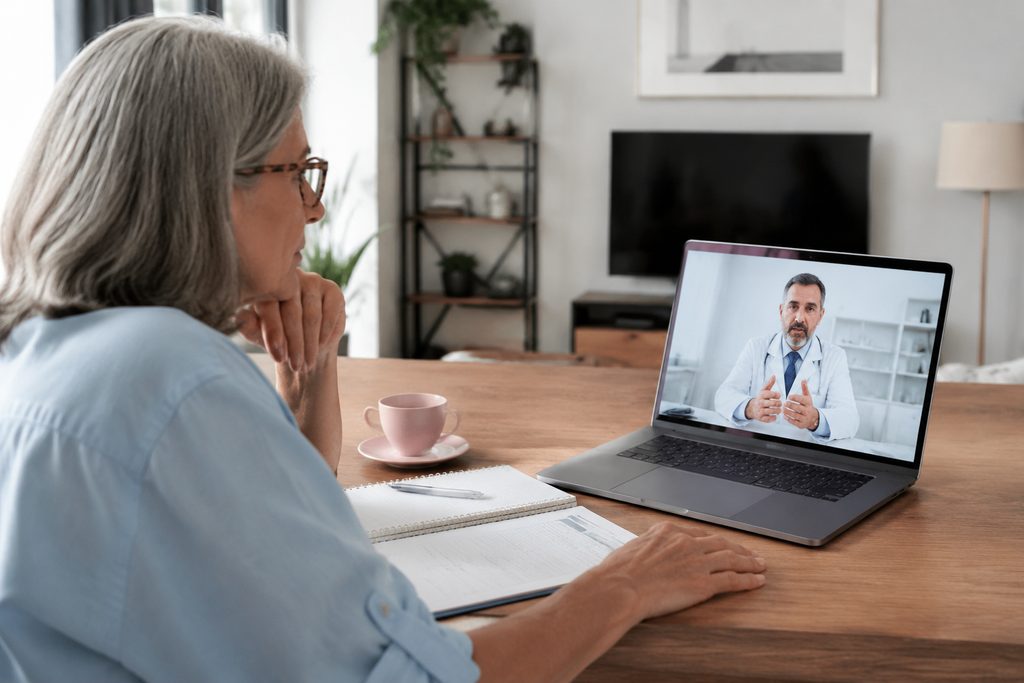
While patients in Canada wait a median 28.6 weeks for orthopedic surgery, surgeons at Beijing Jishuitan Hospital routinely perform over 300 joint replacements per month — with clinical outcomes that match or exceed Western benchmarks. That stark gap explains why a growing number of international patients are asking about a second opinion cost China before they commit to a treatment plan at home. A remote review of your existing scans and records by a Chinese specialist typically costs $300–800, takes about one to two weeks, and can either confirm your current path or open a door you didn’t know existed.
You don’t need to fly to Beijing or Shanghai to get this. The entire process happens online. Let’s walk through it.
How This Actually Works, Step by Step
You send us your medical records. That’s the starting point. We handle the translation into Chinese, route them to the right department at a top-ranked hospital, and coordinate the review. Here’s the sequence in practice:
Step 1 — You gather what you already have. Imaging files (CT, MRI, PET scans in DICOM format), pathology reports, blood work, current medication list, and a short summary of your diagnosis and treatment history. You don’t need to create anything new. If your records are in English, German, French, Arabic, or Russian, our team translates them into medical Chinese.
Step 2 — We match your case to the right specialty. A lung cancer case goes to a thoracic oncology team, not a general oncologist. A complex cardiac case goes to a cardiac surgery department that handles high volumes. This matching step matters more than most patients realize. Chinese hospitals are enormous — the top ones see over 10,000 outpatient visits per day — and the specialist who reviews your case needs to be the right specialist, not just any doctor in the right department.
Step 3 — The specialist reviews everything. This is a written review. The doctor examines your scans, reads your pathology, and considers your treatment history. They write a detailed assessment: whether they agree with your current diagnosis, what they would recommend as next steps, and what treatment options are available in China that might not be offered where you are.
Step 4 — You receive a written report. We translate it back into English. The report includes the specialist’s analysis, treatment suggestions, and a clear statement of whether coming to China for treatment would offer you a meaningful advantage. The written second opinion costs $300–500 and is for reference only — it is not a prescription.
Step 5 — You decide what to do next. Some patients use the report to push for different treatment at home. Others schedule a video consultation to speak directly with the Chinese specialist. And some decide to come to China for treatment. There’s no obligation at any step.
Remote Second Opinion Oncology Shanghai: When It Matters Most
Oncology cases are the most common reason patients request a remote second opinion oncology Shanghai. The reason is straightforward: cancer treatment is changing fast, and Chinese oncology departments handle volumes that most Western centers never see. A single top-tier oncology department in Shanghai may treat more cases of a specific cancer in one year than a regional Western hospital treats in five.
That volume translates into pattern recognition. A thoracic oncologist at a Shanghai hospital who reviews 800 lung cancer cases a year spots things that a general oncologist reviewing 80 cases a year might miss. Not because they’re smarter — because they’ve seen more variations of the disease.
Shanghai is home to several hospitals that rank among China’s top 10 for oncology in the Fudan University specialist reputation rankings. You can explore the full list on our department rankings page, which breaks down 45 specialties by hospital. For oncology specifically, Shanghai’s concentration of expertise is unmatched outside Beijing.
What does a remote oncology review actually catch? Three things, mostly. First, diagnostic confirmation — the Chinese specialist either agrees with your pathology reading or flags a discrepancy. Second, treatment sequencing — whether surgery before chemo or chemo before surgery makes more sense for your specific staging. Third, access to therapies — some targeted therapies and immunotherapies approved in China are not yet available in Europe or North America, and vice versa. A second opinion reveals what your current team might not have mentioned.
A Realistic Timeline
People always underestimate how long the preparation takes. Here’s what a realistic timeline looks like from the day you decide to pursue a remote second opinion:
| Stage | What Happens | Typical Duration |
|---|---|---|
| Days 1–3 | You gather records and request DICOM files from your hospital | 1–3 days |
| Days 3–7 | We translate records into medical Chinese and clarify any gaps | 3–5 days |
| Days 7–14 | Specialist review and written report preparation | 5–10 days |
| Days 14–21 | Translation back to English and delivery to you | 2–3 days |
| Week 3–4 | Optional: video consultation with the specialist | 1–2 weeks scheduling |
| Month 1–2 | If you decide to come to China: S2 visa processing | 2–6 weeks |
The written second opinion itself takes about two weeks end to end. The video consultation adds another one to two weeks for scheduling. And if you decide to pursue treatment in China, the S2 visa — which is the short-stay visa category used for medical treatment and private affairs — typically takes two to six weeks depending on your home country’s Chinese embassy or consulate. Your accompanying family members apply for the same S2 visa.
One thing that surprises people: Chinese public hospitals do not allow overseas patients to pre-book outpatient appointments online. You register and queue on the day of your visit. If you want to lock in a specific specialist and time slot before you fly, that requires going through a hospital’s international department or VIP channel — which costs roughly 1.5 to 2 times the standard rate. This is exactly the kind of coordination we handle.
What Can Go Wrong — and What Happens Then
Let’s be honest about the failure modes, because they exist and you should know them before you pay anything.
Your records are incomplete. This is the most common problem. A pathology report is missing, or the imaging files are corrupted, or the DICOM files from your hospital are locked behind proprietary software. What happens: we tell you exactly what’s missing and ask you to request it. This can add a week or more to the timeline. It’s frustrating, but it’s not a dead end.
The specialist disagrees with your current diagnosis. This is not a failure — it’s the point of a second opinion. But it can be destabilizing. What happens: you now have two conflicting medical opinions. You’ll need to discuss both with your primary doctor and possibly seek a third opinion. We can facilitate a video consultation so you can ask the Chinese specialist direct questions about their reasoning.
The report is more conservative than you hoped. Sometimes the Chinese specialist says, “Your current treatment plan is appropriate. We have nothing different to offer.” That’s a valid outcome. What happens: you’ve spent $300–500 to confirm you’re on the right track. That’s not wasted money — it’s the price of certainty. But you should know it’s a possible outcome before you start.
Scheduling a video consultation takes longer than expected. Top specialists in China are extremely busy. A professor who runs a department and performs surgery three days a week has limited slots for international video calls. What happens: we work with the hospital’s international department to find a slot, but it may take two weeks or more. If the wait becomes unreasonable, we’ll suggest an alternative specialist with comparable expertise.
How to Get a Medical Second Opinion from China: Choosing the Right Format
You can request a specific specialist, and we’ll coordinate through the hospital’s official international department. We cannot guarantee a specific named specialist on a specific date. If the requested specialist is unavailable, we’ll suggest an alternative with comparable expertise from the same department.
This happens. The right response is not to panic or to immediately side with one doctor over the other. Share the written report with your current physician and discuss the differences. If the disagreement is substantial, a video consultation lets you ask the Chinese specialist direct questions about their reasoning. In some cases, a third opinion resolves the conflict.
No. A remote second opinion is a standalone service. Many patients use it to confirm their current treatment plan or to advocate for different treatment at home. Only a small percentage ultimately travel to China for treatment. There is no obligation at any step in the process.
Both cities host multiple hospitals ranked in China’s top 10 across major specialties. Beijing has more top-ranked hospitals overall — 21 in the Fudan Top 100 list, compared to 18 in Shanghai. But for specific specialties, the best department might be in either city. Our matching process focuses on the right department for your diagnosis, not on city preference.
Your Next Step
A remote second opinion is the lowest-cost way to find out whether Chinese medicine has something different to offer your case. It costs less than a single specialist consultation in most Western private systems, and it gives you a documented, expert perspective you can use however you choose.
We’re China Medical Services, a team that connects international patients with 340+ top-ranked Chinese hospitals across 37 cities. We handle translation, specialist matching, hospital coordination, and bilingual support. We don’t practice medicine, and we don’t make treatment promises — we make the connection and let the specialists do their work.
If you’d like to explore whether a Chinese second opinion makes sense for your case, start with a free consultation. We’ll review your situation and tell you honestly whether this path is worth pursuing. Get a free consultation and we’ll guide you from there.
Frequently Asked Questions
Yes. The hospitals used for international patients are JCI-accredited and follow the same international safety standards as top hospitals in the US and Europe. Surgical teams perform high volumes of procedures — often more than their Western counterparts — which studies show leads to better outcomes.
Costs vary by procedure and hospital, but international patients typically save 40-80% compared to US prices — even when factoring in travel and accommodation. A consultation with our team will give you an exact, all-inclusive quote with no hidden fees.
Send us your existing medical reports to get started. We handle everything from hospital selection and appointment scheduling to visa assistance and post-operative recovery planning. Your medical records are reviewed by the specialist before you even book a flight.
For more medical information and treatment options in China, visit chinamedservices.com (China Medical Services).
