Remote Follow-Up After Surgery in China: How It Works, Costs, and What to Expect
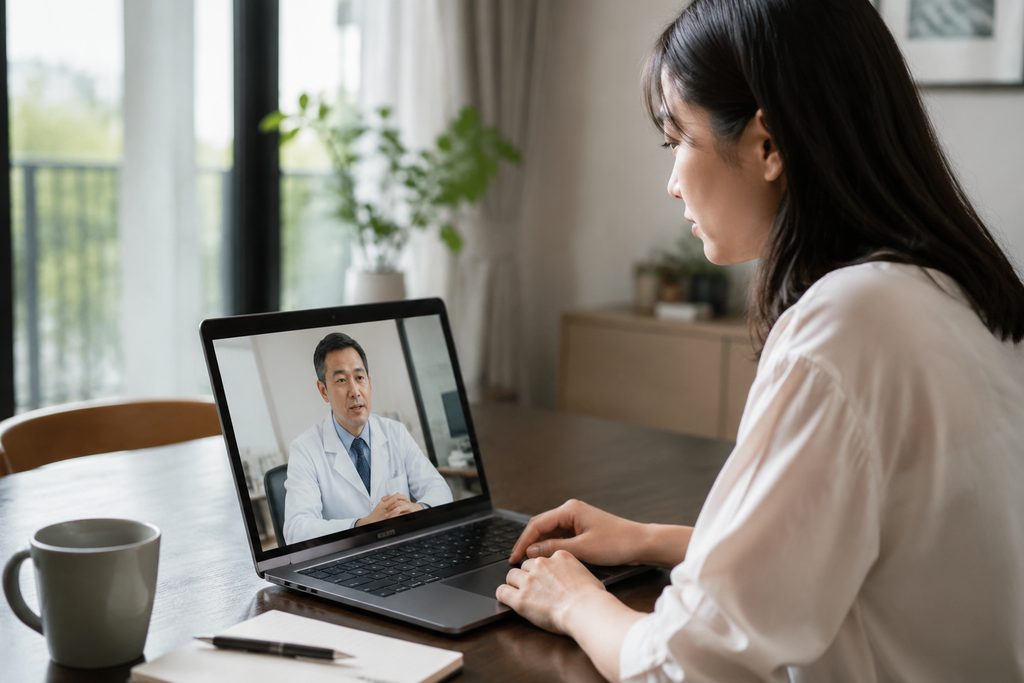
Have you ever worried that traveling abroad for surgery means you’ll be cut off from your medical team the moment you fly home? It’s a fair concern. The good news is that can I do follow-up remotely after surgery in China is no longer a hypothetical question — it’s a standard part of how international patient care is structured at major Chinese hospitals. Our team coordinates remote follow-up for dozens of patients each year, and the systems in place are more mature than most people expect.
Key Takeaways
- Top Chinese hospitals, including those in the Fudan Top 100 and JCI-accredited international departments, routinely offer structured remote follow-up via written second opinions and video consultations.
- Remote follow-up costs range from $100 to $800 per session depending on the specialist tier, with written second opinions starting around $300.
- You will need your complete discharge summary, operative notes, imaging files, and current medication list — in digital form — before any remote follow-up can proceed.
- Remote follow-up is not a substitute for in-person emergency care. If you experience severe pain, fever, wound dehiscence, or suspected complications, seek local medical attention first.
The Problem: Losing Your Surgical Team After You Fly Home
Roughly 14 million people travel internationally for medical care each year, according to Patients Beyond Borders. A significant share undergo surgery — orthopedic procedures, cardiac interventions, oncology resections, reproductive treatments. But surgery is rarely the end of the story. Follow-up imaging, wound checks, medication adjustments, and long-term monitoring are essential. The question is what happens when the patient is 8,000 miles from the operating room.
Most patients assume the answer is simple: they’ll see a local doctor back home. And in many cases, that works. But it’s not always smooth. A surgeon in Chicago or London may not be familiar with the specific technique used in Shanghai or Beijing. Discharge summaries written in Chinese need translation. Imaging formats differ. And the local specialist may hesitate to take over a case they didn’t initiate.
That gap — between the team that operated and the team managing recovery — is exactly where structured remote follow-up programs come in.
Why Remote Follow-Up After Surgery in China Delivers Results
Established Telemedicine Infrastructure at Scale
China’s top-tier hospitals have invested heavily in telemedicine platforms over the past decade. Fuwai Hospital in Beijing, which performs over 14,000 cardiac surgeries annually, runs a national telemedicine network connecting hundreds of partner facilities. Peking Union Medical College Hospital operates a dedicated international medical services department with remote consultation capacity. West China Hospital in Chengdu has a formal telemedicine center that handles follow-up for patients across 20+ provinces and internationally.
This is not a makeshift video call. These are structured platforms with secure data transfer, integrated imaging viewers, and documented consultation workflows. The infrastructure exists because China’s own geography demands it — a patient in Xinjiang or Hainan may be thousands of kilometers from their surgeon, so remote follow-up is a domestic necessity that also serves international patients.
Continuity of Care with the Operating Team
The single biggest advantage of remote follow-up with your Chinese surgical team is continuity. The surgeon who performed your procedure knows exactly what was done — which technique, which implant, which intraoperative findings. That context is impossible to fully transfer to a new provider.
For example, if you had a minimally invasive cardiac valve procedure at Fuwai, the follow-up questions are specific: what does the echocardiogram show at 3 months, how is anticoagulation being managed, are there signs of paravalvular leak. Your operating team can interpret those results in context. A local cardiologist seeing you for the first time cannot.
Cost Efficiency Without Compromise
Remote follow-up is dramatically cheaper than returning to China for every checkup. A round-trip flight from the US or Europe to Beijing costs $1,200 to $2,500 on its own. Add accommodation, local transport, and time off work, and an in-person follow-up visit easily exceeds $4,000. A remote video consultation with the same specialist typically costs $100 to $800. That’s a 80-95% reduction in follow-up costs.
And the cost of telemedicine follow-up after treatment abroad is not just about the consultation fee. It’s about avoiding unnecessary travel, catching complications early before they become expensive emergencies, and getting medication adjustments without a transcontinental flight.
How Remote Follow-Up Actually Works for International Patients
Before you leave China after surgery, request a complete discharge package. This should include the discharge summary, operative report, pathology results if applicable, imaging CDs or files, and a medication list. Ask for these in both Chinese and English if possible — many international departments provide bilingual documentation automatically.
Once home, scan everything into PDF format. Imaging should be exported as DICOM files, not just JPEG screenshots. If you’re unsure how to do this, the hospital’s international department can often send files directly to the remote consultation platform.
Step 2: Choose Your Follow-Up Format
There are three common formats for remote follow-up care medical tourism China patients use:
- Written second opinion: You upload your records and specific questions. The specialist reviews everything and provides a written analysis with recommendations. Cost: $300–500. Turnaround: typically 5–10 business days.
- Video consultation: A live session with the specialist. You can discuss symptoms, show wound photos, ask questions. Cost: $100–300 for standard international department physicians, $500–800 for top-tier specialists.
- Multidisciplinary team (MDT) review: For complex cases — oncology follow-up after tumor resection, for example — multiple specialists review together. Cost: $1,500–2,000. This is appropriate when your case spans surgical oncology, medical oncology, and radiology.
Step 3: Schedule Through the International Department
Do not try to book directly through the hospital’s standard appointment system. Public hospital outpatient scheduling in China is designed for domestic patients and requires in-person registration. International patients use the hospital’s international medical services department or VIP channel, which handles remote follow-up scheduling, translation, and documentation.
Our team at China Medical Services coordinates this process for patients who prefer not to navigate the Chinese-language systems themselves. We handle record translation, appointment scheduling, and technical setup.
Step 4: Prepare for the Consultation
Write down your questions in advance. A productive remote follow-up session covers: current symptoms, medication side effects, activity restrictions, warning signs to watch for, and when the next imaging or lab work is needed. If you have local test results — blood work, X-rays, ultrasounds — upload them before the call so the specialist can review them in real time.
Which Hospitals Offer the Strongest Remote Follow-Up Programs
Not all Chinese hospitals are equal when it comes to international remote follow-up. The best hospitals in China with remote follow-up programs tend to share three characteristics: a dedicated international medical services department, JCI accreditation or equivalent international standards, and a history of treating foreign patients.
Among the 340+ top-ranked hospitals in our database, the ones that consistently perform well for remote follow-up include:
| Hospital | City | Remote Follow-Up Strength | Typical Video Consultation Cost |
|---|---|---|---|
| Peking Union Medical College Hospital | Beijing | Comprehensive international department, bilingual staff, structured telemedicine platform | $300–800 |
| Fuwai Hospital | Beijing | National telemedicine network, cardiac surgery follow-up protocols | $300–800 |
| Zhongshan Hospital Fudan University | Shanghai | Strong international patient center, oncology and cardiac follow-up | $200–600 |
| West China Hospital | Chengdu | Dedicated telemedicine center, extensive remote consultation experience | $200–500 |
| United Family Healthcare (private) | Beijing, Shanghai, Guangzhou | English-speaking staff, JCI-accredited, direct insurance billing, streamlined remote follow-up | $100–300 |
Private international hospitals like United Family and Jiahui offer the smoothest remote follow-up experience for English-speaking patients, with lower consultation fees but fewer ultra-specialized surgical programs. Public hospital international departments offer deeper clinical expertise but sometimes less polished administrative processes. The right choice depends on your procedure and your priorities.
For specialty-specific follow-up — cardiac surgery, oncology, orthopedics — the department rankings are a useful reference. A hospital ranked in the Fudan specialty top 10 for your procedure will have the clinical depth to answer nuanced follow-up questions.
What Remote Follow-Up Can and Cannot Do
Setting realistic expectations is essential. Remote follow-up works well for routine post-operative monitoring: reviewing imaging, adjusting medication, answering questions about recovery milestones, and catching early signs of complications that can be managed conservatively.
But it has clear limits. A video call cannot palpate a wound, cannot auscultate a heart murmur, cannot perform a physical examination. If you develop concerning symptoms — fever above 38.5°C, wound redness or drainage, chest pain, shortness of breath, severe swelling — you need to see a local physician immediately. Remote follow-up is a complement to local care, not a replacement for it.
And that’s worth stating plainly: the best model for most international patients is a hybrid. Your Chinese surgical team provides remote guidance and interprets results in the context of your procedure. Your local physician handles hands-on care and emergency response. Neither replaces the other.
Practical Considerations: Documentation, Timing, and Payment
Before you leave China, confirm these details with the hospital’s international department:
- Discharge documentation: Request bilingual discharge summary and operative report. Ask specifically for DICOM-format imaging files.
- Contact protocol: Get the direct email and WeChat contact for the international department coordinator. Confirm the preferred platform for video consultations — many Chinese hospitals use proprietary platforms that may require a VPN or specific software from outside China.
- Payment method: Remote consultations are typically paid by international wire transfer or credit card through the hospital’s international billing office. Some private hospitals accept direct insurance billing.
- Follow-up schedule: Ask your surgeon to specify the recommended follow-up timeline before you leave — when you need imaging, when you need lab work, when the next remote consultation should occur.
Practical tip: Schedule your first remote follow-up before you leave China. That locks in the appointment and ensures the international department has your complete records on file. It’s much harder to coordinate from home after the fact.
Regarding the cost of virtual follow-up consultation after surgery in China: the figures above reflect standard pricing at top-tier public hospital international departments and JCI-accredited private hospitals. Final quotes vary by hospital, specialist seniority, and case complexity. Some hospitals offer package pricing for a series of follow-up consultations — worth asking about if you anticipate needing multiple sessions.
Frequently Asked Questions
Do I need to return to China for my first post-operative checkup?
Not necessarily. Many procedures — particularly minimally invasive surgeries and uncomplicated recoveries — can be followed remotely from the start. Your surgeon will tell you before discharge whether an in-person follow-up is required. For complex cases or when complications are suspected, an in-person visit may be unavoidable.
Will my insurance cover remote follow-up consultations?
It depends on your policy. Some international health insurance plans cover telemedicine consultations, including cross-border video follow-ups. Others do not. Contact your insurer before scheduling and ask specifically about coverage for international telemedicine and remote consultations. Private hospitals like United Family often handle direct billing, which simplifies the process if your insurer is in their network.
What if I have an emergency after returning home?
Seek local emergency care immediately. Do not wait for a remote consultation. Once you are stable, contact your Chinese surgical team with the local physician’s findings. The remote follow-up can then focus on coordinating care between your local providers and the operating team — reviewing imaging, adjusting the treatment plan, and advising on whether a return to China is necessary.
How do language barriers affect remote follow-up?
At top-tier international departments, this is a solved problem. Bilingual coordinators join the video call or translate written correspondence. If your hospital’s international department does not provide interpretation, our team handles medical translation as part of the coordination service. The key is confirming the language arrangement before the consultation, not during it.
Can I do remote follow-up with a different specialist than my original surgeon?
Yes, but it’s not ideal. A different specialist can review your records and provide a second opinion, but they lack the intraoperative context of your original surgeon. If your original surgeon is unavailable, ask them to brief the covering specialist on your case before the remote consultation.
Your Next Step
Remote follow-up after surgery in China is a practical, well-established option — not a compromise. The systems are in place, the costs are reasonable, and the clinical continuity is valuable. If you’re planning surgery in China or have already returned home and need to arrange follow-up, start by organizing your records and clarifying your surgeon’s recommended follow-up schedule. Our team at China Medical Services helps international patients coordinate remote consultations, translate medical records, and navigate hospital international departments. We are not a hospital and do not provide medical advice — we connect you with the specialists who do. When you’re ready, a free consultation is the simplest way to map out your follow-up plan.
Remote follow-up works best when it’s planned, not improvised. The patients who have the smoothest recoveries are the ones who leave China with a clear follow-up roadmap in hand. That’s a conversation worth having before you board the plane.
For more medical information and treatment options in China, visit chinamedservices.com (China Medical Services).
