Return-Home: Staying Connected to China for Ongoing Care
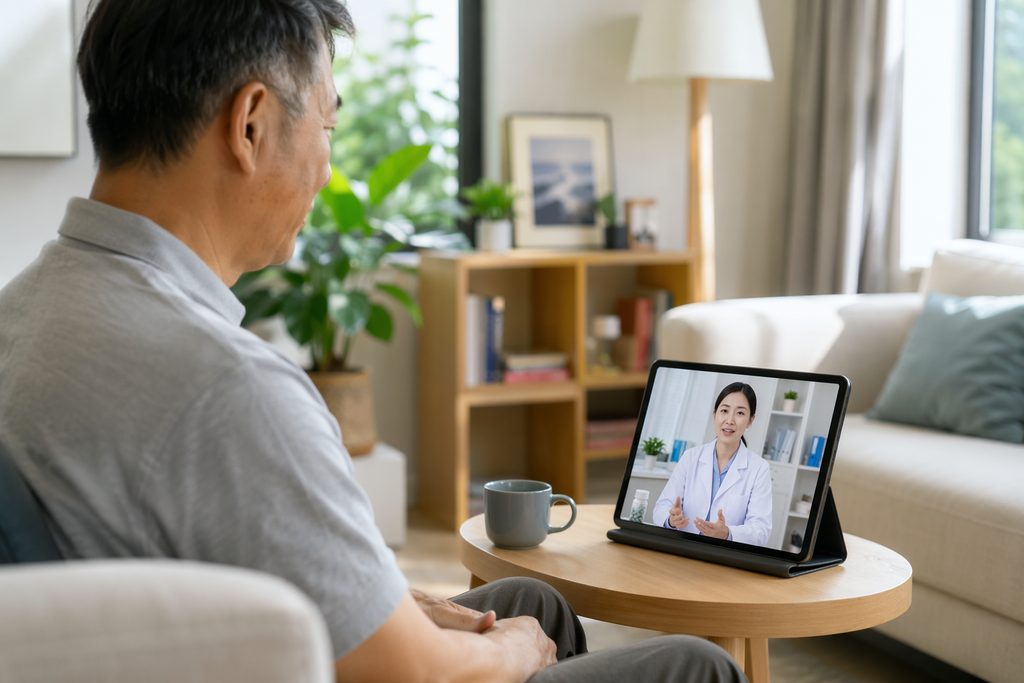
When international patients ask us about heart surgery cost China vs India, the conversation rarely ends at the price tag. The real question underneath is simpler: what happens after the operation? How do you fly home, recover, and keep the same surgical team in the loop six months later? Staying connected to China after treatment is not a bonus feature. For many patients, it determines whether the surgery succeeds in the long run.
We coordinate follow-up care for patients who have returned to the United States, the UK, the Gulf states, and Southeast Asia. The model is straightforward. You keep your records with the treating hospital. You schedule periodic video reviews. You send updated imaging or lab work. The Chinese team reads it, compares it to your baseline, and tells you what changed. This is not a luxury service. It is basic continuity of care, and it is the piece most medical travelers forget to plan for.
Let us walk through how it actually works, where the pitfalls are, and what a realistic timeline looks like.
How This Actually Works, Step by Step
Before you leave China, the discharge team gives you a folder: operative notes, discharge summary, medication list, and imaging on a CD or USB drive. That folder is your lifeline. We ask patients to send us a scanned copy before their flight. The hospital keeps the originals in their electronic medical record system, but having a personal copy means you are never waiting on a fax machine in an emergency.
Once you are home, the follow-up rhythm depends on the procedure. For cardiac surgery, the first remote check usually happens at week two or three. You upload a photo of your incision site, a blood pressure log, and any new lab results. The Chinese team reviews them within 48 to 72 hours. If something looks off — a wound that is not closing, a heart rhythm that shifted — they tell you to see a local cardiologist immediately. That local doctor then communicates with the Chinese team through us, or directly if both parties agree.
For oncology patients, the cadence is different. You complete chemotherapy or radiation in China, return home, and your local oncologist takes over the next cycle. The Chinese oncologist stays involved as a consultant. Every three months, you send updated CT or PET scans. The Chinese team compares them against the baseline imaging from your treatment period. This second read catches things that a single pair of eyes might miss.
The sequence is always the same: you send records, the team reviews, a written summary comes back, and a video call is scheduled if you need to discuss anything face to face. No abstractions here. This is a defined workflow.
What “Staying Connected” Actually Costs
Patients researching heart surgery cost China vs India often assume that lower surgical fees mean lower follow-up fees too. That is not always true. China’s follow-up pricing is competitive, but the structure differs from India’s. In India, many hospitals bundle a few postoperative video calls into the surgical package. In China, the surgery and the follow-up are billed separately, especially at top-tier public hospitals.
Here is a realistic cost breakdown for follow-up care after returning home:
| Service | Typical Range (USD) | Notes |
|---|---|---|
| Written second opinion on new imaging | $300–500 | For reference only, not a prescription |
| Video consultation with treating specialist | $100–300 | Public hospital international department |
| Top-specialist video consultation | $500–800 | Senior professor, longer slot |
| Multidisciplinary team (MDT) video review | $1,500–2,000 | Multiple departments, complex cases |
| Bilingual medical companion (if you return to China) | from $300/day | Half-day or full-day |
These figures are ranges. Final pricing varies by hospital and case complexity. But the key difference from India is this: Chinese hospitals rarely bundle follow-up into the surgical quote. You pay for each consultation as you use it. That can feel fragmented, but it also means you are not paying upfront for services you may never need.
A Realistic Timeline
Staying connected to a Chinese medical team after returning home is not instant. Here is what patients actually experience, with the waiting steps most people forget.
| Stage | What Happens | Realistic Duration |
|---|---|---|
| Week 1 | You return home and settle. Send your discharge folder to us for translation and digitization. | 3–5 days |
| Week 2 | We submit your records to the treating department for a follow-up review slot. The hospital confirms a window. | 5–10 days |
| Week 3–4 | First remote follow-up: written review or video call. The team checks wound healing, medication tolerance, early complications. | 1–2 weeks from submission |
| Month 2–3 | You complete local lab work and send results. The Chinese team compares against your discharge baseline. | Ongoing, every 4–8 weeks |
| Month 6 | First major imaging follow-up (CT, MRI, or echo depending on procedure). Second read by the Chinese team. | 1–2 weeks after upload |
| Month 12 | Annual review. Decision point: continue remote follow-up, or plan a return visit to China for in-person evaluation. | Varies by case |
The waiting step people forget is document translation. If your local lab results are not in English or Chinese, someone has to translate them before the Chinese team can review. That adds two to three days. Another forgotten step is appointment lead time. Top specialists at top-ranked hospitals book video slots one to two weeks out. You cannot email a professor at Fuwai Hospital on Monday and expect a call on Tuesday. It does not work that way.
What Can Go Wrong — and What Happens Then
The honest failure modes matter here. First, records get lost. A patient returns home, unpacks, and six weeks later cannot find the CD with his CT scans. The hospital has the originals, but retrieving them from the medical records department takes time and a signed authorization. We handle that retrieval, but it can add ten days. Keep your own copies. Store them in two places.
Second, local doctors sometimes refuse to communicate with the Chinese team. This happens more often than patients expect. A cardiologist in Texas may not want to coordinate with a surgeon in Beijing. The solution is not to force it. We provide a written summary from the Chinese team that you can hand to your local doctor. That document stands on its own. If the local doctor still refuses, you find another local doctor. Continuity of care does not require friendship between physicians. It requires clear records.
Third, time zones. A video call at 9 a.m. Beijing time is 8 p.m. the previous day in New York. Scheduling requires flexibility. Most Chinese hospital international departments offer evening slots for overseas patients, but not always. If your specialist only has morning slots, you take a late-night call. That is the trade-off.
Fourth, the Chinese team may recommend a return visit. This is not a failure of remote care. Some issues — a suspicious shadow on a scan, a valve that looks different under stress — require hands-on evaluation. When that happens, we coordinate the return trip: visa documents, hospital registration, and a bilingual medical companion for the visit. The remote follow-up is not a replacement for in-person care. It is a bridge between visits.
How to Find a Doctor in China for Second Opinion — and Keep That Relationship Alive
Many patients start their China journey not with surgery, but with a second opinion. The search phrase how to find a doctor in China for second opinion reflects a real need: you have a diagnosis at home, you want a fresh set of eyes, and you do not know where to start.
The process is simpler than most people assume. You send your existing records — imaging, pathology reports, lab work, and a summary of your current treatment plan. We route those to the relevant specialty at a hospital that matches your condition. For cardiac cases, that might be Fuwai Hospital, which performs over 14,000 cardiac surgeries annually. For oncology, it might be a hospital ranked among China’s top 10 for oncology in the Fudan specialty reputation rankings. The team reviews your file and returns a written analysis: what they agree with, what they would do differently, and what they recommend as next steps.
That written opinion costs $300–500. It is for reference only — not a prescription. But it does something more valuable than giving you an answer. It establishes a relationship. When you later decide to pursue treatment in China, that same team already knows your case. The follow-up connection starts on day one, not after discharge.
And if you are comparing heart surgery cost China vs India, the second opinion is where the real comparison happens. India’s top cardiac centers quote competitive prices. China’s top centers quote competitive prices. The deciding factor is rarely the surgical fee. It is the quality of the follow-up system, the clarity of the records, and whether you can reach your surgeon six months later. We have seen patients choose India for a lower upfront quote and then struggle to get a response from the surgical team after returning home. We have also seen Chinese hospitals that are slow to respond. Neither country has a monopoly on good follow-up. The difference is whether you plan for it in advance.
Practical Considerations: Records, Visas, Payment, and Language
Records are the foundation. Before you leave China, request a complete copy of your medical file in English. Most top hospitals provide English discharge summaries, but operative notes and imaging reports may be in Chinese. We translate those for you. Without translated records, your local doctor at home is flying blind.
Visa category matters for return visits. If you need to come back to China for a follow-up procedure or in-person evaluation, you will apply for an S2 visa, not an M visa. The S2 is the short-stay category used for medical treatment and private affairs. Bring your hospital invitation letter and supporting documents. The M visa is for commercial and trade activities — it has nothing to do with medical travel. Using the wrong visa category can delay your return by weeks.
Payment for remote follow-up is typically made by bank transfer or international card, depending on the hospital. Public hospitals require prepayment. Private international hospitals may accept direct insurance billing. If you have insurance, check whether remote consultations are covered. Many international policies cover in-person treatment in China but not video follow-ups. That gap is worth knowing before you commit.
Language is the quiet barrier. Your local doctor at home may not read Chinese. Your Chinese specialist may not feel comfortable writing detailed clinical notes in English without support. We bridge that gap with translation and interpretation. The goal is not to replace your local doctor. It is to give both sides the same information in a language each can act on.
Frequently Asked Questions
Yes. Most top Chinese hospitals with international departments offer remote follow-up through written reviews and video consultations. You send updated records, the team reviews them, and you receive a written summary. The relationship continues as long as you keep scheduling follow-ups.
China’s top oncology centers are ranked among the best in Asia by the Fudan specialty reputation rankings, and many are JCI-accredited. The quality of treatment is high. But remote follow-up depends on the hospital’s international department, not just the oncology department. Some hospitals have excellent oncologists but weak international coordination. That is where a service like ours fills the gap.
The upfront surgical fees are broadly similar at top centers in both countries, though China’s cardiac centers like Fuwai Hospital carry global recognition for volume and outcomes. India often bundles a few follow-up calls into the package. China bills follow-up separately. Over a two-year period, the total cost is often comparable. The bigger variable is whether you can actually reach your surgeon when you need to.
That happens. The workaround is a clear written summary from the Chinese team that your local doctor can review independently. If that still does not work, you find another local doctor. Continuity of care does not require two physicians to like each other. It requires complete records and a patient who insists on coordination.
Yes. Many patients return to China for an annual checkup at a hospital in Shanghai or Beijing and have the results reviewed by the same team that performed their surgery. The checkup package is booked through the hospital’s international department, and the follow-up review is scheduled separately. We coordinate both.
Your Next Step
Staying connected to your Chinese medical team after returning home is not automatic. It requires records, translation, scheduling, and a clear line of communication. But when it works, it gives you something rare: continuity of care across borders. That is the difference between a successful surgery and a successful recovery.
We are China Medical Services. We help international patients match with top-ranked Chinese hospitals, coordinate appointments, and maintain follow-up care after returning home. We do not practice medicine, and we do not promise outcomes. What we do is handle the logistics so you can focus on recovery. If you are weighing heart surgery cost China vs India, or if you have already been treated in China and need to stay connected to your team, start with a free consultation. Tell us where you are, what you need, and we will map the path forward.
That is the core message: the surgery ends, but the relationship should not. Plan for the follow-up before you book the operation. Your future self will thank you.
For more medical information and treatment options in China, visit chinamedservices.com (China Medical Services).
