Robotic Lung Surgery in Shanghai: Chest Team Guide for Foreigners
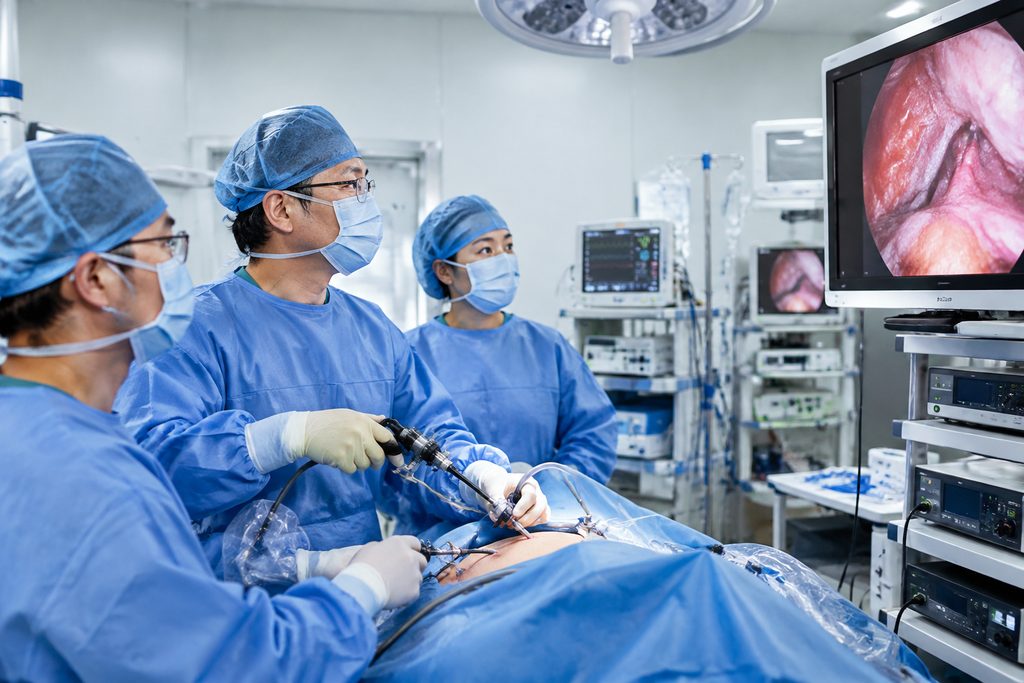
You’ve probably heard that major surgery in China means compromising on quality. The reality runs the other way. For robotic lung surgery in Shanghai, the chest teams at the city’s top hospitals have performed thousands of minimally invasive resections, and the price tag is often one-fifth of what a U.S. hospital charges. That gap is not a discount on quality — it’s a difference in how the system is funded.
Still, the honest version is messier than a headline. Access is not automatic, English-language navigation is limited, and the public system runs on rules that surprise most Western patients. This guide walks through what the surgery actually involves, who performs it well, what it costs, and how to get in the door without wasting a trip.
Robotic Lung Surgery in Shanghai: The Short Answer
Shanghai’s leading thoracic centers — including Shanghai Chest Hospital and Zhongshan Hospital, Fudan University — offer robot-assisted lobectomy and segmentectomy for early-stage lung cancer at roughly $15,000 to $28,000 for the surgical episode, versus $40,000 to $80,000 or more in the United States. The da Vinci Xi and domestic systems like the Toumai robot are both in active use.
But you cannot simply book a surgeon online and fly over. Public hospital outpatient registration happens on the day, and surgery is scheduled only after an in-person consultation. To lock in a date in advance, you go through the hospital’s international or VIP channel — which costs more and still depends on the surgeon’s assessment.
Who This Is Right For — and Who It Isn’t
Robotic thoracic surgery is not a fit for everyone, and a good program will tell you so before you book a flight.
Typically a reasonable candidate if you:
- Have a confirmed or strongly suspected stage I–IIIA non-small cell lung cancer, or a benign nodule requiring resection
- Have a tumor size and location your surgeon judges resectable by minimally invasive approach
- Can travel and tolerate general anesthesia and single-lung ventilation
- Have imaging and pathology reports that can be translated for remote review
- Are willing to complete a pre-operative workup in China, or to have it done at home and re-verified
Probably not the right path if you:
- Have extensive mediastinal invasion or stage IV disease where surgery offers no clear benefit
- Have severe cardiac or pulmonary comorbidity that makes any thoracic surgery high-risk
- Need urgent decompression or an emergency procedure — the logistics cannot move that fast
- Cannot obtain clear pathology or imaging records, since no responsible surgeon operates blind
- Are seeking a guaranteed cure. No surgeon anywhere can promise that, and any who does is a red flag
The Options, Compared
Patients weighing robotic lung surgery in Shanghai are usually comparing it against the same operation at home, or against a video-assisted thoracoscopic (VATS) approach. Here is how the realistic paths stack up.
| Path | Typical Surgical Cost | Wait Time to Surgery | Language Support | Best For |
|---|---|---|---|---|
| Shanghai top public hospital, international/VIP channel | $15,000–$28,000 | 2–6 weeks after records accepted | English-speaking staff at international dept. | Patients wanting top-tier volume and lower cost |
| Shanghai public hospital, standard channel | $8,000–$16,000 | Requires in-person registration first | Limited English; interpreter needed | Patients with a Chinese-speaking companion |
| Private international hospital in Shanghai | $35,000–$60,000 | 1–3 weeks | Full English, direct insurance billing | Patients prioritizing comfort and insurance |
| U.S. academic medical center | $40,000–$80,000+ | 3–8 weeks | English native | Patients with U.S. insurance coverage |
| VATS (non-robotic) in Shanghai | $7,000–$14,000 | Similar to robotic | Same as above | Smaller resections, tighter budgets |
If cost is the deciding factor and your case is straightforward, the standard public channel is the cheapest route — provided you have someone who speaks Mandarin. If you want predictability, English communication, and insurance handling, the private international hospitals are worth the premium. The robotic-versus-VATS choice is a clinical one your surgeon should make with you, not a marketing decision.
Why Shanghai’s Chest Teams Are Worth the Trip
Shanghai Chest Hospital is a national referral center for thoracic disease, and its surgical volume for lung resections is among the highest in the country. Volume matters in surgery. Teams that perform hundreds of lobectomies a year develop pattern recognition that lower-volume centers simply cannot replicate.
Zhongshan Hospital, Fudan University, is consistently ranked among China’s top hospitals overall and appears in the Fudan specialist reputation rankings for thoracic and respiratory surgery. These are not boutique operations — they are large, busy departments running full OR schedules.
What does that mean for you? You get a team that has seen your variant of the disease many times before. You also get a system that moves quickly once you are inside it, and slowly until you are. The bottleneck is almost never surgical skill. It is scheduling, records, and language.
Robotic platforms in use include the da Vinci Xi and, increasingly, China’s domestic Toumai system. Both are established for pulmonary resection. Which platform your surgeon prefers is a technical detail — ask about it during the video consultation, and be wary of any answer that dodges the question.
What It Costs and How Long It Takes
Costs below are for the surgical episode and vary by hospital, tumor complexity, length of ICU stay, and whether you use the international channel. They are estimates, not quotes.
| Item | Typical Range (USD) |
|---|---|
| Pre-operative workup (CT, PET, pulmonary function, labs) | $800–$2,500 |
| Robotic lobectomy / segmentectomy (surgery + hospital stay) | $15,000–$28,000 |
| ICU stay, if required | $1,000–$3,000 |
| Pathology and molecular testing | $500–$2,000 |
| Written second opinion (before travel) | $300–$500 |
| Top-specialist video consultation | $500–$800 |
| Bilingual medical companion (per day) | from $300 |
| Hospital appointment coordination | from $300 |
Airfare, accommodation, and meals are separate. A realistic total for a self-paying patient using the international channel, including a two-week stay, lands somewhere between $25,000 and $40,000. Compare that with a U.S. robotic lobectomy billed at $60,000 to $120,000 depending on the hospital and payer.
Timeline, week by week:
- Weeks 1–2: Records translated, written second opinion or video consultation completed, candidacy confirmed
- Weeks 2–4: Hospital and surgeon selected, appointment coordinated, S2 visa application submitted with hospital documentation
- Week 4–6: Travel to Shanghai, in-person consultation, pre-operative workup, surgery scheduled
- Post-op days 3–7: Typical discharge window for uncomplicated robotic lobectomy
- Weeks 2–4 after surgery: Follow-up imaging, clearance to fly, return home with records in English
Every one of those windows can stretch. Complications, surgeon availability, and hospital scheduling all introduce delay. Plan for flexibility, not a fixed return date.
Practical Considerations: Visas, Records, and Payment
The visa point trips up more patients than anything else. Foreigners coming to China for medical treatment apply for the S2 visa, annotated for medical purposes. Stays beyond 180 days require the S1. Accompanying family members also apply under S2. The M visa is for commercial and trade activity and has nothing to do with medical care — if anyone tells you otherwise, they are wrong. Requirements shift, so confirm current documentation with the nearest Chinese embassy or consulate and with the hospital’s international office.
Records are the second hurdle. You will need imaging on disc or in DICOM format, pathology slides or blocks if a biopsy was done, operative notes from any prior surgery, and a current medication list. Certified English-to-Chinese translation is usually required for the clinical review. Without complete records, no serious surgeon will schedule you.
Payment works differently than in the West. Chinese public hospitals require prepayment; you settle the bill, then seek reimbursement from your insurer afterward. Private international hospitals often bill insurance directly, which is a meaningful advantage if you carry international coverage. Bring a payment method that works in China — international credit cards are accepted at international departments, less so at standard counters.
Plan your follow-up before you leave. Ask for your operative report, pathology report, and discharge summary in English, plus imaging on disc. Your oncologist at home will need all of it, and reconstructing it later is painful.
Frequently Asked Questions
Not through the standard public channel. Public hospital outpatient registration happens on the day of the visit, and surgery is only scheduled after an in-person consultation. To secure a date in advance, you go through the hospital’s international or VIP department, which offers English support at roughly 1.5 to 2 times the standard price. Even then, the surgeon must assess you before confirming.
The surgical fee is genuinely lower — often one-fifth to one-tenth of U.S. charges for equivalent procedures. But the total trip cost includes airfare, accommodation, translation, companion services, and the possibility of a longer stay if recovery is slow. Budget the full picture, not just the OR bill. Prices vary by hospital and case complexity, so any figure you see is a range, not a quote.
This is the question worth asking before you book. Arrange your follow-up oncologist and thoracic surgeon at home in advance, and confirm they will accept a patient who had surgery abroad. Get complete records in English before you leave China. If a complication occurs mid-recovery while you are still in Shanghai, the hospital that operated is your first point of contact — which is one argument for staying in the city for two to four weeks after discharge rather than flying home immediately.
Your Next Step
The core message is simple: Shanghai’s chest teams are genuinely strong, the cost advantage is real, and the barrier is navigation rather than quality. Getting from a CT scan on your laptop to a scheduled operation takes records, a visa, and someone who knows how the system actually works.
We are China Medical Services. We are not a hospital and we do not diagnose or treat anyone. We connect international patients with top-ranked hospitals across China, coordinate appointments through official international departments, and provide bilingual companions who handle registration, queuing, payment, and translation on the ground. If you want to understand your options before committing to anything, start with a free consultation — no pressure, and no obligation to travel.
This article is for general information only and is not medical advice. Treatment decisions should be made with a qualified physician who has reviewed your individual case. Costs, wait times, and visa requirements are subject to change.
For more medical information and treatment options in China, visit chinamedservices.com (China Medical Services).
