Robotic Spine Surgery in China: Costs, Top Hospitals, and How to Book
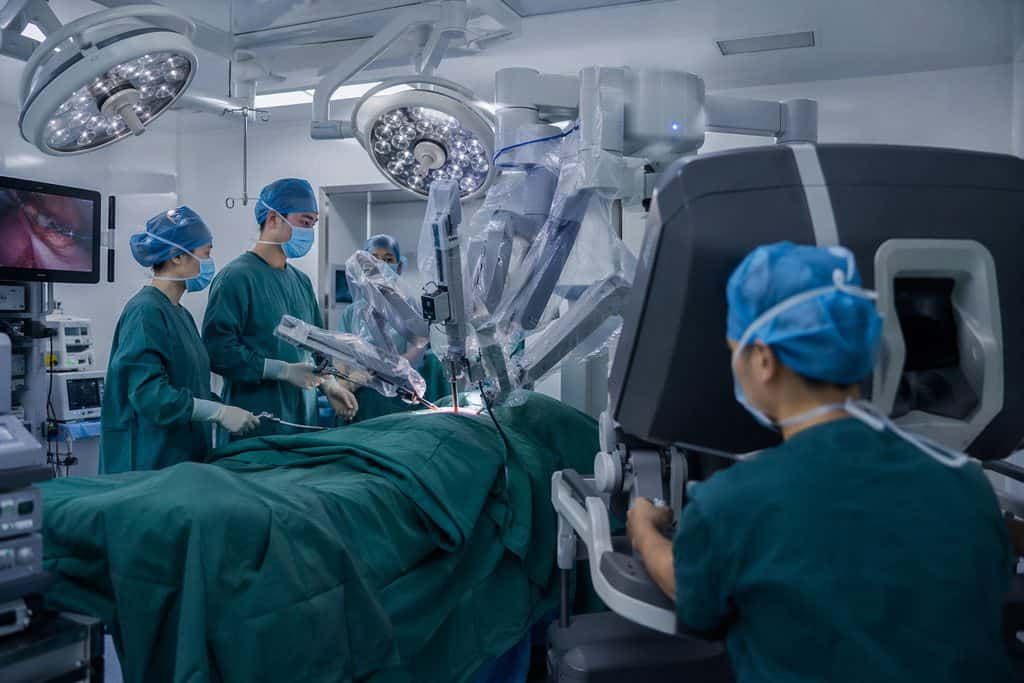
When 47-year-old Daniel from Manchester heard the words “spinal fusion,” his first thought was the recovery. Six months off work. His second thought was the bill. A quote from a private London hospital came in at £38,000. Then a colleague mentioned something that sounded almost too good to be true: the same procedure, done robotically, at a top-tier hospital in Shanghai, for a fraction of that. Daniel’s question was simple: is robotic spine surgery available in China? The short answer is yes. The longer answer involves understanding what that actually means, which systems are in use, and what the real numbers look like.
How This Actually Works, Step by Step
You don’t just show up in Beijing and get surgery the next week. The process has a rhythm, and knowing it ahead of time saves you months of frustration.
First, you gather your existing medical records. MRI scans, CT images, X-rays, neurologist notes, pain management history — everything. These need to be translated into Chinese for review by a hospital’s international department. Most top hospitals have dedicated teams for this, but the translation step alone can take three to five days.
Next, a spine surgeon reviews your case remotely. Many hospitals offer a written second opinion for between $300 and $500. You send your images via secure upload, the surgical team reviews them, and you receive a written analysis with a proposed surgical plan. This is not a prescription. It’s a clinical assessment that tells you whether you’re even a candidate for robotic spine surgery in the first place.
If the surgeon says yes, you move to a video consultation. This costs between $100 and $300 for a standard international department consult, or $500 to $800 if you want a top-specialist video consultation with the actual surgeon who would operate. You discuss symptoms, goals, and the recommended approach — decompression, fusion, disc replacement — and you get a realistic picture of what’s possible.
Only after that do you plan travel. You’ll need an S2 visa for medical treatment, which requires an invitation letter and supporting documents from the hospital. Your family member traveling with you applies for the same S2 category. Visa processing typically takes one to two weeks once documents are in order.
Is Robotic Spine Surgery Available in China? The Systems and Where They Are
Yes, and it’s not a single system. China’s top orthopedic and neurosurgery departments have adopted multiple robotic platforms over the past decade. The two most common are the Mazor X (now Mazor X Stealth Edition, from Medtronic) and the TiRobot, a Chinese-developed orthopedic robot used widely in spinal and trauma procedures. Some hospitals also use the Globus ExcelsiusGPS and the ROSA Spine system.
The Mazor X is the name most Western patients recognize. It’s used for pedicle screw placement in fusion surgeries, and its accuracy data is well-published. Multiple hospitals in Shanghai, Beijing, and Guangzhou have installed Mazor X systems in their orthopedic and neurosurgery departments. The TiRobot, developed by Tinavi Medical Technologies, is less familiar to Western patients but has been used in tens of thousands of procedures across China since its 2016 approval.
What does “robotic” actually mean here? The robot does not perform the surgery autonomously. The surgeon plans the screw trajectories on a 3D model of your spine, and the robotic arm guides the instruments to the precise pre-planned position. The surgeon still does the decompression, the disc work, and the actual fusion. The robot reduces screw misplacement rates — studies show accuracy rates above 98% for robotic-assisted pedicle screw placement, versus around 92-94% for freehand techniques in some series.
What Robotic Spine Surgery Cost in China Actually Looks Like
Let’s talk numbers, because that’s what most people search for when they type “robotic spine surgery cost China.” The honest answer is that prices vary significantly by hospital tier, city, and case complexity. But the range is consistently far below Western prices.
A single-level lumbar fusion with robotic assistance at a top public hospital’s international department in Beijing or Shanghai typically runs between $18,000 and $35,000. That includes the surgery, the robotic system fee, hospital stay, and standard postoperative care. A two-level fusion might range from $28,000 to $45,000. Complex multi-level reconstructions or revision surgeries can push higher.
Compare that to the United States, where a single-level robotic-assisted lumbar fusion commonly bills between $80,000 and $150,000 before insurance. In the UK, private-pay patients often see quotes from £30,000 to £60,000. Even with travel costs, accommodation, and visa fees, the math favors China for self-pay patients.
| Procedure | China (International Dept) | United States | United Kingdom (Private) |
|---|---|---|---|
| Single-level robotic lumbar fusion | $18,000 – $35,000 | $80,000 – $150,000 | £30,000 – £50,000 |
| Two-level robotic lumbar fusion | $28,000 – $45,000 | $120,000 – $200,000 | £45,000 – £65,000 |
| Robotic-assisted disc replacement | $20,000 – $38,000 | $70,000 – $120,000 | £28,000 – £45,000 |
Prices vary by hospital and case complexity. The figures above reflect international department pricing at public hospitals, which is typically 1.5 to 2 times standard domestic rates but includes English-speaking coordination and shorter scheduling lead times.
How much does robotic back surgery cost abroad? In Thailand, a single-level fusion runs $25,000 to $40,000. In South Korea, $30,000 to $50,000. In Germany, €25,000 to €45,000. China sits at the lower end of the international range while offering some of the highest surgical volumes anywhere.
A Realistic Timeline
Here’s what a typical journey looks like, from first contact to walking out of the hospital. This is not a best-case scenario. It’s a realistic one.
| Stage | What Happens | Duration |
|---|---|---|
| Week 1 | You submit existing MRI/CT scans and clinical history. Translation into Chinese begins. | 3–7 days |
| Week 2–3 | Written second opinion from a spine surgeon. You receive a proposed surgical plan or a recommendation for further imaging. | 5–10 days |
| Week 3–4 | Video consultation with the surgical team. You discuss the plan, ask questions, and confirm candidacy. | 1–2 weeks scheduling |
| Week 4–6 | Hospital issues an invitation letter. You apply for an S2 visa. Documents must match exactly. | 1–2 weeks visa processing |
| Week 6–7 | Travel to China. In-person consultation and pre-operative testing (blood work, ECG, chest X-ray, additional imaging if needed). | 2–4 days |
| Week 7–8 | Surgery. Typical hospital stay for a single-level fusion is 5–10 days. | 5–10 days |
| Week 8–12 | Recovery in China or return home. First follow-up imaging at 6 weeks post-op. | Ongoing |
The steps people forget are the document translation and the visa lead time. Hospitals cannot issue an invitation letter until they’ve reviewed your records and confirmed you’re a surgical candidate. That review takes time. If you’re hoping to book robotic spine surgery in Beijing for a specific date, plan at least six to eight weeks from first contact to surgery date.
What Can Go Wrong — and What Happens Then
Mazor X spine surgery in China typically costs $18,000 to $35,000 for a single-level fusion at an international department. The same procedure in the US runs $80,000 to $150,000. In Western Europe, €25,000 to €45,000. The price difference comes from lower facility fees, lower professional fees, and lower implant costs in the Chinese market. The Mazor X system itself is identical.
You cannot book a surgery date without an in-person consultation. That’s the rule at Chinese public hospitals. What you can do is arrange a proxy consultation, where a coordinator visits the specialist with your translated records and gets a preliminary yes or no. If the specialist accepts your case, the hospital can then issue the invitation letter needed for your S2 visa, and you schedule the in-person consultation as the final confirmation step before surgery.
Most Western insurance plans do not cover elective surgery in China unless you have a specific international or expatriate policy. Some plans offer out-of-network reimbursement for medically necessary procedures abroad, but you typically pay upfront and submit claims afterward. Check with your insurer before committing. Private international hospitals in China offer direct billing, but robotic spine surgery is concentrated in public hospitals, which do not.
The only way to know is a surgical review of your imaging. Robotic assistance is most beneficial for fusion procedures requiring precise pedicle screw placement — degenerative disc disease, spondylolisthesis, some scoliosis cases. It’s less relevant for simple decompressions or microdiscectomies. A written second opinion from a Chinese spine surgeon will tell you directly whether robotic assistance adds value for your specific condition.
Your Next Step
Robotic spine surgery in China is real, widely available at top hospitals, and priced at a fraction of Western rates. The challenge is not finding the technology — it’s navigating the process: records translation, surgeon review, visa documents, and in-person logistics. That’s the work we do at China Medical Services. We coordinate written second opinions, video consultations, proxy visits, and on-the-ground support for international patients. We don’t promise surgical outcomes or guarantee access to any specific surgeon. What we do is make the path from your MRI to a Chinese operating room as clear and manageable as it can be. If Daniel’s story sounds like yours, the first step is sending your records for review.
Frequently Asked Questions
Yes. The hospitals used for international patients are JCI-accredited and follow the same international safety standards as top hospitals in the US and Europe. Surgical teams perform high volumes of procedures — often more than their Western counterparts — which studies show leads to better outcomes.
Costs vary by procedure and hospital, but international patients typically save 40-80% compared to US prices — even when factoring in travel and accommodation. A consultation with our team will give you an exact, all-inclusive quote with no hidden fees.
Send us your existing medical reports to get started. We handle everything from hospital selection and appointment scheduling to visa assistance and post-operative recovery planning. Your medical records are reviewed by the specialist before you even book a flight.
For more medical information and treatment options in China, visit chinamedservices.com (China Medical Services).
