Root Canal and Crown Cost in China: Real Prices and How to Plan
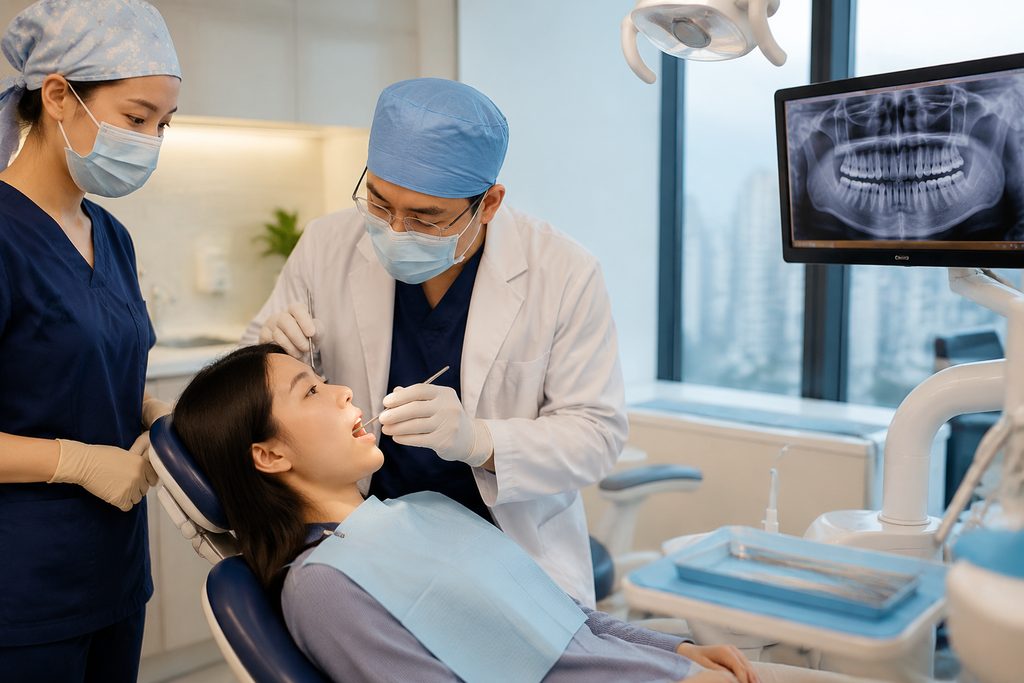
When 42-year-old Michael from Portland learned he needed a root canal and a crown on the same molar, his dentist quoted $2,400. His insurance would cover part of it. The rest was on him. A colleague mentioned that a root canal and crown cost in China often runs a fraction of U.S. prices, and suddenly a procedure he’d been dreading became a question worth researching.
He isn’t alone. Every month, our team fields questions from patients in the U.S., Europe, and the Middle East who are weighing dental care abroad against domestic prices. Some need a single crown. Others are looking at multiple implants, full-mouth rehabilitation, or years of deferred work finally catching up.
This guide answers the question directly: what does dental treatment actually cost in China, is it safe, and how does an international patient navigate the system without speaking Mandarin or knowing where to start?
How Much Does a Root Canal and Crown Cost in China?
Prices vary by hospital, city, materials, and case complexity. But the ranges below reflect what international patients typically encounter at accredited dental departments and international clinics in major Chinese cities.
| Procedure | China (USD) | United States (USD) | United Kingdom (USD) |
|---|---|---|---|
| Root canal (molar, single visit) | $150 – $400 | $1,000 – $1,500 | $800 – $1,200 |
| Porcelain-fused-to-metal crown | $150 – $350 | $800 – $1,200 | $700 – $1,000 |
| All-ceramic (zirconia) crown | $300 – $600 | $1,200 – $2,000 | $900 – $1,500 |
| Root canal + crown (combined) | $450 – $950 | $2,000 – $3,500 | $1,500 – $2,500 |
| Dental implant + crown | $800 – $2,000 | $3,000 – $5,000 | $2,500 – $4,000 |
That’s a savings of 60–75% on most procedures. The gap widens further for complex cases. A patient needing three implants and crowns might pay $4,000–$6,000 in China versus $12,000–$18,000 in the U.S.
A few caveats. These figures reflect cash-pay prices at reputable institutions. Private international hospitals charge more than public tertiary hospitals. And a molar with curved canals or a prior failed root canal takes longer, costs more, and may require a specialist.
Is Root Canal Treatment in China Safe?
This is the question that stops most people from booking. And it deserves a direct answer.
China’s top-tier public hospitals — the ones ranked in the Fudan Hospital Rankings — operate dental departments that meet international standards. Many use the same rotary endodontic systems, apex locators, and digital imaging equipment found in Western clinics. Some have faculty who trained abroad or collaborate with international dental schools.
The safety question isn’t about the country. It’s about the specific clinic.
A few things to verify:
- Hospital accreditation. Look for JCI-accredited private hospitals or public tertiary hospitals with international departments. These facilities follow standardized sterilization and infection-control protocols.
- Dentist credentials. Senior dentists at top hospitals hold advanced degrees and see high volumes of complex cases. Volume matters — a dentist who performs 500 root canals a year has seen more than one who does 50.
- Materials. Ask what brand of rotary files, obturation materials, and crown ceramics the clinic uses. Reputable clinics will answer without hesitation.
What about language? This is where most international patients hit a wall. China’s best public hospitals serve enormous patient volumes — some see over 10,000 outpatient visits per day. Signs are in Chinese. Appointment systems are in Chinese. The dentist may speak limited English.
That’s not a safety issue. It’s a logistics issue. And it’s solvable.
Our team connects international patients with English-speaking dental departments and provides bilingual medical companions who handle registration, queue management, payment, and chairside translation. You focus on the treatment. We handle the system. You can explore how that works on our patient consultation page.
How Much Does a Crown Cost in Beijing?
Beijing deserves its own section because it’s a common entry point for international patients and home to some of China’s most prestigious hospitals.
At a top public hospital dental department in Beijing, expect:
- Metal crown: $100 – $200
- Porcelain-fused-to-metal crown: $180 – $350
- Zirconia crown: $350 – $650
- Full gold crown: $400 – $800
Private international clinics in Beijing — the ones with English-speaking staff and direct insurance billing — typically charge 1.5 to 2 times these amounts. You’re paying for convenience, language support, and a Western-style patient experience.
Which is right for you? If you’re comfortable navigating a large public hospital with a companion’s help, the public route offers excellent value. If you want a clinic that feels like what you’re used to at home, the private route costs more but removes friction.
Both are legitimate. The choice depends on your budget, your timeline, and how much uncertainty you’re willing to absorb.
A Realistic Timeline for Dental Treatment in China
Most patients underestimate how long the full process takes. Here’s what to expect.
| Stage | Typical Duration | What Happens |
|---|---|---|
| Initial inquiry and records review | 2–5 days | You send dental X-rays, photos, and treatment history. A Chinese dental team reviews them. |
| Written second opinion or video consultation | 3–7 days | The dental specialist provides a written assessment or speaks with you online about the plan and estimated cost. |
| Appointment coordination | 1–2 weeks | We coordinate with the hospital’s international department to schedule your visit. Public hospital dental clinics often have limited slots for new international patients. |
| Visa application (S2) | 1–2 weeks | You apply for an S2 visa with supporting hospital documents. Processing times vary by consulate. |
| Travel and first appointment | 1–2 days after arrival | Consultation, imaging if needed, and treatment planning. |
| Root canal procedure | 1–2 visits | Some cases complete in one visit. Complex or infected teeth may need two. |
| Crown fabrication and placement | 5–10 days | The lab creates your crown. You return for fitting and cementation. |
| Total trip (procedure + crown) | 10–14 days | Plan for at least two weeks on the ground for a single tooth. |
For dental implants, add 3–6 months for osseointegration before the final crown. Some patients do the implant placement in one trip and return later for the crown. Others choose a clinic that offers accelerated protocols — though not every case qualifies.
The waiting steps people forget: document translation (1–3 days), appointment lead time at popular hospitals (can stretch to 3 weeks), and visa processing during holiday periods.
What Can Go Wrong — and What Happens Then
Honest failure modes exist. Here they are.
The crown doesn’t fit properly. This happens anywhere — not just China. If you’re still in the country, the clinic will adjust or remake it, usually at no extra charge. If you’ve returned home, you’ll need a local dentist to assess. Most reputable Chinese clinics will coordinate with your home dentist and may cover part of the revision cost. Get the clinic’s aftercare policy in writing before you start.
The root canal fails. Success rates for initial root canals are high — typically over 90% in well-documented cases. But failures occur. A missed canal, a fracture, or reinfection can require retreatment or extraction. If this happens after you’ve left China, you’ll need a specialist at home. This is not a reason to avoid treatment abroad, but it is a reason to choose an experienced dentist and not the cheapest option.
Communication breaks down. You arrive expecting one treatment plan and get another. The dentist recommends an additional procedure you didn’t anticipate. This is the most common frustration we hear about. The fix: get a written treatment plan before you travel, confirm it again at the first appointment, and have a bilingual companion in the room who can pause the conversation and clarify.
The clinic isn’t what you expected. A public hospital dental department may feel crowded and rushed compared to a private clinic. If patient experience matters more to you than price, choose a private international hospital. Neither choice is wrong.
How to Choose the Best Dental Clinic in China for Root Canal Treatment
Not all dental clinics are equal. Here’s how to evaluate them.
Look at hospital rankings. The Fudan Hospital Rankings list China’s top hospitals by specialty. Stomatology (dental medicine) is one of the ranked specialties. Hospitals that appear in the top tier for stomatology have demonstrated clinical volume, research output, and peer recognition. You can browse ranked hospitals by specialty on our departments page.
Ask about case volume. A dentist who performs 20 root canals a month is not the same as one who performs 200. High-volume clinics develop pattern recognition that matters when your canals are unusual.
Check for international patient services. Hospitals with dedicated international departments have English-speaking staff, standardized pricing for foreign patients, and experience coordinating with overseas patients. This reduces the chance of miscommunication.
Request a written treatment plan with itemized costs. Before you commit, you should know: how many visits, what materials, what the crown is made of, what happens if the tooth needs retreatment, and what the total cost will be. Vague answers are a red flag.
Consider the follow-up problem. If you live 7,000 miles away, who handles a complication six months later? Ask the clinic directly. Some have relationships with dentists abroad. Others don’t. Know before you go.
For patients comparing dental work with other procedures, our guide to top-ranked hospitals in China explains how the Fudan ranking system works and why it matters for specialty care.
Practical Considerations for Dental Treatment in China
Visa. Medical treatment in China requires an S2 visa (for stays under 180 days) or S1 (for longer stays). The S2 is the applicable category for short-term medical treatment, and accompanying family members apply for the same category. Requirements vary by consulate — check the latest guidance from your local Chinese embassy. Do not apply for an M visa. That’s for commercial and trade activities and has nothing to do with medical care.
Payment. Public hospitals require prepayment. You’ll pay out of pocket and seek reimbursement from your insurance afterward. Private international hospitals often bill insurance directly, but verify coverage before you travel. Dental work is frequently excluded or capped by Western insurers, so confirm what your plan covers abroad.
Records. Bring your dental X-rays, any prior treatment notes, and a list of medications. Digital copies are fine. If your records are in English, the Chinese dental team can usually work with them directly. If they’re in another language, translation may be needed.
Follow-up at home. Before you leave China, ask for a written summary of the treatment performed, materials used (including crown brand and shade), and any recommendations for your home dentist. This makes continuity of care much easier.
Language. This is the single biggest practical barrier. Even in international departments, not every dentist speaks fluent English. A bilingual medical companion ensures you understand what’s happening and can communicate your concerns. Our companion service starts at $300 per day and covers registration, queue management, payment, and chairside translation.
Frequently Asked Questions
Yes. A root canal and crown in China typically costs $450–$950 at a reputable public hospital, compared to $2,000–$3,500 in the U.S. The savings come from lower labor costs, government subsidies for public hospitals, and different pricing structures — not from lower quality. That said, private international clinics charge more, and complex cases cost more than straightforward ones.
You can arrange a written second opinion or video consultation before traveling, which gives you a treatment plan and cost estimate. But actual treatment requires an in-person examination. Public hospital dental clinics generally cannot schedule a procedure for a patient they haven’t examined. If you want to lock in an appointment slot before arrival, you’ll typically need to go through a hospital’s international department or a private clinic — and even then, the final plan is confirmed after the dentist sees you. Our team handles appointment coordination and can often secure a slot, but we never promise a specific dentist or date.
This is the most important question to ask before treatment. Get the clinic’s aftercare policy in writing. Some Chinese hospitals will coordinate with a local dentist and share records. Others won’t. If a root canal fails or a crown breaks, you’ll likely need a dentist at home — and you’ll want your Chinese treatment records to make that easier. We recommend budgeting for a follow-up visit with your regular dentist within six months of returning.
Yes. The S2 visa covers short-term medical treatment, including dental procedures. You’ll need supporting documents from the Chinese hospital confirming your appointment and treatment plan. Accompanying family members apply for the same visa category. Processing times vary, so apply well before your intended travel date. Never travel on a tourist visa if your primary purpose is medical treatment.
Beijing, Shanghai, and Guangzhou have the highest concentration of top-ranked dental hospitals. Chengdu and Wuhan also have strong programs. The right city depends on your specific needs — for complex cases, you may want a hospital with a dedicated stomatology department and international patient services. Our team can help match you with a hospital based on your case.
Your Next Step
The gap between what dental work costs in China and what it costs in the U.S., U.K., or Australia is real — often 60–75% for root canals, crowns, and implants. But the savings only matter if the treatment is safe, the communication is clear, and the follow-up is planned.
China Medical Services helps international patients navigate that gap. We are not a dental clinic and we do not provide medical care. We connect you with vetted hospitals, coordinate appointments through official international departments, provide bilingual companions, and help you understand the process before you commit to anything. If you’re considering dental treatment in China, start with a conversation. No pressure, no obligation — just a clear picture of what’s possible.
For more medical information and treatment options in China, visit chinamedservices.com (China Medical Services).
