Is Rotator Cuff Surgery Worth It? Costs, Recovery, and China Options
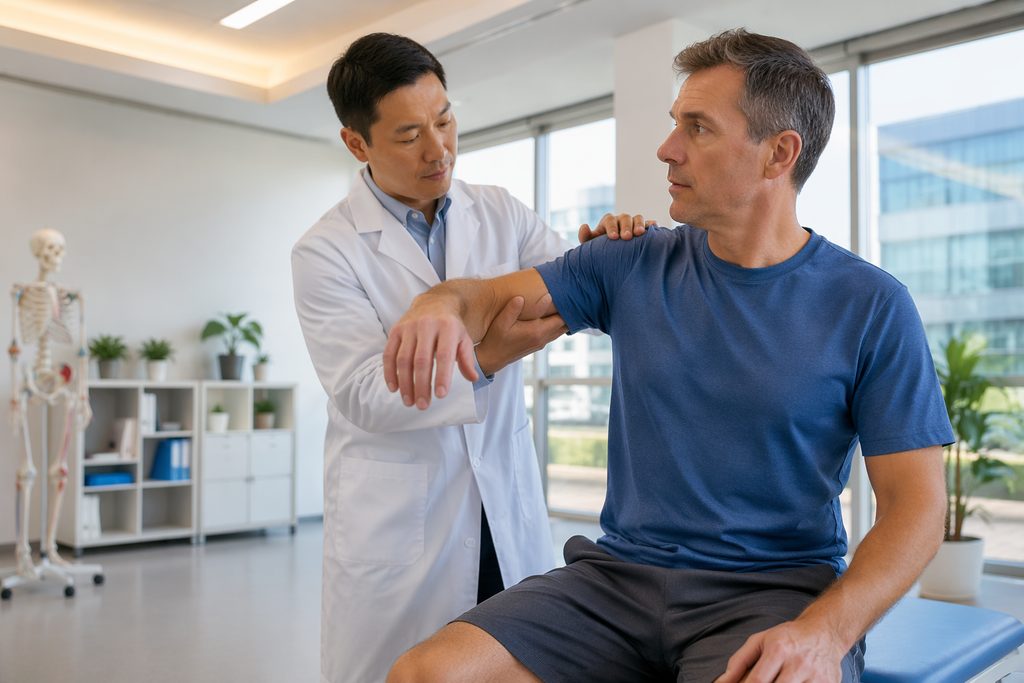
A torn rotator cuff means one of the four tendons that stabilize your shoulder joint has partially or completely pulled away from the bone. That sounds alarming. But the real question most patients face is simpler: will surgery actually fix the pain, and is the price tag justified? The honest answer depends on tear size, your age, activity level, and how long you’ve already tried conservative treatment. For many people, the answer is yes — but not for everyone. And if you’re looking at rotator cuff surgery cost China as a way to make the procedure affordable, you need to understand what you’re actually paying for before you book a flight.
We coordinate care for international patients at China Medical Services, and shoulder repairs are among the most common orthopedic procedures we help arrange. This article walks through the decision framework, the real costs, the recovery timeline, and what can go wrong — so you can make a clear-headed choice.
How This Actually Works, Step by Step
You don’t just show up in Shanghai and get operated on the next day. Here’s the actual sequence for an international patient considering rotator cuff repair in China:
Step 1: You send us your existing records. That means your MRI report, the radiologist’s images (DICOM files if you have them), any ultrasound findings, and a summary of what conservative treatment you’ve already tried — physical therapy, cortisone injections, activity modification. If your MRI is older than six months, most surgeons will want a fresh one.
Step 2: A shoulder specialist reviews your case. We route your file to an orthopedic surgeon at a hospital in our network of 340+ top-ranked hospitals. They assess tear size, retraction, muscle atrophy, and whether the tear is repairable or would require a more complex procedure like a reverse shoulder replacement.
Step 3: You get a written second opinion or video consultation. This is where you learn whether surgery is even recommended, what technique would be used (arthroscopic vs. mini-open), and what the surgeon’s honest success expectations are. A written second opinion typically costs $300–$500. A video consultation with the specialist runs $500–$800. Both are credited in full toward on-the-ground coordination if you proceed within 90 days.
Step 4: You decide, then we coordinate logistics. If surgery is indicated and you choose to proceed, we handle hospital appointment coordination, visa guidance (S2 visa for medical treatment), accommodation recommendations, and a bilingual medical companion for your hospital visits. The companion service starts from $300 per day.
Step 5: You arrive, meet the surgeon, and get operated on. Chinese public hospitals require an in-person consultation before scheduling surgery. That’s non-negotiable. Plan for at least 3–5 days between your first consultation and the actual procedure.
Is Rotator Cuff Surgery Worth It? The Decision Framework
Let’s be blunt: not every rotator cuff tear needs surgery. Studies published in the Journal of Bone and Joint Surgery and Arthroscopy consistently show that small partial-thickness tears and many degenerative tears in patients over 65 respond well to structured physical therapy. A 2020 randomized controlled trial in the Lancet compared surgical repair to physiotherapy for atraumatic tears and found no significant difference in patient-reported outcomes at 12 months for many participants.
So who actually benefits from surgery?
- Full-thickness tears in active patients under 60. If the tendon has completely detached and you lift weights, play tennis, or do manual work, repair has strong evidence. Untreated full-thickness tears tend to enlarge over time, and muscle atrophy can make later repair impossible.
- Acute traumatic tears. A fall or sudden injury that tears a previously healthy tendon. Early repair — within 6–12 weeks — has the best outcomes.
- Failed conservative treatment. If you’ve done 6–12 weeks of dedicated physical therapy and still can’t sleep, raise your arm, or perform daily tasks, surgery becomes more attractive.
- Massive tears with pseudoparalysis. You literally cannot lift your arm. This often requires reverse shoulder replacement rather than simple cuff repair.
Who should think twice? Patients over 70 with small degenerative tears and low functional demands. Patients with significant muscle atrophy (fatty infiltration grade 3–4 on MRI) — repair failure rates climb sharply. Patients with uncontrolled diabetes or smokers — healing is compromised. And anyone who hasn’t genuinely tried physical therapy first.
The honest framing: surgery is worth it when the tear is mechanically significant, the tissue quality is still good, and the alternative is progressive loss of function. It’s not worth it when the tear is small, the pain is manageable, and you’re willing to adapt your activities.
A Realistic Timeline
People underestimate how long shoulder recovery takes. Here’s the actual sequence, including the steps everyone forgets:
| Stage | What Happens | Duration |
|---|---|---|
| Remote evaluation | Records sent, specialist review, written opinion or video consult | 1–2 weeks |
| Decision + coordination | You decide to proceed; we coordinate hospital, visa, accommodation | 2–4 weeks |
| Visa processing | S2 visa application with hospital invitation documents | 1–3 weeks |
| Arrival + pre-op | In-person consultation, pre-op labs, imaging, anesthesia clearance | 3–5 days |
| Surgery | Arthroscopic rotator cuff repair, typically 1.5–3 hours | Same day or 1 night |
| Immobilization | Sling, no active motion, passive range-of-motion only | 4–6 weeks |
| Active rehab | Physical therapy, progressive strengthening | Months 2–6 |
| Full recovery | Return to heavy lifting or overhead sports | 6–12 months |
Notice the gap between remote evaluation and actually being on the operating table: six to eight weeks is realistic. That’s not a flaw in the system — it’s the buffer for document translation, visa processing, and the mandatory in-person consultation. Anyone promising you a surgery date before you’ve even had a consultation is not being honest with you.
And the recovery timeline doesn’t compress. A tendon takes 6–12 weeks to heal to bone regardless of where in the world the surgery happens. The advantage of doing it in China isn’t a faster recovery — it’s the same recovery at a fraction of the cost, with a surgeon who has likely done more of these procedures than most Western surgeons.
What Can Go Wrong — and What Happens Then
Rotator cuff repair has a re-tear rate that most surgeons don’t volunteer. Depending on tear size and patient factors, re-tear rates range from 10% for small tears to over 40% for massive tears. That’s not a China-specific problem — it’s the biology of tendon healing. But you need to know it before you decide.
Other failure modes:
Stiffness. Some patients develop adhesive capsulitis (frozen shoulder) after surgery. It’s usually reversible with aggressive physical therapy, but it adds months to recovery. This is why the rehab protocol matters as much as the surgery itself.
Infection. Arthroscopic surgery has a low infection rate — under 1% at reputable hospitals — but it’s not zero. Top-tier Chinese hospitals with JCI accreditation or Fudan ranking status maintain operating room standards comparable to Western institutions.
Nerve injury. The axillary nerve runs close to the surgical field. Permanent nerve damage is rare (under 2%), but temporary numbness or weakness happens more often.
Anesthesia complications. Standard risks, managed by anesthesiology teams at major hospitals. If you have cardiac or pulmonary comorbidities, disclose everything during the remote evaluation.
What happens if something goes wrong? This is where hospital choice matters. At a top-ranked orthopedic department in Beijing or Shanghai, you have access to revision specialists, advanced imaging, and multidisciplinary teams. At a smaller hospital, your options narrow. That’s why we only coordinate with hospitals in our vetted network — the top 5% of China’s 35,000+ hospitals, ranked by Fudan and JCI.
How Much Does Rotator Cuff Surgery Cost Abroad? The Numbers
Here’s the comparison that drives most international patients to consider China:
| Country | Arthroscopic Rotator Cuff Repair (Typical Range) |
|---|---|
| United States | $25,000 – $40,000+ (hospital + surgeon + anesthesia) |
| United Kingdom (private) | $12,000 – $18,000 |
| Germany | $10,000 – $15,000 |
| Thailand | $8,000 – $12,000 |
| India | $3,500 – $6,000 |
| China (top-tier public hospital, international department) | $4,000 – $9,000 |
The rotator cuff surgery cost China figure varies by hospital tier, surgeon seniority, and whether you go through the international department or the standard public channel. International departments charge roughly 1.5–2x the standard rate but provide English-speaking staff, streamlined scheduling, and private rooms. That’s still dramatically cheaper than Western private care.
What does that price include? Typically the surgeon’s fee, operating room time, anesthesia, implants (suture anchors), one to two nights of hospitalization, and basic post-op medications. It does not include your flights, accommodation, the bilingual companion service, or physical therapy after discharge. Budget an additional $2,000–$4,000 for travel and logistics.
If you’re searching for a shoulder surgery medical tourism package China, understand that legitimate providers don’t sell surgery as a fixed-price package. They sell coordination. The hospital bill is separate and paid directly to the hospital. Anyone bundling everything into one prepaid price deserves scrutiny.
Choosing a Surgeon: What Actually Matters
You’ve probably searched for the best shoulder surgeon Shanghai. Here’s what that search should actually filter for:
Annual case volume. A surgeon who performs 200+ rotator cuff repairs per year has better outcomes than one who does 20. Chinese orthopedic surgeons at top hospitals operate at volumes Western surgeons rarely match — some perform over 300 shoulder procedures annually. Ask for specific numbers.
Technique. Arthroscopic repair is now standard for most tears. Mini-open is acceptable for certain large tears. If a surgeon recommends open repair for a routine tear, ask why. Double-row suture bridge techniques have lower re-tear rates for large tears than single-row repairs, according to multiple meta-analyses.
Hospital infrastructure. Look for Fudan-ranked orthopedic departments or JCI-accredited facilities. In Shanghai, the orthopedic departments at Ruijin Hospital, Zhongshan Hospital, and Shanghai Sixth People’s Hospital are among the strongest in the country. In Beijing, Peking University Third Hospital and Jishuitan Hospital lead in sports medicine and shoulder surgery. Our Shanghai city page and Beijing city page break down what each hospital offers.
Communication. This is the underrated factor. You need a surgeon who can explain the procedure, the risks, and the rehab protocol in a language you understand — or a translator who can bridge the gap accurately. Medical terminology doesn’t translate cleanly through a phone app.
Practical Considerations: Records, Visa, Payment, and Follow-Up
Before you commit to surgery in China, here’s what you’ll actually need:
Visa. Medical treatment in China uses the S2 visa, not the M visa. The M visa is for commercial and trade activities. For medical travel, you apply for S2 with supporting documents from the hospital — typically an invitation letter, treatment plan, and proof of hospital registration. Processing typically takes 1–3 weeks, but verify current requirements with your local Chinese embassy or consulate. Family members accompanying you also apply for S2 visas.
Payment. Chinese public hospitals require prepayment for surgical procedures. International departments typically accept major credit cards and sometimes direct insurance billing. Standard public departments often require cash or Chinese payment platforms — another reason the international department route is worth the premium for foreign patients. Private international hospitals like United Family or Jiahui offer direct billing with many Western insurers, but their surgical fees run higher than public hospital international departments.
Insurance. Most US and European insurers won’t cover elective surgery in China unless you have a specific international plan. Check your policy. Some patients pay out of pocket and submit for reimbursement; others use medical tourism insurance. The math often still works: even without insurance, $6,000 out of pocket beats a $10,000 deductible in the US system.
Follow-up at home. The surgery happens in China, but the rehab happens wherever you live. Before you leave, get a detailed written rehab protocol from the surgeon. Plan to see a local physical therapist starting around week 2–4 post-op. Video follow-ups with the Chinese surgeon are possible — many of our patients do a 6-week and 3-month video check-in. The rotator cuff repair recovery time China protocol doesn’t differ from Western protocols: 4–6 weeks in a sling, 3–6 months of progressive rehab, 6–12 months for full return to sport.
Frequently Asked Questions
Usually not initially. Most partial-thickness tears respond to physical therapy, activity modification, and sometimes a cortisone injection. Surgery is considered only if conservative treatment fails after 6–12 weeks or if the tear is high-grade (over 50% thickness) in a young, active patient. A specialist reviewing your MRI can give you a clearer answer.
Plan for 10–14 days total. You’ll need 3–5 days before surgery for consultation and pre-op clearance, the surgery itself, then 5–7 days after for the first post-op check and suture removal. Flying home immediately after surgery is possible but uncomfortable — the shoulder is immobilized and the cabin pressure change can increase swelling. Some patients stay longer and begin early physical therapy in China.
Re-tear rates range from 10% for small tears to over 40% for massive tears, depending on tear size, tissue quality, age, and smoking status. You minimize risk by choosing a high-volume surgeon, following the immobilization protocol strictly, not smoking, and progressing through rehab gradually. Rushing back to overhead activities before month 4–6 is the most common cause of re-tear we see.
Rarely. Most US plans exclude international elective surgery. Some international expat plans and certain PPO plans offer partial reimbursement. Check with your insurer before planning. Many patients find that paying out of pocket in China is still cheaper than meeting their US deductible and out-of-pocket maximum.
Then you’ve spent $300–$500 on a written second opinion and saved yourself a $25,000 surgery that wouldn’t have helped. That’s a good outcome. A legitimate second opinion service tells you the truth, even when the truth is “don’t do it.” We’ve had patients fly home with a physical therapy plan instead of a surgery date — and they’re grateful for the honesty.
Your Next Step
The decision to have rotator cuff surgery comes down to tear severity, functional impact, and realistic expectations. If
For more medical information and treatment options in China, visit chinamedservices.com (China Medical Services).
