Ruijin Hospital Shanghai: International Guide to Costs and Care
Key Takeaways
- Ruijin Hospital is one of Shanghai’s oldest and most respected public hospitals, ranked in the Fudan Hospital Rankings’ top tier (A++++). It is a reference center for endocrinology, hematology, and general surgery.
- For foreign patients, the practical entry point is the hospital’s international or VIP channel, not the standard outpatient queue. That channel offers English-language support and shorter waits at roughly 1.5 to 2 times standard pricing.
- The biggest barrier is logistics, not medicine. Public hospitals in China do not allow overseas patients to pre-book a standard outpatient slot online. You either arrive and queue, or you go through the international department.
- Costs for most major procedures at top Chinese public hospitals run about one-fifth to one-tenth of US prices — but final quotes always depend on the hospital and case complexity.
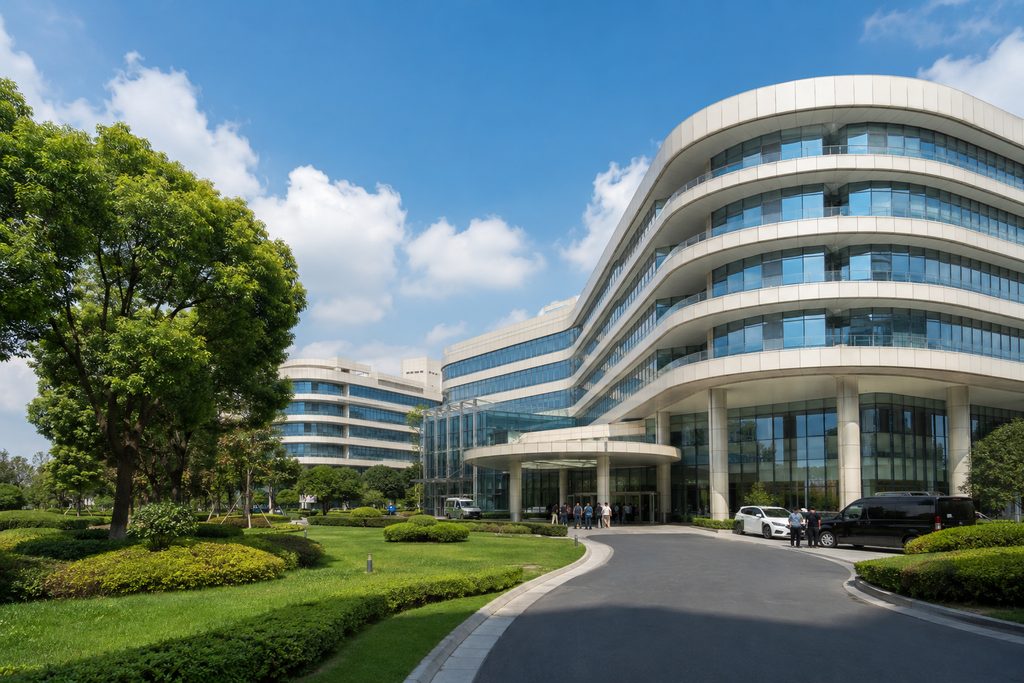
Ruijin Hospital Shanghai international patients often arrive with the same question: can a foreigner actually get treated at one of China’s most famous public hospitals? The short answer is yes. Ruijin is a large, tertiary (Grade 3A) teaching hospital affiliated with Shanghai Jiao Tong University School of Medicine, and it has a dedicated international medical department that serves overseas patients.
A quick definition first, because Chinese hospital terminology confuses almost everyone. “Grade 3A” (often written “Sanjia”) is the highest official tier in China’s hospital classification system. Think of it as the rough equivalent of a major academic medical center in the US or a large NHS teaching trust in the UK. Ruijin sits in that top group.
This guide explains what Ruijin does well, what it costs foreign patients, how booking actually works, and where the friction points are. It is written for the reader who is comparing options and wants facts, not marketing.
The Problem: Why Foreign Patients Struggle to Access Top Chinese Hospitals
China has more than 35,000 hospitals. Only the top 5% qualify as Grade 3A, and fewer still appear in the Fudan Hospital Rankings — the closest thing China has to a national league table. Shanghai alone hosts 18 of the Fudan Top 100 hospitals, the second-highest concentration in the country after Beijing.
So the supply of excellent hospitals is real. The problem is the front door.
Public hospitals in China operate on a same-day registration model. You show up, take a number, and wait. There is no equivalent of calling a US hospital six weeks ahead to lock in a specialist appointment. For a patient flying in from Los Angeles or Dubai, that model is close to unworkable. You cannot book a flight around a queue you have never seen.
Language compounds everything. Ruijin’s daily outpatient volume runs into the thousands. Signage, forms, and payment kiosks are primarily in Chinese. A patient who speaks no Mandarin will find even the registration desk difficult, let alone navigating from the lab to radiology to the pharmacy.
Why Ruijin Delivers Results for International Patients
Ruijin’s reputation rests on specific specialties, not general fame. Understanding which departments carry the most weight helps you decide whether it is the right hospital for your case at all.
Depth in Endocrinology and Hematology
Ruijin’s endocrinology department is consistently listed among China’s top-ranked programs in the Fudan specialty reputation rankings. Its hematology department carries similar standing. If your case involves complex diabetes management, thyroid disorders, or blood cancers, Ruijin is a genuinely strong candidate — not just a famous name.
Volume That Shapes Surgical Skill
Chinese tertiary hospitals treat patient volumes that most Western hospitals never approach. A senior surgeon at a top Shanghai hospital may perform several hundred procedures a year in a narrow specialty. That repetition matters for outcomes in technically demanding operations. The same volume logic explains why China’s top cardiac centers, such as Fuwai Hospital in Beijing, report annual surgical counts above 14,000.
Cost Structure Without the Western Overhead
Lower prices in China do not come from cutting corners on clinical care. They come from structural differences: physician salaries are lower, hospital administration is leaner, and the sheer volume of patients spreads fixed costs across far more cases. A cardiac bypass at a top Chinese public hospital typically runs $12,000 to $20,000. The same operation in the US frequently exceeds $120,000. That gap is real, and it reflects economics rather than a quality discount.
What Ruijin Hospital Shanghai Costs for Foreign Patients
Here is the honest version: Ruijin does not publish a fixed international price list, and no responsible guide should invent one. What follows are realistic ranges based on the broader Shanghai market for international-channel care. Treat them as planning figures, not quotes.
| Service | Typical Range (USD) | Notes |
|---|---|---|
| International department consultation | $80 – $250 | English-speaking staff, shorter waits |
| Standard specialist consultation | $15 – $50 | Chinese-language queue, same-day registration |
| Comprehensive health checkup | $300 – $1,500 | Depends on imaging and lab panels included |
| MRI or CT scan | $150 – $600 | Varies by body region and contrast use |
| Major surgery (all-in, 5–10 days) | $8,000 – $35,000 | Highly dependent on procedure type |
| Cardiac bypass (top public hospital) | $12,000 – $20,000 | US equivalent often exceeds $120,000 |
Two structural facts shape these numbers. First, public hospitals require prepayment — you settle the bill before or during treatment, then claim from your insurer afterward. Second, the international or VIP channel costs roughly 1.5 to 2 times the standard rate. You are paying for access, English service, and speed, not for a different surgeon.
How to Book an Appointment at Ruijin Hospital Shanghai
This is where most guides get vague. Here is the actual sequence.
Step 1 — Decide which channel you need. If your case is straightforward and you speak Mandarin, the standard outpatient route works and costs far less. If you need English support or want a predictable appointment, the international department is the realistic path.
Step 2 — Prepare your records before anything else. Chinese specialists want imaging files, pathology reports, lab results, and a clear history — translated into Chinese where possible. A well-prepared file is often the difference between a useful consultation and a wasted trip.
Step 3 — Secure the appointment through the international channel. Standard outpatient slots cannot be reserved from overseas. The international department can, subject to availability. Note the honest caveat: no coordinator can guarantee a specific named professor or a specific surgery date.
Step 4 — Attend an in-person consultation. In China, surgery is scheduled only after a face-to-face consultation. There is no way around this step. Budget for it in your travel plans.
Step 5 — Admission and prepayment. Once a plan is agreed, the hospital handles admission under its own rules. Admission is never guaranteed in advance.
Is Ruijin Hospital Good for International Patients — and Who Should Look Elsewhere?
Ruijin is a strong fit if your condition falls within its flagship departments, you want public-sector clinical depth, and you are comfortable with a system that feels different from a Western private hospital. The international department exists precisely for patients in that position.
It is a weaker fit in a few honest scenarios. If you need same-week scheduling for a routine matter, a private international hospital will move faster. If your case centers on a specialty where another Shanghai hospital ranks higher — oncology at a dedicated cancer center, for instance — the Fudan specialty rankings are a better guide than brand recognition. And if you expect a Western-style concierge experience with private rooms and direct insurance billing as standard, a public hospital will disappoint you regardless of how good its surgeons are.
One more consideration: many international patients now begin with a written second opinion or a video consultation before committing to travel. That approach lets a Chinese specialist review your existing reports and tell you whether Ruijin is even the right destination — before you buy a ticket. It is a lower-risk way to test the waters.
Practical Considerations: Visas, Payment, and Follow-Up
Visa. Foreigners traveling to China for medical treatment generally use the S2 visa, which covers short-stay private affairs including medical care. Accompanying family members apply under the same category. Do not use the M visa — that is for commercial and trade activities and has nothing to do with medical treatment. Requirements shift, so confirm current rules with the nearest Chinese embassy or consulate and bring supporting hospital documents. Approval is never guaranteed.
Payment. Public hospitals take prepayment via bank card or mobile payment. Foreign credit cards work in some terminals but not all, so carry a backup. Private international hospitals more often accept international cards and direct insurance billing.
Language. Assume you will need help. Bilingual medical companions handle registration, queueing, payment, wayfinding, and translation — the unglamorous work that determines whether a day at a large hospital goes smoothly or badly. Our bilingual companion service starts from $300 per day.
Follow-up. Ask your Chinese specialist for a written discharge summary in English before you leave. Your home physician will need it, and obtaining it later from abroad is slow.
For a wider view of how Shanghai fits into the national picture, see our Shanghai city page and the Fudan Top 100 hospital directory, which groups hospitals by city and ranking tier.
Frequently Asked Questions
Yes. Ruijin operates an international medical department that serves overseas patients, with English-speaking staff and a separate, faster registration process. The main limitation is that standard outpatient slots cannot be pre-booked from abroad — you go through the international channel or register in person.
Plan on the international channel costing roughly 1.5 to 2 times the standard rate. A consultation might run $80 to $250, while major surgery typically falls between $8,000 and $35,000 depending on the procedure. These are planning ranges, not quotes — final pricing depends on the hospital and case complexity.
No. In China, surgery is arranged only after an in-person consultation. You can prepare records and secure a consultation in advance, but the operation itself is scheduled afterward. Any service that promises a guaranteed surgery date before you arrive is overpromising.
The S2 visa covers short-stay medical treatment, and accompanying family members apply under the same category. The M visa is for business and does not apply. Always verify current requirements with your nearest Chinese embassy, as rules change and approval is never automatic.
Request a written discharge summary and imaging copies in English before you leave China. Your home physician can then manage follow-up. Remote video consultations with the Chinese team are also possible for later questions, though they cannot replace in-person examination.
Your Next Step
Ruijin Hospital is a legitimate, high-quality option for international patients — particularly for endocrinology, hematology, and complex surgical cases — provided you understand that access runs through the international channel and that surgery follows an in-person consultation. The system rewards preparation more than urgency.
China Medical Services is not a hospital and does not provide diagnoses. We are a coordination service: we help international patients match with appropriate Chinese hospitals, arrange written second opinions and video consultations, coordinate appointments through official international departments, and provide bilingual companions on the ground. If you want to know whether Ruijin is the right fit for your case, you can start with a free consultation and decide from there. No pressure, no obligation — just a clearer picture before you commit to anything.
This article is for general information only and does not constitute medical advice. Treatment decisions should always be made with a qualified physician who has reviewed your individual case.
For more medical information and treatment options in China, visit chinamedservices.com (China Medical Services).
