SADI-S Duodenal Switch Cost China: Full Journey Pricing and Recovery Support
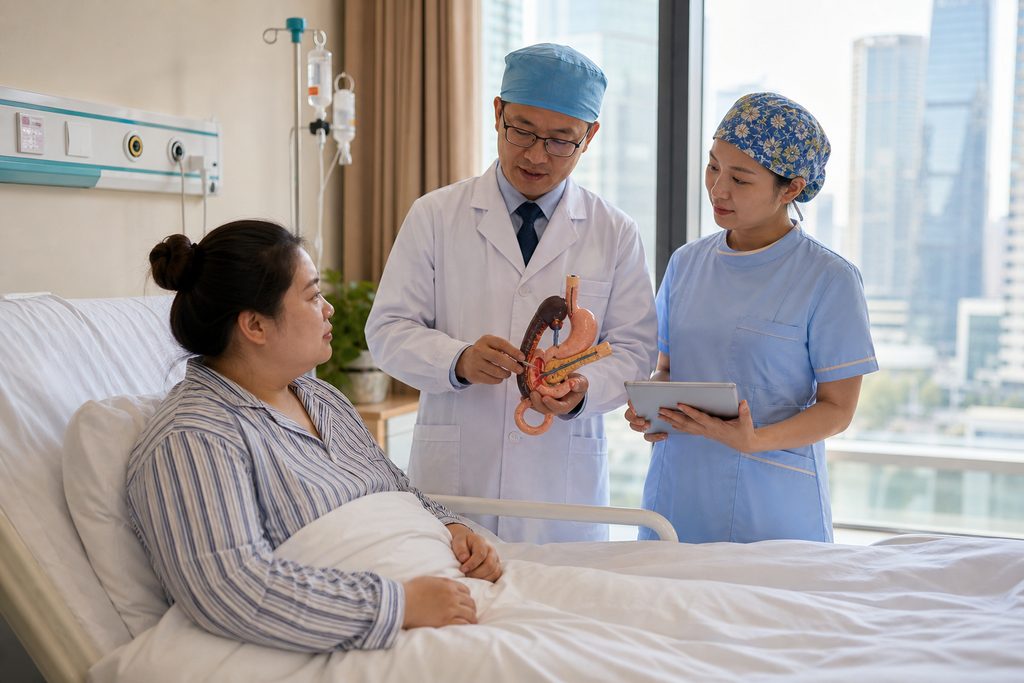
While patients in the United States routinely face bariatric surgery bills exceeding $25,000, the SADI-S duodenal switch cost in China typically ranges from $15,000 to $22,000 for a complete hospital package. That figure often includes the surgeon’s fee, anesthesia, a private recovery room, and implantable devices. The gap widens when you compare it to the $40,000 to $70,000 commonly charged by American hospitals for the same complex metabolic procedure.
That price difference isn’t about cutting corners. It’s structural. Labor costs, hospital operational overhead, and the sheer volume of cases handled by Chinese bariatric centers create an economic reality that makes advanced metabolic surgery accessible to patients who’ve been priced out of care at home. But understanding the real cost requires looking beyond a single number. You need to know what the hospital bill covers, what the recovery demands, and what the full journey actually costs when you factor in travel, accommodation, and the weeks you’ll spend in Beijing or Shanghai before flying home.
Key Takeaways
- SADI-S in China costs $15,000–$22,000 for the hospital procedure — roughly 60–70% less than US pricing for a surgery that produces comparable excess weight loss outcomes of 70–80% at five years.
- Volume matters. Top Chinese bariatric centers perform over 500 metabolic surgeries annually, giving their surgical teams a depth of experience with duodenal switch variants that few Western centers can match.
- Recovery is not a quick trip. You’ll need to stay in China for 3–4 weeks after surgery for drain removal, wound checks, and the first stage of your liquid diet progression before you’re cleared to fly.
- This is major surgery with permanent consequences. The SADI-S reroutes your digestive tract irreversibly. You’ll need lifelong nutritional monitoring and supplementation. No hospital, Chinese or otherwise, can eliminate that reality.
The Problem: Metabolic Disease That Diet Alone Cannot Fix
Severe obesity resists simple solutions. The American Society for Metabolic and Bariatric Surgery (ASMBS) reports that fewer than 5% of people with a BMI over 40 achieve lasting weight loss through diet and exercise alone. The body defends its highest weight through hormonal adaptations that increase hunger and slow metabolism. For these patients, bariatric surgery isn’t a shortcut — it’s the only intervention with Level 1 evidence showing durable, clinically significant weight loss and remission of type 2 diabetes.
The SADI-S, or Single Anastomosis Duodeno-Ileal Bypass with Sleeve Gastrectomy, represents the most powerful tool in the metabolic surgeon’s arsenal. It combines a vertical sleeve gastrectomy (reducing stomach volume by roughly 75%) with an intestinal bypass that reroutes food past a significant portion of the small intestine. The result is both restrictive and malabsorptive — you eat less, and you absorb fewer calories from what you eat. Published five-year data show mean excess weight loss of 72–80%, with type 2 diabetes remission rates exceeding 85% in appropriately selected patients.
But the procedure is technically demanding. It requires a surgeon comfortable with advanced laparoscopic techniques and a center equipped to manage the nutritional complications that can arise months and years later. In many Western countries, only a handful of surgeons offer the SADI-S, and wait times can stretch past 18 months. The cost, as noted, is prohibitive for patients paying out of pocket. That combination — limited access, long waits, high prices — is what drives medically sophisticated patients to look abroad.
Why China’s Bariatric Centers Deliver Comparable Outcomes at Lower Cost
Case Volume Drives Surgical Proficiency
Bariatric surgery follows a well-documented volume-outcome relationship. A 2016 study in The Lancet found that hospitals performing more than 100 bariatric procedures annually had significantly lower rates of serious complications, including leaks and bleeding, compared to low-volume centers. China’s top metabolic surgery departments operate at volumes that dwarf most Western programs. Major centers in Beijing and Shanghai routinely complete 500–800 bariatric cases per year. Their surgical teams perform SADI-S and related duodenal switch procedures weekly, not monthly. That repetition builds muscle memory, refines perioperative protocols, and allows the entire multidisciplinary team — surgeons, anesthesiologists, dietitians, and bariatric nurses — to function as a cohesive unit.
For a procedure as complex as the SADI-S, where the difference between an excellent outcome and a leak or stricture can hinge on millimeters of suture placement, that institutional experience matters. It’s not that a low-volume Western surgeon can’t do the operation well. It’s that a high-volume Chinese team has seen and managed every possible intraoperative variation dozens of times.
Technology Adoption Without the Capital Overhang
Chinese hospitals invest heavily in surgical technology, but they do so without the debt burden that forces Western hospitals to maximize revenue per procedure. The laparoscopic towers, energy devices, and stapling platforms used in a Shanghai bariatric center are the same models found in a top-tier US hospital. The difference is that the Chinese hospital likely paid for that equipment years ago and now operates it at full capacity across long surgical days, driving down the per-case equipment cost. That structural efficiency gets passed on in the form of lower professional and facility fees.
The Cost Structure: Why $18,000 Buys What $50,000 Does Elsewhere
Let’s be direct. The SADI-S duodenal switch cost in China is lower because the underlying economics are different. A senior bariatric surgeon’s professional fee in China is a fraction of what a US surgeon charges — not because the skill is lesser, but because physician compensation structures differ. Hospital room charges, anesthesia time, and nursing care all follow the same pattern. The result is a total bill that runs 60–70% below American pricing while funding the same sterile processing standards, the same laparoscopic equipment, and the same evidence-based Enhanced Recovery After Surgery (ERAS) protocols.
Does lower cost mean lower safety? The data don’t support that concern. China’s JCI-accredited hospitals — and several bariatric centers have earned that international accreditation — meet the same patient safety standards as JCI hospitals in the US, Europe, and the Middle East. Their infection rates, readmission rates, and mortality statistics for elective bariatric surgery are reported and benchmarked. The question “is SADI-S bariatric surgery safe in China” deserves an evidence-based answer: in accredited, high-volume centers, the safety profile matches international norms for this procedure class.
What the Hospital Bill Actually Covers
A SADI-S surgery price abroad is rarely quoted as a single transparent number. You’ll see a base surgical package, then separate line items for anesthesia, devices, and hospital days. In China, the major international patient centers typically offer an all-inclusive surgical package that bundles these elements. Here’s what a typical $18,000–$20,000 SADI-S package includes at a top-tier Beijing or Shanghai hospital:
| Cost Component | Included in Package? | Estimated Value |
|---|---|---|
| Surgeon’s professional fee | Yes | $4,000–$6,000 |
| Anesthesiologist fee | Yes | $1,500–$2,500 |
| Operating room and equipment | Yes | $3,000–$5,000 |
| Laparoscopic staplers and energy devices | Yes | $2,500–$4,000 |
| Private inpatient room (5–7 days) | Yes | $1,500–$2,500 |
| Standard preoperative lab work and imaging | Yes | $800–$1,200 |
| Post-operative medications during admission | Yes | $300–$600 |
| In-hospital dietitian consultation | Yes | $200–$400 |
| International patient coordination fee | Sometimes separate | $1,500–$3,000 |
What’s not included? Your preoperative workup at home — labs, an upper endoscopy, a sleep study if indicated — is on you. Your flights, visa fees, accommodation before admission and after discharge, and any follow-up care once you’re back in your home country are separate costs. A realistic SADI-S medical tourism package in China that is all-inclusive of travel, accommodation, and the hospital procedure will land between $22,000 and $28,000 for a single patient traveling with one companion.
What SADI-S Recovery Actually Looks Like Week by Week
Understanding “what is SADI-S duodenal switch recovery like” is essential before you book a flight. This isn’t a procedure where you bounce back in ten days. The intestinal rerouting and stomach reduction create a recovery arc that unfolds over months, not weeks. Here’s what to expect during the critical China-based portion of your recovery:
Days 1–3 (Hospital): You’ll be on intravenous fluids and pain management. Most centers use laparoscopic techniques, so you’ll have 5–6 small incisions rather than a large open wound. You’ll be up and walking within 24 hours to reduce clot risk. You won’t eat anything — your new stomach needs time to heal before it handles even clear liquids.
Days 4–7 (Hospital): An upper GI contrast study checks for leaks at the staple line. If it’s clear, you start a clear liquid diet — water, broth, sugar-free gelatin. You’ll meet with the bariatric dietitian who will walk you through the staged diet progression you’ll follow for the next two months. Discharge typically happens around day 5–7 if you’re tolerating liquids and your pain is controlled with oral medication.
Weeks 2–3 (Local accommodation): You stay near the hospital. You’ll return for wound checks, drain removal if a drain was placed, and to advance your diet to full liquids (protein shakes, thinned yogurt). This is the hardest stretch psychologically. You’re in a foreign country, eating nothing solid, and your energy is low. Having a companion and a coordinator who speaks the local language makes a material difference here.
Week 4 (Clearance to fly): Most bariatric surgeons clear patients for long-haul flights at the four-week mark, provided there are no complications and you’re tolerating your liquid diet. You’ll need compression stockings and to walk the aisle every two hours during the flight to mitigate clot risk. You fly home with detailed dietary instructions and a plan for follow-up labs at 3, 6, and 12 months.
How to Evaluate a Chinese Bariatric Center Before You Commit
Not every hospital that offers bariatric surgery should be doing the SADI-S. The duodenal switch is a more complex operation than the sleeve gastrectomy or standard gastric bypass. You need to verify that the center you’re considering has specific, documented experience with this procedure — not just general bariatric volume. Here’s what to ask and what to look for:
Procedure-specific volume: Ask directly: “How many SADI-S or traditional duodenal switch procedures does your lead surgeon perform annually?” A reasonable minimum is 30–50 per year. Below that, you’re relying on general surgical skill rather than procedure-specific repetition.
Complication and conversion rates: Every honest surgeon has leaks, bleeds, and cases that need to be converted to an open procedure. The question is whether their rates fall within accepted benchmarks. A leak rate below 2% and a conversion rate below 1% are reasonable expectations for an experienced SADI-S surgeon. If the center won’t share these numbers, that’s a red flag.
Nutritional follow-up protocol: The SADI-S creates permanent malabsorption of fat, fat-soluble vitamins, and certain minerals. You’ll need lifelong supplementation with high-dose vitamin D, vitamin A, vitamin K, iron, calcium, and B12, plus regular lab monitoring. The best Chinese centers provide a written lifetime supplementation protocol and a schedule for follow-up labs. If a center downplays the nutritional commitment or suggests you can manage it on your own, look elsewhere.
International patient infrastructure: Can the hospital provide translated medical records, an English-speaking coordinator, and clear billing? Do they have experience managing the specific needs of patients who will fly home four weeks post-op? If you want to book SADI-S duodenal switch Beijing packages, the hospital’s international department should be able to provide a clear timeline, cost breakdown, and named point of contact before you commit.
Our team has worked with bariatric centers across China and can help you evaluate options based on these criteria. You can explore our database of top-ranked hospitals to see which institutions meet international accreditation standards and have dedicated metabolic surgery departments.
Practical Considerations: Documentation, Visas, and Money
Planning a SADI-S surgery in China requires administrative preparation that’s easy to underestimate. Here’s what you’ll need to handle:
Medical records: You’ll need a comprehensive bariatric workup before the Chinese surgical team will accept your case. This typically includes a recent upper endoscopy with biopsy (to rule out H. pylori and Barrett’s esophagus), a sleep study (untreated sleep apnea dramatically increases surgical risk), an echocardiogram or cardiac stress test if you have cardiac risk factors, recent labs including a full metabolic panel, iron studies, vitamin D, and B12, and documentation of previous weight loss attempts. These records need to be translated into Chinese if the hospital’s international department doesn’t handle translation internally. Plan on spending $300–$500 for professional medical translation.
Visa: Medical treatment in China falls under the S2 visa category, which covers short-term private affairs including medical care. You’ll need an invitation letter from the hospital confirming your scheduled procedure and treatment dates. Your accompanying companion applies for the same S2 visa category. Processing typically takes 1–2 weeks at your nearest Chinese embassy or consulate. Do not apply for an M visa — that’s strictly for commercial and trade activities and will not be accepted for medical travel.
Payment: Chinese hospitals expect payment before admission. Most international patient departments accept wire transfers and major credit cards. Some accept Alipay or WeChat Pay if you set up an account. Cash payments in RMB are possible but impractical for amounts this large. Budget for a 5–10% currency fluctuation buffer if your home currency isn’t pegged to the dollar. The hospital bill will be denominated in RMB; the dollar figures in this article are estimates based on mid-2025 exchange rates.
Insurance: Most Western health insurers will not cover elective bariatric surgery performed abroad, even if they’d cover the same procedure at home. You’ll likely be paying out of pocket. Some patients successfully obtain partial reimbursement by submitting a detailed itemized bill and arguing that the insurer’s in-network cost would have been higher, but this is the exception, not the rule. Confirm your insurer’s policy in writing before you book anything.
Important: Flying long-haul within four weeks of major abdominal surgery carries a real risk of deep vein thrombosis. Your surgeon must explicitly clear you for the flight. Compression stockings, early ambulation, and possibly a short course of prophylactic anticoagulation are standard precautions. Do not book a return flight before your surgeon confirms a safe travel date.
Frequently Asked Questions
The sleeve gastrectomy portion of the SADI-S is permanent — that part of your stomach is removed and cannot be reconstructed. The intestinal bypass can technically be reversed with another major surgery, but reversal carries its own significant risks and is rarely performed except in cases of severe, life-threatening malnutrition. You should approach the SADI-S as an irreversible procedure. The decision to proceed should be made with the understanding that you’re committing to a permanently altered digestive anatomy and a lifetime of nutritional management.
What if I have a complication after I return home?
This is the hardest question in medical tourism, and there’s no comfortable answer. If you develop a stricture, internal hernia, or nutritional deficiency months after returning home, your local bariatric surgeon may be reluctant to manage a complication from a procedure they didn’t perform. Before you travel, identify a bariatric surgeon in your home country who is willing to provide follow-up care. Some will, some won’t. You need to know which camp your local surgeon falls into before you’re three weeks post
For more medical information and treatment options in China, visit chinamedservices.com (China Medical Services).
