Second Opinion Before Surgery: What to Confirm Before You Skip It
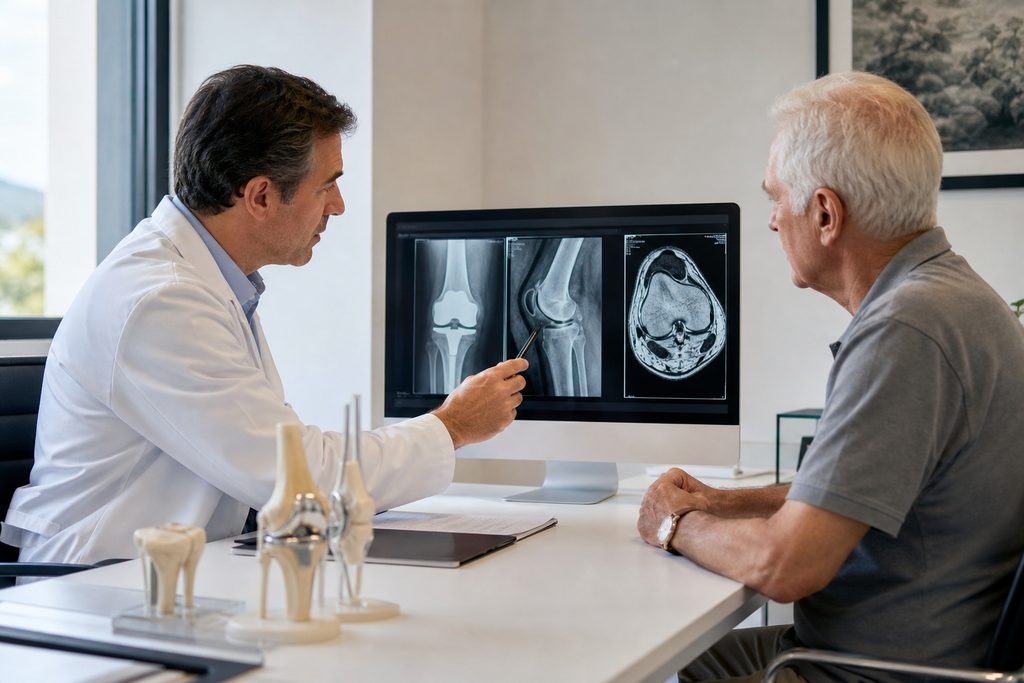
What to Confirm Before You Skip a Second Opinion
What to confirm before you skip a second opinion is not a checklist of paperwork. It is a set of clinical and financial facts that, if ignored, can turn a treatable condition into a cascade of failed procedures. Studies consistently show that between 10% and 35% of primary diagnoses change after a secondary review at a high-volume specialty center. A 2017 study in the Journal of Evaluation in Clinical Practice found that 21% of patients seeking a second opinion at a major academic medical center received a meaningfully different diagnosis. That is roughly one in five people walking into a second consultation and walking out with a different plan.
We coordinate written second opinions and video consultations for international patients considering treatment in China. We are not a hospital. We do not diagnose. What we do is connect you with specialists at Fudan-ranked and JCI-accredited institutions so you can confirm what matters before committing to surgery, chemotherapy, or a long recovery. This article explains exactly what to verify — and what happens when verification never occurs.
Key Takeaways
- Misdiagnosis rates in complex cases range from 10% to 35% depending on specialty; up to 21% of patients receive a changed diagnosis after a second review at an academic center.
- China’s top 5% of hospitals — 340+ institutions ranked by Fudan and JCI — handle surgical volumes that often exceed Western benchmarks by 5 to 10 times.
- A written second opinion from a top Chinese specialist costs from $300–500 and is credited in full toward later on-the-ground coordination if you proceed within 90 days.
- Language, hospital navigation, and follow-up logistics are real barriers; plan for them before you travel, not after you land.
The Problem: Skipping a Second Opinion Has a Measurable Cost
In the United States, a wrong or delayed diagnosis contributes to an estimated 795,000 deaths or permanent disabilities every year, according to a 2023 report from the Johns Hopkins Armstrong Institute Center for Diagnostic Excellence. That number is not a typo. Vascular events, infections, and cancers are the three most commonly missed categories. When a patient skips a second opinion, they are betting that their first imaging review, first pathology read, and first treatment plan were all correct. The odds are not as good as most people assume.
In Canada, the median wait time from general practitioner referral to orthopedic surgery reached 28.6 weeks in 2023, per the Fraser Institute. Meanwhile, a patient with the same MRI film can receive a written second opinion from a specialist at a top Chinese hospital within 5 to 10 business days through services like ours. The bottleneck is not always the disease. Sometimes it is the system.
Consider what this means in practice. A patient diagnosed with early-stage lung cancer in the UK may wait 62 days from urgent referral to first treatment under NHS targets — and many wait longer. That same patient could send existing CT scans and pathology slides to a thoracic oncology team at a Fudan-ranked hospital in Shanghai for a written second opinion. The review happens remotely. No flight. No visa. No hospital admission. Just a documented, specialist-level assessment of whether the original diagnosis and treatment plan hold up.
What to Confirm Before You Skip a Second Opinion: The Core Checklist
This is the section that answers the search directly. If you are leaning toward skipping a second opinion, confirm these five things first. Each one has clinical and financial consequences.
1. Was the pathology read by a subspecialist?
General pathologists read a wide range of tissue types. Subspecialist pathologists read one organ system all day, every day. The difference matters. In a 2015 study from Johns Hopkins, pathology second opinions changed the diagnosis for 21% of patients referred for cancer care, and 7% of those changes were significant enough to alter treatment. Ask who read your slides. If the answer is “the hospital pathologist” without a subspecialty, that is a flag. Not a red flag, but a flag.
2. Was the imaging reviewed by a radiologist who specializes in the relevant body system?
A general radiologist reading a pancreatic MRI is not the same as a hepatobiliary radiologist reading the same scan at a high-volume center. Chinese top-tier hospitals perform imaging at staggering scale. A single large public hospital in Beijing can complete over 10,000 imaging studies per day. The radiologists there see rare presentations weekly that a smaller Western center might see once a year.
3. Has anyone questioned the surgical plan?
Surgeons recommend surgery. That is what they are trained to do. But the type of surgery, the timing, and the necessity are all fair questions. A second opinion should include a direct question: “Is surgery the only option, and is this the right procedure?” At high-volume Chinese cardiac centers like Fuwai Hospital, which performs over 14,000 cardiac surgeries annually, the surgical team may recommend a different graft strategy or a hybrid procedure that was not offered at the first consultation. Volume changes perspective.
4. What is the cost difference between being right and being wrong?
A written second opinion costs from $300–500 through our coordination service. A wrong surgery in the United States can cost $50,000 to $150,000 out of pocket after insurance complications. A failed spinal fusion, an unnecessary hysterectomy, a misread melanoma — these are not rare events. The math is straightforward. The cost of confirmation is a rounding error compared to the cost of being wrong.
5. What do you actually know about the alternatives?
If you were offered one treatment option, you do not have enough information. That is not a criticism of your doctor. It is a structural reality of time-pressured consultations. A second opinion should answer: What are the alternatives? What are the risks of each? What happens if we wait 30 days? What would you do if this were your family member? If those questions have not been answered, you are not ready to skip a second opinion.
Why a Chinese Second Opinion Delivers Results
Take orthopedics. An average US orthopedic surgeon completes approximately 65 joint replacements per year. A surgeon at a top Chinese orthopedic hospital may complete 200 to 500 annually. That is not a minor difference. It means the Chinese surgeon has seen more failed implants, more atypical anatomies, and more revision cases in three years than the US surgeon will see in a decade. When you ask for a second opinion on a hip replacement plan, you want the person who has seen 5,000 hips, not 500.
The same logic applies to oncology. China diagnoses over 4.8 million new cancer cases annually, according to the World Health Organization’s GLOBOCAN data. The top cancer hospitals in Beijing, Shanghai, and Guangzhou treat patient volumes that would be unimaginable at most Western academic centers. A thoracic surgeon at Shanghai Chest Hospital may perform 1,000 lung cancer resections per year. That volume produces a level of intraoperative judgment that cannot be taught in a textbook.
Technology and Workflow at Scale
Chinese top-tier hospitals have invested heavily in imaging infrastructure. PET-CT, 3T MRI, and robotic surgical systems are standard equipment at Fudan-ranked institutions. The difference is workflow. In many Western systems, imaging review is a bottleneck. In Chinese high-volume centers, same-day imaging review is routine for inpatients. For a written second opinion, the review is remote — you send the images, the specialist reads them, and the report comes back with specific findings.
What does this mean for you? A written second opinion from a Chinese specialist is not a vague letter saying “consider alternative treatment.” It is a line-by-line review of your existing records, with specific questions answered and specific recommendations documented. That is the standard we help patients access.
Cost Without Quality Compromise
Let us address the objection directly. Lower cost does not mean lower quality. It means different economics. Chinese physician salaries are lower than US salaries. Hospital construction costs are lower. Malpractice insurance is a fraction of US costs. None of that affects the quality of a written second opinion. The specialist reading your scans at a Fudan-ranked hospital in Shanghai is not less qualified because their consultation fee is $300 instead of $3,000. They are reading the same images, applying the same clinical guidelines, and writing the same kind of report.
For a written second opinion, the fee is from $300–500. For a video consultation with a top specialist, the range is $500–800. A multidisciplinary team video consultation runs $1,500–2,000. These are real numbers, and they are a fraction of what a second opinion at a major US academic center costs — where a single specialist consultation can exceed $1,500 and an MDT review can run $5,000 or more.
What the Second Opinion Process Actually Looks Like
Here is the step-by-step for a written second opinion through our coordination service. No mystery. No hidden steps.
Step 1: You send records. Existing imaging (CT, MRI, PET-CT), pathology reports, surgical notes, lab results — anything you have. We help you organize and translate them into Chinese for the reviewing specialist.
Step 2: We match the specialty. Not just “oncology.” The specific subspecialty. Hepatobiliary oncology. Thoracic surgical oncology. Gynecologic oncology. The match matters more than the hospital name.
Step 3: The specialist reviews. This is not a 15-minute glance. A proper written second opinion involves a full review of all submitted materials, comparison against the original diagnosis, and a written report that addresses specific questions.
Step 4: You receive the report. Typically within 5 to 10 business days. The report is in English, with the specialist’s findings, agreement or disagreement with the original diagnosis, and recommended next steps. It is for reference only — not a prescription. You take it back to your local doctor and discuss.
If you later decide to pursue treatment in China, the second opinion fee is credited in full toward our on-the-ground coordination service within 90 days. That is a one-time credit, applied to the coordination fee only, never to hospital treatment charges.
What a Second Opinion Cannot Do
Let us be honest about the limits. A written second opinion is not a diagnosis. It is a documented review of your existing records by a qualified specialist. It cannot see you in person. It cannot perform a physical exam. It cannot order new imaging. What it can do is confirm whether the original diagnosis was reasonable, whether the proposed treatment aligns with current standards, and whether there are alternatives worth exploring.
It also cannot guarantee a specific outcome. No ethical medical service can. What it can do is reduce the probability that you proceed on a wrong diagnosis. That is not a small thing.
Practical tip: Before paying for any second opinion, confirm that the reviewing specialist is board-certified in the relevant subspecialty and affiliated with a hospital that has international accreditation (JCI) or Fudan ranking. Both are verifiable. Ask for the specialist’s name and department before you commit.
Practical Considerations: Documents, Timing, and Follow-Up
If you are considering a second opinion from a Chinese hospital, here is what you need to prepare.
Medical records. You need the actual images, not just the reports. DICOM files from CT or MRI scans are ideal. A written report without the underlying images is less useful to a reviewing radiologist. Request the DICOM files from your imaging center — they are legally yours in most countries.
Pathology slides. If cancer is involved, the reviewing oncologist may want the actual slides or digital pathology images. This can take time to obtain. Start early.
Translation. Records in English, French, Spanish, Arabic, or Russian generally need professional medical translation into Chinese. Our coordination service includes translation support. If you go it alone, budget for certified medical translation — it is not the same as general translation.
Timing. A written second opinion typically takes 5 to 10 business days from receipt of complete records. A video consultation can be scheduled faster, often within 3 to 7 business days, depending on the specialist’s availability. If you are facing a treatment decision in less than two weeks, start the process immediately.
After the report. Take the written second opinion back to your local treating physician. Do not expect them to be defensive — most good doctors welcome a second set of eyes. If the second opinion conflicts with the first, that is not a failure. That is the system working.
Frequently Asked Questions
Is a Chinese second opinion accepted by doctors in my home country?
In most cases, yes. The report comes from a specialist at a Fudan-ranked or JCI-accredited hospital, which are internationally recognized. Your local doctor can read the report, compare it to the original diagnosis, and discuss the findings with you. The report is a reference document, not a prescription — your local doctor remains your treating physician.
What if the second opinion disagrees with my original diagnosis?
That is the point of getting one. If the second opinion disagrees, you now have two documented perspectives to weigh. You can seek a third opinion, discuss the discrepancy with both specialists, or ask your local doctor to help you decide. A disagreement is not a failure — it is information you would not have had otherwise.
What happens if I decide to pursue treatment in China after the second opinion?
If you proceed within 90 days, the second opinion fee is credited in full toward our on-the-ground coordination service. That service includes hospital appointment coordination, bilingual medical companion support, and logistics assistance. The credit applies to the coordination fee only — never to hospital treatment charges. You are under no obligation to proceed. The second opinion is a standalone service.
Your Next Step
What to confirm before you skip a second opinion comes down to this: the diagnosis, the plan, the alternatives, and the cost of being wrong. If you have not confirmed all four, you are not ready to skip. Our team at China Medical Services coordinates written second opinions and video consultations with specialists at 340+ top-ranked hospitals across 37 cities in China. We are not a hospital, and we do not provide diagnoses — we connect you with the people who can. If you want to confirm your diagnosis before you commit to surgery or long-term treatment, request a free consultation and we will help you figure out the next step.
For more medical information and treatment options in China, visit chinamedservices.com (China Medical Services).
