Second Opinion Service China Cost: Is It Based on Your Real Case?
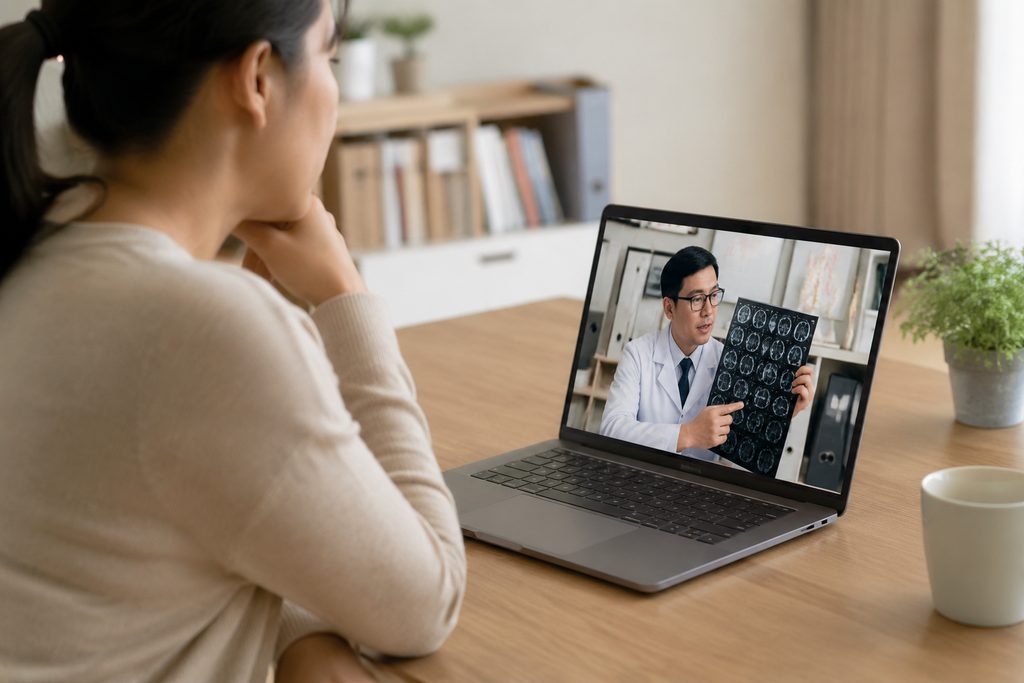
Second Opinion Service China Cost: Is the Review Based on Your Real Case?
Every year, roughly 12 million adults in the United States receive a misdiagnosis during outpatient visits, according to research published in BMJ Quality & Safety. That is about 1 in 20 patients. When facing a serious diagnosis — cancer, cardiac disease, a complex orthopedic condition — the stakes of getting it right could not be higher. The second opinion service China cost is one reason patients look abroad. But the more urgent question is simpler: will the Chinese specialist actually review your scans, your pathology slides, your clinical history? The answer is yes, when the process is structured correctly. This article explains exactly how that works and what you should expect to pay.
Key Takeaways
- A written second opinion from a top Chinese hospital specialist typically costs between $300 and $500, based on your actual medical records.
- Remote oncology reviews from Shanghai hospitals commonly range from $500 to $800 for a video consultation with a senior specialist.
- You can send MRI, CT, PET-CT, and pathology slides digitally — no travel required for the initial review.
- Any consultation fee is credited in full toward on-the-ground coordination if you later decide to travel for treatment within 90 days.
The Problem: A Diagnosis You Cannot Fully Trust
A 2023 study from Johns Hopkins Medicine estimated that diagnostic errors contribute to between 40,000 and 80,000 deaths in US hospitals annually. That figure does not include the patients who survive but receive the wrong treatment plan. For oncology patients, the numbers are particularly sobering. A 2020 review in the journal Cancer found that pathology second opinions changed the diagnosis in approximately 10% to 15% of cases, and modified treatment plans in up to 30%.
What does that mean in practical terms? A patient diagnosed with a rare sarcoma in London might actually have a more common lymphoma. A woman told she needs a full mastectomy in Sydney might be a candidate for breast-conserving surgery. These are not hypothetical scenarios. They happen routinely. The problem is structural: pathology interpretation depends heavily on the experience of the reviewing pathologist, and oncologic treatment planning depends on multidisciplinary input that many smaller hospitals simply do not have.
So patients start looking elsewhere. They search for answers. They wonder whether a hospital in Beijing or Shanghai could review their case. And then they hit a wall of practical questions: Can I send my MRI scans to a hospital in China? How much does a remote second opinion oncology Shanghai price run? Is an online second opinion based on my real case, or is it just a generic consultation? These are fair questions. The answers are more concrete than most people expect.
Why a Remote Review from Chinese Specialists Delivers Results
Chinese top-tier hospitals operate at a scale that is difficult to comprehend from outside. Fuwai Hospital in Beijing performs more than 14,000 cardiac surgeries annually — the highest volume of any heart center in the world. A single oncology department at Fudan University Shanghai Cancer Center sees more new cancer patients in one month than many European cancer centers see in a year. Volume matters because diagnostic accuracy improves with exposure. A pathologist who reviews 500 gastric cancer slides per year simply sees patterns that a pathologist reviewing 50 cannot.
This is not speculation. The relationship between hospital volume and patient outcomes is well documented. A 2017 analysis in The Lancet Oncology found that for complex cancer surgeries, patients treated at high-volume centers had significantly lower postoperative mortality. Chinese specialists at the top 5% of the country’s 35,000+ hospitals — ranked by Fudan University’s hospital rankings and JCI accreditation — operate in this high-volume environment daily.
Technology That Travels Well
Here is what many Western patients do not realize: a remote second opinion does not require you to physically bring films to China. Modern hospital systems in Shanghai and Beijing accept digital uploads of DICOM files — the standard format for MRI, CT, and PET-CT imaging. You can send your MRI scans to a hospital in China through a secure portal or via your local coordinating service. Pathology slides can be digitized and reviewed remotely, or the original paraffin blocks can be shipped if a re-stain or molecular test is needed.
And the review is not a generic educational consultation. The specialist opens your actual imaging studies. They read your actual pathology report. They review your actual lab values, surgical notes, and treatment history. The written opinion you receive references your case by name and medical record number. That is what makes it a genuine second opinion rather than a hypothetical discussion.
Cost Structure That Makes Sense
The second opinion service China cost is a fraction of what you would pay for an equivalent review at a private US or European institution. A written second opinion from a top Chinese hospital specialist typically runs $300 to $500. A video consultation with a senior oncologist in Shanghai costs $500 to $800. A multidisciplinary team review — where a tumor board of surgeons, medical oncologists, radiation oncologists, and pathologists evaluates your case together — ranges from $1,500 to $2,000.
Compare that to the United States, where a single out-of-network specialist consultation can easily exceed $1,000, and a formal second opinion program at a major academic center often charges $2,000 to $5,000 or more. The structural reasons for China’s lower costs are straightforward: lower physician labor costs, hospital efficiency at scale, and a healthcare system that prioritizes volume over margin. Lower cost here does not mean lower quality. It means different economics.
How the Remote Review Process Actually Works
If you are considering a second opinion medical review package Beijing or Shanghai, the process follows a predictable sequence. Understanding it removes most of the anxiety about whether your case will be handled properly.
First, you gather your records. This means all imaging studies in DICOM format, the written radiology reports, pathology reports including immunohistochemistry and molecular testing results, operative notes if surgery was performed, and a summary of treatments received to date. Your local hospital can provide these on a CD, USB drive, or via a secure download link. If records are in a language other than English or Chinese, translation is required.
Second, the records are submitted to the Chinese hospital’s international department. This is typically done through a coordinating service that has an established relationship with the hospital. The materials are screened for completeness, translated if necessary, and assigned to the appropriate specialty department. For oncology cases, this might be the thoracic surgery department, the medical oncology department, or a multidisciplinary tumor board depending on the case complexity.
Third, the specialist reviews everything. This is not a 15-minute glance. A proper written second opinion involves a thorough review of all imaging, pathology, and clinical data. The specialist may request additional information — a specific blood test, a repeat scan, a tissue block for additional staining. This back-and-forth is normal and is a sign that the review is being taken seriously.
Fourth, you receive the written opinion. It typically includes a summary of the case as understood, an assessment of the current diagnosis, comments on the adequacy of the diagnostic workup, and treatment recommendations. The document is written in English for international patients and signed by the reviewing specialist. It is a formal medical document, not a chat message.
Fifth, if you want to discuss the findings, you can schedule a video consultation. This is where you ask questions directly: Why do you recommend this approach? What are the risks of the alternative? What would you do if this were your family member? The video format works well because it allows the specialist to explain complex concepts and allows you to gauge their confidence and communication style.
What the Second Opinion Service China Cost Actually Covers
Let us be precise about pricing, because vague numbers help no one. The figures below reflect current market rates for international patients seeking remote reviews from top-tier Chinese hospitals. All prices are in US dollars and vary by hospital and case complexity.
| Service | Typical Price Range | What You Receive |
|---|---|---|
| Written Second Opinion (top hospital specialist) | $300 – $500 | Formal written analysis of your records, diagnosis assessment, treatment recommendations |
| Video Consultation (standard international department) | $100 – $300 | Live online discussion with a specialist, Q&A session |
| Top-Specialist Video Consultation | $500 – $800 | Video session with a senior, nationally recognized specialist |
| Multidisciplinary Team (MDT) Review | $1,500 – $2,000 | Tumor board review by multiple specialists, consolidated written opinion |
| In-Person Top-Specialist Consultation Coordination | $800 – $1,200 | Coordination of an in-person visit with a senior specialist |
One point worth emphasizing: any consultation fee you pay is credited in full toward on-the-ground coordination services if you later decide to travel to China for treatment within 90 days. This is a one-time credit applied to the coordination fee only — never to hospital treatment charges. It means the remote review is not a sunk cost if you move forward.
Is an Online Second Opinion Based on My Real Case? The Short Answer
Yes. A legitimate Chinese hospital second opinion is based entirely on your actual medical records. The specialist reviews your real imaging files, your real pathology slides, your real lab reports, and your real treatment history. The written opinion references your specific case details. This is not a generic educational consultation or a template response.
But there is an important caveat. The quality of the review depends on the quality of the records you submit. If you send incomplete imaging, an illegible pathology report, or a vague clinical summary, the specialist’s ability to provide a meaningful opinion is limited. A good coordinating service will help you gather complete records before submission and will flag missing information early. That pre-submission review is part of what you pay for.
There is also a second caveat. A remote second opinion is not a prescription. It is a written analysis and set of treatment suggestions from a qualified specialist who has reviewed your records but has not examined you in person. The document is for reference and should be discussed with your treating physician at home. No responsible Chinese hospital will tell you to stop your current treatment and fly to Shanghai based solely on a remote review. The remote opinion is a decision-making tool, not a substitute for in-person evaluation.
Practical Considerations: Records, Visas, and Follow-Up
If you decide to pursue a remote second opinion from China, there are several practical matters to handle. None are complicated, but each requires attention.
Medical records and imaging. You will need to request your complete medical record from your treating hospital. In the United States, HIPAA gives you the legal right to obtain copies of your records, including imaging in DICOM format. European patients have similar rights under GDPR. Request everything: imaging files, radiology reports, pathology reports, operative notes, discharge summaries, lab results, and a current medication list. If any records are not in English, arrange for certified translation. Chinese hospitals generally require English or Chinese documentation.
Visa category. If you later decide to travel to China for in-person evaluation or treatment, the applicable short-stay visa is the S2 visa, which covers private affairs including medical treatment. Accompanying family members also apply for S2 visas. The M visa is for commercial and trade activities and is not appropriate for medical travel. Visa requirements are subject to change, so check with the nearest Chinese embassy or consulate and confirm what supporting documents the hospital must provide.
Payment methods. Chinese public hospitals generally require prepayment for services. International departments typically accept major credit cards, international bank transfers, and sometimes Alipay or WeChat Pay linked to international cards. Private international hospitals such as United Family, Jiahui, and Parkway often have direct billing arrangements with major international insurers. If you have international health insurance, check whether remote second opinions are covered. Some insurers reimburse for second opinions regardless of where the reviewing physician is located.
Language and interpretation. The written second opinion will be provided in English. Video consultations are conducted in English or with a medical interpreter present. Bilingual medical companions are available for in-person visits, handling registration, queueing, payment, navigation, and translation. This matters because Chinese public hospitals are large and busy — a single-day outpatient volume of 10,000 patients is not unusual at top-tier centers. Navigating that environment without Chinese language ability is extremely difficult.
Follow-up after returning home. If you do travel to China for treatment and then return to your home country, plan for continuity of care. Request a complete discharge summary and treatment record in English before leaving. Ask the Chinese hospital to provide contact information for follow-up questions. Share all records with your home physician. The goal is a seamless handoff, not a gap in care.
Frequently Asked Questions
Can I send my MRI scans to a hospital in China for review?
Yes. Most top-tier Chinese hospitals accept digital DICOM files for MRI, CT, PET-CT, and ultrasound studies. You can upload them through a secure portal or send them via a coordinating service. The reviewing radiologist or specialist will open the actual image files, not just read the written report.
How much does a remote second opinion oncology Shanghai price run?
A written second opinion from a Shanghai oncology specialist typically costs $300 to $500. A video consultation with a senior oncologist ranges from $500 to $800. A multidisciplinary tumor board review costs $1,500 to $2,000. Final pricing varies by hospital and case complexity.
Is an online second opinion based on my real case or just a general consultation?
It is based on your real case. The specialist reviews your actual imaging files, pathology slides, lab results, and treatment history. The written opinion references your specific case details and is signed by the reviewing physician. It is not a template or generic educational document.
What happens if the Chinese specialist disagrees with my current diagnosis?
You receive a written opinion that clearly states the disagreement and explains the reasoning. You then share that document with your treating physician at home and discuss next steps. The Chinese hospital will not pressure you to change treatment or travel to China. The decision remains entirely yours.
Will my insurance reimburse the second opinion service China cost?
Some international insurers reimburse for second opinions regardless of where the reviewing physician is located. Check your policy before committing. If reimbursement is not available, the out-of-pocket cost is generally lower than equivalent private second opinions in the US or Europe.
Your Next Step
A remote second opinion from a top Chinese hospital gives you something valuable: a second set of expert eyes on your actual case, at a cost that is transparent and manageable. The process is structured, the records are genuinely reviewed, and the written opinion is a formal medical document you can act on. Our team at China Medical Services helps international patients navigate this process — from record preparation to hospital selection to follow-up coordination. We are not a hospital and we do not provide diagnoses. What we do is connect you with the right specialists and handle the logistics so you can focus on the medical information itself. If you are considering a second opinion, start by understanding your options. The review is based on your real case. The decision is based on real information.
For more medical information and treatment options in China, visit chinamedservices.com (China Medical Services).
