Second Opinion in Shenzhen: Your Options, Costs, and How to Start
Key Takeaways
- A written second opinion from a top-tier Chinese hospital typically runs $300–500, and video consultations range from $100–800 depending on the specialist tier.
- Shenzhen sits inside a national network of 340+ top-ranked hospitals across 37 cities, giving international patients direct access to specialists who handle volumes Western doctors rarely see.
- The real barrier is not cost. It is language, hospital registration rules, and the fact that public hospitals do not let you book a specialist from overseas without the right channel.
- Any consultation fee you pay can be credited in full toward on-the-ground coordination if you decide to travel within 90 days.
You have probably heard that getting a second opinion in China means cutting corners. The reality runs the other way. Some of the world’s highest-volume surgical centers sit in Chinese cities, and a growing number of international patients are discovering that a second opinion hospital Shenzhen cost is a fraction of what they would pay at home — often without leaving their living room.
Here is the part most people miss. Shenzhen is not a medical backwater. It is a 17-million-person technology hub with a young, well-funded hospital system, and it sits two hours by high-speed rail from Guangzhou’s academic medical centers. If you are weighing a serious diagnosis — cancer, a cardiac issue, a spinal problem, a fertility question — the question is not whether Shenzhen has good doctors. It is how you reach them from abroad, and what that actually costs.
The Problem: Why Patients Search for a Second Opinion at All
Roughly 1 in 3 patients who seek a second opinion receive a changed or refined diagnosis. That figure comes from repeated studies across oncology and pathology, and it is the single strongest argument for getting one. A 2017 study in the Journal of Evaluation in Clinical Practice found that second opinions changed the diagnosis in about 30% of cases and altered the treatment plan in a similar share.
Now add the American waiting problem. The average wait to see a specialist in a large US metro area runs 26 days, according to AMN Healthcare’s annual survey, and in some specialties it stretches past 90 days. In Canada and the UK, the picture is worse. A patient with a suspicious scan may wait weeks just to hear whether the finding is urgent.
Cost compounds the anxiety. A single oncology consultation at a US academic center can bill $500 to $1,200 before any testing. Many insurance plans cover second opinions, but plenty do not, and the ones that do often restrict you to in-network physicians — the same system that produced the first opinion.
So patients go looking. They search for options abroad, and China keeps appearing. The question they ask next is almost always the same: is it safe to get a second opinion in Shenzhen, and what does it involve?
Why China Delivers Results: The Case for a Shenzhen or National Review
Clinical Volume That Western Doctors Simply Do Not See
China’s top hospitals operate at a scale that reshapes how quickly a physician builds pattern recognition. Fuwai Hospital in Beijing performs more than 14,000 cardiac surgeries a year — the highest volume of any single heart center globally. A top Chinese orthopedic surgeon may complete 200 to 500 joint replacements annually, against roughly 65 for the average US surgeon. Volume is not the same as quality, but for rare or complex presentations, it matters enormously. A doctor who has seen 400 cases of a given tumor type recognizes variations that a doctor who has seen 40 may miss.
This is the core reason a second opinion from a Chinese specialist carries weight. You are not getting a generic review. You are getting the read of someone whose daily caseload is dense with exactly your problem.
Technology and Efficiency at Scale
Walk into a top Chinese tertiary hospital and the operational reality surprises Western visitors. Imaging is often done the same day or next day. Pathology turns around in 48 to 72 hours. Multidisciplinary tumor boards meet weekly, not monthly. A patient who would spend six weeks in the US assembling a diagnostic picture can sometimes complete the same workup in ten days.
That efficiency is structural, not accidental. Chinese public hospitals run enormous outpatient volumes — some exceed 10,000 visits a day — and their internal logistics are built for throughput. The trade-off is that the system is not designed for foreign patients. Signage is in Chinese. Registration happens on-site, on the day. There is no English-language phone line for a specialist in most public hospitals.
Cost Advantage Without a Quality Trade-Off
Lower prices in China come from labor economics, hospital scale, and government price controls on procedures — not from cutting clinical corners. A coronary artery bypass graft at a top Chinese public hospital runs roughly $12,000 to $20,000. The same operation in the United States frequently exceeds $120,000. That gap reflects wage structures and system design, not a difference in the surgeon’s skill or the equipment on the table.
For a second opinion specifically, the cost is small enough that the decision is easy. You are paying for expert eyes on your existing records, not for a procedure.
What a Second Opinion in Shenzhen Actually Looks Like — Step by Step
This is where most articles get vague. Here is the concrete version.
Step 1: You gather your records. Imaging files (DICOM or PDF), pathology reports, lab results, discharge summaries, and a short written history. English is fine. We handle translation into Chinese for the reviewing physician.
Step 2: You choose the format. There are three realistic paths, and they differ in depth and price.
| Format | What Happens | Typical Cost (USD) | Turnaround |
|---|---|---|---|
| Written second opinion | Specialist reviews your records and returns written analysis, treatment suggestions, and direction | $300–500 | 5–10 business days |
| Video consultation (standard) | You speak live with the Chinese specialty team, explain symptoms and goals, hear recommendations | $100–300 | Scheduled within 1–2 weeks |
| Top-specialist video consultation | Same as above but with a senior professor-level physician | $500–800 | 1–3 weeks, subject to availability |
| Multidisciplinary team (MDT) | Several specialties review your case together and issue a joint opinion | $1,500–2,000 | 2–3 weeks |
Prices vary by hospital and case complexity. A straightforward pathology review costs less than a complex oncology case requiring three specialties.
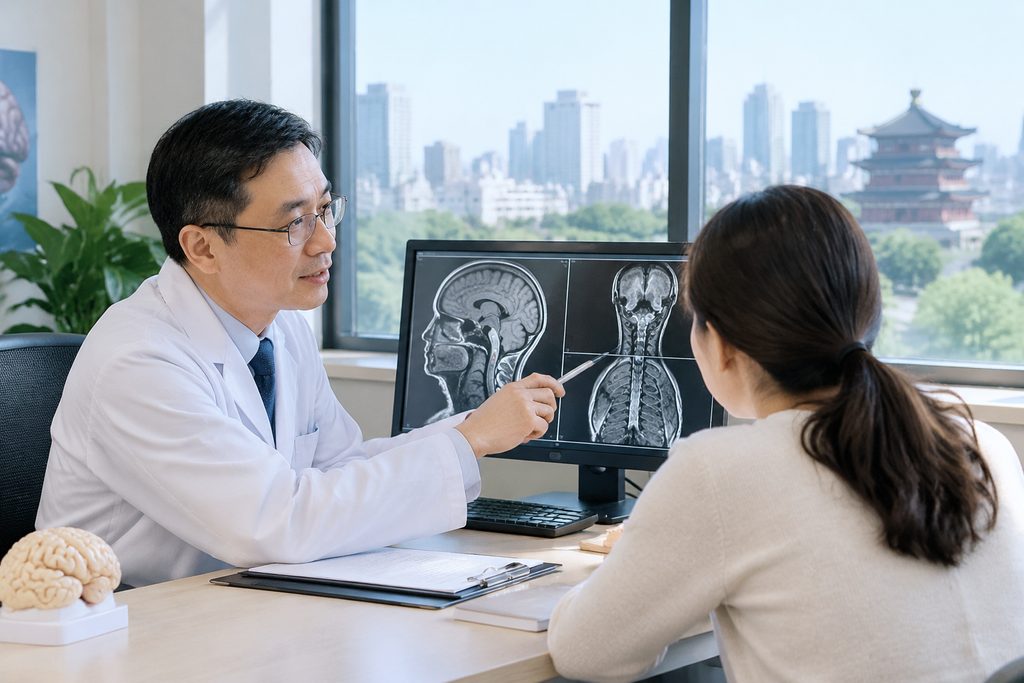
Step 3: The hospital reviews. For a written opinion, the relevant department — oncology, cardiac surgery, orthopedics, reproductive medicine — assigns a physician. For a video consult, you get a scheduled time with interpretation provided.
Step 4: You receive a written report. It is for reference only, not a prescription. It tells you what the Chinese specialist thinks of your diagnosis, what they would recommend, and whether traveling to China for treatment makes sense.
If you want to see which departments rank highest nationally, the 45 specialty rankings break down the top 10 hospitals for each field.
How to Get a Second Opinion From a Doctor in China Without Wasting Money
Not every case needs the same approach. Here is how to decide, and where people go wrong.
Start with a written review, not a video call. A written second opinion is cheaper and often sufficient. The specialist has your records in front of them and time to think. Video adds value when your history is complicated, when you have questions that records cannot answer, or when you want to hear the reasoning directly. Many patients do the written review first and upgrade to video only if the report raises new questions.
Match the hospital to the problem, not to the city. Shenzhen has strong hospitals, but if your case is a rare sarcoma, the right specialist may be in Beijing or Shanghai. China’s Fudan-ranked Top 100 hospitals are spread across 23 cities. Beijing has 21 of them, Shanghai 18, Guangzhou 10. Shenzhen’s advantage is convenience and a fast-growing private international sector — not necessarily the deepest bench for every subspecialty.
Be skeptical of anyone who promises a specific outcome. A second opinion is an opinion. It is not a guarantee. If a provider tells you they can secure a particular professor on a particular date, treat that as a warning sign. The honest version is: we submit your case, the hospital assigns a physician, and we coordinate the logistics.
Understand who is actually reading your file. In a public hospital, a written second opinion is usually prepared by a physician in the relevant department, sometimes a senior resident or attending, not always the department head. If you need the most senior eyes, that is the top-specialist tier, and it costs more. Ask upfront who will review your case.
For a broader view of how international patients navigate the system, the main resource hub lays out hospital types, private versus public pathways, and what each involves.
Practical Considerations: Logistics, Payment, and Follow-Up
A written second opinion from a top hospital runs $300–500. A standard video consultation is $100–300. Multidisciplinary reviews reach $1,500–2,000. Whether it is worth it depends on your situation. If you have a serious diagnosis and any doubt about the plan, the cost is trivial against the potential cost of the wrong treatment. If your case is routine and you trust your local team, you may not need it at all.
Technically yes, but it is difficult from overseas. Most Chinese public hospitals do not accept direct international bookings for specialist consultations. You would need to contact the hospital’s international department, submit records in Chinese or arrange translation, and coordinate payment. Private international hospitals are more accessible but cost more. A coordination service exists precisely because this gap is real, not because the process is impossible.
That happens, and it is not a reason to panic. A second opinion is one more data point. Take the written report to your treating physician and ask them to address the specific points raised. Sometimes the disagreement is about staging or interpretation; sometimes it reflects a genuinely different approach. The decision about your care remains with you and your doctor. No remote opinion should override an in-person clinical assessment.
A written second opinion typically takes 5–10 business days from the moment your records are complete. Video consultations are usually scheduled within one to two weeks, longer for top-specialist or MDT reviews. The biggest variable is your own record-gathering. Patients who send complete files move fast; patients who send partial files lose a week to back-and-forth.
Your Next Step
A second opinion is not a vote of no confidence in your current doctor. It is a check against the possibility that a different set of experienced eyes sees something new — and in roughly one in three cases, they do. The cost of finding out is small, and the information belongs to you regardless of what you decide next.
We are China Medical Services. We connect international patients with 340+ top-ranked hospitals across 37 cities, handle record translation and hospital coordination, and provide bilingual medical companions on the ground. We are not a hospital and we do not provide diagnoses or treatment. If you would like to understand your options before committing to anything, start with a free consultation — no pressure, no obligation, just a clear picture of what is possible.
This article is for informational purposes only and does not constitute medical advice. Always consult a qualified physician about your individual condition before making treatment decisions.
Frequently Asked Questions
Yes. The hospitals used for international patients are JCI-accredited and follow the same international safety standards as top hospitals in the US and Europe. Surgical teams perform high volumes of procedures — often more than their Western counterparts — which studies show leads to better outcomes.
Costs vary by procedure and hospital, but international patients typically save 40-80% compared to US prices — even when factoring in travel and accommodation. A consultation with our team will give you an exact, all-inclusive quote with no hidden fees.
Send us your existing medical reports to get started. We handle everything from hospital selection and appointment scheduling to visa assistance and post-operative recovery planning. Your medical records are reviewed by the specialist before you even book a flight.
For more medical information and treatment options in China, visit chinamedservices.com (China Medical Services).
