Cancer Care in Shanghai for International Patients: Costs, Hospitals, and How to Start
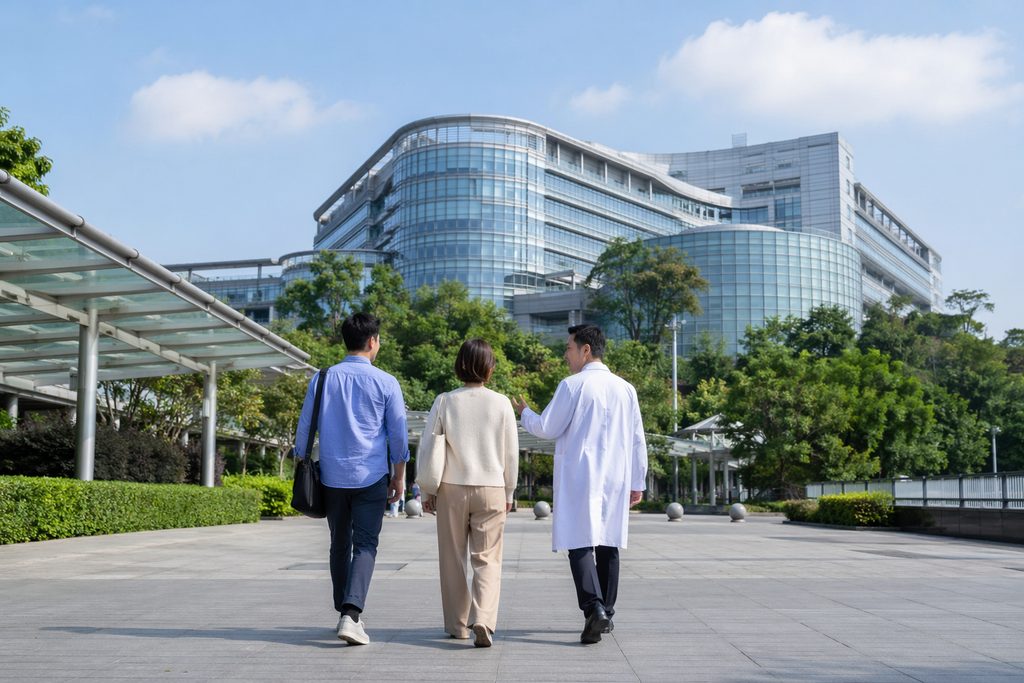
When 52-year-old David from Portland was diagnosed with stage II colorectal cancer, his first instinct was to trust his local oncology team. Then came the estimate: $180,000 for surgery plus adjuvant chemotherapy, with a six-week wait just to see a surgical oncologist. His wife, a nurse, started researching alternatives. A colleague mentioned that cancer treatment cost Shanghai for international patients often runs a fraction of U.S. prices, at hospitals that perform more oncology surgeries in a month than many American centers do in a year.
That single sentence changed their search. What follows is what our team would have told them over a long phone call — the real numbers, the real bottlenecks, and the parts nobody puts in a brochure.
## Is Cancer Treatment in China Safe for International Patients?
This is the question every patient asks first, and it deserves a direct answer.
China’s top-tier public hospitals — the ones ranked by Fudan University’s hospital index and accredited by JCI — meet international standards for surgical safety, pathology, imaging and chemotherapy protocols. A 2023 analysis published in *The Lancet Regional Health – Western Pacific* noted that China’s high-volume cancer centers report post-operative mortality rates for major oncologic surgery comparable to leading Western institutions. Volume matters here. Shanghai’s top cancer hospital handles well over 100,000 outpatient oncology visits annually, and surgical teams there perform hundreds of the same procedure each year.
What differs is not the medicine. It’s the system around it.
Public hospitals in China are enormous. A single outpatient day at a major Shanghai hospital can exceed 10,000 patients. Signage is in Chinese. Registration queues start before dawn. If you don’t speak Mandarin, you cannot navigate this alone — and that’s not a sales pitch, it’s simply how the infrastructure works.
The safety question, then, splits into two parts. Is the clinical care safe? At the top tier, yes. Is the *experience* safe — meaning you understand your diagnosis, your consent forms, your medication schedule, and your follow-up plan? Only if someone qualified is standing next to you.
## How This Actually Works, Step by Step
Here is the sequence, from your living room to a hospital bed in Shanghai.
Step one: gather your records. You send us your existing pathology report, imaging (CT, MRI, PET scans in DICOM format), biopsy slides if available, and a summary of treatments already received. Nothing moves forward without these.
Step two: written second opinion. The relevant Chinese specialty — surgical oncology, medical oncology, radiation oncology, or a combination — reviews your file and returns a written analysis: whether the case is treatable here, what approach they’d recommend, and roughly what it would cost. This typically takes three to seven business days. Cost: $300–500.
Step three: video consultation. If the written opinion looks promising, you speak directly with the Chinese team online. You ask questions. They explain their reasoning. This is where most patients decide whether they trust the plan. Cost: $100–300 for a standard international department, $500–800 for a top-specialist session.
Step four: visa and logistics. For medical travel to China, the applicable short-stay category is the S2 visa, issued for medical treatment and private affairs, subject to the latest embassy or consulate requirements and supporting hospital documents. Accompanying family members apply under the same category. Processing commonly takes one to two weeks. We prepare the hospital invitation letter and document package you’ll need.
Step five: arrival and in-person consultation. In China, surgery cannot be scheduled from overseas without an in-person examination at a public hospital. You arrive, we accompany you to the appointment, and the surgeon confirms the plan face to face.
Step six: treatment and recovery. Admission, surgery, chemotherapy or radiation proceed according to the confirmed plan. A bilingual companion stays with you through registration, payment, pharmacy pickups and discharge instructions.
## Best Cancer Hospital in Shanghai for Foreigners: What the Rankings Actually Say
Fudan University’s annual hospital rankings are the closest thing China has to a national quality benchmark. The overall Top 100 list uses letter grades (A++++ down to A) rather than numeric positions — so anyone claiming a hospital is “number 3 in China” is inventing precision that doesn’t exist. The specialty reputation rankings, however, do list a Top 10 per discipline across 45 specialties, including oncology.
Shanghai is home to 18 hospitals on the Fudan Top 100 — the second-highest concentration in the country after Beijing. For cancer specifically, the names that come up repeatedly in international patient conversations include the city’s dedicated cancer center and the oncology departments of its major university hospitals. Several rank among China’s top 10 for oncology in the specialty reputation list.
For a foreign patient, the practical shortlist usually narrows along three lines:
– Dedicated cancer hospitals — deepest oncology expertise, highest surgical volume, most clinical trials. Busiest, least English-friendly on the standard channel.
– International departments of top public hospitals — the same senior specialists, English coordination, faster scheduling, higher fees.
– Private international hospitals — JCI-accredited, English-speaking staff, direct insurance billing, Western-style rooms. Smaller oncology programs; complex surgery is often referred out.
You can browse the full Fudan-ranked list grouped by city on our top hospitals in China directory, and filter by oncology on the specialty rankings page. For Shanghai specifically, the Shanghai city page lays out every major hospital with contact pathways.
## A Realistic Timeline
Nobody plans around waiting. Everybody waits. Here’s what the calendar actually looks like.
| Stage | Typical Duration | What Slows It Down |
|---|---|---|
| Record collection and translation | 3–10 days | Missing pathology slides; hospitals that release scans slowly |
| Written second opinion | 3–7 business days | Complex cases needing multi-specialty review |
| Video consultation scheduling | 2–7 days | Time zone gaps; specialist availability |
| S2 visa application | 7–15 business days | Document errors; consulate backlogs; peak seasons |
| Travel and arrival | 1–3 days | Flight availability; jet lag recovery |
| In-person consultation and pre-op workup | 3–10 days | Additional imaging or labs the surgeon orders |
| Admission to surgery | 3–14 days | Hospital bed availability; pre-op clearance |
| Hospital stay and recovery | 1–4 weeks | Procedure type; complication management |
| Follow-up and return home | 1–2 weeks | Wound checks; imaging confirmation |
Add it up and you’re looking at roughly six to twelve weeks from first email to surgery, assuming no complications and no visa hiccups. Some patients move faster. Many move slower. Plan for the slower number.
## What Can Go Wrong — and What Happens Then
Honest failure modes, in order of how often we see them.
The case isn’t treatable in China. Sometimes the written second opinion comes back saying the disease is too advanced for surgery, or that the best option is a therapy available closer to home. That costs you $300–500 and saves you a wasted trip. It happens more often than you’d think, and it’s a good outcome, not a bad one.
The visa is delayed or denied. S2 applications can be refused for documentation gaps or consular discretion. There is no appeal that moves fast. Recourse: reapply with a stronger hospital letter, or explore whether treatment can begin after a later arrival date.
The surgeon recommends a different plan after seeing you in person. This is common and not a bait-and-switch. Imaging from abroad rarely tells the whole story. If the revised plan no longer makes sense for you, you can decline and go home. No hospital can compel treatment.
Complications during or after surgery. Top Chinese hospitals manage complications competently, but you are far from your home support network. Travel insurance with medical evacuation coverage is not optional for this trip. Buy it before you book flights.
Language breakdowns in small moments. A nurse explains a medication change in rapid Mandarin. A discharge summary is handwritten. This is precisely where a bilingual companion earns their fee — not in the operating room, but in the hallway at 9 p.m.
## How to Get Cancer Treatment in Shanghai as a Foreigner: Evaluating Providers
Whether you work with us or go direct, apply the same tests.
Ask who reviews your file. A real second opinion comes from a named specialty team, in writing, with reasoning you can read. If the answer is vague — “our experts will look at it” — walk away.
Ask what happens if the appointment falls through. Reputable coordinators refund coordination fees when they can’t deliver. Anyone who keeps the money regardless is selling hope, not service.
Check the hospital, not the intermediary. Every hospital we work with has a public profile. Verify it on the Fudan list or the hospital’s own international department page. If a “partner hospital” doesn’t appear anywhere official, that’s a red flag.
Understand what you’re paying for. Our bilingual medical companion service starts at $300 per day (4-hour half day or 8-hour full day) and covers registration, queuing, payment assistance, wayfinding, translation and accompaniment. It does not include buying priority access to a specific doctor. If a provider describes their fee as an “access fee” or implies queue-jumping, that’s a model built on something we won’t do.
Ask about the credit mechanism. Any consultation fee you pay us — written opinion, video session, MDT — is credited in full toward on-the-ground coordination if you travel to China within 90 days. It’s a one-time credit applied to the coordination fee only, never to hospital treatment charges.
## Practical Considerations: Records, Visa, Payment, Follow-Up
Records. Get your pathology slides physically released, not just the report. Chinese surgical teams often want to re-read the slides themselves. DICOM files on a USB drive or secure cloud link, not printed films.
Visa timing. Apply for the S2 as soon as you have the hospital’s supporting documents. Don’t book flights before the visa is in hand. Family members traveling with you need their own S2 applications.
Payment. Public hospitals require prepayment — typically a deposit before admission, settled in full at discharge. International credit cards work at international departments; standard channels often prefer local payment methods. Private international hospitals frequently bill insurance directly. Most public-hospital care is reimbursed after the fact by your insurer, if your policy covers treatment abroad. Confirm coverage in writing before you travel.
Language. Assume nothing is in English unless you’re in an international department. Bring printed copies of your medication list and allergy information in both English and Chinese.
Follow-up at home. Before discharge, request a complete written summary — operative notes, pathology, imaging, medication schedule — in English. Your oncologist at home will need it. Arrange a video follow-up with the Shanghai team for 4–6 weeks after you return; most international departments offer this.
What does cancer treatment cost in Shanghai for international patients?
It varies by hospital and case complexity, but major oncologic surgery at a top public hospital commonly runs $12,000–25,000, versus $100,000 or more in the United States. Chemotherapy cycles typically cost $800–3,000 each depending on regimen. International department fees run roughly 1.5–2 times standard public-channel pricing. Request a written estimate before committing — no reputable provider quotes a final number without reviewing your records.
Can I book a cancer care appointment at a Shanghai hospital before I arrive?
Standard public outpatient registration cannot be reserved from overseas — you take a number on the day. What can be arranged in advance is an appointment through the hospital’s international department or VIP channel, which is how most foreign patients secure a confirmed specialist slot. Surgery itself cannot be scheduled until you’ve been examined in person. Our appointment coordination service starts at $300 and is refunded in full if we can’t secure the requested booking.
Is cancer treatment in China safe for international patients who don’t speak Mandarin?
The clinical care at JCI-accredited and Fudan top-ranked hospitals is safe by international standards. The navigation is not. Consent forms, medication instructions, discharge summaries and daily ward communication all happen in Chinese. Going without a qualified interpreter is the single most common mistake we see. A bilingual medical companion costs from $300 per day and prevents the misunderstandings that cause real harm.
Do I need a special visa for medical treatment in China?
Yes. The applicable short-stay category is the S2 visa, issued for medical treatment and private affairs, subject to current embassy or consulate requirements and supporting hospital documents. Accompanying family members apply under the same category. Note that the M visa is for commercial and trade activities and is not a medical visa. We prepare the documentation package, but visa approval is always at the consulate’s discretion.
What if the Chinese doctors say my case can’t be treated there?
It happens, and it’s valuable information. You’ll have spent $300–500 on a written second opinion and avoided a costly, exhausting trip. In some cases the team will suggest a treatment approach available in your home country instead. A second opinion that says “don’t come” is still a second opinion doing its job.
## Your Next Step
The core message is simple: Shanghai’s top cancer hospitals offer world-class clinical care at a fraction of Western prices, but the system around that care is built for Chinese-speaking patients with local support. Closing that gap is the entire job. Our team at China Medical Services connects international patients with 340+ top-ranked hospitals across 37 cities — we handle records, second opinions, appointment coordination, visa documentation and bilingual accompaniment. We are not doctors, and we don’t promise outcomes. What we do is make sure you understand every step before you take it.
If you’d like to know whether your case is a fit, start with a free consultation through our patient services page. No pressure, no obligation — just a conversation about what’s possible.
This article is for informational purposes only and does not constitute medical advice. Treatment decisions should always be made with qualified physicians who have reviewed your individual case. Prices are estimates and vary by hospital and case complexity.
Frequently Asked Questions
Yes. The hospitals used for international patients are JCI-accredited and follow the same international safety standards as top hospitals in the US and Europe. Surgical teams perform high volumes of procedures — often more than their Western counterparts — which studies show leads to better outcomes.
Costs vary by procedure and hospital, but international patients typically save 40-80% compared to US prices — even when factoring in travel and accommodation. A consultation with our team will give you an exact, all-inclusive quote with no hidden fees.
Send us your existing medical reports to get started. We handle everything from hospital selection and appointment scheduling to visa assistance and post-operative recovery planning. Your medical records are reviewed by the specialist before you even book a flight.
For more medical information and treatment options in China, visit chinamedservices.com (China Medical Services).
