Shanghai as a Medical Tourism Destination: Costs, Hospitals & Access
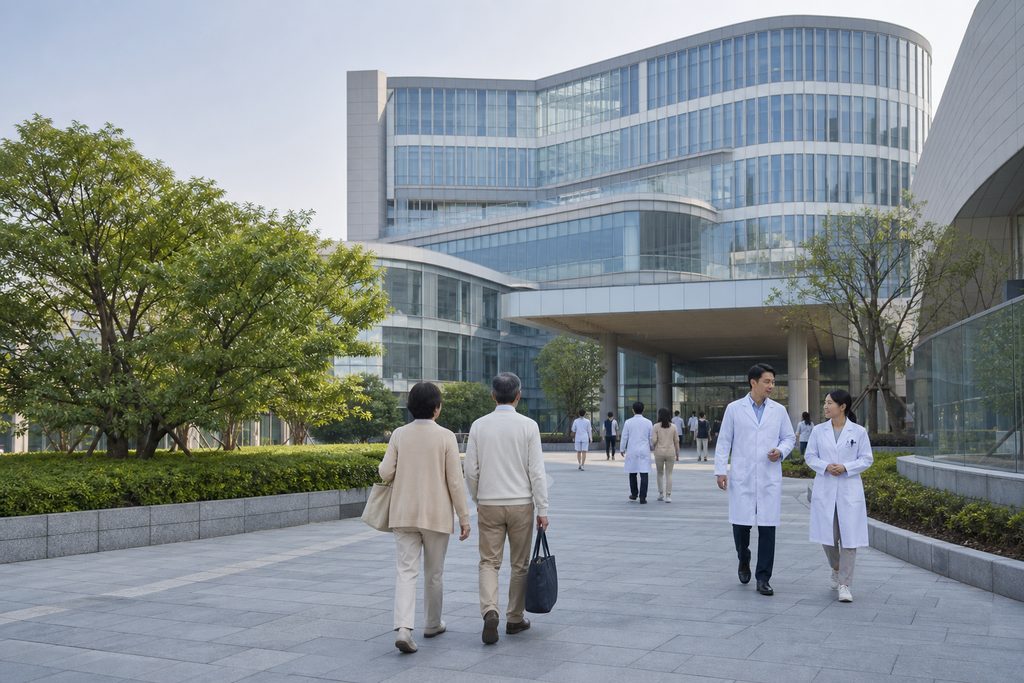
What if the hospital that could solve your problem sits 7,000 miles away — and the price of getting there is a fraction of what you’d pay at home?
Shanghai has quietly become one of the most capable medical cities on earth. Eighteen of its hospitals sit in the Fudan Top 100, the ranking that separates China’s elite institutions from its 35,000+ registered hospitals. For international patients weighing Shanghai as a medical tourism destination, the appeal is rarely one single thing. It’s the combination: cardiac surgery at a fifth of U.S. prices, oncology teams that treat volumes Western centers rarely see, private hospitals where the staff speaks English, and a city that functions as a global hub.
This guide covers what Shanghai actually offers, what it costs, and where the friction points are.
How This Actually Works, Step by Step
Most people assume the first step is booking a flight. It isn’t. Here’s the real sequence.
You gather your existing records — imaging on disc, pathology slides if relevant, lab results, discharge summaries, current medication list. You send those to a coordinating service or directly to a hospital’s international department. A specialist in the relevant field reviews them and returns a written assessment: what they see, what they’d recommend, and whether Shanghai is even the right place for your case. That review takes days, not months.
If the answer is yes, the next step is a video consultation. You speak with the Chinese team directly, through an interpreter if needed. You explain your symptoms and goals; they explain their thinking. Only after that conversation does anyone talk about dates.
Then comes the practical layer. Appointment coordination, a hospital medical card, a visa letter from the hospital, and — critically — an in-person visit once you land. Chinese public hospitals generally do not let you book an ordinary outpatient slot from overseas. You register on the day, in person, in a queue. Surgery follows a face-to-face consultation, not a remote agreement. Patients who want to lock in a specialist and a date ahead of arrival go through the hospital’s international or VIP channel instead, which costs roughly 1.5 to 2 times the standard fee.
That single fact reshapes how you should plan. Remote preparation gets you 80% of the way. The last 20% happens on the ground.
What Shanghai’s Hospitals Actually Offer International Patients
Shanghai’s medical landscape splits into three tiers, and knowing which one fits your case matters more than any ranking.
Top public hospitals. Fudan University’s Zhongshan Hospital and Ruijin Hospital are the names that come up most often. These are enormous institutions — daily outpatient volumes in the tens of thousands — with deep surgical experience and research programs. They are also, frankly, hard to navigate without Chinese. Signage, registration systems, and most physician interactions run in Mandarin.
Private international hospitals. United Family, Jiahui, Parkway, and Raffles operate English-speaking facilities with JCI accreditation and direct insurance billing. You get Western-style scheduling, shorter waits, and a familiar service culture. You also pay more, and for highly complex surgery, the top public centers often carry more specialized depth.
Traditional Chinese medicine. Shanghai has strong TCM institutions for acupuncture, tuina massage, and herbal treatment — genuinely useful for chronic pain, rehabilitation, and conditions where Western medicine has plateaued. Not a replacement for surgery.
For a condition-by-condition view of which institutions lead in each specialty, the 45-specialty rankings are a better starting point than any general list.
A Realistic Timeline
People underestimate the administrative tail. Here’s what the calendar actually looks like for a typical surgical case.
| Stage | Typical Duration | What’s Happening |
|---|---|---|
| Records collection | 3–10 days | Gathering imaging, pathology, labs; translating key documents into Chinese |
| Written second opinion | 3–7 days | Chinese specialist reviews your file and responds in writing |
| Video consultation | 1–2 weeks to schedule | Direct conversation with the clinical team, interpreter included |
| Visa (S2) | 1–3 weeks | Application with hospital invitation letter; varies by consulate |
| Appointment lead time | 1–4 weeks | Longer for named senior specialists via international channel |
| Arrival and in-person consult | Days 1–3 on the ground | Face-to-face examination, final surgical planning, pre-op testing |
| Surgery and admission | Case-dependent | Scheduled after the in-person consult, per hospital rules |
| Recovery before flying | 1–6 weeks | Surgeon clears you for air travel; follow-up imaging before departure |
Add buffer. Document translation alone can stall a plan by a week if pathology slides need re-reading. Visa processing times shift with consulate workload. Nobody who has done this well has done it in a hurry.
What Can Go Wrong — and What Happens Then
The honest failure modes, because you deserve them before you book anything.
The specialist says your case isn’t a good fit. This happens. Sometimes the answer is that your condition is better handled closer to home, or that you’re not yet a surgical candidate. That’s a useful answer, not a wasted one.
The appointment you wanted isn’t available. Named senior specialists book out. A coordination service that promises a specific doctor on a specific date is promising something it can’t control. The honest version: we try, and if the booking can’t be secured, the coordination fee is refunded in full.
Visa delays. S2 applications are subject to the latest embassy and consulate requirements and supporting hospital documents. Approval is never guaranteed. Apply with lead time and don’t book non-refundable flights before the visa is in hand.
Complications after surgery. This is medicine. Chinese hospitals handle postoperative care competently, but you should discuss in advance what happens if recovery runs longer than planned — extended stay costs, insurance coverage, and who manages follow-up once you’re home.
Language breakdowns at the wrong moment. A misread consent form or a misunderstood discharge instruction is a real risk in a hospital where almost nobody speaks English. This is the single strongest argument for a bilingual companion, and it’s not a small one.
What It Costs: Real Numbers for International Patients
Price is where Shanghai’s case is strongest, so let’s be specific. The cost of heart surgery in China for foreigners typically lands between $12,000 and $20,000 at a top public hospital for procedures like coronary artery bypass. The same operation in the United States routinely exceeds $120,000. That gap — roughly five to ten times — holds across many major surgical categories.
These are ranges, not quotes. Final pricing depends on hospital tier, surgeon seniority, implant or device choice, length of stay, and complication risk. Private international hospitals sit higher; VIP channels at public hospitals sit at roughly 1.5 to 2 times the standard rate.
On the service side, transparency matters too. A bilingual medical companion runs from $300 per day, covering registration, queuing, payment assistance, wayfinding, and interpretation — not a promise to secure a particular specialist. Written second opinions from top-hospital specialists run $300–500. Video consultations range from $100–300 at standard international departments up to $500–800 with a top specialist, and multidisciplinary team reviews run $1,500–2,000. Hospital appointment coordination starts at $300, with a full refund if the booking can’t be secured.
Any consultation fee is credited in full toward on-the-ground coordination if you proceed within 90 days — a one-time credit applied to the coordination fee, never to hospital treatment charges.
Is Medical Tourism in China Safe and Reliable?
It’s a fair question, and the answer is more nuanced than a yes.
China’s top hospitals produce outcomes comparable to leading Western centers in high-volume specialties — cardiac surgery, oncology, orthopedics, and reproductive medicine among them. The infrastructure is modern, the surgical volume is enormous, and the equipment is current. Fuwai Hospital in Beijing, for instance, performs over 14,000 cardiac surgeries a year, more than any single center worldwide.
The reliability risk isn’t clinical. It’s logistical. Public hospitals operate on a queue-based system designed for Chinese citizens, not foreign visitors. Registration, payment, and communication all assume Mandarin fluency. Public hospitals require prepayment with insurance reimbursement handled afterward; private international hospitals often bill insurers directly.
So the honest framing: the medicine is reliable, the navigation is not intuitive. Patients who arrive unprepared — no records translated, no appointment coordinated, no interpreter — have a materially worse experience than those who plan the logistics as carefully as the clinical side. That’s the entire reason coordination services exist.
Practical Considerations: Records, Visas, Payment, and Language
Records. Bring imaging on disc or via cloud link, pathology slides and blocks if you have them, and a translated summary. Chinese specialists read English imaging reports, but surgical planning documents need Chinese.
Visa. Medical travel uses the S2 visa, annotated for medical treatment, for short stays; S1 applies for stays exceeding 180 days. Accompanying family members apply for S2 as well. Note that the M visa is strictly for commercial and trade activity and has nothing to do with medical treatment — if anyone tells you otherwise, they’re wrong.
Payment. Public hospitals want payment upfront. Private international hospitals frequently bill insurance directly. Confirm which applies to your case before you travel, and check whether your insurer covers treatment in China at all.
Language. If you’re searching for how to find an English speaking doctor in Shanghai, the realistic answer is: private international hospitals, or the international departments of major public hospitals. Outside those channels, expect Mandarin. A bilingual companion bridges the gap during registration, consultations, and discharge.
Follow-up at home. Ask your Chinese surgeon for a written operative report and imaging in a format your home physician can read. Continuity of care depends on it.
Frequently Asked Questions
Partially. You can complete a written second opinion, a video consultation, and appointment coordination remotely. What you cannot do is lock in surgery from overseas at a standard public hospital — that requires an in-person consultation first. International and VIP channels offer more advance scheduling, at higher cost.
Not as a single document. Public hospitals publish standard fee schedules in Chinese, but international patient pricing varies by department, procedure complexity, and channel. The reliable approach is to submit your records and request a written estimate for your specific case.
If you’re using a private international hospital, you can manage without one. If you’re going to a top public hospital — where the specialists and surgical depth often are — you’ll want one. Registration queues, payment windows, and consent discussions all assume Mandarin.
It can. The in-person examination sometimes reveals something imaging missed, and the plan adjusts. This is normal medicine, not a bait-and-switch. Ask upfront how cost estimates handle plan changes, and confirm your insurance position before committing.
Gather your records and request a review. Nothing about that step commits you to travel, surgery, or any payment beyond the review itself. For a broader view of what’s available across the country, see China Medical Services.
Your Next Step
Shanghai rewards preparation. The hospitals are genuinely world-class, the cost advantage is real, and the logistics are solvable — but only if you treat the administrative side as seriously as the clinical one. We’re a coordination service, not a hospital and not a doctor. We don’t provide medical advice, and we can’t promise a specific surgeon or outcome. What we do is translate your records, connect you with the right department through official hospital channels, and make sure you’re not standing alone in a registration queue. If you’d like a free assessment of whether Shanghai fits your case, start with a conversation — no commitment, just clarity.
For more medical information and treatment options in China, visit chinamedservices.com (China Medical Services).
