Shanghai Mental Health Center Guide: China’s #2 Psychiatry for International Patients Seeking Help
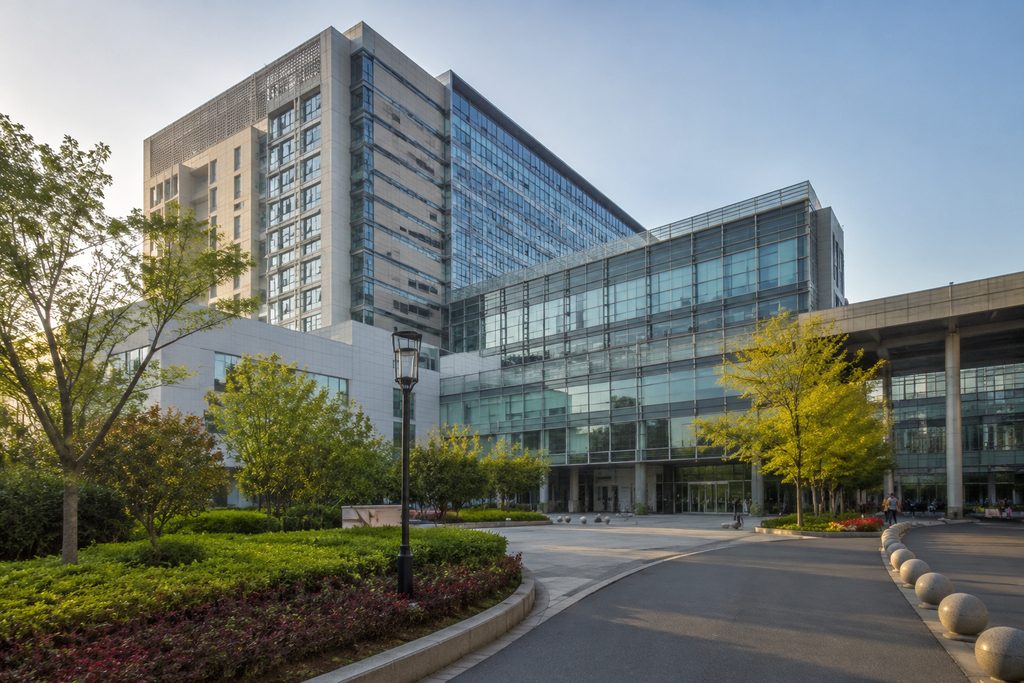
In 2023, a systematic review in The Lancet Psychiatry estimated that mental disorders affect roughly 1 in 8 people globally. That figure doesn’t pause when someone moves abroad. For expats and international residents in Shanghai, a mental health crisis raises a hard question: where do you go when you need a psychiatrist who understands both the clinical picture and the language barrier? The Shanghai Mental Health Center (SMHC) sits on that answer. It’s ranked China’s No. 2 psychiatric institution on the Fudan University specialty reputation list—a detail that matters when you’re trying to separate genuine expertise from hospital marketing. Our team has spent years helping international patients navigate China’s top-tier hospitals, and SMHC is one of the most requested destinations for psychiatric care. What follows is a practical, unfiltered walkthrough of how to access it, what the Shanghai Mental Health Center international patient price structure looks like, and the steps most people overlook until it’s too late.
How This Actually Works, Step by Step
Let’s cut through the confusion. Most foreigners assume they can call SMHC, book an appointment, and fly in. That’s not how China’s public hospital system works. Here’s the real sequence.
First, you send us your existing medical records. That includes any psychiatric evaluation reports, medication history, and—critically—a brief summary of what you’re seeking help for. Our bilingual team translates these documents into clinical Chinese. This step alone trips up many patients who try to go it alone. A Google Translate version of a depression screening won’t cut it with a senior psychiatrist.
Second, we submit your case to SMHC’s International Medical Center. This is the gateway for foreign patients. The general outpatient department doesn’t accept advance bookings from overseas—you’d be lining up at 6 AM with thousands of locals, hoping for a same-day slot. The International Medical Center operates differently. They review foreign cases remotely, confirm which specialist is appropriate, and set a confirmed appointment time. No guesswork.
Third, you receive a written opinion or schedule a video consultation. The choice depends on urgency and whether you’re already in Shanghai. A written second opinion from an SMHC specialist runs $300–500. A video consultation costs $100–300. These are not medical prescriptions—they’re expert analyses of your condition and treatment direction. But they give you clarity before committing to travel.
Fourth, if you decide to proceed with in-person treatment, we coordinate your arrival. That includes helping you apply for an S2 visa with the hospital’s invitation documentation, arranging an airport transfer, and having a bilingual medical companion meet you at SMHC on appointment day. The companion handles registration, payment, navigating the sprawling campus, and real-time translation during your consultation. Without this, you’re functionally illiterate in a system built for Chinese speakers.
This sequence isn’t a sales pitch. It’s the actual logistics required to get a foreign patient from abroad into a top Chinese psychiatric hospital without wasting weeks or getting turned away at the registration desk.
What the Shanghai Mental Health Center International Patient Price Actually Covers
Let’s talk numbers. No one publishes a fixed menu, and any service that claims otherwise is guessing. But based on cases we’ve coordinated, here’s what you should expect.
A standard outpatient consultation with an SMHC psychiatrist through the International Medical Center typically ranges from $200–400. This is the specialist’s time, not a rushed 10-minute slot. Psychiatric evaluations take longer than a general physical—expect 30–45 minutes for an initial assessment. If you need psychological testing, such as cognitive assessments or personality inventories, those add $150–500 depending on the battery required.
Medication management follow-ups are less expensive, usually $100–200 per visit. But don’t budget for a single appointment. Psychiatric treatment is iterative. A realistic plan involves an initial evaluation, a follow-up at 2–4 weeks to assess medication response, and then monthly check-ins for at least three months if you’re starting a new regimen.
For inpatient care, the numbers shift significantly. SMHC’s International Ward—a separate unit with English-speaking nursing staff and private rooms—costs approximately $500–800 per day. That includes accommodation, meals, nursing care, and daily psychiatrist rounds. A typical inpatient stay for severe depression or anxiety disorder runs 2–4 weeks. Do the math: a 21-day admission at the midpoint lands around $13,650. Compare that to the United States, where a similar private psychiatric inpatient stay averages $800–1,500 per day, and the cost differential becomes stark. The Shanghai Mental Health Center international patient price is roughly one-half to one-third of equivalent care in major Western cities.
One detail that surprises patients: medication costs are separate. Psychiatric drugs dispensed through SMHC’s pharmacy are typically much cheaper than Western equivalents—generic SSRIs might run $10–30 per month—but you’ll pay out-of-pocket and claim reimbursement from your international insurance later. SMHC’s International Medical Center doesn’t do direct billing with foreign insurers.
A Realistic Timeline
Most people underestimate how long this takes. Here’s an honest breakdown from initial contact to stable treatment.
| Stage | What Happens | Duration |
|---|---|---|
| Days 1–3 | You send medical records. We translate and prepare a clinical summary in Chinese. | 2–3 business days |
| Days 4–7 | Case submitted to SMHC International Medical Center. Specialist reviews and confirms suitability. | 3–5 business days |
| Days 8–14 | Written second opinion delivered, or video consultation scheduled and completed. | 5–7 business days |
| Weeks 3–4 | If proceeding in-person: S2 visa application with hospital invitation letter. Visa processing times vary by embassy. | 1–2 weeks (typical) |
| Week 5 | Travel to Shanghai. In-person consultation at SMHC with bilingual companion. | 1 day |
| Weeks 6–10 | Follow-up appointments, medication adjustments, possible therapy sessions. | 4–6 weeks |
| Month 3 | Stable treatment plan established. Transition to remote follow-up or local provider back home. | Ongoing |
The bottleneck is rarely the hospital. SMHC’s International Medical Center moves quickly for foreign patients—often faster than you’d expect. The real delays are document translation quality, visa processing at your home country’s Chinese embassy, and your own decision-making timeline. If you’re in crisis, this sequence can compress to about three weeks from first contact to in-person care. But don’t plan on that. Plan on five to six weeks and be relieved if it’s faster.
What Can Go Wrong — and What Happens Then
Let’s be blunt. Things don’t always go smoothly. Here are the failure modes we’ve seen and what we do about them.
The specialist declines the case. Sometimes an SMHC psychiatrist reviews your records and determines they’re not the right fit—perhaps your condition requires a subspecialty they don’t cover, or the complexity exceeds what can be managed with a foreign patient who may not stay for long-term follow-up. This happens in about 10–15% of cases. When it does, we pivot. Shanghai has other strong psychiatric options: Huashan Hospital’s psychiatry department, the Jiahui International Hospital mental health clinic, or private practitioners with Western training backgrounds. We redirect your case to the next-best match within 48 hours.
The visa gets delayed. An S2 visa application requires an invitation letter from the hospital. If SMHC’s administrative office is slow to issue it—rare, but it happens during Chinese public holidays—your timeline slips. We chase the hospital daily. If the delay exceeds a week, we escalate through the International Medical Center’s patient liaison. There’s no magic wand, but persistent bilingual follow-up works better than an anxious email in English.
You arrive and the diagnosis changes. Psychiatric diagnoses are not lab tests. An initial evaluation might reveal a different condition than what your home-country records suggested. Bipolar disorder misdiagnosed as depression is the classic example. This isn’t a failure—it’s good medicine. But it means your treatment plan shifts, possibly extending your stay. We adjust logistics accordingly, including visa extensions if needed. An S2 visa can be extended in Shanghai for medical reasons; it’s paperwork-heavy but routine.
You need inpatient care you didn’t plan for. If the psychiatrist recommends hospitalization and you didn’t budget for it, we don’t pressure you. We present the clinical rationale, the cost estimate, and the alternatives—including returning home for inpatient care with a detailed treatment recommendation from SMHC. The decision is yours. Our role is to make sure you understand the medical reasoning, not to fill beds.
Does Shanghai Mental Health Center Treat Depression? Yes — And Much More
The short answer: does Shanghai Mental Health Center treat depression? Absolutely. It’s one of the most common conditions they manage. But that question misses the bigger picture of what this institution actually does.
SMHC is not a single clinic. It’s a massive academic medical center with over 1,800 inpatient beds, multiple specialized departments, and a research output that lands it consistently in China’s top two psychiatry rankings. The mood disorders unit handles major depressive disorder, bipolar spectrum illnesses, and treatment-resistant depression—including cases where first-line SSRIs have failed. They offer pharmacotherapy, cognitive behavioral therapy, and—for appropriate cases—repetitive transcranial magnetic stimulation and modified electroconvulsive therapy.
Beyond depression, SMHC’s subspecialty reach is broad. The anxiety disorders program treats generalized anxiety, panic disorder, OCD, and PTSD. The early psychosis intervention unit is one of China’s leading centers for first-episode schizophrenia and schizophreniform disorder. There’s a dedicated child and adolescent psychiatry department, a geriatric psychiatry unit for dementia and late-life depression, and a sleep disorders center that handles insomnia and circadian rhythm disturbances. Addiction psychiatry—covering alcohol, benzodiazepine dependence, and internet gaming disorder—is another core strength.
For international patients, the relevant question isn’t whether SMHC treats a given condition. It’s whether they can manage it within the constraints of a foreign patient who may only stay for weeks, not months. Chronic conditions requiring years of psychotherapy aren’t suited to a short-term medical travel model. Acute stabilization, medication optimization, and diagnostic clarification are. That’s the honest boundary.
If you’re looking for the best psychiatric hospital Shanghai for foreigners, SMHC is the strongest public option by reputation. But it’s not the only option. Private international hospitals like Jiahui and United Family offer English-speaking psychiatrists with Western training backgrounds and shorter wait times—at a higher price point. The trade-off is depth of subspecialty expertise versus convenience. SMHC wins on the former; private hospitals win on the latter. We help patients weigh that based on their specific diagnosis, not a generic ranking.
Practical Considerations: Records, Visa, Payment, and Follow-Up
Medical records. You can’t walk into SMHC empty-handed. Bring everything: psychiatric evaluation reports, medication lists with dosages and dates, any neuroimaging or lab results, and—ideally—a summary letter from your current psychiatrist explaining the treatment history and the clinical question you want answered. If records aren’t in English, we translate them. If they’re in English, we still translate them. SMHC’s senior psychiatrists read English medical literature, but clinical documentation needs to be in Chinese for the hospital record system.
Visa. Repeat this to yourself: you need an S2 visa for short-term medical treatment in China. Not an M visa—that’s for commercial activities. Not an L visa—that’s for tourism and technically doesn’t cover hospital visits. The S2 requires an invitation letter from the hospital confirming your appointment. We help you obtain that letter and guide you through the application. Processing times vary by country; budget two weeks minimum.
Payment. SMHC’s International Medical Center requires payment at the time of service. Cash, UnionPay, and major international credit cards are accepted. You’ll receive detailed receipts for insurance reimbursement. If your international health insurance covers overseas psychiatric treatment, confirm pre-authorization requirements before you travel. Some insurers require a treatment plan in advance; we can help you obtain that from SMHC after the initial evaluation.
Language. The International Medical Center has English-speaking coordinators, and some senior psychiatrists speak functional English. But the depth of a psychiatric interview—nuanced emotional states, subtle symptom descriptions, cultural context—demands precise translation. Our bilingual medical companions are not just interpreters. They understand psychiatric terminology in both languages and can convey the clinical meaning, not just the words. This is the single factor that most determines whether a cross-cultural psychiatric consultation succeeds or fails.
Follow-up at home. Psychiatric care doesn’t end when you leave Shanghai. The goal is to hand you back to your home-country provider with a clear treatment plan. SMHC can provide a detailed discharge summary in English—medication regimen, therapy recommendations, warning signs to monitor. For ongoing medication management, some patients arrange periodic video follow-ups with their SMHC psychiatrist. Others transition fully back to local care. We help coordinate the handoff so you’re not left holding a prescription in Chinese with no idea what to do next.
Frequently Asked Questions
You cannot book directly through SMHC’s public registration system from overseas. The route is through the International Medical Center, which accepts foreign patient referrals with translated medical records. Our team handles this submission and confirms a specialist appointment—typically within one week of receiving your documents. Walk-in attempts at the general outpatient department will almost certainly fail without Chinese language ability and a local registration card.
SMHC is ranked No. 2 nationally on the Fudan University specialty reputation list, behind only Peking University Sixth Hospital in Beijing. International patient feedback consistently highlights the clinical depth—senior psychiatrists who manage complex, treatment-resistant cases that stumped providers elsewhere. The friction points are predictable: language barriers outside the International Medical Center, a campus that’s confusing to navigate, and administrative processes built for Chinese citizens. With a bilingual companion, these become manageable. Without one, they’re exhausting.
For outpatient care, budget $200–400 per consultation plus $100–500 for any psychological testing. For a three-month course of treatment with monthly follow-ups, expect $1,500–3,000 total excluding medication. Inpatient care is the larger variable: $500–800 per day for the International Ward, with typical stays of 2–4 weeks. Medication costs are low by Western standards—$10–50 per month for most generic psychiatric drugs. Compared to U.S. private psychiatric care, total costs run one-half to one-third. Insurance reimbursement depends on your policy; confirm overseas psychiatric coverage before committing.
Yes, but with a caveat. SMHC offers cognitive behavioral therapy, interpersonal therapy, and supportive psychotherapy. However, the therapy model is more structured and time-limited than the open-ended psychodynamic therapy common in Western private practice. If you need weekly therapy for a year, SMHC isn’t the right fit—you’re better served by a private English-speaking therapist in Shanghai or telehealth with a provider in your home country. If you need focused, evidence-based therapy as part of a short-term treatment plan, SMHC can provide it.
Your Next Step
Navigating psychiatric care in a foreign country is overwhelming even when you’re well. When you’re struggling, it can feel impossible. That’s the gap we fill. Our team doesn’t diagnose or treat—we handle the logistics, the translation, the hospital coordination, and the in-person support so you can focus on getting better. If you’re considering SMHC or another top Chinese psychiatric hospital, start with a free consultation. We’ll review your situation, tell you honestly whether this path makes sense for your case, and map out what it would take. No pressure, no commitment—just clarity from people who’ve done this hundreds of times.
Request a free consultation to discuss your case with our patient coordination team
For more medical information and treatment options in China, visit chinamedservices.com (China Medical Services).
