Rehabilitation in Shanghai for International Patients: Costs, Hospitals, and How to Start
Rehabilitation in Shanghai for International Patients: Costs, Hospitals, and How to Start
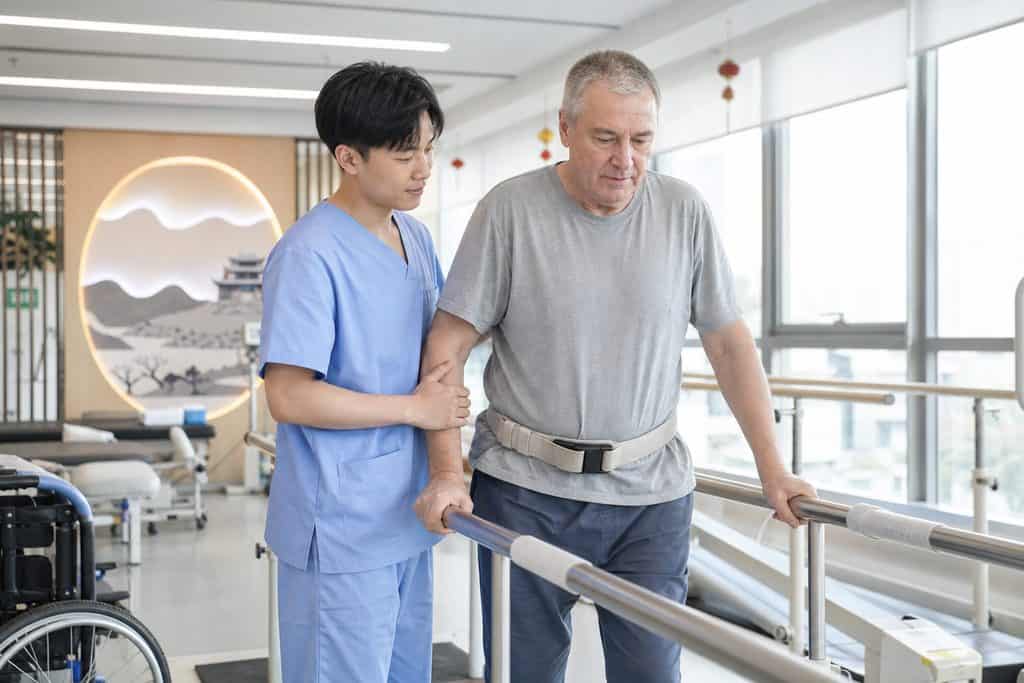
Shanghai treats more international rehabilitation patients than any other mainland city, and the numbers explain why. The city is home to 18 hospitals on the Fudan Top 100 list — second only to Beijing — and a cluster of JCI-accredited private facilities built specifically for English-speaking patients. For families searching for rehabilitation centers in Shanghai for foreigners, the practical reality is this: you can access stroke, orthopedic, and neurological rehab at roughly one-fifth to one-tenth of U.S. prices, but you cannot simply book a public hospital bed from overseas. The pathway runs through international departments, private hospitals, or a coordination service that handles registration and language support.
That gap between “available” and “bookable” is where most patients get stuck. Understanding it before you book flights will save you weeks.
Rehabilitation Options in Shanghai for International Patients: The Short Answer
Shanghai offers three distinct tiers of rehabilitation, and they are not interchangeable. Private international hospitals give you English-speaking therapists, direct insurance billing, and same-week scheduling. Public hospital international departments give you access to China’s highest-volume rehabilitation medicine programs at roughly 1.5 to 2 times the standard public rate. Standard public rehabilitation wards are the least expensive option but require in-person registration and Mandarin fluency, or a bilingual companion.
Cost ranges from roughly $80 to $150 per therapy session at private facilities, and $30 to $70 per session in public hospital rehab departments. A full inpatient stroke rehabilitation program — typically four to eight weeks — generally runs $8,000 to $25,000 depending on hospital tier, therapy intensity, and length of stay. Those figures vary by hospital and case complexity, and final quotes come only after the hospital reviews your records.
Key takeaway: Shanghai’s advantage is not just price. It is volume. Chinese rehabilitation hospitals treat far more stroke and post-surgical cases per year than most Western facilities, which translates into deep practical experience with complex recovery.
Who This Is Right For — and Who It Isn’t
Rehabilitation is not one service. It is a category, and Shanghai fits some patients far better than others.
Typically a good fit:
- Stroke survivors past the acute phase who need intensive daily physical, occupational, and speech therapy
- Post-operative orthopedic patients — hip and knee replacement, spinal surgery, sports injury repair — who need structured recovery
- Patients with neurological conditions such as Parkinson’s disease or traumatic brain injury seeking long-course therapy
- Families comparing costs: a four-week inpatient program in Shanghai can cost less than one week in a U.S. rehab facility
- Patients who want traditional Chinese medicine integrated into recovery — acupuncture and tuina are widely available alongside conventional therapy
Probably not a good fit:
- Anyone in an unstable acute medical state. Shanghai hospitals will not admit a patient who needs active emergency intervention during travel
- Patients who cannot tolerate a long-haul flight or a 10-plus hour journey
- Those expecting a Western-style private room at public-hospital prices — that combination does not exist
- Patients whose home country offers fully covered, high-quality rehab with a short wait. If your insurance covers it and the wait is under a month, staying home is usually simpler
- Anyone seeking guaranteed recovery outcomes. No rehab program anywhere can promise that
The Options, Compared
Here is how the three tiers stack up on the variables that actually affect your decision.
| Factor | Private International Hospital | Public Hospital International Dept. | Standard Public Rehab Ward |
|---|---|---|---|
| English-speaking staff | Yes, throughout | Usually yes | Rarely |
| Cost per therapy session | $80–$150 | $50–$100 | $30–$70 |
| 4-week inpatient program | $15,000–$25,000 | $10,000–$18,000 | $8,000–$14,000 |
| Insurance billing | Direct billing common | Pay first, claim later | Pay first, claim later |
| Booking from overseas | Yes, direct | Yes, via international office | No — in-person registration |
| Typical wait for admission | Days to 2 weeks | 1–3 weeks | Variable, often longer |
| Therapy intensity | Moderate, comfort-focused | High | High |
| Room standard | Western private room | Private or semi-private | Shared ward typical |
Which column suits you? If you are paying out of pocket and want comfort and English service without complication, the private tier is the straightforward choice. If your priority is maximum therapy hours per dollar and you have a companion who speaks Mandarin or you hire a bilingual medical companion, the public international department delivers more rehabilitation per yuan. The standard public ward makes sense mainly for long-stay patients with a Mandarin-speaking family member already in Shanghai.
Finding the Best Physical Therapy Hospital in Shanghai for International Patients
This is the question that determines everything else, and the honest answer is that “best” depends on your diagnosis. Shanghai does not have one dominant rehab hospital. It has several strong programs with different specialties.
For neurological rehabilitation — stroke, brain injury, spinal cord injury — the major teaching hospitals affiliated with Fudan University and Shanghai Jiao Tong University run high-volume programs. Their rehabilitation medicine departments appear among China’s top-ranked specialties in the Fudan hospital rankings, which assess departments by peer reputation rather than advertising. For orthopedic recovery, the city’s leading orthopedic departments handle post-surgical rehabilitation as part of a continuous care pathway, which matters because your surgeon and your therapist can coordinate directly.
Private international hospitals serve a different role. They are the right choice when you need English-language therapy five days a week, direct insurance billing, and a schedule that starts within days. Several carry JCI accreditation, the same international standard used by hospitals in the United States and Europe.
One practical note: if your rehabilitation follows surgery performed in China, staying within the same hospital system simplifies everything. Records transfer internally, and the surgical team can adjust the rehab plan. If you are arriving with a surgery performed elsewhere, bring complete operative notes and imaging — Chinese rehab physicians will want them before designing a program.
You can browse department-level rankings for rehabilitation medicine and related specialties through our specialty rankings by department, and compare Shanghai options on the Shanghai city hospital guide.
How Much Does Stroke Rehab Cost in China?
Stroke rehabilitation is the single most common reason international patients seek rehab in China, so it deserves its own numbers.
A typical inpatient stroke rehabilitation program in Shanghai runs four to eight weeks. At a public hospital international department, expect $10,000 to $18,000 for four weeks, covering bed, daily physical therapy, occupational therapy, speech therapy where needed, nursing, and basic medications. Private international hospitals run $15,000 to $25,000 for the same period. Outpatient therapy, for patients stable enough to live independently, costs $30 to $100 per session depending on tier and therapy type.
What drives the variance? Four things: therapy intensity (one session per day versus three), length of stay, whether you need a private room, and whether you require a bilingual companion. That last item is real. A bilingual medical companion typically runs from $300 per day, and for a patient who speaks no Mandarin, it is often the difference between a workable program and a frustrating one.
Compare that to the United States, where inpatient stroke rehabilitation commonly exceeds $2,000 per day, and a four-week program can easily surpass $50,000 before insurance. China’s cost advantage here is not marginal. It is structural.
If you are also weighing treatment options, our guide to top-ranked hospitals in China explains how the Fudan ranking system works and what the tier labels mean.
Is Rehabilitation in China Safe for Foreigners?
This is the question families ask last and worry about most. The honest answer: China’s top hospitals meet international clinical standards, and the risks that exist are logistical rather than medical.
China’s leading rehabilitation departments follow established protocols for stroke and post-surgical recovery, and major hospitals are accredited by the same bodies that assess Western facilities. Infection control in top-tier public and private hospitals is comparable to international norms. Where the system differs is in communication and process — shared wards, queue-based registration, and paperwork that assumes Mandarin literacy.
Be realistic about these friction points: public hospitals require prepayment with reimbursement handled afterward through your insurer; appointment slots cannot always be locked in advance from overseas; and no hospital anywhere will guarantee a specific functional outcome. Any provider promising you a recovery percentage is not being straight with you.
Safety also means matching the right patient to the right setting. A patient who needs 24-hour medical monitoring belongs in an inpatient program, not an outpatient arrangement. A patient with active infection or uncontrolled cardiac conditions should not travel at all until stabilized. These are judgments your current physician should help make before you commit to anything.
Practical Considerations: Visas, Records, and Payment
Visa. Foreigners entering China for medical treatment typically apply for the S2 visa, which covers short-stay medical treatment and private affairs. Stays expected to exceed 180 days fall under the S1 category. Accompanying family members apply under the same category. Requirements change, so confirm current documentation with your nearest Chinese embassy or consulate — and note that the M visa is for commercial and trade activity, not medical treatment.
Medical records. Bring more than you think you need. Operative reports, discharge summaries, imaging on disc, current medication lists, and recent lab work. Chinese rehabilitation physicians design programs from these documents, and missing records delay admission.
Payment. Public hospitals generally require prepayment, with insurance reimbursement handled after you return home. Private international hospitals frequently bill insurers directly, which removes a significant cash-flow burden. Confirm your insurer’s policy on overseas rehabilitation before you travel — many plans cover it, but pre-authorization is usually required.
Language and companionship. If your Mandarin is limited, plan for interpretation from day one. Registration, pharmacy pickup, scheduling, and discharge paperwork all happen in Chinese. A bilingual medical companion handles the queue, the payment counters, and the conversations with therapists so you can focus on recovery.
After you return home. Ask your Shanghai rehab team for a written discharge summary and a home exercise program in English before you leave. Continuity matters — the gains from intensive inpatient therapy fade without a structured follow-up plan.
Frequently Asked Questions
Sometimes, but not always. Private international hospitals and public hospital international departments can often arrange admission in advance once they review your records. Standard public rehabilitation wards generally require in-person registration, which is one reason coordination services exist. Expect the hospital to make the final call on admission timing based on your clinical picture.
It depends entirely on your plan. Some international policies cover overseas rehabilitation with pre-authorization; others exclude it or cap the benefit. Private hospitals with direct billing relationships make the process smoother. Call your insurer before you book anything and get the coverage decision in writing.
Shanghai’s major hospitals have full emergency and specialist backup on site, which is a genuine advantage of receiving rehab inside a large hospital rather than a standalone clinic. If a complication arises, you are already in a facility equipped to handle it. That said, this is also why patients with unstable conditions should stabilize at home first.
Reputable coordination services exist, and so do operators who overpromise. A legitimate service will be clear that it is not a hospital, will not guarantee clinical outcomes, and will quote prices as ranges subject to hospital confirmation. Be cautious with anyone offering a fixed all-in price before seeing your medical records.
Most inpatient rehabilitation programs run four to eight weeks, with stroke recovery often at the longer end. Add a few days on each side for assessment and discharge planning. Many patients extend their stay once they see progress, so build flexibility into your plans.
Your Next Step
Shanghai gives international patients a genuine rehabilitation option: top-tier clinical volume, meaningful cost savings, and a choice between Western-style private care and high-intensity public hospital programs. The friction is administrative, not medical — visas, records, registration, and language. That part is solvable with planning.
We are China Medical Services, a coordination service, not a hospital. We do not diagnose or treat anyone. What we do is match your case to appropriate hospitals, arrange written second opinions and video consultations with Chinese specialty teams, coordinate appointments through official international departments, and provide bilingual medical companions on the ground. If you are weighing rehabilitation in Shanghai, start with a conversation — send us your records and goals, and we will tell you honestly what is realistic.
This article is for general information only and is not medical advice. Rehabilitation decisions should be made with a qualified physician who knows your full medical history.
For more medical information and treatment options in China, visit chinamedservices.com (China Medical Services).
