Shanghai Renji Hospital Gastroenterology: China’s #1 Digestive Disease Center
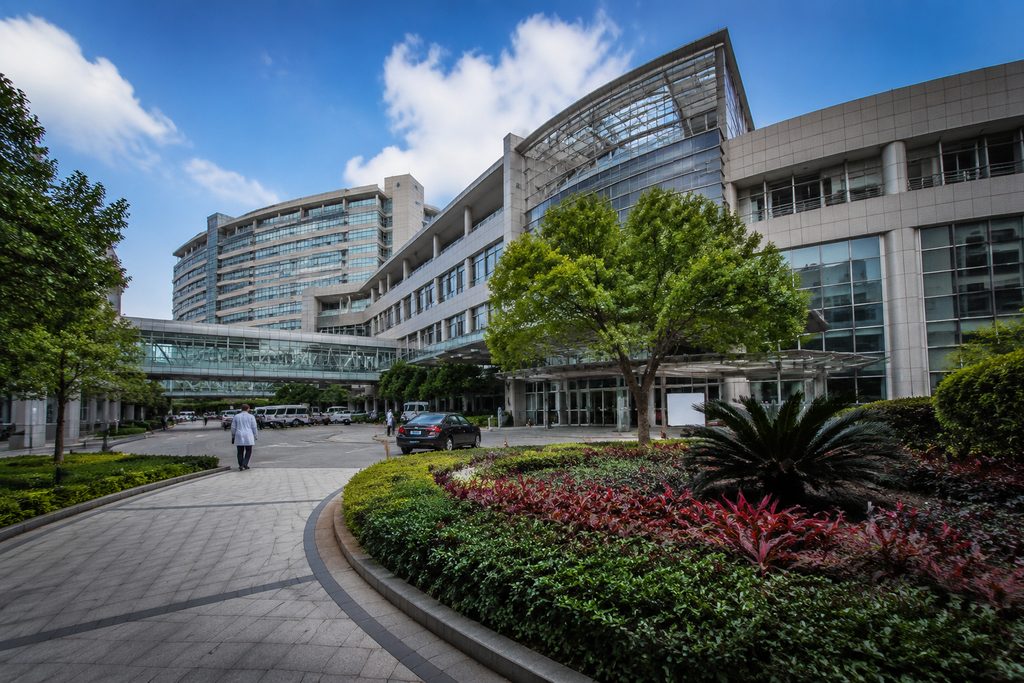
You have probably heard that traveling abroad for medical care is a gamble — lower cost, lower quality. The assumption makes intuitive sense. But in gastroenterology, the data tells a completely different story. At Shanghai Renji Hospital, the Division of Gastroenterology and Hepatology performs upwards of 150,000 endoscopic procedures annually. That volume is not just a number. It is a clinical engine that produces outcomes rivaling — and in some areas surpassing — the most famous Western centers. The challenge for international patients has never been the quality of the care. It has always been access.
Key Takeaways
- Renji Hospital’s GI department is ranked #1 in China by the Fudan University Hospital Rankings, handling over 150,000 endoscopies per year — a procedural volume that directly correlates with higher polyp detection rates and fewer complications.
- For foreign patients, a colonoscopy at Renji through the international VIP channel costs roughly $300–$700, compared to $2,000–$4,000 in the United States, without sacrificing endoscopic technology or specialist expertise.
- Navigating a Chinese public hospital independently — without Mandarin fluency, a local payment system, or an understanding of the registration workflow — will consume days and can result in missed appointments. This is not a place where you can just show up.
- You cannot book a procedure from overseas through the standard public queue. Securing a confirmed appointment and an English-speaking pathway requires coordination through the hospital’s official International Medical Center, which is where a logistics partner becomes essential.
The Problem: Digestive Disease Is Common. Expert Diagnosis Is Not.
Approximately 1 in 3 adults worldwide suffers from a functional gastrointestinal disorder. In Western countries, the pathway to a specialist often winds through months of primary care referrals, insurance pre-authorizations, and scheduling backlogs. A patient in London with persistent abdominal pain might wait 6 to 8 weeks for a diagnostic colonoscopy in the public system. In Canada, the median wait time for gastroenterology consultation stretches past 10 weeks. While they wait, anxiety compounds. A vague symptom becomes a sleepless night.
The cost side is equally punishing. For an uninsured patient in the United States, a diagnostic upper endoscopy with biopsy can easily exceed $2,500. A colonoscopy with polypectomy? Closer to $4,000. These are not luxury prices. They are barrier prices. They force people to delay care. And delayed diagnosis in gastroenterology is dangerous — early-stage colorectal cancer has a 90% five-year survival rate. Late-stage drops below 15%.
Who We Are
We are China Medical Services. We are not a hospital. We do not practice medicine, make diagnoses, or prescribe treatments. What we do is build a bridge. Our team connects international patients with the logistical reality of China’s top-tier hospitals — securing appointments, coordinating bilingual medical companions, and ensuring you never stand alone in front of a Chinese hospital registration counter holding the wrong paperwork. We work with 340+ top-ranked hospitals across 37 cities. Renji Hospital is one of them. And for digestive disease, it is the one that matters most.
Why Shanghai Renji Hospital Gastroenterology Delivers World-Class Results
Clinical Volume That Reshapes Surgical Hands
Renji’s Department of Gastroenterology, led by a team of over 50 senior physicians, houses one of the largest endoscopy units on the planet. The department’s annual endoscopic volume exceeds 150,000 procedures. That includes more than 5,000 ERCPs, over 3,000 ESDs, and a growing number of POEM procedures for achalasia. Volume matters because endoscopy is a tactile skill. A study published in Gastrointestinal Endoscopy demonstrated that endoscopists performing more than 500 colonoscopies annually have significantly higher adenoma detection rates than those performing fewer than 200. Renji’s specialists perform that many in a quarter.
This is the structural advantage. A Western gastroenterologist might see 8 to 12 patients in a half-day session. At Renji, the daily patient throughput is higher, but so is the sub-specialization. One physician focuses exclusively on early gastric cancer resection. Another handles only pancreaticobiliary endoscopy. This is not assembly-line medicine. It is deep, repetitive expertise concentrated in one building.
Technology That Matches Any Western Center
Walk into the endoscopy suite at Renji’s International Medical Center and you will find Olympus 290 series scopes with narrow-band imaging, Fujifilm LASEREO systems, and endoscopic ultrasound equipment identical to what you would see at Mayo Clinic or Charité in Berlin. The difference is not the hardware. It is the workflow. Renji has integrated artificial intelligence-assisted polyp detection into its screening colonoscopy protocol. The AI system flags subtle mucosal changes in real time — a second set of eyes that never blinks. Early data from the department shows this system lifts adenoma detection rates by roughly 8–12% over conventional white-light examination alone.
For foreign patients, this matters because you are not choosing between low-cost and high-tech. You are getting both. The question of “is Renji Hospital good for digestive diseases” is answered by the Fudan ranking, which places it at the very top of China’s gastroenterology departments. But the deeper answer is in the technology stack and the procedural counts that back it up.
The Cost Reality: Why Shanghai Renji Hospital Gastroenterology Price Is a Fraction of Western Rates
Let us address the Shanghai Renji Hospital gastroenterology price directly. A diagnostic gastroscopy through the international VIP channel at Renji typically ranges from $200 to $400. A colonoscopy with biopsy runs between $300 and $700, depending on whether polypectomy is required. An advanced ESD procedure for early gastric cancer might cost $3,000 to $6,000 — still one-third to one-fifth of the US price for the same intervention.
These prices are not lower because corners are cut. They are lower because China’s hospital system operates on a fundamentally different economic model. Physician salaries are not inflated by a fee-for-service insurance system that rewards volume over value. The hospital owns its equipment outright rather than financing it through per-procedure charges. And the sheer scale of Renji — a campus that handles millions of outpatient visits annually — dilutes fixed costs across an enormous patient base.
| Procedure | Renji International VIP (USD) | US Average (USD) |
|---|---|---|
| Diagnostic Gastroscopy | $200 – $400 | $1,500 – $2,500 |
| Colonoscopy with Biopsy | $300 – $700 | $2,000 – $4,000 |
| ERCP | $2,000 – $4,000 | $8,000 – $15,000 |
| ESD (Early Gastric Cancer) | $3,000 – $6,000 | $15,000 – $25,000 |
Prices vary by hospital and case complexity. All figures are estimates for international self-pay patients.
What You Need to Know Before Going Alone
The clinical excellence is real. So are the barriers. We tell every patient this before they book a flight: Shanghai Renji Hospital is a public institution that serves tens of thousands of local patients daily. Without preparation, you will be overwhelmed.
- Visa Requirements: You need an S2 visa annotated for medical treatment. Not an M visa. Not a tourist L visa. The S2 requires an invitation letter from the hospital, medical records, and proof of appointment. Getting that invitation letter independently — without a local contact inside the hospital’s international department — can stall your plans for weeks.
- Payment Systems: Renji’s International Medical Center accepts cash and major credit cards, but the public side of the hospital operates on a prepaid stored-value card system linked to Chinese ID numbers. Foreign patients without a Chinese bank account and a local phone number will find themselves unable to pay for prescriptions, lab tests, or follow-up imaging at public counters. The international wing isolates you from this complexity, but access to it requires coordination.
- Registration Workflow: The public outpatient system does not allow overseas pre-booking. You show up at 6:00 AM, queue for a number, and hope the specialist you need is seeing patients that day. The international VIP channel bypasses this entirely — but it is not a walk-in service. Appointments are coordinated in advance through the hospital’s official international liaison office.
How We Help You Navigate This
These barriers exist for structural reasons, not because anyone is trying to make your life difficult. A hospital built to serve a local population of 25 million people simply does not optimize for a solo traveler from Chicago or Dubai. That is where we come in.
Before you travel, we handle the hospital invitation letter, coordinate your appointment with the specific gastroenterology subspecialist you need, and confirm the procedure date. We also arrange a bilingual medical companion — a professional who speaks fluent English and Mandarin, knows the hospital layout, and handles every logistical touchpoint: registration, payment, escorting you between the endoscopy suite and recovery, and translating your discharge instructions in real time. Our companion service starts from $200 per day.
During your treatment, you focus on your health. We handle the queue tickets, the pharmacy runs, and the insurance documentation. After your procedure, we ensure you have translated medical reports, digital copies of your endoscopic images, and a clear follow-up plan. If you need a written second opinion from a Renji specialist before committing to travel, we can arrange that too — typically $300 to $500 for a formal written report.
And here is the key point: any consultation fee you pay now is credited in full toward on-the-ground coordination if you proceed with treatment within 90 days. You are not paying twice. You are making a deposit on a smoother experience.
Is Renji Hospital Good for Digestive Diseases? The Evidence Speaks.
The Fudan University Hospital Rankings, China’s most authoritative medical ranking system, places Renji’s gastroenterology department at #1 nationally in the specialist reputation榜单. The department is a national key discipline and a designated training center for advanced endoscopic techniques. Its research output — on topics from H. pylori eradication protocols to early gastric cancer detection algorithms — appears regularly in Gut, Gastroenterology, and Endoscopy.
But what matters to a patient is not the publication list. It is the clinical judgment shaped by seeing rare pathology repeatedly. Renji’s IBD center manages one of the largest cohorts of Crohn’s disease and ulcerative colitis patients in Asia. Its liver disease unit handles complex portal hypertension cases that smaller centers might see twice a year. When you ask “is Renji Hospital good for digestive diseases,” the answer is embedded in this daily exposure to complexity. Pattern recognition at this scale cannot be taught in a textbook. It must be lived.
What About the Best Endoscopy Center China for Foreign Patients?
Several Chinese hospitals offer international endoscopy services. But the combination that makes Renji the best endoscopy center China for foreign patients is specific: the #1 Fudan ranking in gastroenterology, the dedicated International Medical Center with English-speaking coordination staff, and the sheer procedural volume that keeps complication rates low. Other centers may have newer buildings or more Western-facing branding. Few have the same depth of subspecialist expertise under one roof.
If you are considering a book endoscopy Shanghai medical tourism package, understand that the package is not a pre-made product you add to a cart. It is a coordination sequence. We confirm the specialist, the procedure date, the pre-procedure consultation, and the recovery timeline. Then we build the logistics around you — airport transfer, hotel recommendations near the hospital in Pudong, and a companion who stays with you through discharge. That is the package. Tailored, not templated.
How Much Does Colonoscopy Cost in Shanghai? A Straight Answer.
The question of how much does colonoscopy cost in Shanghai depends entirely on which pathway you use. A public hospital colonoscopy booked through the standard outpatient queue — assuming you could navigate it — might cost $100 to $200. But you would have no English support, no guaranteed appointment time, and no sedation protocol aligned with Western expectations. The international VIP pathway at Renji, which includes an English-speaking coordinator, a private recovery room, and a board-certified gastroenterologist performing the procedure, ranges from $300 to $700. That is the number to budget for. It is still a fraction of the US cash price, and the clinical quality is equivalent.
Top GI Hospital China International Patient Reviews: What Patients Actually Say
We have coordinated care for patients from over a dozen countries at Renji’s gastroenterology department. The feedback follows a pattern. Patients are initially skeptical — the hospital’s public corridors are crowded, the visual chaos is real, and the cultural difference in bedside manner is noticeable. Chinese physicians tend to be direct and efficient rather than warm and conversational. Then the procedure happens. The endoscopy suite is calm, modern, and staffed by a team that has done this thousands of times. The report is detailed. The images are clear. The follow-up plan is specific.
One patient from Manchester, who came for an ESD procedure after being told in the UK that surgery was his only option, put it this way: “I was terrified walking in. I walked out with my stomach intact and a pathology report that my GP back home called ‘the most thorough he had ever seen.'” The top GI hospital China international patient reviews consistently highlight this gap between the chaotic exterior and the precise interior. Renji is not a medical hotel. It is a high-throughput clinical machine. If you expect spa-like tranquility, you will be disappointed. If you expect expert gastroenterology at a fair price, you will be satisfied.
Frequently Asked Questions
Not through the standard public registration system. The public queue requires in-person registration and a Chinese ID-linked health card. However, Renji’s International Medical Center does accept overseas bookings — but only through a coordinated process that includes medical record review and an invitation letter for your S2 visa. We handle this coordination on your behalf.
Renji’s pathology department processes gastrointestinal biopsies on-site, with results typically available within 3 to 5 working days. If a malignancy is found, the gastroenterology team will coordinate directly with Renji’s general surgery or oncology department for a multidisciplinary consultation. You will not be left to navigate the next steps alone. Our companion stays with you through the diagnosis and helps arrange any follow-up specialist appointments before you leave Shanghai.
Renji’s International Medical Center uses propofol-based sedation administered by a dedicated anesthesiologist, which is the same standard used in Western endoscopy suites. You will be fully unconscious during the procedure and monitored continuously. The recovery bay includes private rooms with nursing observation. If you have specific concerns about sedation, we communicate those to the anesthesia team in advance.
We understand that international travel plans shift. If you need to reschedule, we work with the hospital to find the next available slot. Our appointment coordination fee starts from $300, and if we cannot secure the confirmed appointment we promised, that fee is refunded in full. Cancellation policies for the hospital procedure itself vary, and we make those terms clear before you commit to anything.
Every gastroenterologist at Renji’s International Medical Center holds a senior attending physician title or higher, which in the Chinese system requires at least 10 to 15 years of post-graduate clinical experience. Many have completed fellowships in Japan, Germany, or the United States. We provide you with the performing physician’s credentials and subspecialty focus before you travel. You know exactly who will be holding the scope.
Your Next Step
Shanghai Renji Hospital’s gastroenterology department is not the right choice for every patient. If you need a luxury medical experience with hotel-style amenities, a private international hospital in Shanghai may suit you better. But if your priority is clinical expertise — the kind built on 150,000 procedures a year and a #1 national ranking — then Renji deserves your serious attention. The Shanghai Renji Hospital gastroenterology price makes world-class digestive care accessible. The logistics make it complex. We handle the complexity so you can focus on your health.
If you are considering a procedure at Renji, start with a free consultation. We will review your medical records, confirm which subspecialist is right for your case, and give you a clear cost estimate before you commit to anything. Speak with our team today — no pressure, just a practical conversation about what is possible.
This article is for informational purposes only and does not constitute medical advice. Always consult a qualified physician regarding any medical condition or treatment. Procedure costs are estimates and vary by hospital, case complexity, and exchange rates.
For more medical information and treatment options in China, visit chinamedservices.com (China Medical Services).
