Diabetes Treatment at Shanghai Ruijin Hospital: Ranked #1 in Endocrinology
Key Takeaways
- Ruijin Hospital’s Department of Endocrinology and Metabolism has held the #1 position in China’s Fudan Hospital Ranking for years, managing over 600,000 outpatient visits annually.
- International patients can expect comprehensive diabetes care costs at Ruijin to be roughly 60-80% lower than comparable programs at major US medical centers, though final pricing varies by case complexity.
- Accessing this specific department as a foreigner requires navigating a system with no English-language online booking; walk-in registration is the norm for domestic patients, making preparation essential.
- China does not have a specific “medical visa.” The correct short-term visa category for treatment is S2, and approval requires formal documentation from the inviting hospital.
The Problem: Diabetes Care That Feels Like a Losing Battle
You’ve tracked your HbA1c for years. You’ve cycled through medications, adjusted your diet, and still the numbers don’t move the way your doctor wants. Or maybe you’ve just been diagnosed and you’re looking at a lifetime of management, and the cost projections are staggering. In the United States, the average annual healthcare expenditure for a person with diagnosed diabetes is approximately $19,736, more than 2.6 times higher than what expenditures would be in the absence of diabetes, according to the American Diabetes Association’s Economic Costs of Diabetes report.
That figure isn’t just an abstract statistic. It’s a monthly drain that forces hard choices. It’s the reason some people ration insulin. It’s the reason others look beyond their borders. The search for a better path isn’t about cutting corners. It’s about finding a clinical environment where deep expertise meets a cost structure that doesn’t dismantle your financial future. That search leads some patients to a very specific place: the Department of Endocrinology and Metabolism at Ruijin Hospital, affiliated with Shanghai Jiao Tong University School of Medicine. The department has been ranked first in China for endocrinology by the Fudan University Hospital Ranking, a position it has defended consistently.
Why Ruijin’s Endocrinology Department Delivers Results
Clinical Volume That Reshapes Clinical Intuition
A physician who sees 50 cases of a condition develops a certain pattern recognition. A physician who sees 5,000 develops a different kind entirely. Ruijin’s endocrinology department operates on a scale that is difficult to visualize until you stand in its outpatient hall. The department handles over 600,000 outpatient visits per year. That volume compresses decades of clinical experience into months. For a patient with a complex presentation—atypical type 2 diabetes, monogenic diabetes, or difficult-to-classify metabolic disorders—this matters enormously.
The department isn’t just large. It’s structured around the China National Clinical Research Center for Metabolic Diseases, which means the physicians treating patients are also the investigators designing and running the clinical trials that define new standards of care. This isn’t a passive adoption of international guidelines. It’s active participation in writing them. The team has led major epidemiological studies, including the landmark China National Diabetes and Metabolic Disorders Study, which mapped the true prevalence of diabetes across the country and reshaped public health policy.
Research Infrastructure Translates to Treatment Options
Most patients don’t think about research when choosing a hospital. They should. The Ruijin endocrinology team, led by prominent figures in metabolic research, has pioneered work on the gut microbiota’s role in obesity and diabetes, and on the genetic underpinnings of type 2 diabetes in East Asian populations. What does that mean for a patient? It means access to diagnostic protocols and treatment algorithms that were developed in the same building where you’re being seen. It means the department runs a dedicated biobank with hundreds of thousands of samples, enabling genetic and biomarker analyses that community hospitals simply cannot offer.
The department’s approach to diabetes is not a single-track pharmaceutical protocol. It integrates nutritional intervention, metabolic surgery evaluation, islet cell research, and continuous glucose monitoring technology in a coordinated pathway. For international patients who have been told their options are exhausted, this breadth of investigation can open doors that felt permanently closed.
Is Ruijin Hospital Good for Diabetes Treatment? A Structural Answer
The question “is Ruijin Hospital good for diabetes treatment” gets asked frequently, and the honest answer requires looking at outcomes, not reputation. The department’s clinical data, published in peer-reviewed journals including The Lancet, Diabetes Care, and the Journal of Clinical Endocrinology & Metabolism, demonstrates outcomes in glycemic control, complication reduction, and metabolic surgery that align with top international centers. The difference is structural: Ruijin integrates endocrinology, cardiovascular medicine, nephrology, ophthalmology, and nutrition into a single coordinated workflow, because diabetes damages multiple organ systems simultaneously.
This isn’t a siloed specialty. It’s a metabolic disease command center. That operational philosophy is what separates a top-ranked department from a competent one. And it’s the reason the Fudan ranking—which surveys thousands of peer specialists across China—has consistently placed Ruijin at the top of the endocrinology list.
Diabetes Treatment Shanghai Ruijin Hospital Cost: A Real Breakdown
No conversation about medical travel is complete without transparent numbers. The diabetes treatment Shanghai Ruijin Hospital cost structure differs significantly from what Western patients expect. There is no single all-inclusive package price posted online. Costs are built from components, and they shift based on the complexity of your case, the seniority of the specialist, and whether you access the hospital through the standard public channel or the international VIP department.
What we can provide are benchmark ranges, drawn from actual coordination experience. These figures are for reference and planning. They are not binding quotes—every case requires individual confirmation with the hospital.
| Service Component | Estimated Cost at Ruijin Hospital (USD) | Typical US Cost (USD) for Comparison |
|---|---|---|
| Initial Specialist Consultation (International Dept.) | $150 – $350 | $400 – $700 |
| Comprehensive Diabetes Panel (HbA1c, C-peptide, antibodies, lipids, renal function, etc.) | $200 – $500 | $1,500 – $3,000 |
| Continuous Glucose Monitoring (CGM) Setup & 14-Day Sensor | $150 – $300 | $400 – $800 |
| Written Second Opinion from Endocrinology Specialist | $300 – $500 | $800 – $2,500 |
| Video Consultation with Senior Endocrinologist | $500 – $800 | $500 – $1,200 |
| Inpatient Diabetes Stabilization (3-5 days, including monitoring, medication adjustment, education) | $3,000 – $8,000 | $15,000 – $35,000 |
| Metabolic Surgery Evaluation & Workup (if indicated) | $1,500 – $3,000 | $5,000 – $12,000 |
These numbers tell a clear story. The cost advantage is structural, not promotional. Chinese hospital systems operate with different labor economics, different pharmaceutical pricing, and different administrative overhead. A senior endocrinologist at Ruijin has trained for the same number of years as a US counterpart, sees vastly more patients, and practices in a system where the cost of an MRI or a lab panel isn’t inflated by a multi-layered insurance billing apparatus. The quality is real. The price difference is real. The two facts are not in conflict.
Medical Tourism Diabetes Package China: What’s Actually Included
The phrase “medical tourism diabetes package China” suggests something neat and prepackaged. The reality is more nuanced, and understanding that nuance protects you from disappointment. Ruijin Hospital does not sell a fixed-price “diabetes package” on its website. What exists is a coordinated care pathway that can be assembled based on your specific needs, and which third-party coordination services can package into a coherent timeline with predictable costs.
A well-designed diabetes evaluation trip to Ruijin typically spans 5 to 10 days. It starts with a pre-arrival phase: you send your existing medical records—HbA1c history, medication list, relevant imaging, complication screening results. These are translated and reviewed by the department. A preliminary assessment determines whether an in-person visit is justified. If it is, you arrive with a schedule already roughed out.
Days 1-2 focus on comprehensive diagnostics. This is not a 15-minute consultation. It’s a deep metabolic workup that may include advanced lipid profiling, genetic testing for monogenic diabetes if clinically indicated, body composition analysis, and cardiovascular risk stratification. Days 3-5 shift to the treatment plan conference. You meet the senior specialist, discuss findings, adjust medications, receive nutritional counseling calibrated to your culture and diet, and leave with a written plan that your home physician can implement. If inpatient stabilization is required—for poorly controlled glucose, initiating insulin pump therapy, or managing a complication—the stay extends accordingly.
This is not a wellness retreat. It’s a serious clinical intervention compressed into an efficient timeline. The value is in the depth of investigation and the authority of the resulting plan.
How to Book Appointment Ruijin Hospital Endocrinology Department as an International Patient
This is where the practical reality of Chinese public hospitals hits. You cannot simply go to a website and book an appointment at Ruijin Hospital’s endocrinology department as an overseas patient. The hospital’s domestic registration system requires a Chinese ID number, a local phone number, and often same-day in-person queueing for specialist slots. For a foreigner without Mandarin fluency, this is a non-starter.
The functional pathway is through the hospital’s International Medical Center or VIP department. These channels are designed for patients who need English-capable coordination, expedited scheduling, and a point of contact who manages the administrative friction. The trade-off is cost: international department consultations are priced higher than standard public appointments. The benefit is access: you can actually secure a confirmed appointment before you board a plane.
The documentation you will need includes a copy of your passport, a summary of your medical history in English (which will be translated), recent lab results, and a clear statement of what you hope to achieve. The hospital will issue an invitation letter, which is the foundational document for your S2 visa application. Without that letter, you cannot apply for the correct visa category. This is not a step you can skip or improvise.
Once the invitation letter is in hand, you apply for the S2 visa at the Chinese embassy or consulate in your home country. Processing times vary by jurisdiction, but plan for a minimum of two to three weeks. The S2 visa is issued for short-term private affairs, including medical treatment. It is not an M visa—M is for commercial trade and has no connection to medical travel. Anyone advising otherwise is giving you incorrect information that could result in a visa denial.
Practical Considerations: Logistics, Language, and Follow-Up
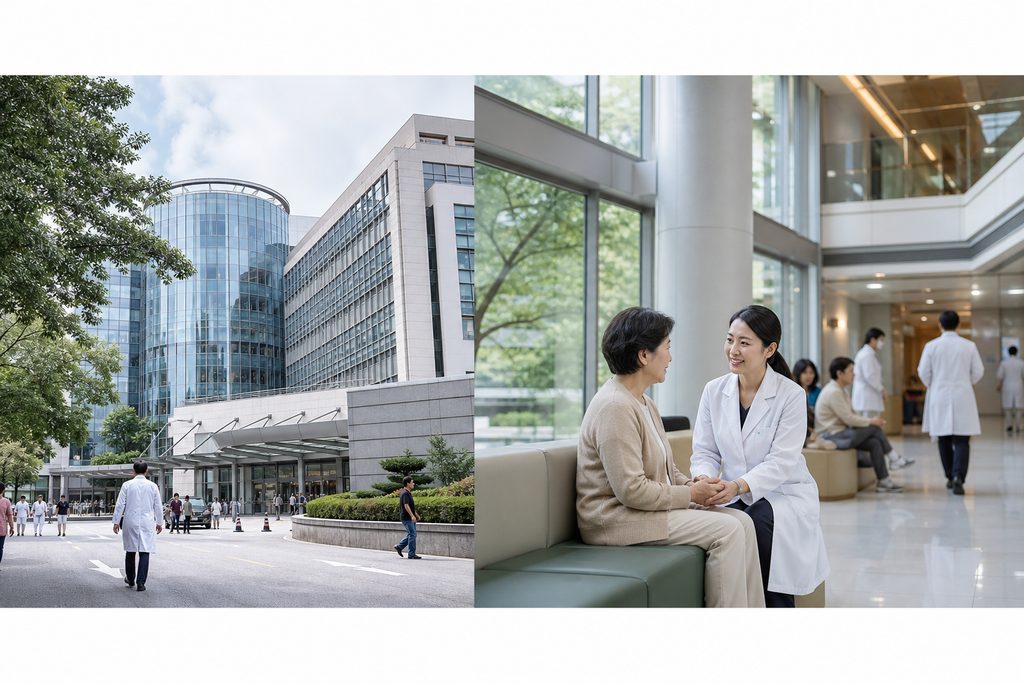
Arriving in Shanghai for treatment is not like arriving for a vacation. You are entering one of the world’s busiest hospital systems, and the experience will test your patience if you are unprepared for the scale. Ruijin Hospital’s campus is enormous. The outpatient building alone processes tens of thousands of patients daily. Signage in English exists but is inconsistent. Registration kiosks, payment counters, pharmacy queues, blood draw stations—each has its own logic and its own crowd.
Payment at the international department is typically required upfront. Major international credit cards are accepted, but it is wise to confirm with your card issuer that transactions in China will not be blocked. Wire transfers are also an option for larger inpatient deposits. The hospital does not direct-bill to foreign insurance companies. You pay, you receive detailed invoices and medical reports in English, and you submit those to your insurer for reimbursement. Check your policy’s out-of-network and international coverage clauses before you travel. Some policies exclude treatment in specific countries or require pre-authorization.
Language is the single largest barrier. Even in the international department, not every nurse or technician speaks functional English. The consulting specialist likely will, but the phlebotomist drawing your blood at 7 a.m. probably will not. This is not a failure of the system—it is a realistic feature of receiving care in a non-English-speaking country. A bilingual companion who knows the hospital’s layout, understands medical terminology in both languages, and can navigate the payment and pharmacy systems transforms the experience from overwhelming to manageable.
After you return home, continuity of care is your responsibility. Ruijin’s specialists will provide a written treatment plan and can offer follow-up video consultations. But they will not coordinate with your local endocrinologist unless you facilitate that connection. Bring your translated records to your next appointment. Make sure your home physician understands the rationale behind any medication changes. A treatment plan only works if it is implemented.
Frequently Asked Questions
No. The ranking comes from the Fudan University Hospital Ranking, which is China’s most authoritative hospital evaluation system. It surveys over 4,000 clinicians nationwide and ranks departments by peer reputation and research output. Ruijin’s Department of Endocrinology and Metabolism has held the top position in this specialty ranking for consecutive years. This is not a paid listing or a tourism promotion—it is a peer-assessed evaluation of clinical and academic strength.
Possibly. Some patients with well-controlled diabetes still seek Ruijin’s evaluation for a different reason: to confirm that their current regimen is optimal, to screen for early complications that routine checks might miss, or to explore newer technologies like advanced hybrid closed-loop systems that are available in China at lower cost. The decision depends on whether you have unanswered questions or unresolved concerns that your current care team cannot address. If you’re satisfied and stable, a trip to Shanghai may not be necessary.
Yes, the hospital pharmacy can dispense medications prescribed during your consultation. However, you are responsible for verifying that those medications are legal to import into your home country and that you have the necessary documentation. Some countries require a prescription translated into the local language. Insulin requires proper cold-chain transport during travel. These are your responsibilities to manage. The hospital will provide documentation; they will not handle customs clearance for you.
Ruijin’s international department can arrange follow-up video consultations to discuss post-treatment issues. However, emergency care must be handled locally. The hospital does not provide remote emergency services. Before you travel, establish a clear communication channel—typically email with the international department coordinator—so you know how to reach your consulting physician for non-urgent follow-up questions. For urgent problems, go to your nearest emergency department.
The most reliable way is a written second opinion, which you can obtain before traveling. You send your existing medical records, the endocrinology team reviews them, and you receive a written analysis that tells you whether an in-person visit is likely to add value, what investigations they would recommend, and what outcomes are realistic. This step costs a few hundred dollars and can save you an unnecessary international trip. If the written opinion suggests a clear benefit, you proceed with confidence. If it doesn’t, you’ve gained clarity at low cost.
Your Next Step
Ruijin Hospital’s endocrinology department offers genuine clinical depth at a cost that makes financial sense for many international patients. The challenge is not the quality of care—it’s the complexity of accessing it. At China Medical Services, our team handles the coordination that makes this pathway practical: translating and submitting your records, securing confirmed appointments through the international department, arranging bilingual accompaniment, and advising on visa documentation. We are not a hospital, we do not provide medical advice, and we never guarantee treatment outcomes. What we offer is clarity and logistical competence, so you can make an informed decision. If you want to understand whether a trip to Shanghai’s top endocrinology center is right for your situation, request a free consultation and we’ll talk through your options. No pressure, no pitch—just the information you need.
For more medical information and treatment options in China, visit chinamedservices.com (China Medical Services).
