Top Complex Fracture Hospital: Shanghai Sixth Hospital Orthopedic Care
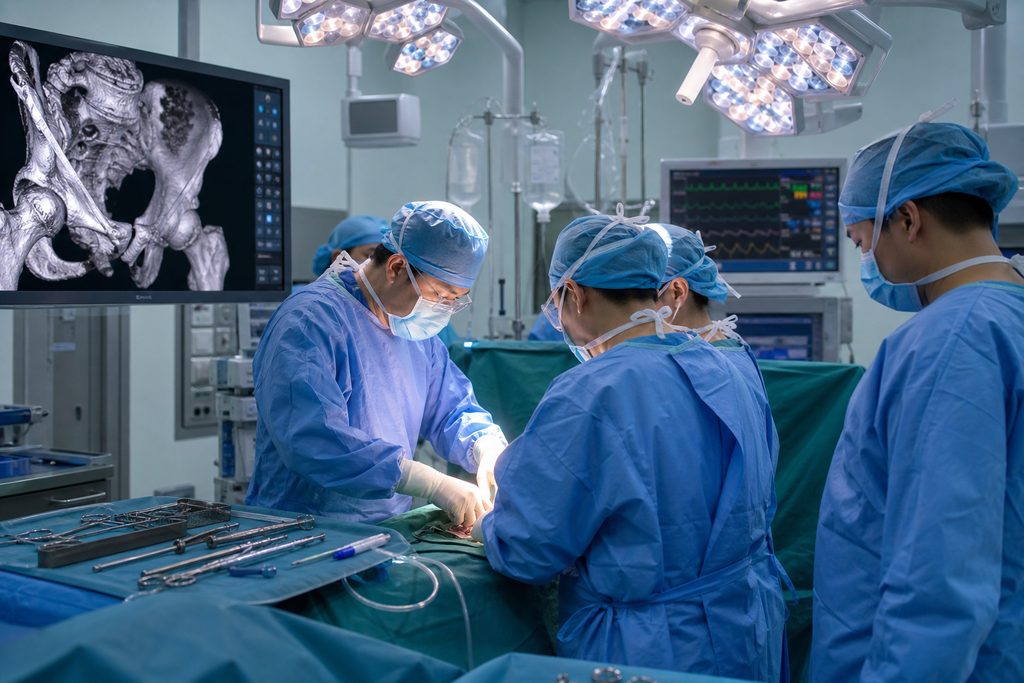
You’ve probably heard that getting surgery in China means rolling the dice on quality. The data says otherwise — especially for orthopedic trauma. Shanghai Sixth People’s Hospital handles over 40,000 orthopedic surgeries every year. That volume dwarfs most Western trauma centers. And for a patient staring down a complex fracture, volume is not a marketing number. It is the difference between a surgeon who has seen your injury pattern fifty times and one who has seen it twice.
The real question is not whether Shanghai Sixth Hospital is good for complex fractures. The question is whether you can navigate the system well enough to access that expertise. Most international patients cannot do it alone. That is where the actual complexity lives — not in the operating room, but in the coordination around it.
Key Takeaways
- Shanghai Sixth People’s Hospital performs more than 40,000 orthopedic procedures annually, making it one of the highest-volume trauma centers globally.
- Complex fracture surgery cost Shanghai Sixth Hospital typically runs 60-80% below comparable US hospital charges, even through the international department.
- Public hospital rules in China require in-person consultation before surgery scheduling — there is no remote booking for standard outpatient channels.
- Language, registration, payment deposits, and post-operative follow-up are the four biggest operational hurdles for foreign patients.
The Problem: Orthopedic Trauma Care Is Priced Like a Luxury Good in the West
In the United States, a complex fracture requiring open reduction and internal fixation — think a comminuted tibial plateau fracture or a pilon fracture — routinely generates hospital charges between $35,000 and $80,000. That is before surgeon fees, anesthesiology, implants, and rehabilitation. For uninsured patients or those with high-deductible plans, the out-of-pocket exposure can exceed $50,000.
Wait times add another layer. In Canada and the UK, semi-elective orthopedic trauma reconstruction can sit on a waiting list for 6 to 18 months. A patient with a malunion or nonunion — where the bone healed wrong or not at all — is not technically emergent. So they wait. And every month of waiting means muscle atrophy, joint stiffness, and a harder recovery later.
This is the reality for approximately 1 in 10 patients who sustain a severe lower-extremity fracture. The initial surgery fails to achieve union, or hardware complications develop. They become repeat customers of a system that already failed them once.
Why Shanghai Sixth Hospital Delivers Results for Complex Fracture Surgery
Clinical Volume That Reshapes Surgical Judgment
Shanghai Sixth People’s Hospital is not just a general hospital with an orthopedic department. It is a designated national center for orthopedic trauma. The emergency department sees a steady stream of high-energy injuries — motor vehicle accidents, industrial crush injuries, falls from height. That translates into a surgical team that performs complex fracture fixation daily, not weekly.
Compare that to a typical US community hospital, where an orthopedic surgeon might handle 2-3 complex fracture cases per month. Volume is not everything, but for fracture patterns that require intraoperative improvisation — choosing between plate configurations, deciding on bone grafting, managing soft tissue envelopes — experience is the single strongest predictor of avoiding complications.
Microsurgical Capability Most Hospitals Do Not Have
Shanghai Sixth is famous for limb replantation and microsurgical reconstruction. The hospital performed China’s first successful severed limb replantation in 1963. That legacy matters for complex fracture patients because open fractures with vascular injury, large soft tissue defects, or bone loss require microsurgical expertise — free flaps, vascular repair, nerve reconstruction — that simply does not exist in most Western trauma centers below the level of a major academic medical center.
A patient with a Gustilo-Anderson type IIIB open tibia fracture needs more than a plate and screws. They need a surgeon who can cover the hardware with viable tissue. Shanghai Sixth does that routinely.
The Cost Structure Is Fundamentally Different
Complex fracture surgery cost Shanghai Sixth Hospital runs from roughly $8,000 to $20,000 for most cases requiring internal fixation, depending on implant type and length of stay. Through the hospital’s international department — which is how foreign patients access care — expect to pay 1.5 to 2 times the standard public rate. That still lands between $12,000 and $30,000.
That is 60-80% below comparable US hospital charges. The reasons are structural: lower labor costs for nurses and support staff, higher patient throughput, centralized implant procurement, and a hospital system built around volume rather than per-procedure margin maximization. Quality does not scale down with price. The implant systems — DePuy Synthes, Smith+Nephew, Stryker — are the same brands used in Boston or Frankfurt.
How International Patients Actually Schedule Complex Fracture Surgery at Shanghai Sixth Hospital
The process is not like booking a hotel. Public hospitals in China operate on a same-day registration system for standard outpatient visits. You cannot call from abroad and reserve a surgery slot. The pathway for international patients runs through the hospital’s international medical center or VIP department.
Here is the realistic sequence:
- Remote records review. You send existing imaging — X-rays, CT scans, MRI — plus surgical history and current medications. A specialist reviews them and gives a written or video opinion on whether Shanghai Sixth is the right fit.
- In-person consultation. You travel to Shanghai for a face-to-face evaluation. The surgeon examines the limb, assesses soft tissue condition, and orders any missing imaging. This step is non-negotiable for surgical planning.
- Surgical scheduling. Once the surgeon confirms the plan, the international department coordinates an admission date. Expect 1-3 weeks between consultation and surgery for non-emergent cases.
- Pre-operative clearance. Blood work, ECG, chest X-ray, anesthesia evaluation. Usually completed in 1-2 days.
- Surgery and inpatient stay. Complex fracture fixation typically requires 5-14 days of hospitalization, depending on soft tissue management and early mobility milestones.
Do not arrive in Shanghai expecting same-week surgery without prior coordination. The international department manages a high volume of foreign patients, and surgeon schedules fill quickly. Remote evaluation first, travel second — that is the sequence that works.
What Recovery Looks Like After Complex Fracture Surgery Abroad
How long is recovery after complex fracture surgery abroad? The honest answer: longer than you want it to be, and the first six weeks matter most.
For a lower-extremity complex fracture — tibial plateau, pilon, distal femur — you are looking at 6-12 weeks of non-weight-bearing or touch-down weight-bearing. That means crutches or a walker. Then 3-6 months of progressive loading and physical therapy. Full recovery, including return to sport or heavy labor, takes 9-18 months.
Upper-extremity fractures move faster. A complex distal radius or proximal humerus fracture might allow light use at 6-8 weeks and near-normal function by 4-6 months.
Here is what the timeline looks like for a typical international patient:
| Phase | Timeline | What Happens |
|---|---|---|
| In-hospital recovery | 5-14 days after surgery | Wound care, early range-of-motion, discharge planning |
| Early healing | 2-6 weeks | Strict weight-bearing restrictions, suture removal, first follow-up X-ray |
| Progressive loading | 6-12 weeks | Gradual weight-bearing as tolerated, formal physical therapy begins |
| Functional recovery | 3-6 months | Most daily activities resume, hardware may remain in place |
| Full recovery | 9-18 months | Return to sport or physical work, possible hardware removal discussion |
One thing most patients do not plan for: follow-up imaging. You will need X-rays at 6 weeks, 12 weeks, 6 months, and 12 months. If you return home after surgery in Shanghai, you need a local orthopedic surgeon willing to review those images and communicate with your Shanghai team. This is not optional. It is the difference between catching a hardware failure early and discovering it after the bone has shifted.
Is Shanghai Sixth Hospital Good for Complex Fractures? What the Numbers and Reputation Say
Shanghai Sixth People’s Hospital consistently ranks among China’s top orthopedic hospitals in the Fudan University hospital rankings — the country’s most authoritative hospital evaluation system. Its orthopedic trauma division is considered a national reference center. The hospital’s department of orthopedics is one of the largest in China, with dedicated subspecialty teams for trauma, joint reconstruction, spine, sports medicine, and microsurgery.
For a patient asking “is Shanghai Sixth Hospital good for complex fractures,” the answer is yes — with a caveat. The hospital is enormous. Single-day outpatient volume can exceed 10,000 patients. The orthopedic department alone sees thousands of consultations weekly. Without Chinese language ability and a clear navigation plan, you will be overwhelmed. The clinical expertise is there. Accessing it efficiently is the hard part.
Medical tourism Shanghai Sixth Hospital orthopedic is not a well-worn path like cosmetic surgery in Seoul or cardiac bypass in Bangkok. It is a serious clinical destination for patients who have exhausted options at home — failed fixation, nonunion, complex revision cases, or those facing prohibitive costs. The patients who do best are those who arrive with complete medical records and realistic expectations.
Practical Considerations: Documentation, Visas, and Payment for Shanghai Sixth Hospital Treatment
Before you book a flight, get your paperwork in order. Chinese hospitals require a complete medical file: all prior imaging in DICOM format, operative reports, implant records if hardware is already in place, current medication list, and a referral letter from your home physician if available. Incomplete records mean repeat imaging in Shanghai — which adds cost and delays surgical planning.
For the visa, foreign nationals seeking medical treatment in China apply for an S2 visa with a medical treatment annotation. The hospital’s international department can provide an invitation letter and treatment confirmation to support the application. Family members accompanying the patient also apply for S2 visas. Processing times vary by country — allow 2-4 weeks. Do not book non-refundable flights before the visa is issued.
Payment is upfront. Public hospitals in China, including their international departments, require a deposit before admission. The deposit amount depends on the estimated surgical cost — typically 50-100% of the quoted package price. Major international credit cards are accepted at international departments, but notify your bank in advance to avoid declined transactions. Wire transfers are also common for larger amounts.
Insurance is a mixed picture. Some international insurers with direct billing arrangements in China will work with Shanghai Sixth’s international department. Others require you to pay out of pocket and submit for reimbursement. Check with your insurer before committing. Get pre-authorization in writing if possible.
Request an itemized cost estimate from the international department before you travel. The estimate should break down surgeon fees, implant costs, anesthesia, hospital bed charges, and estimated length of stay. This protects you from surprise charges and gives your insurer something concrete to review.
Frequently Asked Questions
No. The hospital requires an in-person consultation before any surgical scheduling. What you can do remotely is submit your records for a preliminary review — a specialist will assess whether your case is appropriate for Shanghai Sixth and give you a realistic treatment plan before you spend money on travel. This remote step is the smart way to de-risk the trip.
There is no fixed package price. Costs depend on fracture type, implant selection, length of stay, and whether soft tissue reconstruction is needed. As a reference range, international patients should budget $12,000 to $30,000 for complex fracture surgery through the international department. That includes surgeon fees, standard implants, anesthesia, and hospital stay. Complex revision cases or those requiring microsurgical flaps run higher.
This is the hardest question to answer honestly. Your Shanghai surgical team will review follow-up imaging remotely if you send it — most international departments maintain email follow-up channels. But if you develop a deep infection or hardware failure, you need a local surgeon to manage it. Shanghai Sixth cannot fly a team to your home country. Before you travel, identify a local orthopedic surgeon willing to take over post-operative care. If you cannot find one, reconsider whether traveling for surgery is right for you.
In the international department, no. English-speaking coordinators handle registration, billing, and interpretation during consultations. But the moment you step outside that department — to the imaging center, the pharmacy, or the inpatient ward — English coverage thins out. A bilingual medical companion who knows the hospital’s physical layout and administrative workflows saves hours of confusion. This is not a luxury. It is the difference between a smooth admission and a day spent lost in corridors.
For more on how top Chinese hospitals compare across specialties, see our guide to Fudan-ranked hospitals by city. If you are evaluating orthopedic options specifically, our orthopedics department rankings provide a useful starting point. And for a full overview of how international patients navigate Chinese healthcare, start at the China Medical Services homepage.
Your Next Step
The clinical case for Shanghai Sixth Hospital is strong. The operational case — getting there, getting registered, getting through surgery, and getting home safely — is where most international patients struggle. That is what we do. China Medical Services is not a hospital and we do not provide medical advice. We coordinate the logistics: record translation, international department scheduling, bilingual accompaniment, visa documentation support, and post-operative follow-up coordination. If you want to know whether Shanghai Sixth is the right destination for your specific fracture, start with a conversation. Request a free consultation and we will walk you through the realistic options.
For more medical information and treatment options in China, visit chinamedservices.com (China Medical Services).
