Top Joint Revision Hospital: Shanghai Sixth Hospital Cost & Booking Guide
What Does Joint Revision Surgery Cost at Shanghai Sixth Hospital in 2026?
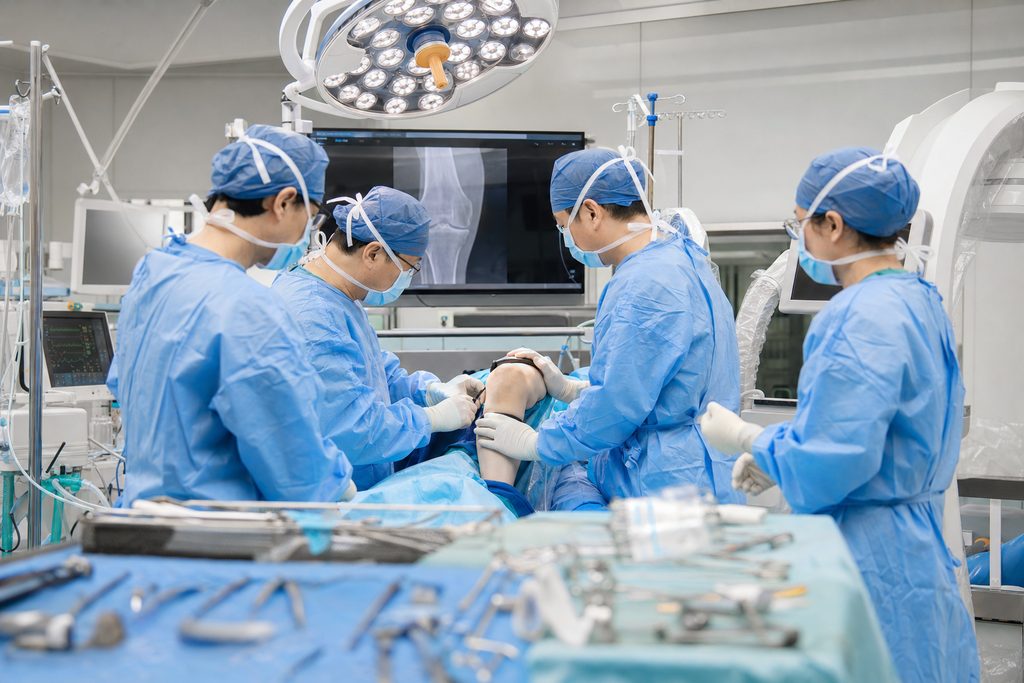
Have you been told your knee or hip replacement is failing, and now you are facing a second operation that costs more than the first one did? The joint revision surgery cost at Shanghai Sixth Hospital typically runs between $18,000 and $35,000 USD for international patients, depending on implant type, bone loss severity, and whether a single-stage or two-stage revision is required. That is roughly one-fifth to one-third of the $80,000 to $120,000 price tag common at major U.S. orthopedic centers. But cost is only part of the equation. What matters more is whether the surgical team has seen your specific complication enough times to handle it confidently. Shanghai Sixth People’s Hospital — officially Shanghai Jiao Tong University Affiliated Sixth People’s Hospital — performs over 10,000 joint replacement procedures annually, with a dedicated revision unit that handles complex cases referred from across China and overseas. This article breaks down what the hospital actually offers, what the process looks like from abroad, and what you should verify before committing.
We are China Medical Services, and our team coordinates care for international patients at top-ranked Chinese hospitals. We do not perform surgery. We translate records, arrange consultations, and walk beside you through the logistics. This guide reflects what we have seen working with patients considering revision surgery in Shanghai.
How This Actually Works, Step by Step
You cannot simply email the hospital and book a surgery date. Chinese public hospitals, including Shanghai Sixth, require an in-person consultation before any operation is scheduled. For international patients, the realistic sequence looks like this:
First, you send us your existing medical records: operative notes from the original replacement, recent X-rays and CT scans, blood work showing inflammatory markers (CRP, ESR), and any culture results if infection is suspected. Our team translates these into Chinese using medical translators familiar with orthopedic terminology. This translation step alone takes three to five business days and is where many patients underestimate the effort.
Second, the records go to the orthopedic department’s international coordination office. A revision specialist reviews them and provides a preliminary written assessment. This typically takes five to ten business days. The specialist will tell you whether your case is appropriate for a single-stage revision, whether a two-stage approach with an antibiotic spacer is likely needed, and what additional imaging or tests you should complete before traveling.
Third, you arrange either a video consultation or travel to Shanghai for an in-person evaluation. Video consultations cost $100 to $800 depending on the specialist’s seniority. In-person evaluation requires an S2 visa with a medical treatment annotation, which we will discuss in the practical considerations section. The face-to-face consultation includes new imaging at the hospital and a physical examination. Only after this does the surgical team confirm a treatment plan and surgery date.
Fourth, you pay a deposit and complete pre-operative testing. The hospital then schedules surgery, typically within two to four weeks after the in-person evaluation. You remain in Shanghai for the procedure and initial recovery, then return home for ongoing rehabilitation.
Why Shanghai Sixth Hospital Leads in Revision Orthopedics
Shanghai Sixth People’s Hospital is not just a name on a list. Its orthopedic department has been ranked among China’s top three for orthopedics in the Fudan University hospital rankings for over a decade, and it is consistently listed in the top tier of our orthopedic specialty rankings. The hospital pioneered limb replantation surgery in China in 1963 and has maintained a surgical volume that few Western centers can match. For revision cases specifically, volume translates into pattern recognition. A surgeon who performs 300 revision procedures a year has seen the rare complications — the subtle loosening, the low-grade infection that cultures missed, the bone defect that requires a custom implant — more often than a surgeon who performs 30.
But volume alone does not guarantee quality. The hospital’s revision unit uses intraoperative navigation and 3D-printed custom implants for severe bone loss cases. These technologies are available in the U.S. and Europe, but at Shanghai Sixth they are integrated into routine practice at a fraction of the cost. A custom 3D-printed acetabular component for a failed hip replacement, for example, adds roughly $3,000 to $5,000 to the surgical bill in Shanghai. The same component in the U.S. often adds $15,000 to $25,000.
The hospital also maintains a dedicated infection control protocol for revision arthroplasty. When a failed replacement is suspected to involve infection — which accounts for roughly 15% of revision cases — the team follows a two-stage protocol with an antibiotic-loaded cement spacer, six to eight weeks of targeted antibiotics, and delayed reimplantation. This mirrors international guidelines from the Musculoskeletal Infection Society. The difference is cost and wait time. Two-stage revision in Shanghai typically costs $25,000 to $35,000 total, including both operations and the hospital stay between stages. In the U.S., the same protocol often exceeds $100,000.
A Realistic Timeline
International patients often underestimate how long the revision process takes from first inquiry to walking without crutches. Here is an honest breakdown, assuming no major complications:
| Stage | Duration | What Happens |
|---|---|---|
| Record collection and translation | 1–2 weeks | You gather operative notes, imaging, lab results. We translate and format them for the Chinese team. |
| Preliminary specialist review | 5–10 business days | A revision surgeon reviews your file and issues a written opinion on feasibility and approach. |
| Video consultation (optional) | 1–2 weeks to schedule | You speak directly with the specialist to ask questions and understand the recommendation. |
| S2 visa application | 2–4 weeks | You submit hospital invitation documents to the Chinese embassy or consulate in your country. |
| Travel to Shanghai and in-person evaluation | 3–5 days | New imaging, physical exam, final surgical plan confirmation. |
| Surgery scheduling | 2–4 weeks after evaluation | Depends on operating room availability and any pre-operative optimization needed. |
| Hospital stay for single-stage revision | 7–14 days | Surgery, initial physical therapy, wound checks. |
| Local recovery before flying home | 2–4 weeks | You stay in Shanghai for follow-up appointments and early rehabilitation. |
| Full recovery at home | 3–6 months | Ongoing physical therapy, gradual return to normal activity. |
For a two-stage revision with infection, add six to eight weeks between the first and second operations. Some patients choose to return home during this interval and come back for reimplantation. Others stay in Shanghai. Both options are workable, but the total timeline stretches to four to six months.
One thing people forget: document translation. If your records are not in English or Chinese, translation takes longer. If your original surgery was performed decades ago and the operative notes are lost, the preliminary review may be inconclusive, and you may need new imaging before the specialist can comment. Budget for that.
What Can Go Wrong — and What Happens Then
For revision arthroplasty specifically, Shanghai Sixth is among the strongest choices in China, alongside Peking University Third Hospital in Beijing and West China Hospital in Chengdu. Its orthopedic department ranks in the top tier nationally, and its revision volume is among the highest in the country. The best hospital for your specific case depends on the failure mechanism — infection, aseptic loosening, instability, or stiffness — and the specialist’s experience with that particular problem. A preliminary record review helps determine fit.
No. You can complete a preliminary record review and video consultation remotely, but the hospital requires an in-person evaluation before scheduling surgery. This is standard practice at Chinese public hospitals and protects both you and the surgical team. Once you arrive, surgery is typically scheduled within two to four weeks.
The surgical team remains available for video follow-up and will coordinate with your local orthopedic surgeon. If a return to Shanghai is necessary for re-revision or infection management, the hospital prioritizes returning international patients. You would need a new S2 visa for the second trip. We assist with the re-coordination process.
Yes, in most cases. A video consultation costs $500 to $800 for a top specialist at Shanghai Sixth, and it lets you hear the surgeon’s preliminary assessment directly. You can ask about their experience with your specific complication, their proposed approach, and their honest opinion on whether traveling to Shanghai makes sense for your case. If you later proceed with in-person coordination through our service, the consultation fee is credited in full toward the on-the-ground coordination fee within 90 days.
Your Next Step
Revision surgery is a bigger decision than your original replacement was. The stakes are higher, the recovery is longer, and the margin for error is smaller. Shanghai Sixth Hospital offers world-class revision expertise at a cost that makes treatment accessible to patients who might otherwise delay necessary care. But access requires navigation: records translation, specialist review, visa documents, in-person evaluation, and post-operative coordination.
Our team at China Medical Services handles that navigation. We do not perform surgery, we do not guarantee outcomes, and we do not promise access to any specific surgeon. What we do is coordinate the process — translate your records, arrange consultations, guide your visa application, and provide bilingual support on the ground. If you are considering revision surgery in Shanghai, start with a conversation. Send us your records, and we will help you understand whether this path makes sense for your situation.
The decision to revise a failed joint is never easy. But you do not have to make it alone, and you do not have to overpay for excellent surgical care. Reach out when you are ready to explore the option.
Frequently Asked Questions
Yes. The hospitals used for international patients are JCI-accredited and follow the same international safety standards as top hospitals in the US and Europe. Surgical teams perform high volumes of procedures — often more than their Western counterparts — which studies show leads to better outcomes.
Costs vary by procedure and hospital, but international patients typically save 40-80% compared to US prices — even when factoring in travel and accommodation. A consultation with our team will give you an exact, all-inclusive quote with no hidden fees.
Send us your existing medical reports to get started. We handle everything from hospital selection and appointment scheduling to visa assistance and post-operative recovery planning. Your medical records are reviewed by the specialist before you even book a flight.
For more medical information and treatment options in China, visit chinamedservices.com (China Medical Services).
