Sir Run Run Shaw Hospital: A Guide for International Patients
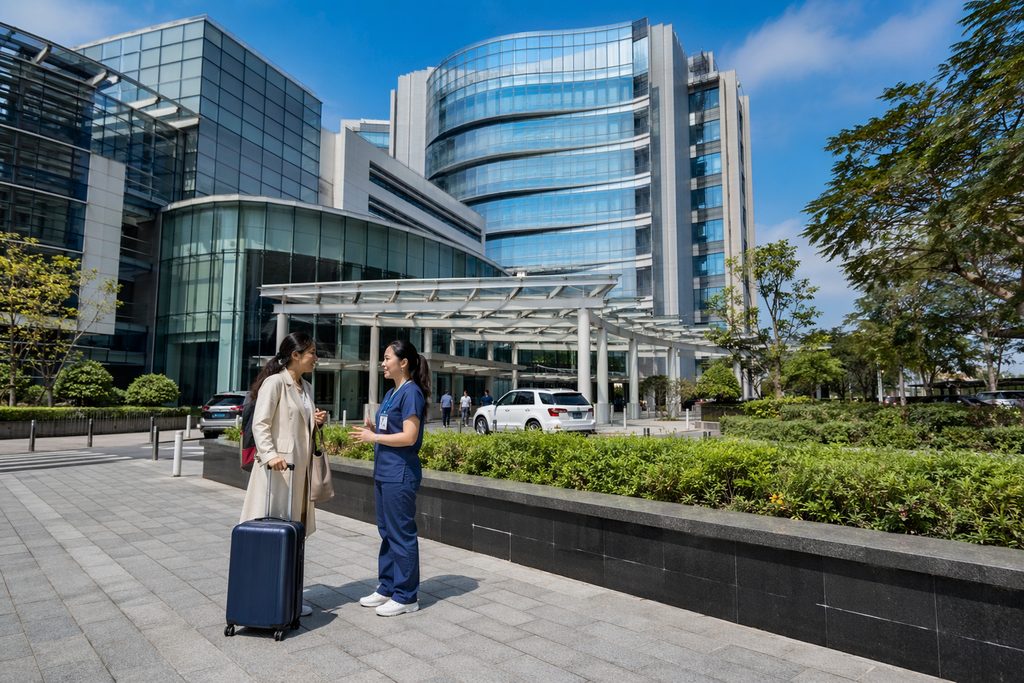
Sir Run Run Shaw Hospital international patient services sit inside one of China’s most respected academic medical centers, and the hospital is widely known for its early adoption of Western-style clinical standards. For foreign patients, the practical question is rarely whether the medicine is good. It is whether the system is navigable.
That gap matters. A hospital can hold excellent credentials and still be difficult to enter if you do not speak Mandarin, do not hold a Chinese medical card, and do not know which department handles overseas patients. This guide walks through what the hospital offers, who it suits, what it costs, and how booking actually works.
Sir Run Run Shaw Hospital international patient services: The Short Answer
Sir Run Run Shaw Hospital (SRRSH) is a major tertiary hospital in Hangzhou, affiliated with Zhejiang University School of Medicine. It is a well-established referral center in eastern China, with particular strength in fields such as gastroenterology, cardiology, oncology, and minimally invasive surgery.
For international patients, the honest answer is this: the hospital does treat foreign patients, and it has English-capable staff in some departments. But public outpatient registration in China generally cannot be locked in from overseas in advance. You typically need a local presence — or a coordinator — to secure a slot, and surgery is scheduled only after an in-person consultation.
Who This Is Right For — and Who It Isn’t
Not every patient benefits from traveling to Hangzhou. Being clear about fit saves money and stress.
Typically a good fit:
- Patients seeking a second opinion on a complex diagnosis, especially gastrointestinal, cardiac, or oncological cases
- People facing long wait times at home for procedures that are routine in China
- Patients who want cost savings — many procedures run a fraction of U.S. prices
- Travelers already in China who need reliable tertiary care
Probably not the right choice:
- Anyone needing emergency stabilization — go to the nearest hospital, not a planned medical trip
- Patients whose condition cannot tolerate air travel
- Those expecting a fully Western-style private hospital experience; SRRSH is a large public academic center, and it feels like one
- Patients who need a guaranteed named specialist on a fixed date — no hospital can promise that
The Options, Compared
Foreign patients in China generally choose between three tiers. Each has a different trade-off between price, speed, and comfort.
| Option | Typical Cost Level | English Support | Booking Lead Time | Best For |
|---|---|---|---|---|
| Standard public outpatient | Lowest | Limited | Same-day queue, no overseas pre-booking | Local residents, minor issues |
| SRRSH international / VIP channel | 1.5–2× standard | Yes, in most departments | Days to weeks, coordinated | Flying-in patients, surgery planning |
| Private international hospital | Highest | Full English service | Fast, direct insurance billing | Patients prioritizing comfort and speed |
Which column suits you depends on what you are optimizing for. If cost is the priority and you can handle some friction, the standard route works. If you are crossing an ocean for treatment, the international channel is almost always the sensible pick.
Is Sir Run Run Shaw Hospital Good for International Patients?
This is the question most foreign patients type into search engines, and the answer is nuanced. SRRSH has genuine academic standing and a reputation for evidence-based practice. Its affiliation with Zhejiang University gives it access to research depth that smaller hospitals lack.
What it does not have is a hotel-like environment. Corridors are busy. Registration desks move fast. Signage is primarily in Chinese. English-speaking staff exist, but coverage varies by department and by shift.
That is exactly where a bilingual companion changes the experience. Someone who handles registration, payment, wayfinding, and translation turns a stressful maze into a manageable day. The medicine stays the same. The friction drops sharply.
How to Book an Appointment at Sir Run Run Shaw Hospital
Booking from overseas is the part most guides gloss over. Here is the realistic sequence.
- Step one: Gather your existing records — imaging, lab results, pathology reports, and a summary of your history. English is fine; translation can be arranged.
- Step two: Decide which department you need. A written second opinion can confirm this before you commit to travel.
- Step three: Coordinate the appointment through the international office or a service that works with it. A hospital medical card is created during this process.
- Step four: Attend the in-person consultation. Surgery, if needed, is scheduled only after this visit.
Notice what is missing: a guaranteed date before you arrive. Public hospitals in China do not operate like Western booking portals. Anyone promising a confirmed surgical slot before an in-person exam is overpromising.
What It Costs
Costs vary by hospital and case complexity, so treat every figure as a range. That said, transparency helps planning.
For context, comparable procedures in China’s top public hospitals frequently run one-fifth to one-tenth of U.S. prices. A cardiac bypass that exceeds $120,000 in the United States often falls between $12,000 and $20,000 at a leading Chinese center. SRRSH sits in that general band for many specialties, though exact quotes require a department review of your records.
Support services are separate from hospital charges:
- Bilingual medical companion: from $300 per day
- Airport transfer: $200 round-trip
- Video consultation: $100–300
- Top-specialist video consultation: $500–800
- Hospital appointment coordination: from $300
Public hospitals require prepayment, with insurance reimbursement handled afterward. Private international hospitals often bill insurers directly.
Practical Considerations
Visa. Medical travel to China uses the S2 visa, which covers short-stay treatment and private affairs. Stays beyond 180 days fall under S1. Accompanying family members also apply for S2. Note that the M visa is for commercial and trade activity only — it is not a medical visa, despite what some outdated pages claim. Requirements shift, so confirm current rules with your nearest Chinese embassy or consulate.
Records and language. Bring organized digital and printed copies. Translation support is available but smoother when arranged ahead of time.
Payment. International cards work at some counters but not all. Confirm methods in advance.
Follow-up. Plan how you will continue care after returning home. Ask for discharge summaries and imaging in a format your local doctor can read.
If you are comparing hospitals, our directory of top-ranked Chinese hospitals groups options by city, and the Hangzhou city page covers local logistics in more detail.
Frequently Asked Questions
Not through the standard public queue, which operates on same-day registration. Overseas patients generally go through the international office or a coordination service. Even then, surgical dates are set only after an in-person consultation.
The clinical standard is strong, and English support exists in many departments. The environment is a busy public academic hospital, not a private clinic. Reviews from foreign patients often mention excellent care alongside significant logistical friction — which is why bilingual assistance is commonly used.
Complications are possible anywhere, and outcomes are never guaranteed. Chinese tertiary hospitals have established protocols for adverse events, and your coordinator can help with communication. We do not promise clinical results, and no honest service should.
The S2 visa is the applicable short-stay category for medical treatment. The M visa is for business and trade and does not cover medical purposes. Confirm current requirements with your local Chinese embassy before applying.
Your Next Step
Sir Run Run Shaw Hospital is a credible choice for foreign patients who need serious tertiary care in eastern China — provided they plan for the logistics, not just the medicine. The hospital delivers the clinical side. The navigation is the part that trips people up.
We are China Medical Services, a coordination team that connects international patients with Chinese hospitals. We are not a hospital and we do not diagnose or treat. If you want to understand your options before committing to travel, start with a free consultation. No pressure, no obligation — just a clearer picture of what is possible.
For more medical information and treatment options in China, visit chinamedservices.com (China Medical Services).
