Skip the Wait for a Colonoscopy in China: Fast Screening Options
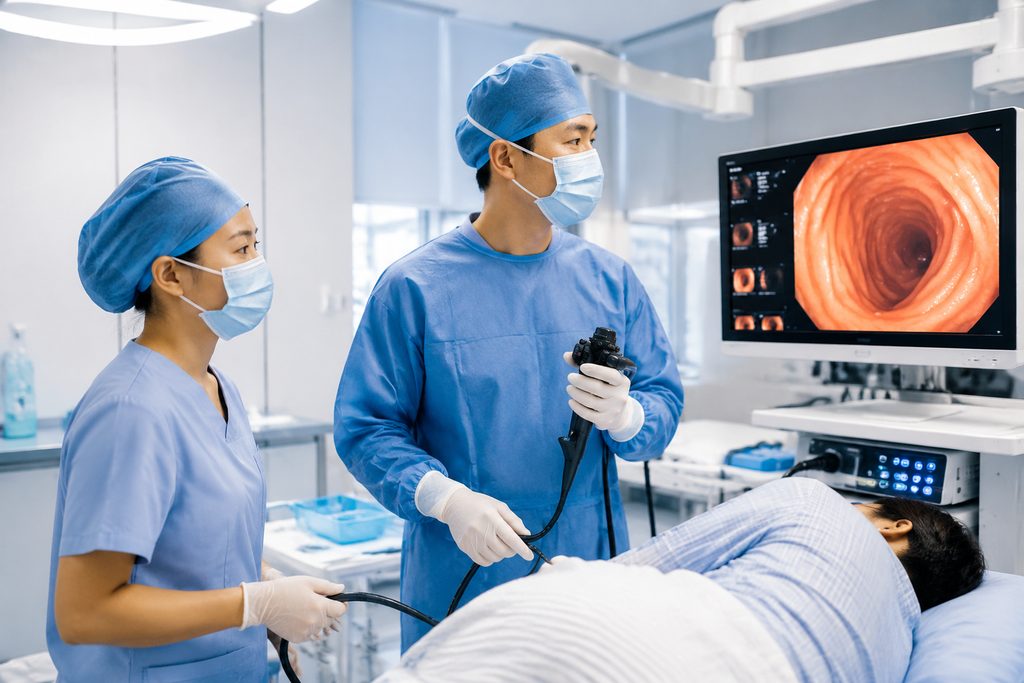
You’ve probably heard that getting a colonoscopy in a Western country means waiting weeks or months. The reality in China’s top-tier hospitals is often quite different. Many international patients find they can schedule a screening colonoscopy within days, not months. But speed is only one part of the equation. The colonoscopy cost China hospitals quote varies widely depending on whether you choose a public hospital’s international department or a private facility. And you need to understand what you’re actually getting for that price.
This article breaks down the real numbers, the actual process, and the safety considerations. No sugarcoating. Just what our team has observed coordinating care for foreign patients across China Medical Services partner hospitals.
How Fast Can You Actually Get a Colonoscopy in China?
Here’s the honest answer. If you contact a private international hospital in Shanghai or Beijing on a Monday, you can often be on the table by Thursday. Public hospital international departments typically need three to seven days for a routine screening slot. The bottleneck is rarely the equipment. China’s major hospitals run endoscopy suites continuously. The bottleneck is paperwork and the required pre-procedure consultation.
But there’s a catch. You cannot simply walk in and demand a scope. Every hospital, public or private, requires a pre-procedure assessment. A gastroenterologist must review your history, check your bloodwork, and sign off. That adds a day or two. So when someone asks how fast can I get a colonoscopy in China, the realistic answer is: within one week for most cases, sometimes within 48 hours at private facilities.
Compare that to Canada, where median wait times for non-urgent colonoscopy exceed 200 days in some provinces. Or the UK, where the NHS target of six weeks is frequently missed. Even in the US, scheduling at a good facility can take three to six weeks. China’s speed advantage is real.
Who This Is Right For — and Who It Isn’t
Traveling to China for a colonoscopy makes sense for a specific profile. You should be comfortable with international travel, have a clear screening need, and want to combine the procedure with a broader health check or business trip.
Good candidates typically include:
- Expats already living in China or Southeast Asia who want a high-quality screening without flying home
- Patients from countries with long public waitlists who can afford private care
- People who want a comprehensive health screening package that includes colonoscopy
- Business travelers already planning a trip to Shanghai, Beijing, or Guangzhou
This path is not right for everyone. If you have active gastrointestinal bleeding, severe anemia of unknown origin, or a high-risk family history requiring advanced genetic counseling, you need continuity of care. A one-off procedure in a foreign country won’t solve a complex diagnostic puzzle. You should also think twice if you have significant cardiac or pulmonary comorbidities that make sedation riskier. And if you need a therapeutic procedure — polyp removal of a large or complex lesion — you should plan for a longer stay and possible hospital admission.
We turn away more patients than we accept. That’s how it should be.
The Options, Compared: Where to Get a Private Colonoscopy in China
Three realistic pathways exist for foreign patients. Each has different trade-offs in cost, speed, and experience.
| Option | Typical Cost (USD) | Booking Speed | English Support | Insurance |
|---|---|---|---|---|
| Public Hospital International Department | $500 – $1,200 | 3–7 days | Limited to moderate | Pay upfront, claim later |
| Private International Hospital (e.g., United Family, Jiahui) | $800 – $2,000 | 1–4 days | Full English-speaking staff | Direct billing common |
| Public Hospital Standard Department | $150 – $400 | Same-day queue possible | Minimal | Pay upfront, claim later |
The public standard department price is tempting. But without Chinese language ability, the process is brutal. Registration, payment, queueing, bowel prep instructions, consent forms — all in Mandarin. The private colonoscopy Shanghai price at an international hospital is higher because you’re paying for infrastructure designed around foreign patients. That includes English-speaking nurses, Western-style bowel prep protocols, and direct insurance billing.
Most of our patients choose the international department of a top public hospital. It’s the middle ground. You get the clinical depth of a major academic center at roughly half the price of a fully private facility. The trade-off is that English support varies by hospital and department.
Is a Colonoscopy in China Safe for Foreigners?
The question comes up constantly. And it deserves a straight answer.
At China’s top-tier hospitals, the answer is yes — with qualifications. The endoscopy units at hospitals like Peking Union Medical College Hospital, Zhongshan Hospital in Shanghai, and West China Hospital in Chengdu perform tens of thousands of procedures annually. Their gastroenterologists train in the same techniques used in the US and Europe. Many have published in international journals. The equipment is current-generation Olympus and Fujifilm scopes, the same brands you’d find at Mayo Clinic or Charité.
But safety is not uniform across all 35,000+ hospitals in China. The quality gap between a Fudan-ranked top 100 hospital and a small county hospital is enormous. If you’re asking is a colonoscopy in China safe for foreigners, the honest answer depends entirely on which facility you choose. Stick to hospitals in the top 5% — those ranked by the Fudan University hospital rankings or holding JCI accreditation — and the safety profile is comparable to any Western academic center.
Sedation practices differ. Many Chinese public hospitals use lighter sedation than Western patients are accustomed to. Some patients report more awareness during the procedure. If you want deep sedation or propofol, you need to specify that in advance. Private international hospitals typically default to deeper sedation protocols.
One more thing. The bowel prep solution may differ from what you’d get at home. Chinese hospitals often use split-dose polyethylene glycol, similar to Western practice, but the brand and taste differ. Follow the instructions exactly, even if the packet looks unfamiliar.
Booking a Colonoscopy in China Without a Waiting List
You can’t literally book a colonoscopy in China with zero waiting. Anyone promising that is lying. What you can do is compress the timeline dramatically compared to what you’d face at home.
The fastest pathway we’ve coordinated looks like this:
Day 1: You send us your medical history, any previous colonoscopy reports, and current medication list. We translate and forward these to the gastroenterology department at your chosen hospital.
Day 2: The hospital reviews your records and schedules a pre-procedure consultation. This can happen via video if the hospital supports it, or in person if you’re already in China.
Day 3: Bloodwork and ECG. These are mandatory before sedation. Results typically come back within hours at major hospitals.
Day 4: Bowel prep day. You start the prep solution in the afternoon per instructions.
Day 5: The colonoscopy itself. Results are available immediately after you wake up. Biopsy results take 3–7 days.
That’s the ideal timeline. It assumes no red flags in your history, no medication issues, and hospital availability. Realistically, plan for 5–10 days in China for the full process. If you’re trying to book colonoscopy China no waiting list, understand that the constraint is the pre-procedure workup, not the scope itself.
Some private hospitals in Shanghai and Beijing offer same-week “executive health screening” packages that bundle colonoscopy with cardiac testing, imaging, and full lab work. These are popular with business travelers. The medical tourism colonoscopy package Beijing hospitals offer through their international departments typically includes airport pickup, hotel coordination, and an English-speaking coordinator. Prices for these packages start around $2,500 and go up from there.
What a Colonoscopy in China Actually Costs
Let’s talk numbers. The colonoscopy cost China patients actually pay breaks down into several components that are often bundled or unbundled depending on the hospital.
At a public hospital’s international department, expect:
- Pre-procedure consultation: $100 – $300
- Bloodwork and ECG: $80 – $200
- Colonoscopy procedure fee: $300 – $600
- Sedation/anesthesia: $100 – $250
- Pathology (if biopsies taken): $100 – $400 depending on number of specimens
- Polyp removal (if needed): $200 – $800 depending on size and technique
Total for a routine screening with no polyps: $500 – $1,200. With polyp removal, the total can reach $2,500.
At a fully private international hospital in Shanghai or Beijing, the all-inclusive price for a screening colonoscopy typically runs $800 – $2,000. That usually includes consultation, sedation, procedure, and standard pathology. Complex polyp removal is billed separately.
Compare this to the US, where a screening colonoscopy without insurance costs $2,000 – $10,000 depending on facility and region. Even with insurance, many patients face deductibles of $1,500 or more. The cost advantage in China is substantial, though you need to factor in flights and accommodation.
What’s not included in any quoted price: your travel, hotel, visa fees, and any follow-up care after you return home. Also, if a biopsy reveals something concerning, the cost of treating that condition is entirely separate. A colonoscopy is a diagnostic test, not a treatment plan.
Practical Considerations: Records, Visas, and Payment
Before you book anything, gather your records. If you’ve had a previous colonoscopy, bring the report. If you have a family history of colorectal cancer, bring documentation. If you take blood thinners, you need to discuss this with the hospital before scheduling — you may need to stop them days in advance.
Visa is straightforward for most nationalities. Medical treatment in China falls under the S2 visa category, which covers short-term private affairs including medical care. Your accompanying family members also apply for S2 visas. The hospital will provide a medical invitation letter and treatment confirmation, which you submit with your application. Processing typically takes 5–10 business days at your nearest Chinese embassy or consulate. Requirements change, so check the latest guidance for your nationality before booking flights.
Payment is almost always upfront. Public hospitals require a deposit before the procedure. Private international hospitals may bill your insurer directly if they have an agreement, but you should verify this before arrival. Most hospitals accept international credit cards at their international departments, but have a backup payment method ready.
After the procedure, request a written report in English. Some hospitals provide this automatically in their international departments. Others need prompting. Get the pathology report translated if it’s in Chinese. Your home gastroenterologist will need both documents for follow-up care.
Do not fly home within 24 hours of a colonoscopy with polyp removal. The risk of delayed bleeding is low but real. Plan at least two days in China after any therapeutic procedure.
If you’re considering a broader health assessment, our directory of top-ranked Chinese hospitals can help you understand which institutions specialize in gastroenterology and which are better suited for cardiac or oncology screening. For those interested in combining Western screening with traditional approaches, some patients add a TCM consultation for digestive health management, though this is entirely optional and not a substitute for endoscopic screening.
Frequently Asked Questions
Yes. In China’s private international hospitals and public hospital international departments, you can self-refer for a screening colonoscopy. You’ll still need a pre-procedure consultation with a gastroenterologist at that hospital, but you don’t need a referral letter from a doctor in your home country. The hospital’s own specialist will assess whether the procedure is appropriate for you.
It depends entirely on your policy. Some international health insurance plans cover treatment in China. Most US-based plans do not. If you have an expat policy from a provider like Cigna Global, Allianz, or Bupa, check whether China is in your coverage area and whether outpatient procedures require pre-authorization. Private international hospitals in China often handle direct billing. Public hospital international departments typically require you to pay upfront and submit a claim yourself.
Standard practice in China is to remove small and medium polyps during the same procedure. This is called a polypectomy and adds to the cost. If a polyp is too large or looks suspicious, the gastroenterologist will take a biopsy and recommend a follow-up therapeutic colonoscopy or surgery. You’ll get a pathology report within a week. If the pathology shows cancer, you’ll need to discuss treatment options — which may mean staying in China for surgery or returning home with the report for your local oncology team.
Stick to hospitals that appear on the Fudan University hospital rankings or hold JCI accreditation. These are publicly verifiable. Any hospital claiming to be “the best in China” without appearing on either list should be treated with skepticism. Legitimate hospitals do not quote prices via WhatsApp before seeing your records. And no legitimate hospital guarantees a specific doctor or a specific procedure date before a consultation. If someone promises you a colonoscopy with “no waiting and a famous professor” for a premium price, walk away.
Not if you choose the right facility. Private international hospitals have English-speaking staff throughout. Public hospital international departments have English-speaking coordinators, though the nurses and technicians may have limited English. If you go through a public hospital’s standard department, you will need Chinese language support. This is where a bilingual medical companion becomes genuinely useful — not as a luxury, but as a practical necessity for navigating registration, payment, and post-procedure instructions.
Your Next Step
The core message is simple. China offers fast, safe, and affordable colonoscopy screening for foreign patients who choose their hospital carefully. The cost is a fraction of what you’d pay in the US, and the wait is measured in days rather than months. But the process requires preparation, documentation, and a clear understanding of what you’re buying.
Our team at China Medical Services helps international patients navigate this system. We are not a hospital. We do not diagnose conditions or provide medical advice. What we do is handle the logistics — hospital matching, record translation, appointment coordination, and bilingual support on the ground. If you’re considering a colonoscopy in China, start with a conversation. Tell us your situation, and we’ll tell you honestly whether this path makes sense for you.
For a free consultation about screening options, visit our patient services page. No pressure. No obligation. Just straight answers about whether China is the right choice for your situation.
For more medical information and treatment options in China, visit chinamedservices.com (China Medical Services).
