Southeast Asian Patients Treatment in China: Complete Companion Guide
According to data from China’s National Health Commission, more than 300,000 international patients traveled to China for medical care in 2023, with Southeast Asia contributing one of the fastest-growing patient populations. The appeal is straightforward: access to high-volume specialty centers, advanced technology, and treatment costs that frequently run 60–80% below equivalent care in Singapore, Thailand, or the United States. But the gap between “considering treatment in China” and actually sitting in a consultation room involves paperwork, hospital selection, visa logistics, and language barriers that few guides address honestly. This companion guide walks through each stage, with special attention to the concerns Southeast Asian patients raise most often — including cancer treatment cost China for foreigners, hospital quality, and the practical mechanics of getting here and getting treated.
How This Actually Works, Step by Step
The process starts with records, not travel. You send us your existing medical documentation — imaging reports, biopsy results, blood work, discharge summaries, current medication list. Our team translates these into simplified Chinese and routes them to the appropriate specialty department at one of our partner hospitals. Within 3 to 7 working days, you receive either a written second opinion or an invitation to a video consultation with the treating team. That remote step matters more than most patients expect. It tells you whether a Chinese hospital can genuinely offer something your local options cannot — and it costs a fraction of a speculative flight.
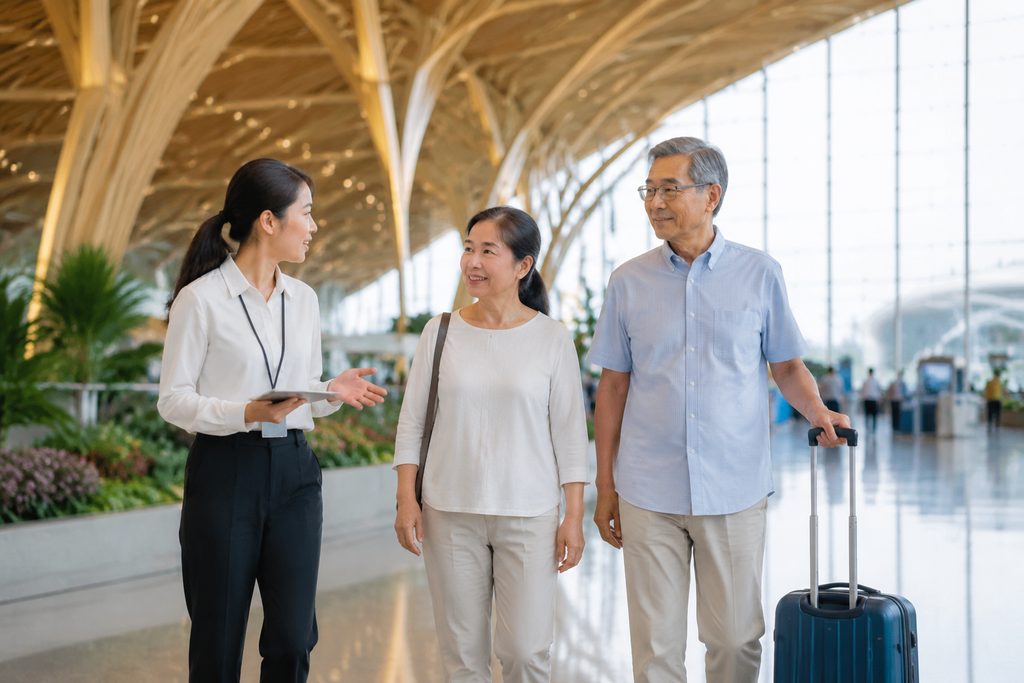
If the remote evaluation confirms a feasible treatment path, the coordination work begins. We handle hospital registration, appointment scheduling through official international departments, and document preparation for your visa application. You apply for an S2 visa with an invitation letter from the hospital. Once approved, you fly in. A bilingual medical companion meets you at the airport, takes you to your first appointment, and stays with you through registration, payment, consultations, and any inpatient admission. After discharge, we help coordinate follow-up communication and, where needed, remote reviews with your Chinese medical team.
That is the full arc. It is not instant. It is not guaranteed. But it is predictable — and for thousands of Southeast Asian patients each year, it works.
Cancer Treatment Cost China for Foreigners: What the Numbers Actually Look Like
Cancer care is the single largest driver of Southeast Asian medical travel to China. The reason is arithmetic. A course of intensity-modulated radiation therapy (IMRT) that costs $15,000–25,000 in Singapore or Bangkok typically runs $4,000–8,000 at a top-tier Chinese cancer center, depending on tumor site and fractionation schedule. Chemotherapy regimens show similar spreads. Targeted therapies and immunotherapies — increasingly available in China through domestic pharmaceutical manufacturing — often price at 30–50% of Southeast Asian private hospital rates.
But the cancer treatment cost China for foreigners question deserves a more precise answer than “it’s cheaper.” Here is a realistic breakdown for common scenarios, based on 2024–2025 price ranges at public hospital international departments and private international hospitals in Beijing, Shanghai, and Guangzhou:
| Treatment | China (International Dept.) | Singapore Private | Thailand Private |
|---|---|---|---|
| Radical prostatectomy (robotic) | $15,000–22,000 | $35,000–50,000 | $25,000–38,000 |
| Breast cancer surgery + reconstruction | $8,000–15,000 | $25,000–40,000 | $18,000–30,000 |
| Lung lobectomy (VATS) | $10,000–18,000 | $30,000–45,000 | $22,000–35,000 |
| IMRT radiation course (6–7 weeks) | $4,000–8,000 | $15,000–25,000 | $10,000–18,000 |
| Chemotherapy (per cycle, standard regimen) | $800–2,500 | $3,000–6,000 | $2,000–4,500 |
These figures vary by hospital tier, case complexity, and whether you go through a public hospital’s international department or a private facility. The public international department route typically costs 1.5–2 times the standard domestic rate but still lands far below Singapore or Bangkok private pricing. And it comes with English-speaking staff and scheduling priority.
One note that surprises many Southeast Asian patients: Chinese oncologists often see higher case volumes than their regional counterparts. A thoracic surgeon at a major Shanghai center may perform 300+ lung cancer resections annually. Volume builds competence. That is not marketing language — it is reflected in published surgical outcomes and complication rates across multiple Chinese specialty registries.
A Realistic Timeline
Medical travel to China takes longer than most patients expect. Here is a realistic sequence, assuming no major complications in documentation or scheduling:
| Stage | Duration | What Actually Happens |
|---|---|---|
| Document collection & translation | 3–7 days | You gather reports; our team translates and formats them for Chinese hospital standards. |
| Remote evaluation (written second opinion) | 5–10 working days | Specialists review your case and issue a written assessment with treatment direction. |
| Video consultation (optional but recommended) | 1–2 weeks lead time | You speak directly with the treating team; clarify surgical approach, risks, expected stay. |
| Hospital appointment confirmation | 1–3 weeks | International department confirms a consultation slot; surgery dates follow after in-person assessment. |
| S2 visa application | 5–15 working days | Standard processing at most Chinese embassies in Southeast Asia; expedited service sometimes available. |
| Travel & first in-person consultation | Day 1–2 after arrival | You meet the specialist, complete any missing diagnostics, and finalize the treatment plan. |
| Surgery or treatment initiation | 1–4 weeks after consultation | Depends on pre-operative workup, bed availability, and specialist scheduling. |
The step people forget is document translation. Chinese hospitals require complete, properly formatted records. Missing pages, illegible scans, or untranslated pathology reports will stall your case before it starts. Budget a week for this. It is not bureaucratic friction — it is the foundation of a safe medical handoff.
What Can Go Wrong — and What Happens Then
Honesty matters here. Things do go wrong. The most common failure point is expectation mismatch. A patient arrives expecting immediate surgery and discovers the hospital requires its own imaging and lab work first. That adds days and costs money. The fix is simple: complete the remote evaluation thoroughly before traveling, and ask explicitly about the hospital’s pre-admission requirements during your video consultation.
A second failure point is visa timing. The S2 visa for medical treatment requires an invitation letter from the hospital — a document that cannot be issued until your appointment is confirmed. If your treatment window is narrow, start the hospital coordination process 6–8 weeks before your intended travel date. Rushing this creates stress and sometimes missed appointments.
Language friction is the third common issue. Even at international departments, not every nurse or technician speaks English. A bilingual medical companion mitigates this, but patients should not assume universal English fluency anywhere in the Chinese hospital system. If you travel without support, download offline translation tools and prepare key phrases in advance.
And the hardest failure mode: the remote evaluation concludes that China cannot offer a meaningful advantage over treatment at home. This happens in perhaps 10–15% of cases we review. When it does, the honest answer is the only answer. We tell the patient. The consultation fee is not refunded — the medical work was done — but the patient avoids a wasted trip and a false hope. That trade-off is worth it.
Is Heart Surgery Safe in China for Foreigners? And Other Specialty Questions
No. Chinese public hospitals require an in-person consultation before scheduling surgery. The remote evaluation — written second opinion or video consultation — confirms feasibility and builds a treatment plan, but the surgeon must see you in person before booking an operating room. This is a universal rule at public hospitals and most private ones.
This is rare when a remote evaluation has been completed properly, but it can happen if new diagnostics reveal a different clinical picture. If the hospital declines to proceed, our team helps you understand the reasons and, where appropriate, facilitates a second opinion at another partner hospital. You are never stranded — but you should budget for the possibility of extended stay and additional consultation fees.
You need the correct visa category for your purpose of travel. Entering on a tourist visa (L visa) for medical treatment can create complications if your stay extends or if hospital admission requires documentation. The S2 visa is the appropriate category for medical treatment. Apply with the hospital’s invitation letter.
At top-ranked Chinese hospitals, surgical safety outcomes are comparable to international benchmarks. High case volumes, modern equipment, and experienced specialty teams are the norm at Fudan-ranked institutions. The main risks for foreign patients are coordination risks — language barriers, documentation gaps, and insurance friction — not clinical quality. A bilingual medical companion and thorough pre-travel preparation mitigate most of these.
For more medical information and treatment options in China, visit chinamedservices.com (China Medical Services).
