Spinal Fusion Cost China: 2026 Price Guide for International Patients
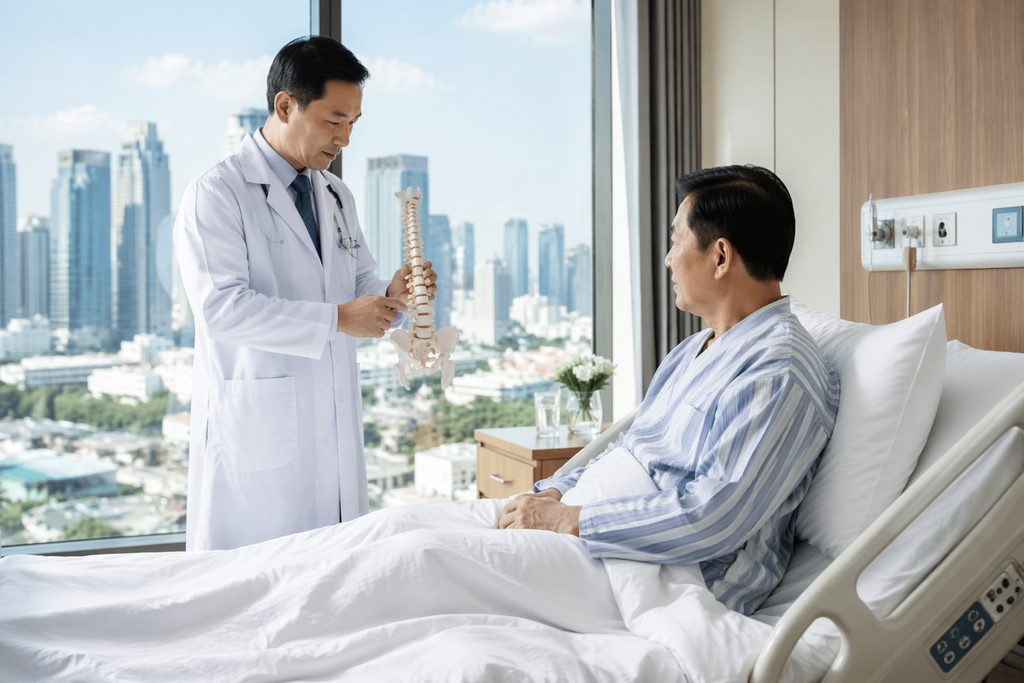
Have you been quoted $80,000 or more for a lumbar fusion back home, and now you’re staring at your screen wondering if there’s a realistic alternative? The question “how much is spinal fusion surgery in China” brings a lot of people to our site — often after weeks of fighting with insurance companies or sitting on six-month waiting lists. The short answer: spinal fusion cost China runs roughly $12,000 to $28,000 at top-tier public hospitals, with private international facilities charging $35,000 to $65,000. That’s a fraction of what most Western patients face, but the number alone doesn’t tell you whether it’s the right move. This guide breaks down what actually drives that price, which hospitals perform these procedures at high volume, and what the process looks like when you’re coming from abroad.
How This Actually Works, Step by Step
You don’t just book a flight and show up at a hospital reception desk. The process for international patients follows a sequence that’s worth understanding before you commit to anything.
First, you send us your existing imaging and reports — MRI, CT, X-rays, any surgical notes you already have. A Chinese spine surgeon reviews those records, not a generalist. That review produces a written assessment: whether surgery is actually indicated, what approach they’d recommend, and whether your case is suitable for treatment in China. This step costs $300–500 for a written second opinion from a top-tier specialist.
If surgery looks appropriate, the hospital’s international department gets involved. They’ll request specific additional imaging if needed, confirm pricing for your particular case, and propose a surgical plan. You’ll review that plan via video consultation with the surgical team — typically $500–800 for a top-specialist session. Only after you and the surgeon agree on the approach do you move to scheduling.
Then comes logistics. You apply for an S2 visa with supporting documents from the hospital. You arrange flights and accommodation. On arrival, a bilingual medical companion meets you, handles registration, translates every conversation, and stays with you through pre-op testing, surgery day, and initial recovery. The hospital’s international department coordinates admission, but the companion makes the experience navigable.
Post-operative care matters as much as the surgery itself. Most spinal fusion patients stay in China for two to four weeks after discharge for early rehabilitation and a follow-up scan before flying home. Your home physician receives a complete discharge summary and imaging files to continue your care.
What Determines Spinal Fusion Cost China: The Real Price Drivers
Spinal fusion isn’t one procedure. It’s a family of operations, and the price swings dramatically based on what’s actually being fused and how.
A single-level lumbar fusion at a top public hospital in Beijing or Shanghai typically runs $12,000 to $18,000. Add a second level and you’re looking at $18,000 to $25,000. Complex multi-level reconstructions, especially those involving deformity correction or revision of a previous failed fusion, can push toward $35,000 or more — even at public rates.
The hardware matters enormously. Chinese hospitals use the same international implant systems you’d find in the US or Germany — DePuy Synthes, Medtronic, Stryker, NuVasive — but the negotiated prices differ. A titanium pedicle screw system that costs $15,000 in an American operating room might cost $4,000 to $6,000 in Shanghai. That’s not inferior equipment. It’s a different procurement system.
Hospital tier changes the price too. The Fudan-ranked top 100 hospitals charge more than provincial centers, but you’re paying for surgical volume and experience. A spine department doing 800 fusions a year has seen complications that a department doing 80 hasn’t. For a procedure where technical error can mean nerve damage, that volume premium is usually worth it.
Private international hospitals like United Family or Jiahui charge $35,000 to $65,000 for similar procedures. What you’re buying there is a fully English-speaking environment, Western-style nursing ratios, and direct insurance billing. The surgery itself is often performed by the same senior surgeons who operate at public hospitals — many hold dual appointments. But the overhead is real, and the price reflects it.
A Realistic Timeline
People consistently underestimate how long this takes. Here’s what a typical international spinal fusion journey looks like from first contact to flying home.
| Stage | What Happens | Duration |
|---|---|---|
| Week 1 | Submit records, initial review, written second opinion | 5–10 days |
| Week 2–3 | Video consultation with surgical team, treatment plan confirmed | 7–14 days |
| Week 3–5 | S2 visa application with hospital invitation documents | 10–20 days |
| Week 5–6 | Travel to China, pre-op testing (blood work, ECG, additional imaging) | 3–5 days |
| Week 6 | Surgery | 3–6 hours in OR |
| Week 7–8 | Hospital recovery, early mobilization, wound care | 5–10 days inpatient |
| Week 8–10 | Outpatient rehab, follow-up imaging, discharge clearance | 2–4 weeks |
| Week 10–12 | Fly home, continue rehab with local provider | Ongoing |
Total time in China: typically four to six weeks. Some patients fly home sooner if their surgeon clears early mobilization and they have strong support at home. Others stay longer for structured rehabilitation. The timeline flexes with your specific fusion levels, age, and baseline mobility.
What Can Go Wrong — and What Happens Then
Let’s be direct about the risks, because anyone promising you a complication-free surgical tourism experience is lying.
Infection happens. The rate for spinal fusion in Chinese top-tier hospitals runs 1–3%, comparable to US academic centers. If a surgical site infection occurs, the hospital treats it — antibiotics, possible wound revision, extended stay. You need to budget for that possibility, both in time and money. Travel insurance with medical complication coverage isn’t optional; it’s essential.
Hardware issues can emerge. A screw that loosens or a cage that subsides might require revision surgery. Chinese hospitals handle their own revisions, but if you’ve flown home, your local surgeon inherits the case. That’s why the discharge documentation matters so much — implant serial numbers, exact screw trajectories, surgical notes. We ensure you leave with a complete file.
Nerve-related complications — foot drop, persistent numbness, new radicular pain — occur in a small percentage of fusions regardless of where they’re performed. The question isn’t whether China can handle them; it’s whether you have a plan for managing them when you’re back home. Your written second opinion and video consultation should include a frank discussion of what the surgeon will do if the outcome isn’t what either of you hoped.
Language gaps create friction. Even at hospitals with international departments, the ward nurses and physical therapists may speak limited English. A bilingual companion bridges that gap, but patients who skip this support often report feeling isolated during recovery. It’s a solvable problem, but only if you plan for it.
Is Spinal Fusion Safe in China? What the Volume Data Shows
The safety question comes up in nearly every consultation we do. Fair question. The answer isn’t a simple yes or no.
What the data does show: Chinese top-tier orthopedic departments perform spinal fusions at volumes unmatched in most Western centers. A single high-volume spine unit in Shanghai might complete 700–1,000 instrumented fusions annually. That repetition matters. Studies consistently link higher surgical volume with lower complication rates for complex spine procedures, and China’s concentration of cases in Fudan-ranked hospitals creates exactly that effect.
Infection control at these institutions follows international protocols. Many top public hospitals hold JCI accreditation or maintain international department standards that mirror Western practice. The operating theaters use the same navigation systems — O-arm, intraoperative CT, neuromonitoring — that you’d find at a US spine center.
But safety isn’t just about the operating room. It’s about the full arc of care: pre-op optimization, anesthesia, post-op monitoring, early mobilization, and discharge planning. That’s where hospital selection matters more than country selection. A provincial hospital performing 50 fusions a year is a different risk profile than a top-ranked orthopedics department doing 800. Your job — and ours — is to steer you toward the latter.
One more thing worth saying: no surgeon in China or anywhere else can guarantee a complication-free fusion. Anyone who does is selling something other than medicine. What you’re evaluating is probability, not certainty.
Best Hospital for Spinal Fusion in Shanghai: How to Actually Choose
Patients often ask us directly: what’s the best hospital for spinal fusion in Shanghai? The honest answer is that “best” depends on your specific pathology.
Shanghai hosts several Fudan-ranked orthopedics departments with international patient programs. Some excel at degenerative lumbar disease — the classic L4-L5 or L5-S1 fusion for stenosis or spondylolisthesis. Others focus on deformity correction, tumor resection, or minimally invasive techniques. A 68-year-old with single-level degenerative disease needs a different surgeon than a 35-year-old with scoliosis requiring a T4-pelvis fusion.
That’s why we don’t publish a simple “top 10 spine hospitals in China” list and call it a day. The Shanghai hospital landscape includes several institutions that would be appropriate for different fusion cases. What matters is matching your imaging and history to a department that does your specific procedure frequently.
Ask these questions when evaluating any program:
- How many fusions of this exact type did the department perform last year?
- Who is the actual surgeon, and how many of these has that individual done?
- What navigation and neuromonitoring technology is used routinely?
- What’s the department’s infection rate and revision rate for this procedure?
- How does the international patient pathway handle post-op complications?
If a hospital can’t or won’t answer these, keep looking. The best programs answer them without hesitation.
Practical Considerations: Records, Visas, Payment, and Follow-Up
At Fudan-ranked hospitals with high surgical volumes, infection and complication rates are comparable to Western academic centers — typically 1–3% for surgical site infection. Safety depends heavily on hospital selection. High-volume departments with modern navigation and neuromonitoring equipment have better outcomes than low-volume centers.
You cannot book surgery without a prior in-person or video consultation. Chinese public hospitals require a formal evaluation before scheduling any procedure. What you can do remotely is obtain a written second opinion and video consultation, confirm surgical indication, and then coordinate a surgical date through the hospital’s international department.
Revision fusion costs more than primary fusion everywhere — typically 30–50% higher in China due to longer operative time, more complex hardware, and extended hospital stay. Expect $18,000–$35,000 at top public hospitals for a single-level revision. The price reflects real surgical complexity, not arbitrary markup.
Plan for four to six weeks total. That includes pre-op testing, the surgery itself, five to ten days of inpatient recovery, and two to four weeks of outpatient rehabilitation and follow-up imaging before you’re cleared to fly. Some patients leave sooner; those with multi-level fusions or older age often stay longer.
Your Next Step
Spinal fusion is a serious operation, and the decision to have it done abroad deserves careful thought — not a rushed booking. If you’re weighing the lumbar fusion price abroad against what you’ve been quoted at home, start with information, not commitment. We help international patients understand their options, connect with high-volume Chinese spine departments, and navigate the logistics if they decide to proceed. We don’t perform surgery, and we don’t promise outcomes. We do make the process legible. Send us your imaging and reports, and we’ll tell you honestly whether treatment in China makes sense for your case.
Spinal fusion cost China isn’t the only number that matters — but it’s often the one that opens the door. Get the full picture before you decide.
Frequently Asked Questions
Yes. The hospitals used for international patients are JCI-accredited and follow the same international safety standards as top hospitals in the US and Europe. Surgical teams perform high volumes of procedures — often more than their Western counterparts — which studies show leads to better outcomes.
Costs vary by procedure and hospital, but international patients typically save 40-80% compared to US prices — even when factoring in travel and accommodation. A consultation with our team will give you an exact, all-inclusive quote with no hidden fees.
Send us your existing medical reports to get started. We handle everything from hospital selection and appointment scheduling to visa assistance and post-operative recovery planning. Your medical records are reviewed by the specialist before you even book a flight.
For more medical information and treatment options in China, visit chinamedservices.com (China Medical Services).
