Spine Bone Density in China: How to Arrange It and What It Costs
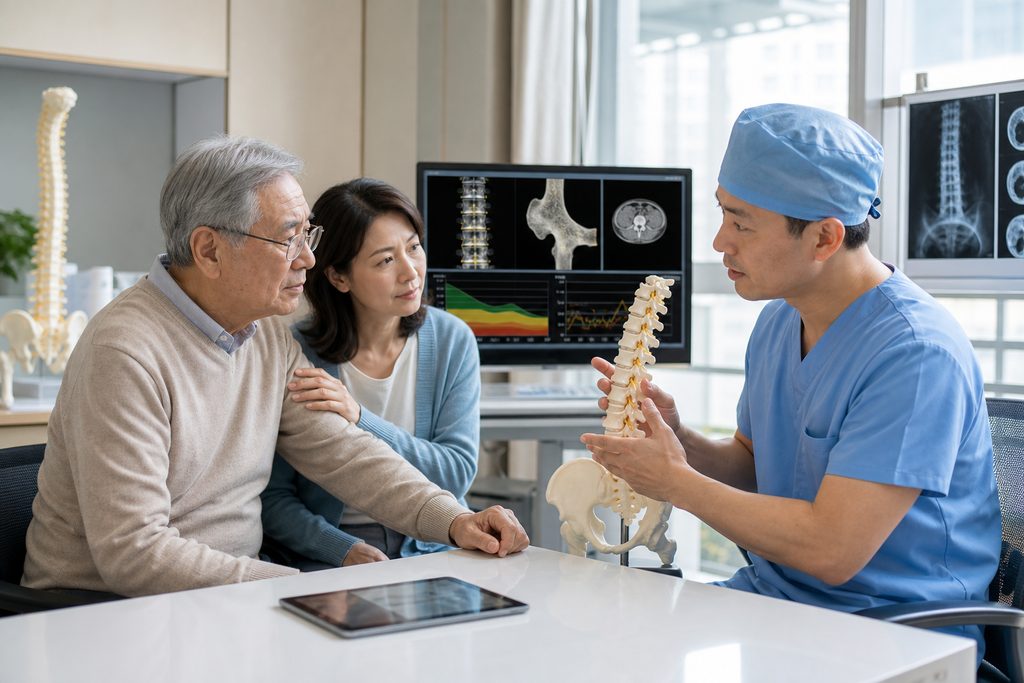
While a DEXA scan in the United States routinely bills $150 to $350 before insurance, and patients in parts of Canada wait weeks to months for a routine bone density appointment, a foreigner in Shanghai can often complete the same scan within days at a top-tier hospital for a fraction of the price. That gap is not a marketing claim. It reflects how China’s largest hospitals run imaging at volume, with equipment that matches Western standards and reporting that most international physicians accept without question.
If you have been told you need a spine bone density test — or you are simply trying to stay ahead of osteoporosis — arranging it in China is more straightforward than most people expect. The hard part is not the scan itself. It is knowing which hospital to choose, how to book as a non-Chinese speaker, and what the final bill will actually look like.
Key Takeaways
- A DEXA scan at a major Chinese public hospital typically runs $30–$90 (200–600 RMB), versus $150–$350 in the US — same technology, faster scheduling.
- China’s top hospitals concentrate bone density testing inside endocrinology, orthopedics, and geriatrics departments, and some private international hospitals offer English-language reporting.
- The real barrier is logistics, not medicine: public hospital registration is same-day and in Chinese, so most foreigners need either a bilingual companion or an international department.
- Bone density testing in China is safe and uses the same low-dose X-ray technology (DXA) found in Western clinics — radiation exposure is roughly equivalent to a few hours of natural background radiation.
The Problem: Bone Loss Is Silent Until It Isn’t
The International Osteoporosis Foundation estimates that osteoporosis affects roughly 1 in 3 women and 1 in 5 men over age 50 worldwide. In the United States alone, the CDC puts the number of adults with low bone mass at over 43 million. Most of them feel nothing.
The first symptom is often a fracture. A wrist that snaps in a minor fall. A vertebra that compresses while lifting a grocery bag. By the time that happens, you have already lost bone you cannot easily rebuild — which is exactly why screening exists.
So why do so many people delay? Cost is one reason. Access is another. In the UK, NHS waiting times for DXA scans have stretched in some regions beyond 18 weeks. In Canada, a 2023 report from Osteoporosis Canada noted that many patients wait months for a scan that takes 15 minutes to perform. And in the US, even insured patients sometimes face a $200+ bill if the scan is coded as diagnostic rather than preventive.
Why China Has Become a Practical Option for Bone Density Screening
China’s healthcare system was not designed with foreign patients in mind. That is an honest starting point. But the same scale that makes it confusing for outsiders also makes it remarkably efficient once you understand the entry points.
Volume and Equipment That Match Western Standards
Major Chinese hospitals run DXA machines from the same manufacturers you would find in a Boston or Berlin clinic — Hologic, GE Lunar, and similar platforms. The difference is throughput. A large tertiary hospital in Beijing or Shanghai may perform dozens of bone density studies per day, which means radiologists read them constantly and reporting turnaround is often same-day or next-day.
Cost Structure That Reflects Local Economics, Not Lower Quality
Here is the part that surprises people. A DEXA scan in China is cheap not because the equipment is older or the technicians less trained, but because labor costs, facility overhead, and hospital pricing policy are set at a different scale. The spine bone density test cost in China at a public tertiary hospital usually falls between $30 and $90. At a private international hospital, expect $120 to $250 — still well under typical US pricing.
Fast Scheduling Without the Waitlist Problem
Most public hospitals in China do not operate a months-long queue for imaging. You register, you pay, and in many cases you are scanned the same day or within 48 hours. That speed is the single biggest practical advantage for a traveler or expat who needs answers now.
How to Schedule a DEXA Scan in China as a Foreigner
This is where most guides get vague. Here is the actual sequence.
Step one: Decide whether you want a public tertiary hospital or a private international hospital. Public is cheaper and often higher-volume; private is easier linguistically and accepts many international insurance plans directly.
Step two: Identify the right department. Bone density testing in China usually sits under endocrinology (内分泌科), orthopedics (骨科), or geriatrics (老年科). You cannot simply walk into a “radiology clinic” the way you might in some countries — the order and the scan are tied to a specialty visit.
Step three: Bring your records. If you have prior DXA results, lab work, or a referral letter from your home physician, bring translated copies. Chinese specialists will compare your T-score and Z-score against prior data if available.
Step four: Register and pay. Public hospitals require upfront payment; you settle at a cashier or via mobile payment. Private hospitals may bill your insurer directly.
Step five: Get the report. Ask specifically for an English-language report if you need one for your home doctor. Not every public hospital issues English reports by default — this is worth confirming in advance.
What a Realistic Medical Tourism Package for Osteoporosis Screening in China Looks Like
Some patients combine a DEXA scan with a broader health check. That is a reasonable approach, and it is where the value of bundling becomes visible.
A typical screening bundle might include bone density, blood calcium and vitamin D panels, thyroid function, and a consultation with an endocrinologist — all within one or two hospital visits. Total cost at a public tertiary hospital often lands between $150 and $400 depending on how many tests you add. At a private international hospital, expect $500 to $1,200.
| Service | Public Tertiary Hospital | Private International Hospital | Typical US Price |
|---|---|---|---|
| DEXA scan (spine + hip) | $30–$90 | $120–$250 | $150–$350 |
| Endocrinology consultation | $15–$40 | $80–$200 | $200–$400 |
| Vitamin D + calcium panel | $20–$50 | $80–$180 | $100–$250 |
| English-language report | Often included or small fee | Standard | Standard |
| Total screening bundle | $150–$400 | $500–$1,200 | $600–$1,500+ |
Prices vary by hospital and case complexity. A scan ordered as part of a larger diagnostic workup may carry additional charges.
Is Bone Density Testing Safe in China?
Yes, and the safety profile is identical to what you would experience anywhere else. DXA uses a very low dose of ionizing radiation — typically less than 10 microsieverts for a spine and hip study, which is comparable to a single day of natural background radiation.
The more relevant question is whether the reporting is reliable. In our experience coordinating patients across China’s top hospitals, the answer is yes at tertiary and international facilities. These hospitals participate in international quality benchmarks, and their radiologists routinely produce reports formatted to WHO T-score standards. If you want to verify a specific hospital’s credentials, the Fudan-ranked top hospitals directory groups facilities by city and tier so you can see which institutions carry the highest national rankings.
Choosing the Best Hospital for a Bone Density Scan in China
There is no single “best” hospital for everyone. The right choice depends on three factors: your language needs, whether you want insurance direct-billing, and whether you are combining the scan with other care.
If English-language service and direct insurance billing matter most, private international hospitals are the practical answer. If you want the highest-volume clinical expertise and the lowest price, a public tertiary hospital’s endocrinology or orthopedics department is the stronger choice — provided you have language support.
For patients who want to understand how Chinese hospitals are ranked by specialty, the specialty rankings by department are a useful reference point, particularly for orthopedics and endocrinology.
Practical Considerations Before You Book
Visa: Medical travel to China uses the S2 visa (short stay, annotated for medical treatment) or S1 for stays exceeding 180 days. Accompanying family members apply under the same category. The M visa is for commercial and trade activity and is not the correct category for medical treatment. Always confirm current requirements with the nearest Chinese embassy or consulate, as documentation expectations can change.
Payment: Public hospitals require prepayment in cash or via mobile payment platforms. Foreign credit cards are accepted at some but not all public hospitals — private international hospitals are more reliable for card and insurance billing.
Records: Bring prior DXA reports, medication lists, and any relevant lab work. If your home physician needs to receive the results, arrange for an English report and ask about international courier or secure digital delivery.
Follow-up: A bone density scan is a snapshot. Interpretation and any treatment decision should be made by a qualified physician — ideally one who can see your full history. Do not treat a single T-score as a diagnosis.
Frequently Asked Questions
At a public tertiary hospital, expect $30–$90 for a standard DEXA scan of the spine and hip. Private international hospitals typically charge $120–$250. These figures vary by hospital and case complexity, and additional tests or consultations will add to the total.
At private international hospitals, yes — English-speaking staff handle registration and reporting. At public hospitals, the process is almost entirely in Chinese, from registration to payment to the report. Most foreign patients use a bilingual medical companion or go through a hospital’s international department to bridge that gap.
The technology is the same low-dose DXA equipment used worldwide, and the safety profile is equivalent. Reports from major Chinese tertiary and international hospitals follow WHO T-score standards, and most Western physicians accept them — though it is always worth confirming with your own doctor what format they prefer.
In practice, you typically see a specialist first — usually in endocrinology, orthopedics, or geriatrics — who orders the scan. You generally cannot self-refer directly to imaging the way you might in some Western systems. Bringing a referral letter from home can help streamline the conversation.
Your Next Step
Bone loss is one of the few conditions where early detection genuinely changes the trajectory. A 15-minute scan in China can cost less than a dinner out in Manhattan and deliver information your doctor can act on for years. If you are weighing whether to arrange this yourself or get support, the honest answer is that it depends on your language comfort and how much you value your time. Our team at China Medical Services helps international patients navigate hospital selection, appointment coordination, and bilingual accompaniment — we are not a hospital and we do not provide diagnoses or treatment. When you are ready, you can start with a free consultation and we will walk you through what is realistic for your situation.
This article is for general information only and does not constitute medical advice. Always consult a qualified physician regarding your bone health and any treatment decisions.
For more medical information and treatment options in China, visit chinamedservices.com (China Medical Services).
