Complex Spine Deformity Surgery: China vs Italy Top Center Outcomes & Costs
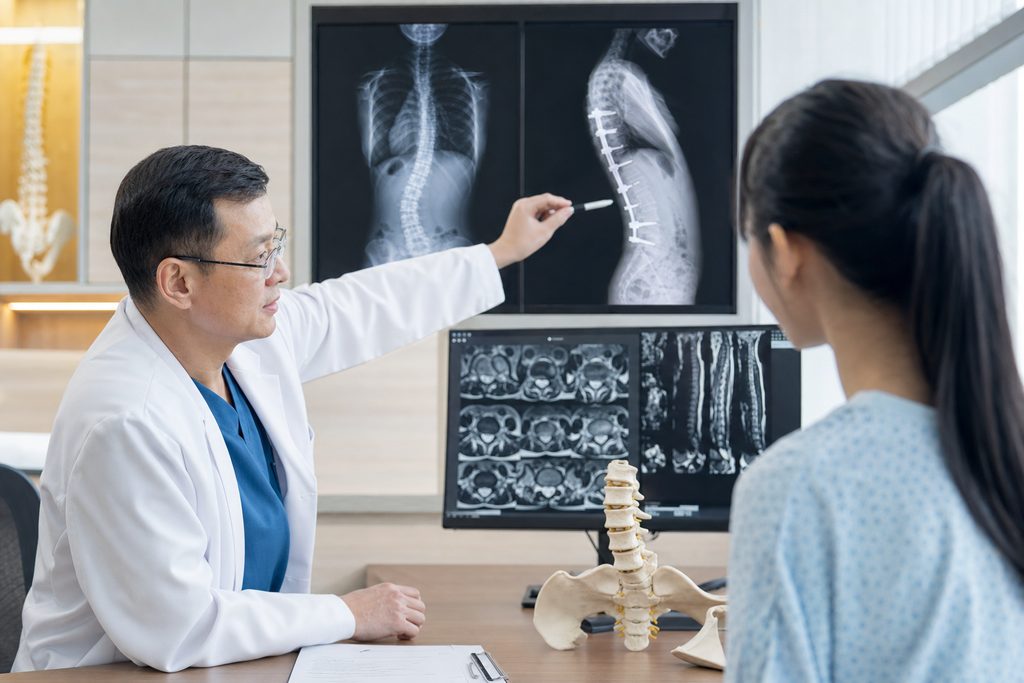
Have you ever stared at a quote for spinal reconstruction and felt the ground shift beneath your feet? The numbers are staggering. A severe scoliosis correction or multi-level vertebral column resection can run past $250,000 in the United States and often exceeds €80,000 at private facilities in Italy. The search for an alternative is not about cutting corners. It is about survival, access, and finding a team that performs this specific, high-stakes surgery every single day. The complex spine deformity surgery cost China at JCI-accredited university hospitals typically ranges from $35,000 to $68,000. That includes implant systems from the same manufacturers used in Milan or Rome—DePuy Synthes, Medtronic, Stryker—and a surgical volume that is difficult to match anywhere in Europe.
We help patients from Italy and across Western Europe navigate these choices every month. They come to us with MRI scans on a USB drive and a very specific fear: am I trading safety for affordability? The answer is more nuanced than a price tag. Here is how the process actually works, what the timeline really looks like, and where things can go sideways if you are not prepared.
How This Actually Works, Step by Step
You do not book a spine fusion like a hotel room. The sequence matters. Here is what happens from the moment you decide to explore treatment in China until the day you fly home.
Step 1: You send us your existing imaging and records. We need full-length standing scoliosis X-rays (PA and lateral), a recent MRI (within 6 months), a CT scan if you have had prior instrumentation, and any operative notes from previous surgeries. You also send a brief medical history. We translate everything into clinical Chinese. This is not Google Translate—our team includes Mandarin-speaking medical coordinators who know how to render “pedicle subtraction osteotomy” and “sagittal imbalance” accurately.
Step 2: We match your case to a spine deformity team. Not every top orthopedic hospital does high-volume adult deformity. We look at the Fudan Hospital Ranking for Orthopedics, filter for centers that perform over 400 major spinal deformity cases annually, and present you with two or three realistic options. You choose. We do not push one hospital.
Step 3: Written second opinion. The Chinese spine team reviews your translated records and issues a formal written assessment. This document covers their recommended surgical plan (posterior-only vs. combined anterior-posterior), the proposed implant strategy, estimated blood loss parameters, neuromonitoring protocol, and a frank discussion of risk. You receive this in English. The complex spine deformity surgery cost China estimate comes with this document, broken down by hospital charges, surgeon fees, implant costs, and ICU stay. The written second opinion itself costs from $300 to $500. If you later proceed to surgery through us, that fee is credited in full toward our coordination service.
Step 4: Video consultation. You sit down with the surgical team via secure video link. A bilingual coordinator stays on the line. You ask the hard questions: How many of these specific procedures has the lead surgeon performed? What is the team’s infection rate for instrumented fusion? What neuromonitoring do they use—SSEP, MEP, EMG? The surgeon answers directly. This costs $500 to $800 for a top-specialist session. Again, it credits toward coordination if you move forward.
Step 5: You decide. No pressure. Some patients take the written opinion back to their Italian orthopedist for a second look. Others are ready to schedule.
Step 6: Surgery coordination. We handle the S2 visa invitation letter from the hospital, schedule your preoperative clearance appointments, book your hospital bed, arrange airport pickup, and assign you a bilingual medical companion. You fly to Shanghai, Beijing, or Nanjing. You meet your surgeon within 48 hours of arrival. Surgery typically happens within 3 to 5 business days after your final preoperative workup is complete.
Why Some Patients Look Beyond Italy for Complex Deformity Correction
Italy has excellent spine surgeons. The Rizzoli Orthopedic Institute in Bologna is a reference center. The Galeazzi in Milan handles complex cases. No one disputes the quality. The issue for many international patients is a combination of wait time, cost at private facilities, and the sheer repetition that comes with surgical volume.
A surgeon who corrects 200 adult scoliosis cases a year has seen intraoperative complications that a surgeon doing 40 a year has only read about. That is not a critique of training. It is a reality of procedural medicine. At top-tier Chinese university hospitals—the kind listed in the Fudan Orthopedics top 10—a single spine deformity team may operate on six to eight major deformity cases per week. That volume drives pattern recognition. The neuromonitoring technician has seen a motor evoked potential signal drop and recover a thousand times. The perfusionist knows the rhythms of controlled hypotension. The nursing team has a protocol for every drain, every brace, every log-roll turn.
Also, the economics shift the calculus. At a private Italian facility, a T2-to-pelvis fusion with multiple osteotomies can exceed €70,000. At a JCI-accredited Chinese university hospital, the same procedure using the same implant brands runs from $35,000 to $68,000 depending on the number of levels fused, the osteotomy techniques required, and the length of ICU stay.
This is not a comparison between Italian public system care—where wait times for complex elective deformity can stretch past 18 months in some regions—and Chinese private pay. It is a comparison between two private-pay pathways for patients who cannot or will not wait. And in that comparison, the numbers speak clearly. Patients searching for the best spine deformity centers Italy vs China often find that the top Chinese centers match or exceed the case volumes of their Italian counterparts while operating at a significantly lower price point.
A Realistic Timeline
Here is what the calendar actually looks like, from first contact to flying home. This is not a best-case scenario. It is an honest range based on patients who moved through the process in 2025 and early 2026.
| Stage | What Happens | Duration |
|---|---|---|
| Week 1–2 | Records collected, translated, and sent to spine team | 7–14 days |
| Week 3–4 | Written second opinion drafted and returned in English | 5–10 business days |
| Week 4–5 | Video consultation scheduled and completed | 3–7 days to schedule |
| Week 5–7 | Decision period, S2 visa application, hospital invitation letter | 2–3 weeks (visa processing varies by embassy) |
| Week 8 | Arrival in China, preoperative clearance (labs, anesthesia consult, updated imaging) | 2–4 days |
| Week 8–9 | Surgery and ICU stay | 1 day surgery, 1–3 days ICU |
| Week 9–11 | Inpatient rehabilitation and mobilization | 10–18 days |
| Week 11–12 | Discharge, hotel-based recovery, follow-up X-ray, clearance to fly | 5–10 days |
| Month 3–12 | Recovery at home, remote follow-up, physical therapy | Ongoing |
What surprises most patients? The visa wait. Italian passport holders need an S2 visa for medical treatment in China. The hospital issues an official invitation letter, but the Chinese embassy in Rome or consulate in Milan still needs time to process. Budget three weeks. Do not book flights until the visa is in your passport. Also, the preoperative clearance phase is not skippable. The Chinese anesthesiology team will want their own labs, their own ECG, and often their own standing X-rays. Even if yours are only a month old, expect to repeat some imaging. This is standard and it protects you.
Total time in China: plan for 4 to 6 weeks from arrival to clearance for the flight home. The exact recovery time for complex spine surgery abroad depends on the number of levels fused and your preoperative condition, but you should not expect to board a long-haul flight less than three weeks after a multi-level fusion.
What Can Go Wrong—and What Happens Then
Let us address the fear head-on. You are considering major spine surgery in a country where you do not speak the language, far from your local orthopedic team. What if something goes wrong?
Intraoperative neuromonitoring signal loss. This is the big one. During deformity correction, the spinal cord is under stress. The monitoring team watches for signal degradation in real time. If signals drop, the surgeon pauses, raises mean arterial pressure, removes or adjusts instrumentation, and waits. This happens in roughly 1% to 2% of major deformity cases worldwide. The protocol in a top Chinese center is identical to what you would see at Rizzoli or the Schulthess Klinik in Zurich. The difference? The Chinese team has likely managed this scenario more times in the past year.
Implant malposition. A pedicle screw breaches the cortex. It happens even in the best hands—reported rates hover around 2% to 5% per screw. If the breach is medial and threatens the cord, the screw is removed or repositioned. If it is lateral and asymptomatic, it may be left alone. Your postoperative CT scan will be read by a radiologist who does nothing but spine imaging. You will know exactly where every screw sits before you leave the hospital.
Surgical site infection. Deep infection rates for instrumented spinal fusion run about 1% to 3% in high-volume centers. Chinese JCI-accredited hospitals track these numbers obsessively. If an infection develops, it is treated with irrigation, debridement, and culture-directed antibiotics. The implant stays in unless the infection cannot be controlled. You would need to extend your stay. We help coordinate that—hotel, visa extension if needed, communication with the hospital.
You arrive and the surgeon says the plan changed. This is rare but real. The preoperative imaging may not fully capture the rigidity of a curve, or a comorbidity may surface during clearance. The surgeon may recommend a staged procedure instead of a single operation, or a shorter fusion than originally planned. You have the right to say no. You can walk away. Our coordination fee covers the scheduling and translation work already done. The hospital will not charge for a surgery that does not happen. You fly home and regroup.
We do not pretend these risks do not exist. They exist in Bologna, in Milan, in Shanghai, and in Beijing. The question is whether the team has a rehearsed response. At the centers we work with, they do.
How to Evaluate a Spine Center from 9,000 Kilometers Away
You cannot tour the operating room. You cannot shake the surgeon’s hand before you commit. So what do you look at?
Surgical volume, not just hospital reputation. A hospital can be famous for joint replacement and mediocre in deformity. Ask for the specific number: how many adult spinal deformity cases did this surgeon perform last year? A number above 100 is solid. Above 200 is excellent. The team should be able to produce this figure without hesitation.
JCI accreditation. Several Chinese spine centers hold Joint Commission International accreditation. This means an external, Western-based body has audited their infection control, medication management, surgical safety checklist compliance, and credentialing processes. When you search for JCI accredited spine surgery hospitals China, you are not looking for a marketing badge. You are looking for evidence that the hospital’s protocols are written in a language that international auditors understand and verify.
Implant transparency. Ask which implant system the surgeon plans to use and why. If the answer is vague, walk. If the answer is “we use DePuy Expedium for the thoracic levels and Medtronic CD Horizon for the lumbar because of the sagittal correction we need to achieve,” you are talking to someone who plans their cases meticulously. The implant cost should be itemized in your quote. You have a right to know.
Neuromonitoring protocol. A serious deformity center uses multimodal intraoperative monitoring—SSEP, MEP, and EMG—with a dedicated neurophysiologist in the room. Not a technician who runs the machine. A neurophysiologist who can interpret the signals and advise the surgeon in real time. Ask if this person is board-certified. At the centers we recommend, they are.
Language and coordination. The surgeon may speak some English. The nursing staff likely will not. You need a bilingual medical companion who understands spine terminology—someone who can translate “the drain output is 80cc over 8 hours, we are watching for a CSF leak” without blinking. This is not a nice-to-have. It is a safety requirement. Our companions are trained specifically for surgical inpatient settings.
When patients ask us about top spine surgeons for scoliosis in Italy or China, we tell them to stop comparing individuals by name and start comparing teams by volume, outcomes data, and transparency. A famous surgeon with a low-volume practice is riskier than a less famous surgeon who corrects deformities every Tuesday and Thursday with the same scrub team and the same neuromonitoring crew.
Practical Considerations: Records, Visa, Payment, and Follow-Up
Medical records. Bring everything. Digital copies on a USB drive and printed copies in a folder. Full-length standing films are non-negotiable—a standard lumbar MRI will not show the sagittal balance that determines your surgical plan. If your Italian orthopedist took EOS low-dose stereoradiography images, those are gold. Bring them.
Visa. You need an S2 visa, not an M visa. The M visa is for commercial and trade activities and has nothing to do with medical treatment. The S2 is the short-stay category used for private affairs including medical treatment. The hospital issues an invitation letter. You apply at the Chinese embassy or consulate. Processing time varies. Plan for it. If your stay will exceed 180 days—uncommon for spine surgery but possible for staged procedures—you need an S1 visa.
Payment. Chinese public university hospitals require prepayment. You deposit the estimated surgical cost upfront, and the hospital draws from that deposit as charges accrue. Any unused balance is refunded at discharge. International wire transfers work. Some hospitals accept major credit cards but confirm this before you fly. The complex spine deformity surgery cost China quote you receive includes the hospital deposit estimate, but final charges may vary slightly based on actual implant usage, ICU days, and blood products transfused.
Insurance. Most Italian and European private insurance plans operate on a reimbursement model. You pay the hospital, you submit the claim, you get repaid. The hospital provides an itemized invoice and discharge summary in English for this purpose. We help you gather the documentation. We do not file the claim for you—that is between you and your insurer. Some international plans have direct billing arrangements with JCI-accredited Chinese hospitals. Check before you commit.
Language. You will not navigate this alone. Our bilingual medical companion stays with you through admission, surgery day, ICU rounds, and discharge. They translate conversations with nurses, physiotherapists, and the surgical team. They explain the medication schedule, the drain management, the brace-wearing protocol. They are not interpreters on a screen. They are physically present.
Follow-up at home. You return to Italy with a detailed discharge plan, a USB drive containing your postoperative imaging, and a written recommendation for physical therapy progression. Your Chinese surgeon will schedule two or three remote follow-up video calls over the first year. You also see your local orthopedist for in-person checks. The two teams do not need to coordinate directly—you carry the records between them.
Frequently Asked Questions
You do not book surgery directly. The process starts with a written second opinion. You send us your imaging and records. We translate them and submit them to a spine deformity team at a top orthopedic hospital in Shanghai. The team reviews your case and issues a surgical plan and cost estimate. If you decide to proceed, we coordinate the S2 visa invitation, hospital admission, preoperative clearance, and your in-country logistics. There is no way to bypass the preoperative evaluation. The surgeon must see you in person, examine you, and review updated imaging before scheduling the operating room. Anyone who promises otherwise is not being honest about how Chinese university hospitals work.
What is the recovery time for complex spine surgery abroad?
For more medical information and treatment options in China, visit chinamedservices.com (China Medical Services).
