Stem Cell for Diabetes in China: Our Coordination Service
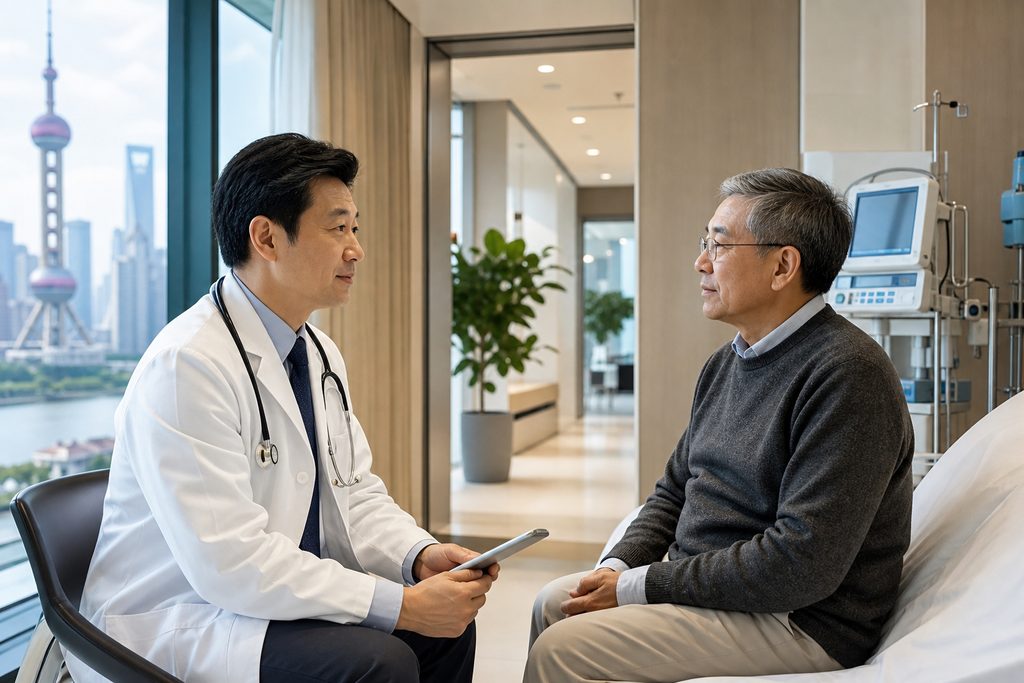
You’ve probably heard that medical tourism means flying to a developing country and hoping for the best. The reality with diabetes care in China is different. Public hospitals here perform over a million inpatient diabetes-related admissions annually, and a growing number of university-affiliated centers run registered clinical trials for cell-based therapies. The question is not whether the science exists. It is whether you can find a legitimate program, understand what you are paying for, and avoid clinics that sell hope instead of evidence.
Stem Cell Therapy for Diabetes Cost China: The Short Answer
Budget roughly $18,000 to $45,000 for a full mesenchymal stem cell (MSC) treatment course for diabetes at a reputable Chinese hospital. That range typically covers pre-treatment evaluation, one to three infusions, imaging, laboratory monitoring, and a short inpatient stay. It does not include international flights, long-term accommodation, or post-return follow-up care.
The caveat: this is not a one-line purchase. Pricing swings based on cell source, dose, delivery route, hospital tier, and whether you are treated through a public hospital’s international department or a private stem cell clinic. Some programs quote under $10,000. Others exceed $60,000. A low quote is not a bargain. It is often a red flag.
Who This Is Right For — and Who It Isn’t
Stem cell intervention for diabetes is not a first-line treatment. It is an investigational or adjunctive option for people whose disease is not adequately controlled by standard care. That standard includes metformin, GLP-1 receptor agonists, SGLT2 inhibitors, insulin, and structured lifestyle intervention.
Who is typically a good candidate:
- Adults with type 2 diabetes and measurable residual beta-cell function who still respond to some oral agents
- People with early-stage type 1 diabetes enrolled in a registered clinical trial
- Patients with diabetic complications such as early nephropathy or non-healing ulcers where MSC immunomodulation may help
- Those who have already optimized conventional therapy and still have HbA1c above 8.0%
Who should not pursue this:
- Anyone with active malignancy or a history of cancer within five years
- People with uncontrolled infections, severe liver or kidney failure, or bleeding disorders
- Patients with diabetic ketoacidosis or hyperosmolar hyperglycemic state
- Anyone expecting a cure. No legitimate center promises that.
If you are stable on oral medication with an HbA1c under 7.5%, flying to China for cell therapy is probably not worth the risk or cost.
The Options, Compared
You are not choosing between “China” and “nowhere.” You are choosing between several imperfect paths. Here is how they stack up.
| Option | Estimated Cost | Regulatory Status | Realistic Outcome |
|---|---|---|---|
| Standard diabetes care at home | $2,000–$8,000/year | Fully approved | Disease management, not reversal |
| Stem cell therapy in China (public hospital international dept.) | $18,000–$45,000 per course | Registered clinical trial or hospital ethics-approved compassionate use | Modest HbA1c reduction, reduced insulin need in some patients |
| Private stem cell clinic in China | $8,000–$25,000 | Often unregistered, limited oversight | Highly variable, sometimes no verifiable data |
| Stem cell therapy in the US (clinical trial) | $0–$5,000 if enrolled | FDA-regulated trial | Access limited, strict criteria |
| Stem cell tourism in Mexico, Panama, or Ukraine | $12,000–$30,000 | Minimal regulation | Inconsistent cell quality, weak follow-up |
Public hospital programs in China sit in an unusual middle ground. They are less expensive than US private-pay options, more regulated than most Latin American clinics, and more transparent than many private Chinese operators. That combination is why international patients keep asking about them.
How Does Stem Cell Treatment for Diabetes Work in China
Most Chinese centers use mesenchymal stem cells derived from umbilical cord tissue, placental tissue, or adipose tissue. These cells do not become new beta cells. That is the most common misunderstanding. MSCs work through paracrine signaling — they secrete cytokines and extracellular vesicles that reduce inflammation, suppress autoimmune attack on remaining beta cells, and improve insulin sensitivity in peripheral tissues.
A typical protocol looks like this:
- Day 1–2: full evaluation — fasting glucose, HbA1c, C-peptide, autoantibody panel, liver and kidney function, cardiac workup
- Day 3: first intravenous infusion of 1–3 million MSCs per kilogram of body weight
- Day 4–7: inpatient monitoring, second infusion in some protocols
- Week 2–4: third infusion, repeat labs, discharge planning
Some centers combine intravenous delivery with intra-arterial infusion into the pancreaticoduodenal artery, arguing this increases cell homing to the pancreas. The evidence for superiority of one route over another is thin. Ask any center to show you their published outcomes before you accept their protocol.
Is Stem Cell Treatment for Diabetes Safe in China
Safety data from Chinese MSC trials is generally reassuring for the short term. A 2023 meta-analysis of 22 randomized controlled trials involving over 1,000 diabetic patients treated with MSCs reported no increased risk of serious adverse events compared to controls. The most common side effects were transient fever, mild headache, and injection-site discomfort.
But “generally reassuring” is not the same as “safe for you.”
Three concerns deserve your attention. First, cell source and manufacturing. Public hospitals with GMP-certified cell labs follow stricter quality control than private clinics that buy third-party cells of unknown provenance. Second, long-term oncogenic risk remains theoretically possible, and no Chinese study has followed patients beyond five years. Third, immunosuppression is sometimes used alongside cell therapy in type 1 diabetes protocols, which carries its own infection risk.
If a clinic tells you stem cells are “completely safe” and shows you only testimonials, walk away.
Best Stem Cell Clinics for Diabetes in China: What “Best” Actually Means
China has no official ranking for stem cell clinics. But you can apply the same filters we use when evaluating hospitals for international patients. The strongest programs share three traits.
They are affiliated with a university hospital that appears in the Fudan Hospital Rankings. They have a clinical trial registration number on the Chinese Clinical Trial Registry (ChiCTR) or ClinicalTrials.gov. And they publish peer-reviewed outcome data, not just marketing brochures.
Hospitals with active diabetes cell-therapy research clusters include several in Shanghai, Beijing, and Guangzhou. These are also the cities where you will find English-speaking international departments and the most experience managing foreign patients. A hospital that treats 10,000 diabetic inpatients a year has a very different level of baseline competence than a boutique clinic that only does stem cell injections.
We do not publish a ranked list of stem cell clinics. The landscape changes too fast, and a clinic that was strong two years ago may have lost its key investigator or changed its cell supplier. What we do is verify current trial registrations, check hospital credentials, and confirm that the program you are considering has treated international patients before.
Book Stem Cell Therapy for Diabetes China Package: What You Are Actually Buying
No legitimate hospital sells a “stem cell package” like a vacation deal. What you are really arranging is a staged medical evaluation with the possibility of cell therapy if you qualify. That distinction matters more than any price difference.
A credible coordination process looks like this:
- You send your existing medical records — HbA1c history, C-peptide, current medications, complication screening
- The hospital’s endocrinology team reviews them and gives a written opinion on whether cell therapy is appropriate for your case
- If yes, you schedule a video consultation to discuss the protocol, risks, and expected monitoring
- You travel to China for in-person evaluation and, if you still qualify, treatment
- You return home with a written follow-up plan and a direct line to the treating team for questions
Anything that skips the records review and video consultation is not a medical program. It is a transaction.
What It Costs — and What Drives the Variance
That is a genuine possibility. Response rates in published MSC trials vary widely — roughly 30% to 60% of patients show meaningful improvement depending on the study and the endpoint. If you see no benefit, you will have spent significant money and time. That is why we recommend a written second opinion before you commit to travel. A $300–$500 remote evaluation can tell you whether your specific case is likely to respond, and it is credited toward coordination if you proceed.
Ask for three things: a clinical trial registration number, the name of the hospital’s ethics committee that approved the protocol, and published outcome data from the treating team. If they cannot produce all three, do not proceed. Also check that the hospital itself appears in the Fudan rankings or holds JCI accreditation. A legitimate program will be proud of its credentials and will show them without hesitation.
Stem cell therapy for diabetes is not yet approved as a standard treatment by China’s National Medical Products Administration. It is available through registered clinical trials or hospital ethics-approved compassionate use protocols. That means you are receiving an investigational therapy, not an approved drug. This is also true in the United States and Europe, where cell therapy for diabetes remains largely trial-based.
Your Next Step
Stem cell therapy for diabetes in China is a legitimate but uneven landscape. The gap between a strong university program and a weak private clinic is wide, and the difference is not always visible from abroad. Our team at China Medical Services exists to close that gap. We are not a hospital, we do not provide diagnoses, and we never promise treatment outcomes.
What we do is verify programs, coordinate with hospital international departments, translate your records, and support you on the ground. If you are considering this path, start with a written second opinion. Send us your records and let a Chinese endocrinology team tell you honestly whether cell therapy makes sense for your case. If it does, we will help you plan the rest. If it doesn’t, you will have saved yourself a very expensive flight. Get a free consultation at our patient coordination page.
Frequently Asked Questions
Yes. The hospitals used for international patients are JCI-accredited and follow the same international safety standards as top hospitals in the US and Europe. Surgical teams perform high volumes of procedures — often more than their Western counterparts — which studies show leads to better outcomes.
Costs vary by procedure and hospital, but international patients typically save 40-80% compared to US prices — even when factoring in travel and accommodation. A consultation with our team will give you an exact, all-inclusive quote with no hidden fees.
Send us your existing medical reports to get started. We handle everything from hospital selection and appointment scheduling to visa assistance and post-operative recovery planning. Your medical records are reviewed by the specialist before you even book a flight.
For more medical information and treatment options in China, visit chinamedservices.com (China Medical Services).
