Stem Cell Therapy Costs Less in China: The Real Value Explained
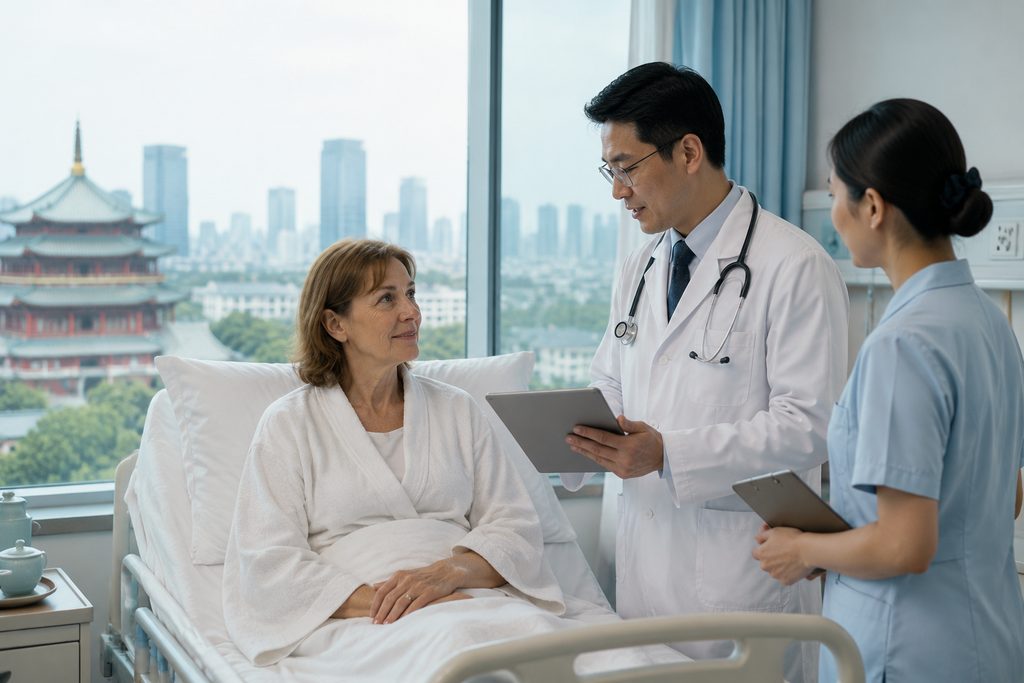
Stem Cell Therapy Costs Less in China: The Real Value Explained
Key Takeaways
- Stem cell therapy in China typically runs 40–70% below US prices, with orthopedic and neurological applications seeing the widest gaps.
- China’s National Medical Products Administration (NMPA) has approved over 80 stem cell clinical trial applications since 2018, signaling a maturing regulatory environment.
- Lower costs reflect structural economics — hospital efficiency, competitive lab pricing, and volume — not necessarily lower quality.
- Anyone considering treatment abroad must verify the specific clinic’s trial registration or hospital affiliation before committing any payment.
According to a 2023 report from Research and Markets, the global stem cell therapy market reached $12.7 billion, yet American patients face bills of $25,000 to $50,000 for a single autologous stem cell injection for osteoarthritis. The same procedure at a top-tier Chinese hospital often lands between $8,000 and $18,000. That stark gap in stem cell therapy cost China vs USA is what drives thousands of patients to ask a harder question: what exactly are they getting for the lower price?
We work with patients every week who ask us this. Some arrive skeptical. Others arrive desperate. Most land somewhere in between — they have done enough research to know the price difference is real, but they need someone to explain the mechanics behind it before they book a flight. This article breaks down that mechanics, honestly.
The Problem: Stem Cell Therapy Pricing in the US Has Become Unsustainable
A single mesenchymal stem cell (MSC) treatment for knee osteoarthritis at a private US clinic averages $28,000, according to a 2024 analysis by the Peterson Center on Healthcare. Insurance almost never covers it. Medicare explicitly excludes stem cell injections for orthopedic conditions outside approved clinical trials. So patients pay cash. And cash runs out fast.
The burden does not stop at orthopedics. Multiple sclerosis patients exploring autologous hematopoietic stem cell transplantation (aHSCT) face US hospital quotes of $150,000 to $250,000. In China, the same procedure at a major hematology center typically ranges from $40,000 to $80,000. The difference is not a rounding error. It is the difference between treatment and bankruptcy for many families.
What happens when the price is too high? Patients delay care. Some turn to unregulated clinics in countries with weaker oversight. Others simply live with progressive degeneration. The status quo punishes the sick.
Why Stem Cell Therapy in China Delivers Comparable Results at a Lower Price
Clinical Volume Creates Pricing Leverage
Chinese hospitals operate at a scale that Western institutions rarely match. A single orthopedic department at a top Shanghai hospital may perform 300 to 500 stem cell injections per year for cartilage repair. That volume lets the hospital negotiate lower prices for lab consumables, culture media, and growth factors. It also means the lab technicians and clinicians have seen more cases — and more complications — than a US clinic doing 20 procedures a year.
Volume drives competence. Competence drives efficiency. Efficiency drives cost down. This is not a marketing slogan. It is how every high-volume surgical center in the world works, from cardiac bypass in India to joint replacement in Thailand.
Regulatory Momentum Is Real, Not Cosmetic
Since 2018, China’s NMPA has shifted from a patchwork of provincial rules to a centralized framework for stem cell clinical trials. Over 80 investigational new drug (IND) applications for stem cell products had been accepted by 2023, according to a review published in Cell Proliferation. That is not the Wild West. That is a country building a formal approval pipeline.
But here is the honest caveat: many clinics in China still operate outside the clinical trial system. They market stem cell treatments for anti-aging, diabetes, and autism without solid trial data. The fact that the regulatory framework exists does not mean every clinic follows it. Patients must ask for trial registration numbers and hospital affiliation documents. We tell every patient this before they spend a dollar.
Structural Cost Differences, Not Quality Cuts
Why is the same procedure cheaper in Shanghai than in San Diego? Labor. A senior lab technician in Shanghai earns roughly one-fifth of their US counterpart. Hospital administrative overhead runs lower. Malpractice insurance premiums are a fraction of US costs. None of these factors touch the quality of the stem cells themselves. The biology does not change with the zip code.
The cost gap narrows when you compare Chinese private international hospitals to US academic centers — but even then, the savings usually hold at 30–50%. The real question is not “why is it cheaper?” but “what am I paying for in the US?” Part of the answer is liability insurance, regulatory compliance costs, and a healthcare system built on fee-for-service incentives.
What an Affordable Stem Cell Package in China Actually Includes
When a patient asks us about affordable stem cell therapy abroad packages, they usually imagine a bundled price that covers everything. The reality varies by hospital. A typical package at a public hospital’s international department includes the initial consultation, imaging, lab work, the cell harvesting or expansion procedure, the injection itself, and one night of observation. That bundle might run $10,000 to $15,000 for a single joint.
What it rarely includes: airfare, hotel, meals, translation services, and follow-up imaging after you return home. Those costs add up. A two-week stay in Shanghai with a companion can add $3,000 to $6,000 depending on accommodation choices. Patients who budget only for the procedure get surprised.
| Procedure | US Average Price | China Average Price | Savings |
|---|---|---|---|
| MSC injection for knee osteoarthritis (single joint) | $25,000–$50,000 | $8,000–$18,000 | 55–68% |
| Autologous stem cell transplant for multiple sclerosis (aHSCT) | $150,000–$250,000 | $40,000–$80,000 | 60–73% |
| Stem cell therapy for type 1 diabetes (clinical trial setting) | $30,000–$60,000 | $12,000–$25,000 | 50–60% |
| Cosmetic/facial stem cell application (unapproved in US) | N/A (largely unavailable) | $3,000–$8,000 | — |
Prices vary by hospital tier, cell type, and case complexity. The table above reflects ranges reported by patients and hospital international departments, not fixed quotes. Always confirm the final price in writing before travel.
How to Evaluate a Stem Cell Clinic in China Without Getting Burned
This is where most patients make mistakes. They search for best stem cell clinic Shanghai price, find a slick website, and wire a deposit. Then they arrive at a clinic that is not affiliated with any hospital and has no published trial data. The price looked good. The outcome did not.
Here is the evaluation framework we use with every patient. It is not proprietary. It is just disciplined.
First, check the hospital affiliation. A legitimate stem cell treatment should happen inside or under the supervision of a hospital with a recognized hematology, orthopedics, or neurology department. If the clinic is a standalone storefront, walk away.
Second, demand the trial registration number. Any stem cell therapy given outside a registered clinical trial in China is operating in a gray zone. The NMPA requires IND approval for investigational stem cell products. If the clinic cannot produce a registration number from the Chinese Clinical Trial Registry or ClinicalTrials.gov, that is a red flag.
Third, ask what cells you are getting. Autologous means your own cells. Allogeneic means donor cells. The source matters for safety and efficacy. So does the expansion method. If the clinic cannot explain the cell source and processing in plain language, they probably do not understand it themselves.
Fourth, verify the doctor’s credentials. The physician overseeing your treatment should have a license from the National Health Commission and a track record in the relevant specialty. Ask for their registration number and check it.
Patients who skip these steps sometimes save money. Sometimes they lose more than money.
Is Stem Cell Therapy Safe in China? What the Data Says
The question is stem cell therapy safe in China deserves a straight answer. For registered clinical trials conducted at major hospitals, the safety profile is comparable to trials in the US, Europe, and Japan. A 2022 systematic review in Stem Cells Translational Medicine examined adverse events across 36 MSC trials in China and found no significant difference in serious adverse event rates compared to Western trials.
But the safety picture changes outside registered trials. Unregulated clinics have reported cases of tumor formation, infection, and immune rejection. The exact number is hard to pin down because adverse events at unlicensed facilities often go unreported. This is not unique to China — the same problem exists in Mexico, Ukraine, and parts of the US. The difference is that China’s regulatory crackdown since 2020 has made it harder for unlicensed clinics to advertise openly.
So: is it safe? In the right setting, yes. In the wrong setting, no. The setting matters more than the country.
Caution: Never agree to stem cell therapy from a provider who cannot show you a hospital affiliation document and a clinical trial registration number. Legitimate providers welcome these questions. Fraudulent ones deflect.
Can You Book Stem Cell Treatment in Beijing? The Real Booking Process
This is the hardest question to answer honestly. Chinese hospitals have established adverse event protocols, and major centers carry liability insurance. But pursuing legal recourse as a foreign patient is difficult. You would need to work through the hospital’s patient relations department, and language barriers compound every step. This is why we tell patients to choose hospitals with international departments and English-speaking staff — not because nothing will go wrong, but because the response will be faster if it does.
No legitimate hospital in China offers stem cell therapy for anti-aging. The NMPA has not approved any stem cell product for cosmetic or anti-aging indications. Clinics advertising this are operating outside the regulatory framework. If anti-aging is your goal, stem cell therapy is not the right tool — and any clinic offering it is not the right provider.
Not formally, but it helps. Chinese hospitals will review your records regardless. A referral letter summarizing your diagnosis and treatment history speeds up the review process. If you are considering treatment for a complex condition, a written second opinion from a Chinese specialist can clarify whether you are even a candidate before you spend money on travel. That service typically costs $300–$500 and is worth every dollar if it prevents a wasted trip.
Your Next Step
The price gap in stem cell therapy between China and the US is real, and the reasons behind it are structural, not magical. Lower labor costs, higher clinical volume, and a maturing regulatory system explain most of the difference. But the gap only matters if you choose a legitimate provider — and that requires verification, not hope.
We help patients navigate this process. China Medical Services is not a hospital and we do not provide diagnoses or treatment. What we do is review your records, connect you with hospital international departments, and help you coordinate the logistics — from visa documents to bilingual accompaniment during your hospital visits. If you want to understand whether stem cell therapy in China is a realistic option for your specific condition, start with a conversation. You can request a free consultation and we will tell you honestly what is possible and what is not. No pressure. Just clarity.
Frequently Asked Questions
Yes. The hospitals used for international patients are JCI-accredited and follow the same international safety standards as top hospitals in the US and Europe. Surgical teams perform high volumes of procedures — often more than their Western counterparts — which studies show leads to better outcomes.
Costs vary by procedure and hospital, but international patients typically save 40-80% compared to US prices — even when factoring in travel and accommodation. A consultation with our team will give you an exact, all-inclusive quote with no hidden fees.
Send us your existing medical reports to get started. We handle everything from hospital selection and appointment scheduling to visa assistance and post-operative recovery planning. Your medical records are reviewed by the specialist before you even book a flight.
For more medical information and treatment options in China, visit chinamedservices.com (China Medical Services).
