Weight Loss Surgery in China: Real Costs, Safety, and How to Book
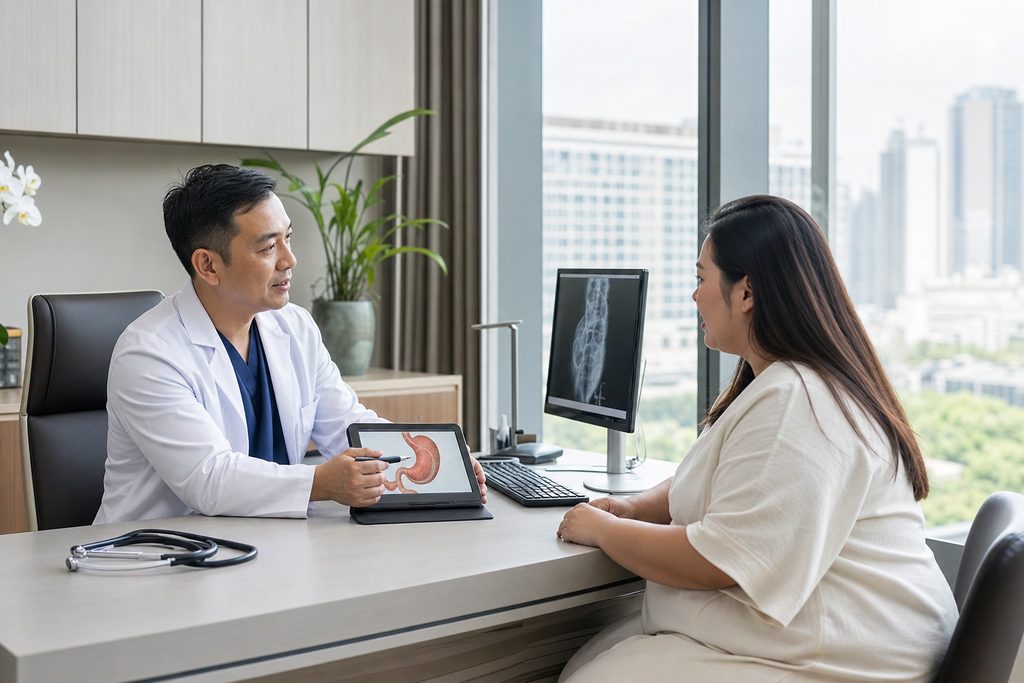
When 44-year-old Daniel from Manchester started researching bariatric options, his local quote for a gastric sleeve came back at £14,500. The wait time was 18 months. He had already been denied coverage by his insurer twice. So he started looking further afield. Mexico, Turkey, India. Then a colleague mentioned China. His first question was the same one every patient asks us: how much does weight loss surgery cost in China? The answer depends on hospital tier, procedure type, and whether you go through a public hospital’s international department or a private facility. But here is the honest range: a gastric sleeve in China typically costs between $8,000 and $18,000. A gastric bypass runs $12,000 to $22,000. Those figures usually include the surgeon’s fee, anesthesia, hospital stay, operating room costs, and basic post-operative monitoring.
What they do not always include is what happens before and after. Pre-operative evaluations, extended hospital stays for complications, and follow-up care after you fly home are often separate. That is the caveat that turns a one-line answer into a planning exercise.
Gastric Sleeve Surgery Cost China: The Short Answer
For a straightforward sleeve gastrectomy at a reputable Chinese hospital, expect to pay between $8,000 and $18,000. That is roughly 60% to 75% less than the average $25,000 to $35,000 price tag in the United States or the £12,000 to £18,000 range in the UK. But the sticker price is not the whole story. Hospital choice drives most of the variance. A public top-tier hospital’s international department will charge less than a JCI-accredited private hospital. And the surgeon’s experience level matters. A chief surgeon with 2,000+ sleeves under their belt commands a higher fee than a junior attending.
So when someone asks us how much is bariatric surgery in Beijing, we give them a range, not a number. Beijing’s public hospital international departments tend to run $9,000 to $14,000 for a sleeve. Private international hospitals in the same city can push that to $16,000 or more. Shanghai sits in a similar band. The city matters less than the facility tier.
Who This Is Right For — and Who It Isn’t
Bariatric surgery is not a cosmetic shortcut. It is a metabolic intervention with lifelong consequences. The patients who benefit most are those with a BMI of 35 or higher who have failed sustained weight loss through diet, exercise, and medical management. Patients with a BMI of 30 to 34.9 may qualify if they have obesity-related conditions like type 2 diabetes, hypertension, or severe sleep apnea. Age matters too. Most Chinese surgical teams prefer patients between 18 and 65. Outside that range, the risk-benefit calculus shifts.
Who should not pursue this in China — or anywhere else:
- Patients with untreated eating disorders, particularly binge eating disorder or bulimia
- Anyone with active substance abuse or uncontrolled psychiatric illness
- Patients who cannot commit to lifelong vitamin supplementation and follow-up blood work
- Those with severe, unstable cardiac or pulmonary disease who cannot tolerate general anesthesia
- Patients whose primary motivation is cosmetic rather than metabolic health
And a harder truth: if you are not prepared to change how you eat permanently, no surgery will fix that. The pouch can stretch. Weight can return. A surgeon in Shanghai cannot follow you home to Manchester.
The Options, Compared
China offers three main bariatric procedures. The right one depends on your BMI, metabolic profile, and risk tolerance. Here is how they stack up.
| Procedure | Typical Cost in China (USD) | Average Excess Weight Loss at 2 Years | Key Risks |
|---|---|---|---|
| Gastric Sleeve (Sleeve Gastrectomy) | $8,000 – $18,000 | 60% – 70% | Staple line leak, acid reflux, vitamin B12 deficiency |
| Gastric Bypass (Roux-en-Y) | $12,000 – $22,000 | 70% – 80% | Dumping syndrome, internal hernia, marginal ulcer |
| Gastric Band | $7,000 – $12,000 | 40% – 50% | Band slippage, erosion, port infection; largely phased out |
The sleeve is now the default choice for most international patients. It is technically simpler than a bypass, preserves normal intestinal continuity, and carries a lower long-term complication rate. Bypass remains the better option for patients with severe, long-standing type 2 diabetes because of its stronger hormonal effect. The band? We rarely recommend it. Most Chinese centers have stopped offering it as a first-line option due to high revision rates.
Is Gastric Bypass Safe in China? What the Data Actually Shows
This is the question behind every other question. And it deserves a straight answer. China performs more bariatric procedures annually than any country except the United States and Brazil. The Chinese Society for Metabolic and Bariatric Surgery reported over 20,000 procedures in 2022, with sleeve gastrectomy accounting for roughly 80% of them. Volume matters. Hospitals that perform hundreds of sleeves per year have lower leak rates and shorter operative times than low-volume centers.
But safety is not uniform across the country. A top-tier hospital in Beijing or Shanghai is not the same as a small private clinic in a second-tier city. The distinction we draw for patients is simple: if a facility cannot show you its annual bariatric volume, its 30-day complication rate, and its reoperation rate, walk away. Legitimate centers track these numbers. Chinese public hospitals with dedicated bariatric units typically report 30-day mortality below 0.3% for sleeve gastrectomy — comparable to Western benchmarks. The key is choosing a hospital that treats bariatric surgery as a specialty, not a side gig.
One more consideration: the surgeon’s experience with patients of your body type. A surgeon who has operated primarily on East Asian patients with BMIs of 32 to 38 may face a different technical challenge with a 350-pound Western patient. Ask directly: how many patients with my BMI have you operated on in the past year? If the answer is vague, find another team.
Weight Loss Surgery Packages China Price: What Is Actually Included
Many international patients search for weight loss surgery packages China price because they want a single number that covers everything. Some hospitals and facilitators do offer packaged pricing. A typical package for a gastric sleeve at a private international hospital in Shanghai or Beijing ranges from $14,000 to $18,000 and may include:
- Pre-operative consultations and imaging
- The surgical procedure and anesthesia
- Three to five nights of hospital stay
- Basic post-operative medications
- One follow-up visit before departure
- Airport transfer and an English-speaking coordinator
What is usually excluded: extended ICU stays, treatment for complications, additional nights beyond the package limit, and any follow-up care after you return home. Read the package terms carefully. A package that seems cheaper may exclude the pre-operative endoscopy or the post-operative contrast study that confirms the staple line is intact. Those are not optional extras. They are standard of care.
For patients seeking affordable bariatric surgery Shanghai, the public hospital international departments offer the best value. You get access to high-volume surgical teams at roughly 40% less than private facility pricing. The trade-off is less hand-holding. You will need to navigate more of the logistics yourself, or hire a bilingual medical companion to handle registration, payment, and translation.
Our team at China Medical Services has seen package pricing evolve significantly over the past five years. The trend is toward transparency. Hospitals that once quoted vague ranges now itemize their fees. That is good for patients.
Booking a Gastric Sleeve in China: The Step-by-Step Reality
If you want to book gastric sleeve surgery China, understand this first: Chinese public hospitals do not allow overseas patients to book surgery remotely. You cannot email a hospital, send your records, and receive a surgery date. The system does not work that way. The standard path is:
First, you submit your medical records — recent blood work, any endoscopy results, your weight history, and a letter from your primary care physician documenting your attempts at non-surgical weight loss. A Chinese bariatric team reviews these remotely. If they accept your case, you schedule an in-person consultation.
Second, you travel to China for the consultation. The surgeon examines you, orders any missing tests, and confirms you are a surgical candidate. Only then is a surgery date set. This is the rule at public hospitals. Private international hospitals may offer more flexibility, but even they require an in-person evaluation before scheduling surgery.
Third, you undergo the surgery and stay in the hospital for three to five days. Most international patients remain in China for a total of 10 to 14 days to allow for staple line healing and a follow-up visit before flying home.
The visa you need is an S2 visa, issued for private affairs or medical treatment. It is not an M visa — that is for commercial and trade activities, and using it for medical travel is incorrect. Your accompanying family member also applies for an S2. Your hospital will provide an invitation letter and treatment confirmation to support the application. Approval is never guaranteed, but a complete application with hospital documentation has a strong track record.
Practical Considerations: Records, Payment, and Follow-Up
Bring everything. Your surgical team needs a complete picture: recent hemoglobin A1c if you are diabetic, a sleep study if you have apnea, cardiac clearance if you are over 50 or have cardiac risk factors, and a list of every medication you take. Missing records mean delays or repeat testing in China.
Payment is another friction point. Chinese public hospitals require pre-payment, typically a deposit covering the estimated full cost of surgery. International credit cards are accepted at most international departments, but daily limits can be a problem. Some patients split payment across multiple cards or arrange a wire transfer in advance. Private international hospitals are more flexible and may bill your insurer directly if you have coverage that extends to treatment abroad. Most Western insurers do not cover elective bariatric surgery overseas, so plan for out-of-pocket payment.
Language is the quiet obstacle. Even at top hospitals, the nursing staff on a general surgical ward may speak limited English. The surgeon may speak English during consultations, but the nurse checking your drain at 2 a.m. probably will not. A bilingual companion changes that experience. For about $300 per day, someone handles registration, translates during rounds, and explains what is happening at every step. It is not a luxury for bariatric patients. It is the difference between feeling informed and feeling lost.
Follow-up after you return home is the part nobody plans for. You will need vitamin panels every three months for the first year, then every six to twelve months for life. Your local GP can order these. But if a complication arises — persistent vomiting, inability to tolerate fluids, suspected leak — your local hospital may be reluctant to manage a surgery performed abroad. Ask your Chinese surgical team before you leave: who do I contact if something goes wrong? Get a direct email or WeChat contact. A responsible team will provide one.
Frequently Asked Questions
Beijing and Shanghai are within 10% to 15% of each other for the same procedure at the same hospital tier. A gastric sleeve at a public hospital international department in either city runs $9,000 to $14,000. Private international hospitals in both cities charge $14,000 to $18,000. The hospital you choose matters more than the city.
At high-volume centers, yes. Chinese bariatric units that perform 300 or more procedures annually report complication rates comparable to Western benchmarks. The risk is not the country. The risk is choosing a low-volume facility or a surgeon who cannot show you their outcomes data. Ask for numbers before you commit.
Your Chinese surgical team should provide a discharge summary in English and a direct contact for post-operative questions. For non-emergency issues, remote consultation is usually sufficient. For emergencies — suspected leak, severe dehydration, bowel obstruction — you will likely be managed by your local hospital. Some patients purchase medical evacuation insurance, but it is rarely needed for bariatric surgery. The more practical step is ensuring your local GP knows your surgical history and is willing to order the necessary blood work.
No. Chinese public hospitals require an in-person consultation before scheduling surgery. Private international hospitals may offer remote video consultations to determine candidacy, but you will still need to be examined in person before a surgery date is confirmed. Anyone promising a surgery date based on records alone is not following standard practice.
Lower labor costs, lower facility overhead, and a high-volume surgical model. Chinese hospitals perform many more procedures per surgeon per year, which drives down per-case costs without necessarily compromising quality. You are not paying for a lower standard of care. You are paying for a different cost structure.
Your Next Step
Weight loss surgery in China is not the right choice for everyone. But for patients facing long waits, denied coverage, or prohibitive costs at home, it is a legitimate option with real data behind it. The key is choosing a hospital with verifiable volume and a surgical team that treats you like a patient, not a package deal.
We are not a hospital. We do not diagnose or treat. What we do is help international patients navigate the Chinese healthcare system — matching you with appropriate hospitals, coordinating consultations, arranging bilingual companions, and guiding you through the S2 visa process. If you are considering bariatric surgery in China and want to understand your options without pressure, start with a free consultation. We will tell you what is realistic, what it costs, and whether this path makes sense for your situation.
For more medical information and treatment options in China, visit chinamedservices.com (China Medical Services).
