Endometriosis Excision Surgery in China: Full Support for Deep Infiltrating Disease
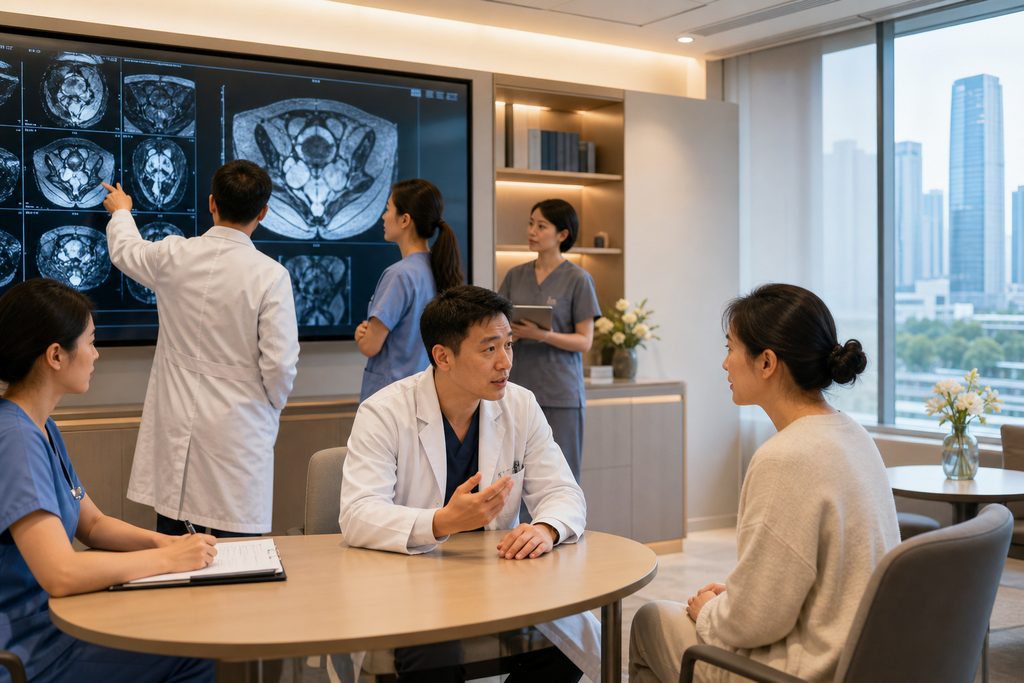
When 34-year-old Sarah from Melbourne finally received a diagnosis after eleven years of pain, the relief lasted about thirty seconds. Her gynecologist mapped the disease on the MRI — deep infiltrating endometriosis involving the uterosacral ligaments, the rectovaginal septum, and one ureter. The recommended surgeon had an eighteen-month waitlist. The private quote came back at AUD 42,000. She started searching for alternatives that same night.
Sarah is not alone. Deep infiltrating endometriosis affects approximately 1 in 10 women of reproductive age globally, and the subset with DIE faces a particularly brutal path — longer diagnostic delays, more complex surgeries, and fewer surgeons qualified to perform complete excision without leaving disease behind. The financial weight compounds the physical suffering. That is what brings a growing number of patients to a question they never expected to ask: could traveling to China for endometriosis excision surgery be the answer?
Key Takeaways
- Complete laparoscopic excision for deep infiltrating endometriosis at top Chinese hospitals costs $8,000–18,000 USD — roughly 60–80% less than comparable private surgery in the US, UK, or Australia.
- China’s highest-volume gynecologic surgery centers perform several hundred complex endometriosis cases annually, giving surgeons deep experience with multi-organ DIE resections that community hospitals rarely see.
- Navigating China’s public hospital system independently is genuinely difficult — language barriers, payment systems, and visa logistics create real friction that a coordinator solves.
- Recovery abroad requires planning: you need to understand visa duration limits, post-operative monitoring protocols, and when it is safe to fly home before committing to surgery overseas.
The Problem: When Local Options Fall Short for Deep Infiltrating Disease
Deep infiltrating endometriosis is not the same disease as superficial peritoneal endometriosis. It invades beyond the pelvic peritoneum, penetrating more than 5 millimeters into underlying tissue. The rectovaginal septum, bowel wall, bladder, ureters, and pelvic ligaments become infiltrated with endometrial-like tissue that bleeds, scars, and adheres with each menstrual cycle. Complete excision surgery — cutting out every visible and palpable lesion while preserving organ function — is the gold standard. But it is also one of the most technically demanding procedures in gynecologic surgery.
Wait times tell part of the story. In Canada, the median wait for gynecologic surgery from specialist referral to operating room stretches to 14 weeks, with complex endometriosis cases often waiting far longer. The UK’s NHS reports that only 62% of patients start treatment within the 18-week target. In Australia’s public system, Category 2 patients wait a median of 90 days — and DIE cases frequently get bumped when more urgent oncology cases fill the schedule. Private care solves the wait but creates a cost crisis. The average cash price for complex endometriosis excision in the United States runs between $25,000 and $50,000 depending on surgical complexity and hospital billing practices. Even insured patients face deductibles and out-of-network charges that can exceed $10,000.
And then there is the surgeon question. Complete excision of DIE requires a gynecologic surgeon comfortable dissecting disease off the bowel, the bladder, and the ureters — often with a colorectal surgeon or urologist standing by. Most community gynecologists simply do not have that case volume. A 2023 study in the Journal of Minimally Invasive Gynecology found that high-volume endometriosis surgeons — those performing more than 100 cases annually — achieved significantly lower recurrence rates than low-volume surgeons. The problem is that high-volume surgeons are concentrated in a handful of academic centers, and their waitlists reflect that scarcity.
Who We Are
We are not a hospital. We do not provide medical treatment, make diagnoses, or offer clinical guidance. We are a medical concierge team based in China that connects international patients with the country’s top-tier hospitals — 340+ institutions ranked in the top 5% of China’s 35,000+ hospitals by the Fudan University hospital rankings and JCI accreditation. Our job is logistics: matching your case to the right surgical team, coordinating appointments through hospital international departments, arranging bilingual medical companions, and handling the visa guidance and travel planning that make treatment abroad possible. We are the bridge — not the destination.
Why China Delivers Results for Complex Endometriosis Excision
Three structural factors make China’s top gynecologic surgery centers worth serious consideration for deep infiltrating endometriosis treatment. None of them are magic. All of them are measurable.
Surgical Volume Creates Pattern Recognition
A surgeon who sees five cases of ureteral endometriosis per year operates differently than one who sees five per month. China’s demographic scale — 1.4 billion people served by a concentrated tier of elite hospitals — produces case volumes that are hard to match elsewhere. At a top academic medical center like Peking Union Medical College Hospital (PUMCH) in Beijing or the Obstetrics and Gynecology Hospital of Fudan University in Shanghai, a dedicated endometriosis surgeon may perform 200–400 complex laparoscopic excisions annually. That volume builds a kind of intraoperative pattern recognition that no amount of fellowship training can replicate. The surgeon learns to distinguish subtle disease from healthy tissue, to anticipate where hidden lesions cluster, and to manage unexpected findings — like a bowel nodule that was invisible on pre-operative MRI — without hesitation.
This matters for DIE specifically. Incomplete excision is the single biggest predictor of symptom recurrence. A 2022 systematic review in Human Reproduction Update found that patients who received complete excision had a 5-year reoperation rate of approximately 10%, compared to 30–50% for those who received incomplete or ablative surgery. The surgeon’s ability to identify and remove all disease — not just the obvious lesions — directly determines whether the patient will need another surgery in five years.
Multi-Disciplinary Surgery Is Built Into the System
Deep infiltrating endometriosis frequently crosses organ boundaries. Bowel involvement occurs in 5–12% of endometriosis patients. Urinary tract involvement affects roughly 1–2%. When disease infiltrates the rectosigmoid colon, you need a colorectal surgeon in the operating room. When it encases the ureter, you need a urologist. In many Western hospitals, coordinating two surgical services for a single case is a scheduling nightmare — different departments, different block time allocations, different billing systems.
China’s large public hospitals operate differently. Because these institutions function as self-contained medical cities with all specialties under one roof, intra-operative consultation between services is logistically simpler. A gynecologic oncologist, a colorectal surgeon, and a urologist can be scheduled for the same operating room on the same morning. The system is built for multi-disciplinary surgery because the hospital’s sheer size makes it routine. Our team has coordinated DIE cases where the surgical plan involved three attending surgeons from different departments — and the hospital scheduled them as a single case without the bureaucratic friction that would stall the same request elsewhere.
The Cost Structure Is Fundamentally Different
Let us address the obvious question directly: if the surgery costs less, does that mean the quality is lower? The answer requires understanding why prices differ, not just that they do.
The endometriosis excision surgery cost China at a top-tier public hospital’s international department typically ranges from $8,000 to $18,000 USD for complex DIE cases involving multi-organ resection. That is the all-in surgical fee — operating room, surgeon fees, anesthesia, hospital stay, and basic post-operative care. The same procedure in the United States would bill at $25,000–50,000. In Australia’s private system, AUD 30,000–45,000. In the UK privately, £12,000–25,000.
| Country | Typical Cost Range (USD) | Wait Time (Private) | Wait Time (Public) |
|---|---|---|---|
| China (Top Public Hospital, International Dept) | $8,000 – $18,000 | 2–6 weeks | N/A (international patients use VIP/private channels) |
| United States | $25,000 – $50,000 | 2–8 weeks | Varies by insurance network |
| Australia (Private) | $20,000 – $35,000 | 4–12 weeks | 3–18 months |
| United Kingdom (Private) | $15,000 – $32,000 | 2–8 weeks | Up to 18+ weeks (NHS) |
The price difference is not about cutting corners on surgical quality. It reflects structural economics. China’s surgeon salaries are lower relative to Western peers — not because surgeons are less skilled, but because the overall cost of living and physician compensation structures differ. Hospital operating costs, from sterile processing to nursing labor, run leaner. And the international department model — where foreign patients pay out-of-pocket at rates set above the domestic public price but well below Western private rates — creates a middle tier that is accessible to international patients without being subsidized by them.
Is it cheap? No. $8,000–18,000 is real money. But for patients facing five-figure out-of-pocket costs at home with long waits, the math shifts from “can I afford to go?” to “can I afford not to consider it?”
What You Need to Know Before Going Alone
We would be doing you a disservice if we painted this as simple. Traveling to China for deep infiltrating endometriosis surgery requires navigating several structural barriers. Knowing them upfront is better than discovering them mid-process.
- Visa Requirements: Medical treatment in China requires an S2 visa with a notation specifying the treatment purpose. This is a short-term visa — typically issued for 30–90 days — and requires an invitation letter from the treating hospital. You cannot apply for this without a confirmed hospital acceptance. Family members accompanying you also need S2 visas. The M visa is for commercial business only and cannot be used for medical treatment. Getting the invitation letter requires the hospital’s international department to process paperwork that varies by institution — there is no single standardized form.
- Public Hospital Reality: Ordinary outpatient clinics at Chinese public hospitals cannot be pre-booked from overseas. You show up, queue, and hope. For international patients, the viable path is through the hospital’s international medical department or VIP channel — a parallel system with English-speaking coordinators, shorter queues, and the ability to schedule consultations and surgery in advance. This costs more than the standard public rate (approximately 1.5–2x) but is still far below Western private prices. Our team works exclusively through these channels because the standard outpatient route is not navigable without fluent Mandarin.
- Payment Systems: Chinese public hospitals operate on a pre-payment model. You deposit funds at admission, the hospital deducts charges daily, and you settle the balance at discharge. International credit cards are not universally accepted — many hospital payment counters only process UnionPay or domestic bank transfers. Cash deposits in RMB are the most reliable method. Private international hospitals like United Family or Jiahui accept international cards and direct insurance billing, but they may not have the same depth of DIE surgical experience as the top public academic centers.
- Language and Navigation: A top Chinese hospital sees 10,000–20,000 outpatient visits per day. The buildings are enormous, the signage is primarily in Chinese, and the workflow — registration window, consultation room, payment counter, lab, imaging, back to consultation — follows a logic that assumes local familiarity. Without a bilingual companion who knows the hospital layout and the process sequence, a simple pre-operative consultation can consume an entire day of confusion.
How We Help You Navigate This
These barriers are real but not insurmountable. Our role is to absorb the friction so you can focus on preparing for surgery and recovery.
Before you travel, we match your case to an appropriate surgical team. This starts with your medical records — operative reports, imaging, pathology — which we translate and present to the international departments of hospitals in our network. For deep infiltrating endometriosis, we typically look at centers like the Obstetrics and Gynecology Hospital of Fudan University in Shanghai, which runs one of China’s highest-volume endometriosis programs, or PUMCH in Beijing, where multi-disciplinary surgical coordination is a core competency. We also consider private international hospitals for patients who prioritize English-speaking environments and direct insurance billing, though we are transparent that the deepest DIE surgical expertise resides in the major public academic centers. You can explore our full database of top-ranked hospitals to understand the landscape.
Once a hospital accepts your case, we coordinate the invitation letter for your S2 visa application. We guide you through the documentation requirements — passport validity, photo specifications, application form — and confirm the treatment timeline so your visa duration covers the surgery and the minimum recovery period before you are cleared to fly.
On the ground, a bilingual medical companion meets you at the hospital. This person handles registration, queues, payment counter runs, and real-time translation during consultations with your surgeon. They do not provide medical advice. They solve the operational problems that would otherwise consume your energy and time. If your surgeon orders pre-operative imaging — a pelvic MRI with endometriosis protocol, for instance — your companion navigates you to the right department, confirms the imaging center understands the clinical question, and ensures the results reach your surgeon’s team.
After surgery, we remain engaged through discharge and the early recovery period. We coordinate follow-up appointments, translate discharge instructions, and help arrange the fitness-to-fly clearance you will need before boarding a long-haul flight home. Recovery from DIE excision is not trivial — most patients need 7–10 days in-country before they are medically fit to travel, and some require longer if bowel resection was involved. We plan for that reality from the start.
What Is Recovery Time for Endometriosis Excision Abroad?
Recovery timelines depend on the extent of surgery. For laparoscopic excision limited to the pelvic peritoneum and ligaments, most patients are discharged within 2–4 days and cleared to fly within 7–10 days. When bowel resection is performed — a segmental rectosigmoid resection for deeply infiltrating bowel endometriosis — the hospital stay extends to 5–7 days, and the safe window for long-haul air travel opens around day 10–14 post-operatively. Your surgeon makes the final call based on your clinical status, not a calendar.
Full recovery at home takes longer. Most patients need 4–6 weeks before returning to desk-based work and 8–12 weeks before resuming heavy lifting or intense exercise. These timelines are not specific to surgery in China — they apply to DIE excision performed anywhere. The difference is that recovering from surgery abroad means you are away from your usual support system during the acute phase. We help mitigate this by ensuring your hotel or serviced apartment is within close proximity to the hospital, that you have a local contact number for urgent concerns, and that your discharge plan is clear before you leave the hospital room.
How Is Endometriosis Surgery Performed in China?
The surgical approach at top Chinese centers mirrors international standards. Complete laparoscopic excision is the default for DIE. The surgeon uses high-definition laparoscopy to systematically inspect the pelvic cavity, identify all visible and palpable lesions, and excise them with negative margins where anatomically feasible. When disease involves the bowel, a colorectal surgeon joins the procedure for segmental resection and primary anastomosis. Ureteral involvement brings a urologist to the table for ureterolysis or reimplantation.
What differs is not the technique but the peri-operative workflow. Chinese hospitals tend to be more conservative about post-operative monitoring — you may stay an extra day or two compared to same-day discharge models common in some Western centers. Pain management protocols lean toward multimodal analgesia with less reliance on opioid-only regimens. And the hospital expects a family member or companion to assist with basic care tasks — bringing meals, helping with mobility, communicating with nurses — which is why our bilingual companion service extends into the post-operative period for international patients traveling without family.
Frequently Asked Questions
The best hospital for deep infiltrating endometriosis China depends on your specific disease pattern. For disease involving the bowel and urinary tract, academic centers with established multi-disciplinary surgical teams are the priority — the Obstetrics and Gynecology Hospital of Fudan University in Shanghai and Peking Union Medical College Hospital in Beijing both have dedicated endometriosis programs with high case volumes. We match your case to the right center based on your imaging, prior surgical history, and the organs involved, not based on a generic ranking. You can browse our specialty department directory to see which hospitals rank in China’s top 10 for gynecology and reproductive medicine.
What does the deep infiltrating endometriosis treatment Shanghai price include?
The deep infiltrating endometriosis treatment Shanghai price at a public hospital international department typically bundles the surgeon fee, anesthesiologist fee, operating room charges, hospital bed for the standard length of stay, basic post-operative medications, and routine pathology. It does not include pre-operative imaging (expect $300–800 for a pelvic MRI with endometriosis protocol), airfare, accommodation, or the cost of a bilingual companion. Prices vary by hospital and case complexity — a straightforward pelvic excision
For more medical information and treatment options in China, visit chinamedservices.com (China Medical Services).
