Stem Cell Treatment Timeline in China: How Long Your Journey Takes
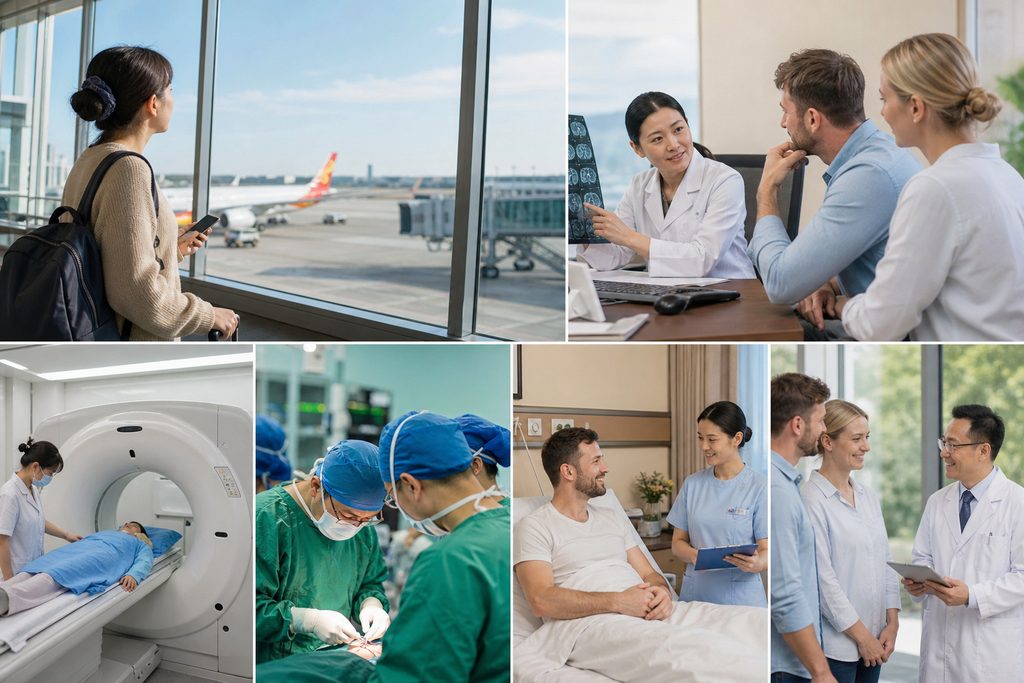
You have probably heard that getting medical treatment in China means navigating endless bureaucracy and opaque pricing. The reality for stem cell therapy is more nuanced. The stem cell therapy cost China question is not just about a number on an invoice. It is about what you pay for at each stage, how long each stage takes, and where the real bottlenecks sit. A surprising amount of the timeline has nothing to do with laboratory work or cell processing. It has to do with document preparation, hospital scheduling, and visa processing.
Our team coordinates medical journeys for international patients across China’s top-ranked hospital network. We have seen the full arc of this process enough times to describe it honestly. This article lays out the actual sequence, the waiting periods people forget, and the decision points where timelines stretch or compress.
How This Actually Works, Step by Step
The journey starts long before you board a plane. Here is the real sequence.
First, you send your existing medical records. That means diagnostic reports, imaging files, blood work, and any prior treatment history. Our team translates these documents into Chinese for review by the relevant specialty department.
Second, the hospital’s international department or a designated specialist reviews your case. They assess whether stem cell therapy is even indicated for your condition. This is a critical filter. Not every patient who requests stem cell treatment will be accepted. Reputable hospitals in China reject cases where the evidence does not support the intervention.
Third, if the medical team sees a potential fit, they issue a preliminary treatment plan and a cost estimate. This is where the stem cell therapy cost China becomes concrete for you. The estimate typically covers cell processing, hospital fees, physician charges, and the procedure itself. It may not cover accommodation, transport, or companion services.
Fourth, you apply for the S2 visa with the hospital’s invitation letter and supporting documents. Processing times vary by embassy. We advise patients to budget two to four weeks for this step alone.
Fifth, you arrive in China, attend an in-person consultation, and complete any additional pre-treatment tests. Only after these results are reviewed does the hospital schedule the actual cell therapy session.
Where the Timeline Actually Gets Consumed
Most people assume the laboratory phase takes the longest. In practice, the waiting steps around the clinical process consume more calendar time than the cell preparation itself.
Document translation takes three to five business days. Hospital review takes one to three weeks, depending on the department’s caseload. The S2 visa takes two to four weeks. Pre-treatment testing after arrival takes two to five days. The cell processing itself often takes only one to two weeks, depending on whether the therapy uses autologous cells derived from your own tissue or allogeneic cells from a donor line.
So the total journey from first contact to treatment typically spans six to ten weeks. Some patients compress this to five weeks. Others stretch to twelve weeks because of incomplete records or visa backlogs.
A Realistic Timeline
Here is a stage-by-stage breakdown based on what we coordinate for patients.
| Stage | What Happens | Typical Duration |
|---|---|---|
| Day 1–5 | Medical records collected, translated, and submitted | 3–5 business days |
| Week 1–3 | Hospital specialty review and preliminary plan | 1–3 weeks |
| Week 3–7 | S2 visa application and approval | 2–4 weeks |
| Week 7–8 | Arrival, in-person consultation, pre-treatment tests | 2–5 days |
| Week 8–10 | Cell processing and treatment session | 1–2 weeks |
| Month 3 | Post-treatment follow-up, either in China or remotely | Ongoing |
These ranges assume no complications and a responsive patient. If a hospital requests additional imaging or a second specialty consultation, add one to two weeks. And if you have not yet gathered your records, the clock has not even started.
What Can Go Wrong — and What Happens Then
Let us be direct about the failure modes.
The most common problem is incomplete medical records. A hospital cannot assess eligibility without a clear picture of your current condition. If the review team asks for a missing MRI series or a specific blood marker, you lose days waiting for your home provider to send it. The fix is simple: gather everything before you start.
The second problem is visa rejection or delay. The S2 visa is the correct category for short-term medical treatment and private affairs in China. It is not guaranteed. Embassies can ask for additional proof of the hospital relationship or financial capacity. If that happens, the timeline shifts by two to three weeks. Our team helps prepare the supporting documents, but we never promise approval.
The third problem is medical ineligibility discovered late. Sometimes a hospital accepts a case for review, then declines after seeing pre-treatment test results. This is not a bureaucratic failure. It is the system working correctly. The recourse is a revised plan, a different specialty, or a written second opinion to clarify next steps.
How Long Does Stem Cell Treatment Take in China: Separating Lab Time from Wait Time
Here is a question we hear constantly: how long does stem cell treatment take in China? The honest answer splits into two parts.
The actual clinical procedure is often brief. An intravenous infusion may take an hour. A localized injection may take less. The laboratory processing of autologous cells takes longer — typically five to fourteen days from tissue harvest to reinfusion. But the calendar time from your first inquiry to the day of treatment is dominated by the steps around the medicine, not the medicine itself.
So when someone asks about the timeline, we reframe it. The medical part is predictable. The administrative and logistical part is where weeks are won or lost. That is also where a bilingual coordinator earns their value.
Best Stem Cell Clinics in China for Foreigners: What to Look For
Searching for the best stem cell clinics in China for foreigners produces a flood of results. Many are marketing pages. Some are legitimate hospital international departments. The distinction matters enormously.
A credible facility will have an academic affiliation, a published research record, and a clear protocol for foreign patients. It will ask for your medical history before quoting a price. It will not promise a cure. It will explain the regulatory status of the therapy — whether it is approved, in clinical trial, or offered as an investigational procedure under hospital oversight.
Our database covers top-ranked hospitals across 37 cities, including public tertiary centers and JCI-accredited private international hospitals. The right choice depends on your condition, your budget, and your tolerance for a research-oriented environment versus a more Western-style service model.
Stem Cell Therapy Package Price Shanghai: What the Number Includes
Patients often search for a stem cell therapy package price Shanghai because Shanghai is a major hub for international medical travel. The package concept is appealing. But packages vary wildly in what they cover.
Some packages include only the cell processing and the infusion procedure. Others bundle airport pickup, hotel, interpreter services, and follow-up consultations. The price difference is not always about medical quality. It is about how much of the journey is managed for you.
For context, remote video consultations with a specialist at a public hospital’s international department typically range from $100 to $300. A written second opinion from a top-tier expert runs $300 to $500. These are the pre-treatment costs that help you decide whether to commit to the full journey.
If you upgrade to an on-the-ground coordination service within 90 days of any consultation, that consultation fee is credited in full toward the coordination cost. It is a one-time credit and applies only to the coordination fee, never to hospital treatment charges.
Is Stem Cell Treatment in China Safe: The Regulatory Reality
Safety is the question behind every other question. Is stem cell treatment in China safe? The answer depends on where you go.
China has tightened its regulatory framework for cell-based therapies significantly in recent years. Hospitals operating under formal clinical trial protocols or hospital ethics committee oversight follow strict patient screening, cell quality control, and adverse event reporting. These are the environments where international patients should seek treatment.
But there is a gray market. Private clinics with no academic affiliation, no trial registration, and no peer-reviewed output operate outside this framework. They market aggressively to foreigners. The safety risk in those settings is real and poorly documented.
Our role is not to guarantee outcomes. It is to connect you with institutions that have verifiable credentials and transparent processes. That is the difference between a medical decision and a gamble.
Book Stem Cell Therapy China Fast Track: What Fast Actually Means
Some patients arrive wanting to book stem cell therapy China fast track as if booking a hotel room. The phrase itself reveals a misunderstanding. You cannot book a treatment slot before a doctor has reviewed your case and accepted you as a candidate.
What a fast track can mean, realistically, is this: your documents are prepared correctly the first time, your hospital review is prioritized through the international department, and your visa application is submitted with complete supporting evidence. These steps compress the timeline by days or weeks. They do not bypass medical judgment.
Public hospitals in China generally cannot offer advance booking for ordinary outpatient visits. Surgery and inpatient treatment require an in-person consultation first. The international department or VIP channel is the route for scheduling ahead with senior specialists and English-language support. Expect to pay roughly 1.5 to 2 times the standard channel rate for that access.
Practical Considerations: Records, Visa, Payment, and Follow-Up
Before you start, get these four things in order.
Medical records. Collect every relevant report, scan, and lab result. Translate them professionally. Incomplete records are the number one cause of early rejection.
Visa. Apply for the S2 visa with the hospital’s invitation letter. Family members accompanying you also apply for S2. The M visa is for commercial and trade activities and has nothing to do with medical treatment. Do not let anyone tell you otherwise.
Payment. Public hospitals in China generally require prepayment. Insurance reimbursement happens after the fact. Private international hospitals may offer direct billing with major insurers. Confirm this before you commit.
Follow-up at home. Plan for how you will manage post-treatment monitoring once you leave China. Some hospitals offer remote follow-up consultations. Your home physician should receive a full treatment summary.
Language is another layer. Top-tier Chinese hospitals see thousands of patients daily. Without Chinese language ability, even simple tasks like paying a fee or finding the right department become difficult. A bilingual medical companion handles these logistics so you can focus on the medical conversation.
Frequently Asked Questions
The stem cell therapy cost China is typically a fraction of what comparable treatment costs in the United States. While prices vary by hospital and case complexity, many procedures in China cost roughly one-fifth to one-tenth of the US equivalent. A consultation with a top specialist in China often costs less than a routine specialist visit in the US before insurance.
It is possible but tight. The fastest realistic timeline is around five to six weeks if your records are complete, the hospital review is quick, and your visa processes without delay. Most patients should plan for eight to ten weeks. If you are missing documents or need additional pre-treatment testing, expect twelve weeks.
This is why remote evaluation comes first. A written second opinion or video consultation before you travel can clarify whether a hospital is likely to accept your case. If you are rejected after arrival, the recourse is a revised plan through a different department or hospital. It is frustrating, but it is also the system protecting you from an inappropriate treatment.
Most Western insurers do not cover investigational or unapproved stem cell therapies, regardless of where they are performed. Some cover consultations and diagnostic testing. Check with your insurer before committing. Public hospitals require prepayment, so you need clarity on reimbursement before you arrive.
Your Next Step
The timeline for stem cell therapy in China is manageable once you understand where the weeks actually go. Most of them are spent on documents, review, and visa processing — not on the treatment itself. That means the process rewards preparation.
We are China Medical Services, a team that connects international patients with top-tier Chinese hospitals. We do not practice medicine, and we do not promise outcomes. What we do is handle the coordination, translation, and logistics so you can make a clear-eyed decision. If you want to understand your specific timeline, start with a free consultation about your case.
Get the records ready. Ask the hard questions. Then decide.
For more medical information and treatment options in China, visit chinamedservices.com (China Medical Services).
