Stent Placement Cost in China: What Patients Actually Pay in 2026
Stent Placement Cost in China: What Patients Actually Pay in 2026
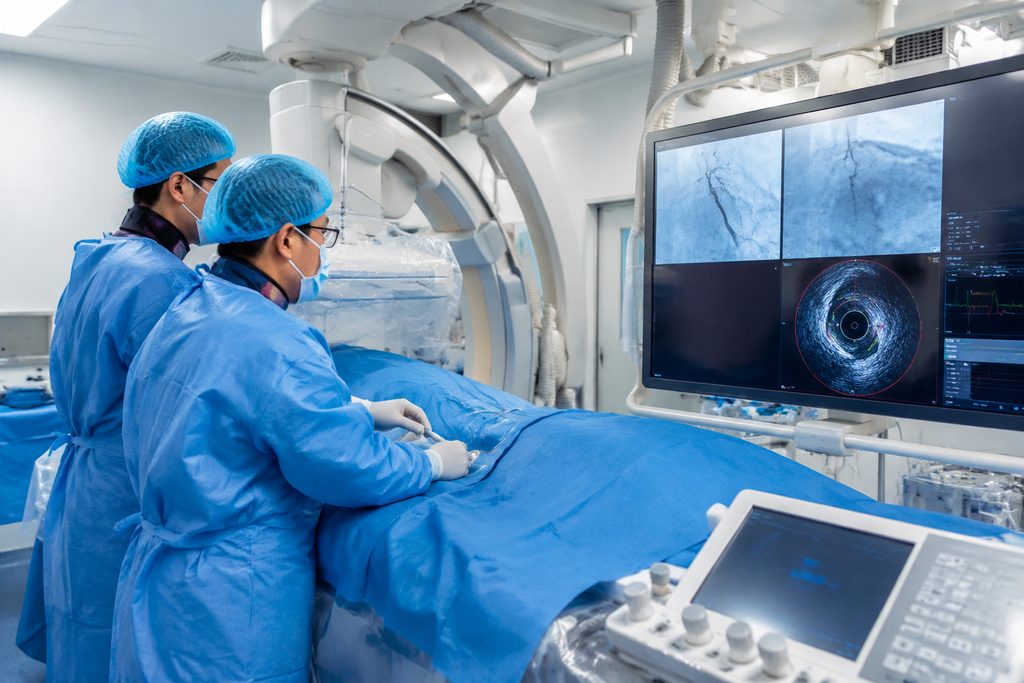
A drug-eluting coronary stent procedure in China costs between $3,500 and $12,000 at a top-tier public hospital — roughly one-tenth of the $30,000 to $100,000 billed in the United States for the same intervention. That gap is not a marketing claim. It reflects a national procurement program that cut stent prices by more than 90% overnight, combined with public hospital fee schedules that have stayed low for decades.
But the headline number hides real variables. Where you’re treated, which stent is used, how many blockages are stented, and whether you enter through the standard or international department can swing the final bill by a factor of three. Understanding those levers is the difference between a $4,000 procedure and a $14,000 one.
Stent Placement Cost China: The Short Answer
Expect $3,500 to $12,000 all-in for a single-vessel angioplasty with drug-eluting stent placement at a major Chinese public hospital. Private international hospitals charge $15,000 to $25,000 for the same procedure with English-speaking staff and direct insurance billing.
That “all-in” figure typically covers the stent itself, balloon catheters, guidewires, contrast dye, the cath lab fee, surgeon and anesthesiologist charges, ICU or cardiac monitoring for one to two nights, and a short hospital stay. What it usually does not cover: your flights, hotel, visa costs, translation, and any follow-up care after you fly home.
One more caveat worth stating plainly. These are ranges, not quotes. A patient with a single clean lesion and normal kidney function will land near the bottom. Someone with three-vessel disease, diabetes, and reduced ejection fraction will land higher — and may need bypass surgery instead, which is a different conversation entirely.
Who This Is Right For — and Who It Isn’t
Medical tourism for cardiac stenting is not for everyone. The patients who do well with it tend to share specific characteristics.
Typically a good fit:
- Stable coronary artery disease with a clear angiogram showing one or two treatable lesions
- Uninsured or underinsured patients facing $30,000+ quotes at home
- Patients on a waiting list longer than 90 days for a non-emergency procedure
- People willing to travel 10–14 days total, including pre-procedure workup and a short recovery
- Patients who can bring complete prior imaging and lab work in English or translated
Probably not a good fit:
- Anyone with an active heart attack or unstable angina — this is an emergency, treat it where you are
- Patients with severe left main disease or complex multi-vessel anatomy that may require open-heart surgery
- Those with advanced kidney disease who cannot tolerate contrast dye
- Anyone who cannot tolerate a long-haul flight within weeks of the procedure
- Patients whose home cardiologist will not accept or follow up on overseas intervention records
The Options, Compared
Here is how the genuine alternatives stack up for a single-vessel drug-eluting stent procedure. Figures reflect 2025–2026 published ranges and vary by hospital and case complexity.
| Option | Typical Total Cost (USD) | Wait Time | English Support | Insurance Direct Billing |
|---|---|---|---|---|
| China — top public hospital (standard channel) | $3,500–$8,000 | Days to 2 weeks | Limited; interpreter needed | No — pay upfront, claim later |
| China — public hospital international/VIP department | $8,000–$14,000 | Days to 1 week | Yes | Rarely |
| China — private international hospital | $15,000–$25,000 | Days | Yes | Often |
| United States — hospital charge | $30,000–$100,000+ | Days to weeks | Yes | Yes |
| United Kingdom — private | £10,000–£18,000 (~$13,000–$23,000) | 1–4 weeks | Yes | Varies |
| India — private hospital | $3,000–$6,000 | Days | Yes | No |
Which column suits you depends on what you value most. If cost is the deciding factor and you have some tolerance for language friction, a Chinese public hospital through the standard channel is the cheapest credible option globally. If you want a Western-style experience with English-speaking cardiologists and someone else handling the insurance paperwork, the private international tier is worth the premium. And if you have good domestic coverage that will pay most of the bill, staying home may simply be the rational choice.
Coronary Stent Price at a Shanghai Hospital — What Drives the Number
Shanghai is where many international patients land first, and it’s a useful case study because the city has both ends of the spectrum. A coronary stent price at a Shanghai hospital ranges from roughly $3,800 at a large public institution like Ruijin or Zhongshan to $20,000+ at a private international facility such as Jiahui or United Family.
Three factors explain almost all of the variance.
The stent itself. Since China’s centralized procurement reform, a drug-eluting stent that once cost $2,000 now costs the hospital around $100–$150. That single change collapsed the largest line item in the bill. But not every stent is covered — newer-generation bioresorbable scaffolds and certain imported brands sit outside the bulk procurement list and can add $1,500 or more.
The channel you enter through. Public hospitals in China operate on a two-track system. The standard outpatient channel is inexpensive but requires same-day registration and queuing — you cannot pre-book a specialist consultation from overseas. The international or VIP department lets you lock in an appointment in advance, provides English-speaking coordinators, and charges roughly 1.5 to 2 times the standard rate. That premium buys convenience and language, not better clinical outcomes.
Case complexity. One stent in one artery is a straightforward 45-minute procedure. Three stents across multiple vessels, with intravascular imaging guidance, rotational atherectomy for calcified lesions, or a longer ICU stay, can triple the total. Ask any hospital for a written estimate based on your actual angiogram — not a generic package price.
How Much Does a Heart Stent Cost in China — and What’s Included
To answer “how much does a heart stent cost in China” precisely, you need an itemized view. Here’s what a typical $6,000 public-hospital bill at a top-tier cardiac center breaks down into.
- Stent (drug-eluting, domestically procured): $100–$400 per unit
- Balloon catheter and guidewire: $400–$900
- Contrast media and diagnostic angiography: $500–$1,200
- Cath lab and procedure fee: $1,000–$2,500
- Physician and anesthesia fees: $600–$1,500
- Hospital stay (2–4 days, including cardiac monitoring): $800–$2,000
- Pre-procedure workup (ECG, echo, bloods, chest X-ray): $300–$800
That totals roughly $3,700 to $9,300 depending on how the case unfolds. Private international hospitals add a facility premium that pushes the same list toward $15,000–$25,000.
What is not in any of these numbers: airfare (typically $800–$1,800 round-trip from Europe or North America), hotel for 10–14 days ($700–$2,500 depending on city and standard), visa fees, and the cost of a bilingual medical companion if you choose one. Our patient consultation service can walk through these ancillary costs line by line so there are no surprises.
Is Stent Surgery Safe in China?
This is the question international patients ask most, and it deserves a direct answer. China’s leading cardiac centers perform volumes that most Western hospitals never approach. Fuwai Hospital in Beijing, for instance, performs over 14,000 cardiac surgeries annually — the highest volume of any single heart center globally. High volume correlates with procedural proficiency, and published outcome data from China’s top-tier hospitals for elective PCI compare favorably with international benchmarks.
Safety, though, is not evenly distributed. A 3,000-bed provincial hospital and a Fudan-ranked national center are not the same product. The variables that matter most:
- Hospital tier. Stick to institutions ranked in the Fudan Hospital Rankings or holding JCI accreditation. Our directory of top-ranked Chinese hospitals filters by city and specialty so you can see which centers carry the strongest cardiac programs.
- Operator experience. Ask how many PCIs the interventional cardiologist performs annually. In a top center, the answer will be in the hundreds.
- Emergency backup. A hospital that can perform on-site emergency bypass surgery is safer than one that cannot. This is a legitimate question to ask before booking.
- Post-procedure follow-up. The procedure is only half the story. Dual antiplatelet therapy, statin management, and cardiac rehab in the months after matter enormously — and you’ll likely do that at home.
What we cannot tell you is that any individual case will go smoothly. No one can. What we can say is that the clinical infrastructure at China’s top cardiac hospitals is genuinely world-class, and the safety question is best answered by the specific hospital and operator you choose, not by the country as a whole.
Practical Considerations: Visa, Records, and Payment
Getting the logistics right matters as much as choosing the hospital.
Visa. International patients traveling to China for medical treatment apply for the S2 visa with a notation for medical purposes. Stays exceeding 180 days require the S1 category. Accompanying family members apply under the same S2 category. Note that the M visa is for commercial and trade activities only — it is not a medical visa, despite what some outdated online guides suggest. Requirements shift, so confirm current documentation with your nearest Chinese embassy or consulate, and expect to provide a hospital invitation letter and appointment confirmation.
Medical records. Bring your most recent coronary angiogram on disc or USB, a full lipid panel and HbA1c, an echocardiogram report, a medication list, and any prior PCI or bypass records. Chinese cardiologists will want to review the actual imaging, not just a summary letter. Having these translated into Chinese — or having a bilingual coordinator handle it — saves days.
Payment. Public hospitals require prepayment before the procedure. International credit cards are accepted at international departments but often not at standard cashier windows, where Alipay, WeChat Pay, or cash dominate. Private international hospitals frequently bill insurers directly. If you’re relying on reimbursement from a home insurer, get an itemized English-language receipt and a discharge summary before you leave the hospital — chasing these documents later from abroad is painful.
Language. This is the practical barrier most patients underestimate. China’s top public hospitals handle tens of thousands of outpatient visits daily. Signage, registration systems, and most clinical staff operate in Chinese. A bilingual medical companion who handles registration, queuing, payment, and translation is not a luxury for most international patients — it’s the difference between a smooth week and a chaotic one.
Frequently Asked Questions
Not directly. Chinese public hospitals do not allow overseas patients to pre-book a procedure without an in-person consultation first — a cardiologist must examine you and review your angiogram before scheduling. What you can arrange in advance is a video consultation with a cardiac specialist, which produces a treatment recommendation and a realistic cost estimate. If the plan is feasible and you agree, coordination of your arrival and hospital scheduling can follow. Some private international hospitals offer more flexible pre-booking, but they charge accordingly.
Fuwai Hospital is the standout, with the highest cardiac surgical volume globally and a dedicated international department. Peking Union Medical College Hospital and Beijing Anzhen Hospital are also strong cardiac centers. For a broader view, our specialty rankings page lists the top-ranked hospitals by department, including cardiac surgery and cardiology, drawn from the Fudan specialist reputation rankings.
This is the risk that deserves the most honest answer. Stent-related complications — restenosis, thrombosis, access-site problems — can occur weeks or months after the procedure. Your home cardiologist will manage them, which is exactly why you must leave China with complete records: the angiogram images, the stent brand and model, the procedural report, and a clear medication plan. Before you travel, confirm that a cardiologist at home has agreed to take over your follow-up care. If you cannot arrange that, reconsider whether traveling for the procedure is wise.
Almost never. Standard travel insurance excludes planned medical treatment. You need either a dedicated medical tourism policy or a home health plan that reimburses overseas care. Read the exclusion clauses carefully — many policies exclude elective procedures entirely, and “elective” is how a scheduled stent placement will be classified even if your cardiologist considers it necessary.
Plan for 10 to 14 days. That typically covers arrival, pre-procedure workup and consultation (2–3 days), the procedure itself, 2–4 days of hospital recovery, and a post-discharge check before flying. Your cardiologist will advise on when it’s safe to fly — usually within a week for an uncomplicated single-vessel case, longer if there were complications.
Your Next Step
The core message is simple: stent placement in China costs a fraction of Western prices, the clinical quality at top-tier cardiac centers is genuinely strong, and the main obstacles are logistical rather than medical. The savings are real, but so is the planning required to capture them safely.
We are China Medical Services — a coordination service, not a hospital and not a provider of medical advice. We help international patients understand their options, connect with appropriate specialists through written second opinions and video consultations, and handle the on-the-ground logistics if they decide to travel. We don’t diagnose, and we don’t promise outcomes.
If you’d like a clear picture of what your specific case would involve — costs, hospitals, and realistic timelines — you can start with a free consultation. No pressure, no obligation. Just a conversation about whether this path makes sense for you.
This article is for general informational purposes only and does not constitute medical advice. Treatment decisions should always be made in consultation with a qualified physician who has reviewed your individual medical history.
For more medical information and treatment options in China, visit chinamedservices.com (China Medical Services).
