Best Interventional Cardiologists in China: Your Angioplasty and Structural Heart Guide
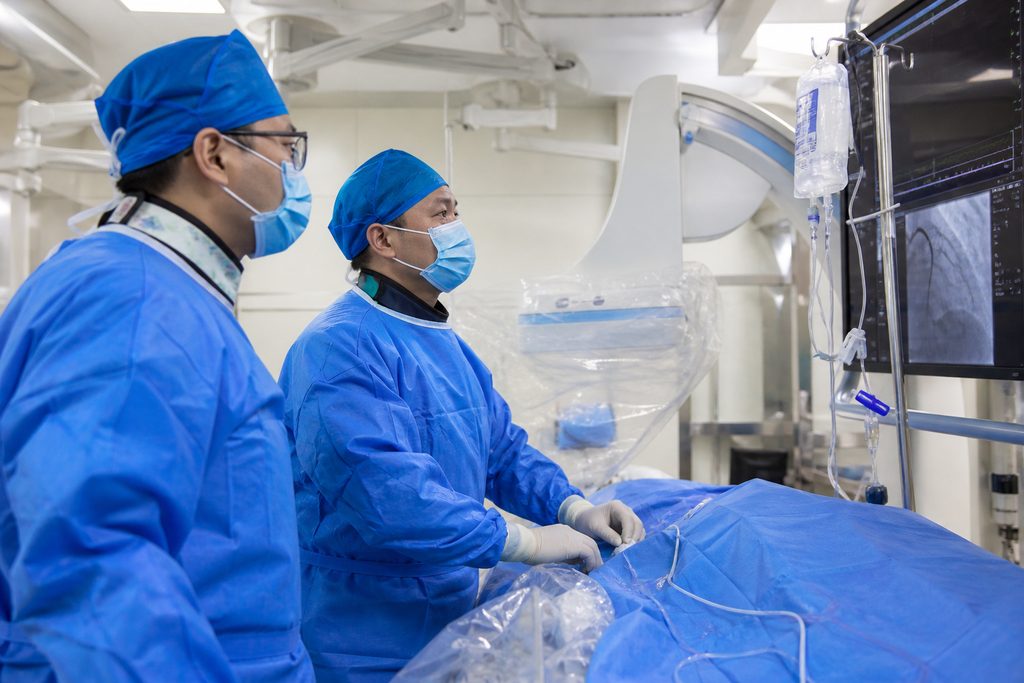
More than 14,000 cardiac surgeries and interventions happen each year at a single Beijing hospital. That volume, concentrated in one facility, represents a depth of clinical experience that reshapes how we think about the best interventional cardiologist China cost equation. You are not just paying for a procedure. You are gaining access to specialists who see rare structural heart defects with a regularity that turns the extraordinary into the routine. But the real question is not whether expertise exists here. It is how a foreign patient can reliably connect with it without getting lost in a system that moves at a scale and speed unfamiliar to Western healthcare navigation.
The Short Answer: Where the Top Talent Concentrates
If you need a definitive starting point, Fuwai Hospital in Beijing and Zhongshan Hospital in Shanghai house the country’s most influential interventional cardiology departments. These are not just high-volume centers. They are the training grounds where many of China’s leading specialists honed their craft, and they consistently rank at the top of national specialty evaluations. For complex structural heart work—think transcatheter aortic valve replacement—these two names surface in virtually every conversation with local medical professionals. The catch is that a hospital’s reputation does not automatically translate into a smooth pathway for an English-speaking patient. The specialist you want may only see patients through a public channel that cannot be pre-booked from overseas, which is where a different approach becomes necessary.
Who This Is Right For — and Who It Isn’t
Traveling internationally for a heart procedure is not a decision made lightly. The patients who benefit most from this path share a specific profile. They typically have a clear diagnosis already established at home and are seeking a second opinion or a procedure with a more manageable price tag. They are stable enough to fly and have family or a support system that can manage the logistics of a multi-week stay. The technology in Chinese catheterization labs is genuinely world-class, often matching or exceeding what is available in North American or European centers, especially for advanced imaging-guided interventions.
This route is not suitable for everyone. A patient in the middle of an acute coronary event needs their nearest emergency room, not an international flight. Someone with multiple unstable comorbidities that require constant management across different specialties will find the coordination burden extremely high. And if the primary motivation is to access an experimental therapy that is not approved anywhere else, that is a red flag. Responsible interventional cardiologists in China, like their peers globally, practice evidence-based medicine. They are not offering miracle cures outside of clinical trial protocols. Being honest about who should not make this trip is what makes the rest of the guidance credible.
The Options, Compared: Public, VIP, and Private Pathways
The way you enter the system defines your entire experience. It dictates who you see, how quickly you see them, and what kind of communication support surrounds you. We see three distinct models for international patients seeking an interventional cardiologist.
| Feature | Public General Outpatient | Hospital International/VIP Wing | Private International Hospital |
|---|---|---|---|
| Specialist Access | Top-ranked professors; but you queue in person, often for hours, with no guarantee of seeing the specific name you want. | Senior specialists from the public hospital; appointments are scheduled in advance through the international department. | Experienced, often bilingual cardiologists; may include visiting experts from public hospitals on a part-time basis. |
| Language Support | Mandarin only. You must bring your own interpreter. Signage and reports are in Chinese. | Dedicated English-speaking coordinators and nursing staff. Medical reports can be provided in English. | Fully English-capable environment. JCI-accredited standards familiar to Western patients. |
| Angioplasty Stent Price (USD) | $8,000 – $15,000 (materials + basic ward; extremely difficult to navigate alone) | $20,000 – $35,000 (includes coordination, better room, and language support) | $30,000 – $50,000+ (all-inclusive package pricing with direct insurance billing) |
| Wait Time | Unpredictable; days of queuing for tests before a procedure can be scheduled. | Coordinated; typically within 1-2 weeks of arrival for a pre-evaluated case. | Minimal; scheduled like any private hospital admission. |
The public channel is the financial bargain, but for a foreigner who speaks no Mandarin, it is a gauntlet of bureaucratic friction that can feel insurmountable. The VIP wing of a top public hospital is the sweet spot for many of the patients we work with: you get the same hands that operate on 1,000+ cases a year, but with a layer of logistical padding that makes the process humanly manageable. The private international hospital is the path of least resistance, and for a straightforward angioplasty, it offers a familiar, low-stress environment at a cost that still undercuts a US hospital bill by a wide margin.
Why a “Structural Heart Specialist” Label Matters More Than a Hospital Name
Not every interventional cardiologist works on structural heart disease. That distinction is the single most important filter you can apply when researching the best interventional cardiologist China cost. A specialist who spends their days placing coronary stents is not the same person you want performing a MitraClip or a left atrial appendage closure. Structural heart intervention is a distinct subspecialty that demands additional years of focused training in imaging interpretation—particularly 3D transesophageal echocardiography—and a tactile skill set that is closer to surgery than to traditional catheter-based work. When you see a program that performs over 200 transcatheter aortic valve replacements annually, you are looking at a team that has already navigated the learning curve and settled into a rhythm of predictable outcomes. The complication rates at these centers are not a matter of individual brilliance. They are a function of institutional muscle memory. The anesthesiologists, the perfusionists, the nursing team—everyone in the room knows the choreography. For a foreign patient, this team-based competence is a safety net that an individual star surgeon cannot replicate alone.
What It Costs: Angioplasty Stent Price in Beijing and Shanghai
The angioplasty stent price Beijing hospitals quote depends on a variable that catches many patients off guard: the number and type of stents. A single drug-eluting stent procedure in a top public hospital’s international wing typically lands between $18,000 and $28,000. That includes the stent itself, the catheterization lab fees, a short inpatient stay, and the coordination services. If the anatomy requires two or three stents, the total moves closer to $35,000. Shanghai prices track similarly, though some private facilities in the city push toward the higher end of the range due to their premium positioning.
What is not included in that figure? Your pre-procedure cardiac CT and blood work, which may be done at home or repeated on arrival. Your visa fees, flights, and accommodation for yourself and a companion. And the cost of any unexpected complication that extends your stay. A realistic budget for a single-vessel angioplasty with a two-week stay in a serviced apartment near the hospital, including flights and a bilingual companion, sits around $30,000 to $40,000 all-in. That is still roughly one-fifth of the cash price in many US markets, but it is not pocket change. The value proposition sharpens when you compare complex structural procedures. A transcatheter aortic valve replacement that bills at $150,000 in the United States can be completed in a Shanghai VIP ward for $50,000 to $65,000.
Practical Considerations: Records, Visas, and What Happens After You Fly Home
The logistical spine of a successful trip is built before you ever board a plane. Chinese interventional cardiologists will not schedule a procedure based on a one-line email. They need your full catheterization history. That means the actual DICOM files from your angiogram, not just the written report. They need your echocardiogram images, your CT scans, and a detailed summary of your current medication regimen. Gathering these records is often the longest lead-time item in the entire process, and it is the step where we see the most delays. Hospitals in your home country are not always quick to release raw imaging data to a patient, but without it, the Chinese team cannot give you a meaningful pre-evaluation.
Visas are the next gate. For medical treatment, the applicable short-stay category is the S2 visa, which requires an invitation letter from the Chinese hospital confirming your treatment plan. This is not a document you can generate yourself, and it is not issued casually. The hospital’s international department must formally accept your case before they will produce the letter, which is why the remote evaluation step is non-negotiable. Your accompanying family member applies for their own S2 visa under the same process. We have seen patients attempt to enter on a tourist visa and then seek treatment. This creates legal exposure for both the patient and the hospital and can result in a refusal of care.
Payment is upfront. Chinese public hospitals, including their VIP wings, operate on a deposit system. You fund your hospital account before the procedure, and unused funds are refunded at discharge. Credit cards are accepted, but transaction limits on foreign cards can cause headaches. A wire transfer in advance is often more reliable. Insurance is another friction point. Most international insurers will reimburse after the fact, but they will not pay the hospital directly unless you are in a private facility with a direct billing agreement. That means you need the liquidity to float the full cost and then pursue reimbursement with your insurer after you return home.
Follow-up is the final piece. A stent is not a cure. It is a mechanical scaffold that requires lifelong antiplatelet therapy and periodic monitoring. Your interventional cardiologist in China will provide a detailed discharge summary and medication plan in English. But the ongoing management falls to your local cardiologist. Before you leave, confirm that your home doctor is willing to accept you back and manage a case that originated abroad. Some are, and some are not. Having that conversation early prevents a dangerous gap in care.
Frequently Asked Questions
The safety profile of angioplasty in a top-tier Chinese catheterization lab is comparable to what you would find in a major Western center. The hardware is the same—the same stent platforms from Abbott, Boston Scientific, and Medtronic that are used globally. The variable is not the equipment or the technical skill. It is the system of care around the procedure. In a hospital’s international wing, where English-speaking staff manage your case and the same attending physician who does 300 angioplasties a year performs yours, the risk of a safety lapse due to miscommunication is low. In a crowded public outpatient department where no one speaks your language, that risk rises. Safety is not a yes-or-no question. It is a function of the pathway you choose.
Look past the hospital’s brand name and focus on the operator’s annual case volume for your specific procedure. A specialist who does 50 mitral valve repairs a year is in a different league from one who does 10. Ask for their complication rates and their 30-day mortality data for the procedure you need. A confident, high-volume program will share these numbers. Also, check whether the specialist has trained or published internationally. Many senior interventionalists at Fuwai and Zhongshan have fellowships in Europe or the United States and publish in English-language journals. This is not just a marker of prestige. It means they are accustomed to discussing complex cases in English and collaborating with overseas colleagues, which matters when you need to communicate nuanced symptoms or concerns.
Complications in interventional cardiology are rare but real. Coronary perforation, stroke during a structural procedure, emergency conversion to open surgery—these are risks that exist in every catheterization lab on earth. The difference in a high-volume Chinese center is the speed of the rescue response. Cardiac surgeons are in the same building, often on the same floor. The team has rehearsed emergency protocols hundreds of times. What you lose as a foreign patient is the familiar medico-legal framework you might have at home. Medical malpractice litigation in China is a different system, and as a foreigner, you have limited recourse if you believe negligence occurred. This is not a reason to avoid treatment. It is a reason to choose your hospital and your specialist with extreme care, and to acknowledge that you are accepting a different risk profile than you would at home.
Some private international hospitals in Shanghai and Beijing offer all-inclusive packages for straightforward angioplasty. These typically bundle the procedure, a private room, airport transfers, and a translator for a fixed price. But a true “package” that covers every variable is uncommon for interventional cardiology because the procedure itself can evolve based on what the angiogram reveals. A planned single stent can become two. A diagnostic angiogram can turn into a same-session intervention. The hospitals that offer rigid packages are often the ones you do not want for complex care. What works better is a transparent, itemized estimate with clear upper and lower bounds, built after the Chinese specialist has reviewed your imaging. That is not a package in the tourist sense. It is a care plan with financial predictability.
Your Next Step
The search for the right interventional cardiologist in China eventually narrows to a single practical question: how do you get your records in front of the right specialist without spending thousands on a speculative trip? Our team does not provide medical advice, and we are not a hospital. What we do is bridge the gap between your cardiac imaging and the Chinese specialist who needs to see it. We coordinate the remote written second opinion or video consultation that tells you whether traveling for a procedure makes sense. And if it does, we handle the on-the-ground coordination—the appointments, the language support, and the logistics—so that you can focus on your recovery. If you are ready to explore whether a Chinese interventional cardiology program is a genuine option for your situation, you can learn more about how we work on our patient coordination page. The first step is a conversation, not a commitment.
For more medical information and treatment options in China, visit chinamedservices.com (China Medical Services).
