Stroke Rehab Cost in China: A 2025 Price Guide for Foreigners
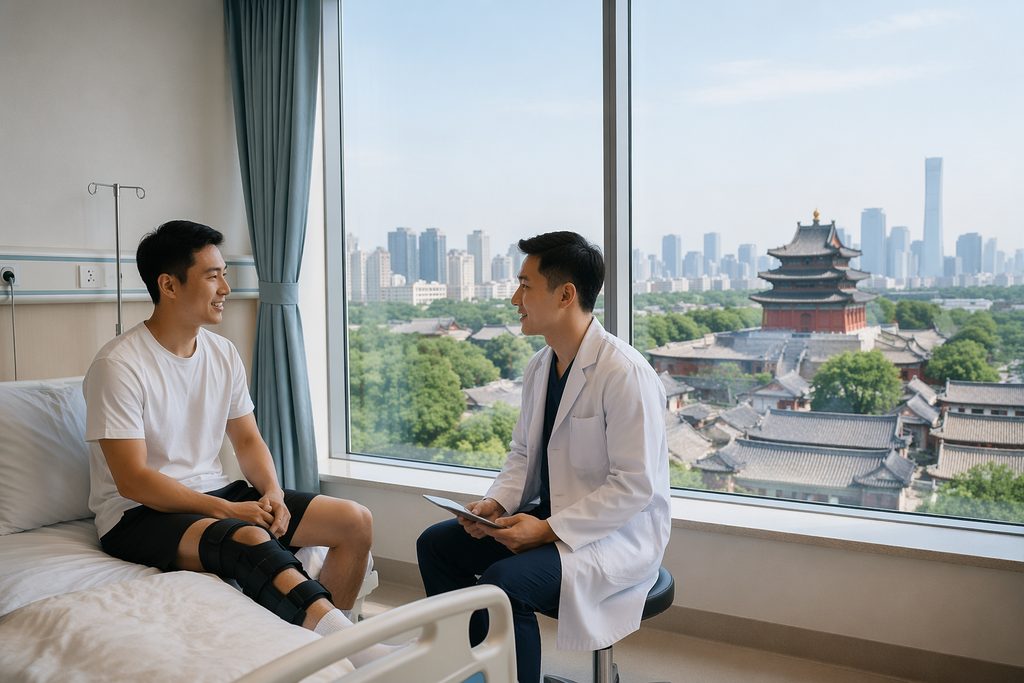
You’ve probably heard that recovering from a stroke means either draining your savings at a Western rehab facility or settling for subpar care abroad. The data tells a different story. Stroke rehabilitation in China delivers structured, multi-disciplinary therapy at roughly 20-30% of what the same program costs in the United States. A month of comprehensive inpatient stroke rehab at a top-tier Chinese hospital typically runs between $6,000 and $14,000. In the US, that same month often exceeds $40,000. The gap is real. But the numbers hide nuance — facility tier, city, therapy intensity, and whether you use the public system or an international department all shift the final bill dramatically.
Stroke Rehab Cost China: The Short Answer
For a foreign patient, weekly inpatient stroke rehabilitation in China costs between $1,500 and $3,500 at a reputable public hospital international wing. That includes daily physical therapy, occupational therapy, speech therapy, nursing care, and basic accommodation. Outpatient therapy packages run lower — roughly $400 to $900 per week for three to five sessions. Private international hospitals in Shanghai or Beijing charge more, typically $2,500 to $5,000 per week inpatient.
Those are honest ranges. Not teaser rates.
The caveat? The price you actually pay depends on three things: which hospital tier you choose, how many therapy hours per day the neurologist prescribes, and whether you need a private room with English-speaking nursing staff. A basic ward at a public hospital is cheaper than a VIP suite at United Family. Both exist. Both treat stroke.
Who This Is Right For — and Who It Isn’t
Stroke rehab in China suits a specific patient profile. Knowing whether you fit it saves you time and money.
Good candidates typically include:
– Patients who are medically stable — the acute phase is over, vital signs are steady, and the focus is functional recovery
– Those needing intensive daily therapy (3+ hours per day) at a fraction of Western prices
– Families already considering medical travel for other reasons, who want to combine rehab with a longer stay
– Patients who respond well to structured, protocol-driven therapy rather than highly individualized boutique programs
– People with a realistic budget of $8,000 to $20,000 for a 4-8 week program
Who should not pursue this:
– Patients still in the acute or subacute phase requiring ICU-level monitoring — you need to be discharged from acute care first
– Those with severe dysphagia requiring specialized instrumental assessments not available at every facility
– Patients with profound cognitive impairment who cannot participate in therapy — passive care is available, but gains will be limited anywhere
– Anyone expecting a miracle cure. Stroke rehab is slow, repetitive work. China offers cost advantage, not magic.
– Patients whose insurance requires in-network US providers and will not reimburse overseas care
If you’re in the second list, staying closer to home is genuinely better. No facility can fix what therapy cannot address.
The Options, Compared
You have three realistic paths for stroke rehabilitation in China. Each carries a different price point, service level, and language experience.
| Option | Weekly Cost (USD) | Daily Therapy Hours | English Support | Best For |
|---|---|---|---|---|
| Public hospital, standard ward | $1,200 – $2,200 | 2–3 | Limited — bring a companion | Budget-focused patients with a family member present |
| Public hospital, international/VIP wing | $2,000 – $3,500 | 3–4 | Good — bilingual coordinators on site | Most foreign patients seeking quality + reasonable cost |
| Private international hospital (e.g., United Family, Jiahui) | $3,000 – $5,500 | 2–4 | Excellent — Western-style care, direct insurance billing | Patients with international insurance or higher budgets |
| Outpatient therapy only (any tier) | $400 – $900 | 1–2 (per session day) | Varies | Patients staying in China with family, not needing inpatient care |
Most foreign patients land in the middle row. The international wing of a top public hospital gives you access to the same rehabilitation physicians and therapists as the standard wards, but with English coordination, private rooms, and faster scheduling. You pay roughly 50% more for that convenience. The private international hospitals cost more still, but they handle insurance directly — a deciding factor if your policy reimburses overseas care.
How Much Is Stroke Rehabilitation in China Per Week — Broken Down
The weekly figure is useful, but you should see what it buys. Here’s a realistic weekly breakdown for a mid-tier public hospital international wing stay in Shanghai:
- Inpatient bed and nursing care: $600 – $1,100 per week (private room, 24-hour nursing)
- Physical therapy (5 sessions/week): $300 – $600
- Occupational therapy (3 sessions/week): $180 – $360
- Speech and swallowing therapy (2–3 sessions/week): $150 – $300
- Physician consultations and monitoring: $150 – $350
- Basic medications and consumables: $100 – $300
- Interpreter/companion service (if used): $300 – $500 per day, or included in some packages
Total: roughly $1,500 to $3,500 per week, matching the range above. What drives the variance? Therapy intensity is the biggest lever. A patient doing 4 hours of combined therapy daily costs more than one doing 2 hours. The second lever is room type. The third is whether you need specialized equipment-based therapy like robotic gait training or constraint-induced movement therapy — those add $50 to $150 per session.
And no, the quoted rates don’t include airfare, visa fees, or accommodation for family members. Those are separate.
Is Stroke Rehab in China Good Quality?
This is the question every patient actually asks. The honest answer: quality varies by hospital, exactly as it does in the US or Germany.
China’s top rehabilitation departments — those ranked in the Fudan University specialty reputation list for Rehabilitation Medicine — operate at a standard comparable to good Western facilities. They use the same evidence-based protocols: Bobath and Brunnstrom approaches, task-oriented training, mirror therapy, functional electrical stimulation. The equipment is modern. The patient volume is high, which means therapists see more stroke cases in a month than some Western therapists see in a year.
That volume matters. Stroke rehab is a skills game. Therapists who treat 200 stroke patients annually develop clinical instincts that part-time exposure cannot produce.
But the system has friction points. Standard public hospital wards rarely have English-speaking staff. Documentation may be in Chinese. Family involvement expectations differ from Western norms — Chinese rehab culture assumes family members assist with daily care, so nursing ratios may feel lighter than you’re used to. These aren’t quality failures. They’re structural differences. A bilingual medical companion solves most of them, which is why many international patients use one for at least the first week.
If you want a more detailed look at hospital rankings before deciding, our top-ranked hospital database groups facilities by city and specialty tier.
Best Stroke Rehabilitation Hospital Shanghai Price vs. Beijing
The two cities dominate medical travel to China, and their rehab pricing differs enough to matter.
Shanghai’s top options include the rehabilitation departments at Huashan Hospital and Zhongshan Hospital, plus private players like Jiahui and United Family. Weekly inpatient rates at public international wings run $2,200 to $3,200. Shanghai’s advantage is concentration — you have more JCI-accredited private options in one city than anywhere else in mainland China, which means more English support and insurance flexibility.
Beijing’s strength is depth in public hospital rehabilitation. China Rehabilitation Research Center (CRRC) in Beijing is the country’s largest rehab-focused institution. Weekly rates at public international departments run slightly lower than Shanghai, typically $1,800 to $2,800. Beijing’s private international sector is smaller but growing.
For stroke recovery center Beijing cost comparison purposes: expect to pay 10-15% less in Beijing public facilities than Shanghai equivalents, but with fewer private alternatives if you want direct insurance billing. Neither city is the wrong choice. Your specific therapy needs should drive the decision more than a few hundred dollars per week.
What It Costs: A Realistic 6-Week Budget
Let’s put the full picture together for a typical foreign patient doing 6 weeks of inpatient stroke rehab in China.
| Expense Item | Low Estimate (USD) | High Estimate (USD) |
|---|---|---|
| 6 weeks inpatient rehab (public international wing) | $9,000 | $21,000 |
| Round-trip flights (economy, from US/Europe) | $1,200 | $2,500 |
| S2 visa and document preparation | $200 | $500 |
| Bilingual medical companion (first 5 days) | $1,500 | $2,500 |
| Miscellaneous (meals, local transport, incidentals) | $800 | $1,800 |
| Total | $12,700 | $28,300 |
The same 6-week program in the US would typically run $40,000 to $70,000 for the rehab alone. Even at the high end of the China estimate, you’re looking at 40-60% savings. At the low end, the savings exceed 70%.
What’s not included: any acute medical complications requiring ICU care (rare in stable rehab patients, but possible), specialized assistive devices you may need to purchase, and follow-up therapy after returning home.
Practical Considerations: Records, Visa, and Payment
Getting to China for rehab requires paperwork. Here’s what actually matters.
Medical records. You’ll need your complete acute care records: imaging reports (CT/MRI), discharge summary, neurologist’s notes, current medication list, and any prior therapy assessments. Hospitals in China will not accept you for rehab without documentation of the original stroke event. Have these translated into Chinese if possible — most international departments can arrange translation, but it adds time.
Visa. Foreign nationals coming to China for medical treatment apply for an S2 visa with the treatment purpose noted. Your hospital must provide an invitation letter and treatment confirmation documents. Family members accompanying you also apply for S2. The S2 is the correct category for short stays under 180 days. Do not apply for an M visa — that’s for commercial and trade activities, not medical care.
Payment. Public hospitals in China require upfront payment or a deposit before admission. International insurance is usually reimbursed after the fact, not billed directly — except at private international hospitals like United Family, which do direct billing with many insurers. Bring a credit card with a high limit, or arrange a bank transfer before arrival. Cash is not practical for hospital deposits of this size.
Language. Even in international wings, not every therapist speaks English. A bilingual medical companion for the first several days helps you understand therapy instructions, communicate pain or concerns, and navigate the hospital’s administrative systems. After that, many patients manage with translation apps and the hospital’s coordinator.
Follow-up after return. The hospital will provide a discharge summary and home exercise program. You’ll need to hand these to your local physiatrist or physical therapist for continuity. Expect some translation work — discharge summaries from Chinese hospitals are typically in Chinese unless you specifically request an English version through the international department.
Frequently Asked Questions
For inpatient care at a public hospital international wing, expect $6,000 to $14,000 per month. Private international hospitals run $12,000 to $22,000 per month. These figures include therapy, nursing, and accommodation but exclude flights, visas, and companion services.
You can coordinate a treatment plan and provisional admission through a hospital’s international department or a medical coordination service before flying. However, the hospital will still require an in-person evaluation on arrival before finalizing the therapy schedule. No legitimate hospital will guarantee a specific therapy protocol sight-unseen.
Some international insurers reimburse treatment at Chinese hospitals, particularly JCI-accredited private facilities. Public hospitals typically require upfront payment with reimbursement claimed afterward. Check with your insurer before committing — ask specifically about overseas rehabilitation coverage and whether pre-authorization is required.
Top-tier Chinese hospitals have full acute care capabilities. If a medical complication arises during rehab, you’ll be transferred to the hospital’s neurology or emergency department. This is one reason to choose a large general hospital for rehab rather than a standalone rehab center — integrated acute care is available on the same campus.
Most structured inpatient programs run 4 to 8 weeks. Shorter stays yield limited functional gains — stroke recovery is measured in weeks and months, not days. Some patients do 4 weeks inpatient, then continue with outpatient therapy while staying in China with family. The hospital will assess progress and adjust the plan accordingly.
Your Next Step
Stroke rehab in China offers genuine cost savings without sacrificing therapy quality — if you choose the right hospital tier and arrive with realistic expectations. The numbers are clear: $6,000 to $14,000 per month for care that would cost three to five times more in the US, delivered by high-volume rehabilitation specialists.
Our team at China Medical Services helps international patients navigate these decisions. We are not a hospital, and we do not provide medical advice or diagnoses. What we do is match your records and goals with appropriate facilities, coordinate the hospital’s international department on your behalf, and arrange bilingual support when you need it. If you’re considering stroke rehabilitation in China, start with a conversation — tell us your situation and we’ll help you figure out whether this path makes sense for you. No obligation, no pressure. Just honest guidance from people who know the system.
For more medical information and treatment options in China, visit chinamedservices.com (China Medical Services).
