Stroke Rehab: How Long Does Progress Take & What It Costs in China
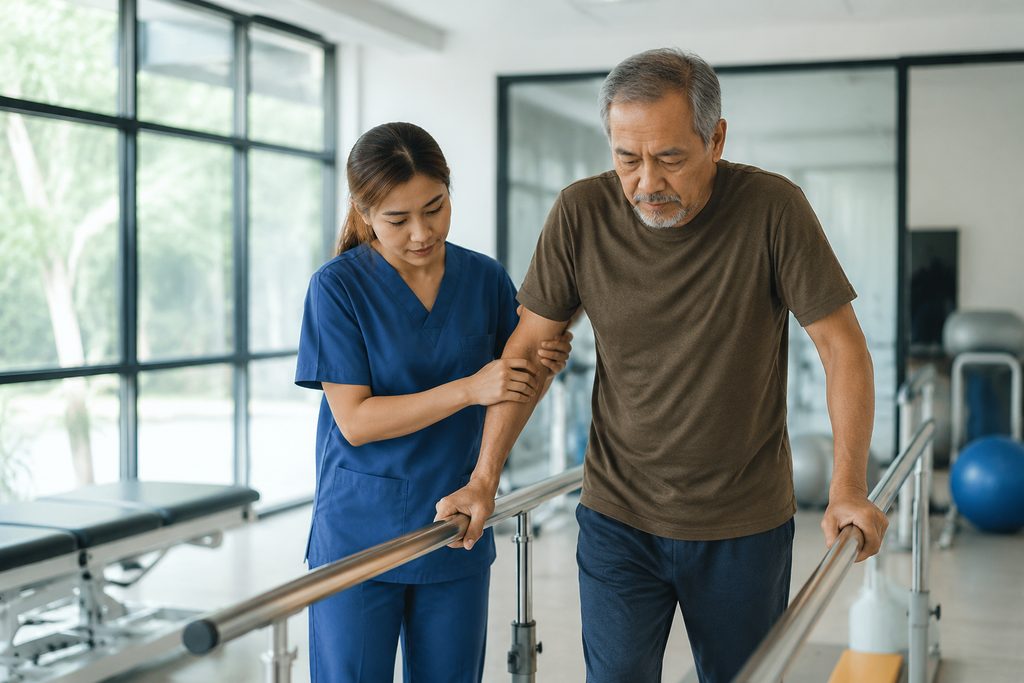
While patients in the United States face average out-of-pocket costs exceeding $17,000 for the first year of stroke rehabilitation, equivalent programs at top-tier Chinese hospitals often run between $6,000 and $15,000 annually — a fraction of the price with comparable functional outcomes. The real question isn’t just about money, though. It’s about time, patience, and knowing what recovery actually looks like month by month.
If you or a family member just had a stroke, the uncertainty is the hardest part. Will he walk again? Will she speak clearly? How long before we know what “normal” looks like now? We hear these questions from families every week. The honest answer is that stroke recovery follows a predictable arc, but the pace varies enormously from person to person. What we can do is lay out that arc clearly, explain what drives faster versus slower progress, and show you what stroke rehab cost China looks like compared to Western systems. No false promises. Just the framework you need to make clear-headed decisions during a disorienting time.
How This Actually Works, Step by Step
The path from stroke to rehabilitation program looks like this. First, the patient is stabilized in an acute care hospital — typically 3 to 7 days for an ischemic stroke, longer for hemorrhagic. Once medically stable, the rehabilitation assessment begins. You send us the discharge summary, imaging reports (CT or MRI), and any physician notes. Our team translates these documents into Chinese and submits them to the rehabilitation department at one or more of the 340+ top-ranked hospitals in our network. A specialist reviews the case and returns a written assessment: what level of impairment exists, what therapies are indicated, and how many weeks of inpatient versus outpatient rehab are recommended. From there, you decide whether to proceed with a video consultation to speak directly with the rehab team, or move toward scheduling an in-person evaluation in China. The entire remote review typically takes 5 to 10 business days.
Stroke Rehab Cost China: What the Numbers Actually Look Like
Let’s talk about money directly, because that’s what most families need to know first. Inpatient stroke rehabilitation at a top Chinese public hospital — the kind with dedicated neurorehabilitation wards, speech therapy, occupational therapy, and physiotherapy — typically costs between $200 and $500 per day for the hospital stay and therapy sessions combined. A four-week inpatient program therefore lands around $5,600 to $14,000. Outpatient rehabilitation, where the patient lives nearby and attends daily therapy sessions, runs $50 to $150 per session. Three sessions per week for three months totals roughly $1,800 to $5,400.
Compare that to the United States, where a single day of inpatient rehab averages $1,600 to $2,500, and a 30-day program easily exceeds $50,000 before insurance. Even with good coverage, copays and deductibles routinely push out-of-pocket costs past $10,000. In the UK and Canada, the public system covers rehabilitation, but wait times for intensive inpatient rehab can stretch from weeks to months — and that delay directly affects functional recovery. The best stroke rehabilitation hospital Shanghai has to offer — typically Huashan Hospital or Ruijin Hospital, both with dedicated neurorehabilitation centers — delivers outcomes on par with leading Western facilities at roughly one-fifth to one-third the cost.
| Rehab Setting | China (per unit) | United States (per unit) |
|---|---|---|
| Inpatient rehab (per day) | $200–$500 | $1,600–$2,500 |
| Outpatient PT/OT session | $50–$150 | $150–$400 |
| Speech therapy session | $40–$120 | $120–$300 |
| 4-week inpatient program | $5,600–$14,000 | $45,000–$70,000 |
These figures vary by hospital tier, city, and case complexity. But the structural gap is consistent: China’s rehabilitation infrastructure is newer, more centralized, and priced for a domestic market where out-of-pocket healthcare is the norm. That pricing reality is exactly why international patients can access world-class therapy at a fraction of Western rates.
A Realistic Timeline
Stroke recovery is not linear. Progress comes in bursts, plateaus, and occasional regressions. What follows is a realistic timeline based on clinical literature and what we see among international patients who pursue rehabilitation in China. “How long does stroke recovery take” is the question every family asks — and the honest answer is that meaningful recovery continues for 12 to 18 months, with the steepest gains in the first 3 to 6 months.
| Stage | Timeframe | What Happens |
|---|---|---|
| Acute hospitalization | Days 1–7 | Medical stabilization; initial PT/OT assessment; discharge planning begins |
| Document translation & remote review | Days 5–15 | Records sent, translated, reviewed by Chinese rehab specialists; written plan returned |
| Visa processing (S2) | 2–4 weeks | Invitation letter from hospital, application, approval; family members apply under same category |
| Inpatient rehabilitation | Weeks 1–8 post-arrival | Daily PT, OT, speech therapy; 3–6 hours of active therapy per day at top facilities |
| Outpatient transition | Months 2–6 | 3–5 sessions per week; focus shifts to activities of daily living and community re-entry |
| Maintenance & home program | Months 6–18 | Monthly check-ins; home exercise program; assistive device adjustments |
Families routinely underestimate the visa lead time. The S2 visa, which covers private medical treatment and accompanying family members, requires a formal invitation or treatment confirmation letter from the receiving hospital. That letter can only be issued after the remote review is complete. Budget four weeks from document submission to visa in hand. Rushing this step leads to rescheduled therapy slots and added stress.
What Can Go Wrong — and What Happens Then
Here’s where we earn trust: by telling you what fails. The most common failure mode is unrealistic expectation. A patient arrives expecting to walk unassisted after four weeks. When that doesn’t happen, the family blames the facility, the therapist, the country. The real culprit is the nature of stroke itself. Severe motor impairment takes months to improve, not weeks. A good rehab program manages expectations from day one — and a good coordinator prepares you before you board the plane.
Medical complications happen too. Post-stroke depression affects roughly one in three patients and can stall physical progress. Swallowing difficulties can lead to aspiration pneumonia if not properly screened. Spasticity can worsen without consistent therapy. In each case, the recourse is the same: the rehabilitation physician adjusts the treatment plan, adds medication or additional therapy modalities, and communicates the revised timeline. Chinese rehabilitation hospitals are well-equipped for these complications — most have on-site neurology, psychiatry, and internal medicine consultation within 24 hours.
Language barriers are a real risk. Daily therapy requires constant communication between patient, therapist, and family. Without a bilingual companion, instructions get lost, exercises are performed incorrectly, and progress stalls. This is not a minor inconvenience; it’s a clinical risk factor. That’s why families who book stroke rehabilitation programs in China typically retain a medical companion for at least the first two weeks.
Is Stroke Rehab in China Good? How to Evaluate a Program
The short answer: yes, at top-tier facilities, stroke rehabilitation in China is genuinely excellent. The long answer requires knowing how to separate the top 5% from the rest. China has over 35,000 hospitals. Maybe 200 have dedicated neurorehabilitation units with the equipment, staffing ratios, and clinical protocols that meet international standards. Those 200 are concentrated in Beijing, Shanghai, Guangzhou, and a handful of other major cities.
When evaluating a program, look at four things. First, therapist-to-patient ratio: a good inpatient rehab unit has no more than 8 patients per therapist. Second, therapy intensity: at least 3 hours of active therapy per day, not passive modalities like heat or electrical stimulation. Third, multidisciplinary staffing: physiatrist, physical therapist, occupational therapist, speech-language pathologist, and neuropsychologist all on the same team. Fourth, outcome tracking: the facility should measure functional independence (FIM or Barthel Index) at admission and discharge, and share those numbers with you.
Chinese rehabilitation hospitals have one structural advantage over many Western counterparts: volume. A single neurorehabilitation ward in Shanghai may treat 200 stroke patients per month. That repetition breeds clinical pattern recognition. Therapists see variations of the same impairment daily, not weekly. And the cost structure allows for more therapy hours per day than insurance-driven Western systems typically authorize. Is stroke rehab in China good? At the right hospital, it’s not just good — it’s often more intensive than what patients receive at home.
Practical Considerations: Records, Visa, Payment, and Follow-Up
Before you book a stroke rehabilitation program in China, gather these documents: discharge summary from the acute hospital, all imaging (CT/MRI on CD or via secure link), current medication list, and any prior therapy notes. The more complete the record, the more accurate the remote assessment. Incomplete records lead to conservative recommendations and avoidable delays.
Visa category matters. Medical treatment falls under the S2 visa, which covers the patient and accompanying family members. Processing takes two to four weeks in most countries. The hospital issues a treatment confirmation letter after the remote review is complete — that letter anchors the visa application. Do not apply for an M visa; that’s for commercial and trade activities and will not cover medical treatment.
Payment at Chinese public hospitals is prepaid. You deposit funds at admission and the hospital deducts daily charges. International insurance plans typically reimburse after the fact, so keep every receipt and discharge document. Private international hospitals in China — United Family, Jiahui, Raffles — offer direct billing with some Western insurers, but their rehabilitation programs are less intensive than top public hospital units and cost two to three times more. For stroke rehab specifically, the public hospital international departments offer the best balance of clinical quality and cost.
Follow-up after returning home is the step families forget. Stroke recovery continues for 18 months, not 8 weeks. A good program gives you a written home exercise plan, video demonstrations of each exercise, and a schedule for remote check-ins. Some Chinese hospitals now offer tele-rehabilitation follow-up at $50 to $100 per session. That continuity matters more than most families realize.
Frequently Asked Questions
Functional recovery continues for 12 to 18 months after stroke, with the fastest gains in the first 3 to 6 months. Progress after 18 months is possible but slower and typically limited to specific skills with intensive, targeted practice. That doesn’t mean therapy stops — maintenance therapy prevents decline and preserves gains.
Most Chinese hospital packages include the inpatient bed, daily physician rounds, physical therapy, occupational therapy, speech therapy, nursing care, and basic medications. Airfare, visa fees, meals for family members, and bilingual companion services are typically separate. Always request an itemized cost breakdown before committing.
Most patients can fly 2 to 4 weeks after a stable ischemic stroke, provided blood pressure is controlled and there are no active complications. Hemorrhagic stroke patients should wait longer — typically 6 to 12 weeks — and require medical clearance. Long-haul flights increase clot risk, so compression stockings and hydration are standard precautions.
Some international insurance plans cover treatment at JCI-accredited Chinese hospitals, but most public hospital international departments operate on a prepay-and-reimburse model. You pay upfront, submit itemized receipts, and your insurer reimburses according to your policy. Check with your insurer before booking — and get pre-authorization in writing when possible.
Most Chinese hospital international wards allow one family member to stay in the patient room or in adjacent family accommodation. The hospital provides meals for the patient; family meals are arranged separately. A bilingual companion can help coordinate daily logistics so family members can focus on emotional support rather than navigation.
Your Next Step
Stroke recovery is a marathon with a steep first hill. The decisions you make in the first 12 weeks — where to do rehab, how intensively, with what support — shape the next 18 months of function and independence. Our team at China Medical Services helps international families evaluate rehabilitation options at China’s top-ranked hospitals, translate records, coordinate video consultations, and arrange bilingual support on the ground. We don’t practice medicine and we don’t promise outcomes. We do the logistics so you can focus on recovery. If you’re weighing stroke rehab cost China against programs at home, start with a free consultation — we’ll review your records and give you an honest assessment of what’s feasible.
For more medical information and treatment options in China, visit chinamedservices.com (China Medical Services).
