Tangdu Hospital Xi’an: Neuroscience Excellence at Air Force Medical University
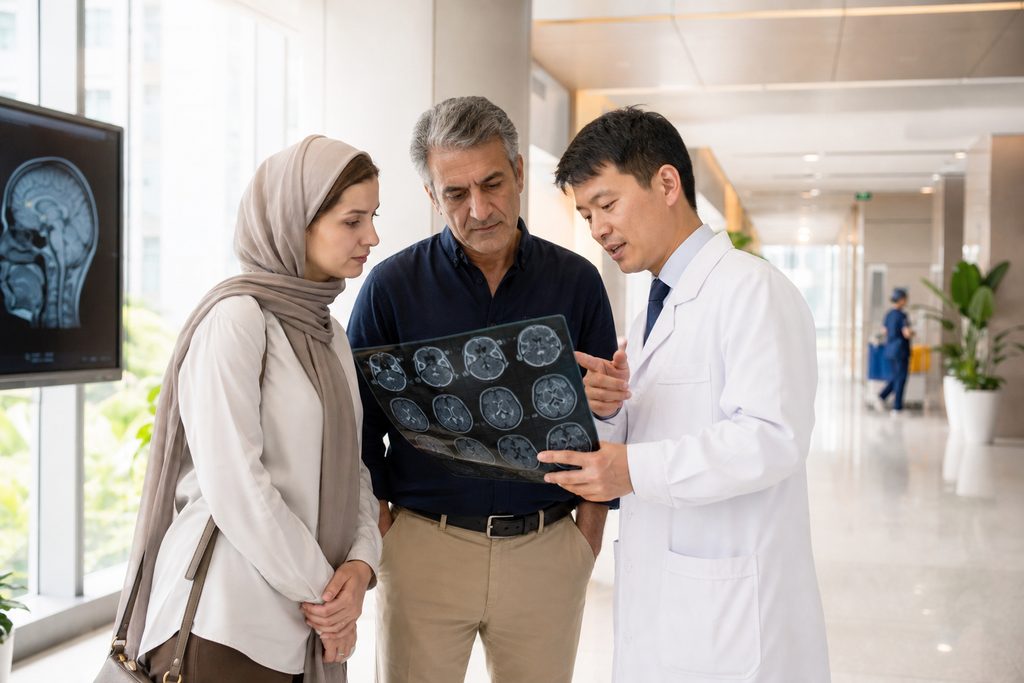
What if the neurological care you need has been available all along — just not where you were looking? A diagnosis of a brain tumor, a complex spinal condition, or a movement disorder brings life to a halt. The search for answers becomes urgent. The path forward often narrows to a handful of familiar names in Western medicine. But there is a wider world of clinical expertise. Tangdu Hospital in Xi’an, affiliated with the Air Force Medical University, represents one of China’s most concentrated centers for neurology and neurosurgery. It is not a household name in London or Los Angeles. It should be on the radar of anyone facing a serious neurological condition who is willing to look beyond their borders for advanced surgical care at a fraction of the expected cost.
Key Takeaways
- Tangdu Hospital performs over 4,000 neurosurgical procedures annually, placing it among China’s highest-volume centers for complex brain and spine surgery.
- The hospital’s dual identity as a military medical university affiliate and a public clinical powerhouse means it attracts top surgical talent and invests heavily in intraoperative technology like MRI-guided resection and robotic stereotaxis.
- Navigating a Chinese public hospital independently is genuinely difficult without Mandarin fluency — registration, payment, and inpatient logistics are not built for international walk-ins.
- Understanding the real Tangdu Hospital neurosurgery cost structure — and how to access the international medical center rather than the crowded public queue — is the difference between a smooth experience and a frustrating one.
The Problem: A Neurological Diagnosis With No Clear Path Forward
Brain tumors are not rare. The Central Brain Tumor Registry of the United States reports an average annual age-adjusted incidence rate of approximately 24 per 100,000 people for all primary brain and CNS tumors. That is roughly 84,000 new diagnoses each year in the US alone. For many, the diagnosis arrives with a second shock: the timeline to treatment. A 2023 survey by the Society of Neuro-Oncology found that median wait times from initial MRI to craniotomy at major US academic centers stretched to 34 days. For aggressive gliomas, every week matters. And then comes the cost. A standard craniotomy for tumor resection in the United States carries a hospital charge that can exceed $100,000 before a single consultant’s fee is added. Even insured patients face deductibles and out-of-network charges that can reach five figures.
The alternatives feel thin. Western Europe offers excellent care but similar wait times and costs. Medical tourism to Thailand or India raises legitimate questions about regulatory oversight and surgical volume. Patients and families are caught between the fear of the disease and the fear of financial ruin. That tension is real. It is exhausting. And it is exactly why a growing number of international patients are examining a third path: China’s top-tier public hospitals, where surgical volumes are extraordinary, technology is current, and the cost structure resets the entire conversation.
Who We Are
The relationship between surgical volume and patient outcomes is well-documented. A 2017 study in The Lancet Neurology analyzed over 90,000 craniotomy cases and found that hospitals performing more than 50 tumor resections annually had a 30-day mortality rate 1.7 percentage points lower than low-volume centers. Tangdu Hospital’s neurosurgery department operates at a scale that dwarfs that threshold. The department handles more than 4,000 neurosurgical cases each year, spanning neuro-oncology, functional neurosurgery, cerebrovascular intervention, and spinal neurosurgery. A surgeon here might perform 150 to 200 brain tumor resections in a single year. Compare that to a typical neurosurgeon at a Western community hospital, who may perform 20 to 30. Volume is not everything. But when the stakes are this high, repetition builds judgment that no textbook can teach.
Tangdu Hospital has invested heavily in the tools that make modern neurosurgery safer. The hospital operates intraoperative MRI suites, which allow surgeons to scan the brain mid-procedure and confirm that tumor margins are clean before closing. It uses neuronavigation systems that fuse preoperative functional MRI and diffusion tensor imaging to map eloquent cortex — the areas controlling speech, movement, and vision — so the surgical corridor avoids them. For deep-seated tumors, the hospital employs robotic stereotactic systems that guide biopsy needles or electrodes with submillimeter accuracy. These are not experimental technologies. They are standard operating equipment in the department. The difference is that at Tangdu, they are available at a cost structure that does not require a patient to mortgage a home.
Let us address the question that brings most international patients to this page. A craniotomy for tumor resection at Tangdu Hospital, including hospitalization, operating theater fees, anesthesia, and postoperative ICU monitoring, typically ranges from $15,000 to $25,000 USD. A complex spinal fusion might fall between $18,000 and $30,000. Deep brain stimulation for Parkinson’s disease, including the electrode hardware and implantation, can range from $30,000 to $45,000. These are not fixed prices — they vary by case complexity, implant choice, and length of stay. But the benchmark is clear. Comparable procedures in the United States cost five to ten times these amounts. A brain tumor resection that bills at $120,000 in Boston might cost $20,000 in Xi’an. The structural reasons are straightforward: lower labor costs across the surgical and nursing teams, hospital efficiency at scale, and a medical device market where domestic manufacturers compete aggressively with multinationals. The clinical protocols — sterile technique, anesthesia monitoring, postoperative ICU care — are the same. The price is not lower because the care is worse. It is lower because the economic model is different.
This is what makes the Tangdu Hospital neurosurgery cost such a compelling data point for international patients. It is not a discount. It is a different cost of doing excellent medicine.
What You Need to Know Before Going Alone
Tangdu Hospital is a public institution. That means it serves a domestic patient population that numbers in the tens of thousands daily. The main outpatient hall is crowded. Registration kiosks operate in Mandarin. Payment windows accept Chinese bank cards and local mobile payment platforms like WeChat Pay and Alipay — not Visa or Mastercard. None of this is designed to exclude foreigners. It is simply designed for the 99% of patients who are Chinese citizens. Walking in without preparation is a recipe for frustration. Here are the barriers you will face.
- Registration and Queuing: The public outpatient system does not accept advance bookings from overseas. You cannot email the hospital and reserve a neurosurgery consultation slot. Appointments are released on a rolling basis through a Chinese-language app. They disappear within minutes. Without a local coordinator, you will not get through the front door.
- Language in Clinical Encounters: Tangdu Hospital’s neurosurgeons are highly trained. Many read English-language medical literature. Few conduct clinical consultations in English with the fluency needed to discuss surgical risks, postoperative rehabilitation, and informed consent. A bilingual companion who understands neurosurgical terminology is not a luxury. It is a safety requirement.
- Payment Infrastructure: The hospital requires prepayment for inpatient stays and surgical packages. The cashier’s office is not set up for international wire transfers or foreign credit cards. Funds need to be in place through a Chinese bank account or a verified payment channel before a surgery date is confirmed. This is a solvable problem. It is not one you want to solve from a hotel room in Xi’an the night before a scheduled procedure.
- Postoperative Logistics: After brain surgery, you may spend days in an ICU where nursing staff do not speak English. Follow-up imaging, pathology reports, and discharge summaries will be issued in Chinese. Translating these documents accurately — not just linguistically, but medically — is essential for continuity of care when you return home.
How We Help You Navigate This
These barriers exist for structural reasons. They are not insurmountable. Our team has built a workflow that turns each obstacle into a managed step. Before you travel, we collect your medical records, have them translated into clinical Chinese by bilingual medical professionals, and submit them through the hospital’s international patient channel. We do not promise to secure a specific surgeon on a specific date — no honest coordinator can make that guarantee in a public hospital system. But we do confirm an appointment with the appropriate neurosurgical team, and we handle the back-and-forth until a consultation slot is locked. If we cannot secure the appointment, we refund the coordination fee in full.
On the ground in Xi’an, a bilingual medical companion meets you at the hospital entrance. This person handles registration, queues at payment windows, escorts you to imaging suites, and sits in on consultations to ensure every question is translated and every answer is understood. During a surgical consent discussion, the companion does not just translate words — they make sure the surgeon’s risk assessment and the family’s expectations are aligned. After discharge, we arrange follow-up appointments, translate discharge instructions and pathology reports, and coordinate with your home physician to ensure a clean handoff.
For patients who want to understand their options before committing to travel, we facilitate video consultations with Tangdu specialists through the hospital’s international department. A written second opinion based on your existing scans and records typically costs $300 to $500. A live video consultation with a senior neurosurgeon ranges from $500 to $800. And here is what matters: if you decide within 90 days to proceed with treatment at Tangdu and use our on-the-ground coordination service, every dollar of that consultation fee is credited toward the coordination cost. You are not paying twice. You are paying to get informed, and we apply that investment toward the real work of getting you treated.
Is Neurosurgery in China Safe for Foreigners? A Direct Answer
This question deserves a straight answer. Neurosurgery carries inherent risk wherever it is performed — in Boston, Berlin, or Beijing. The safety of a procedure depends on the surgical team’s experience, the hospital’s infection control protocols, the quality of intraoperative monitoring, and the strength of postoperative critical care. On all four measures, Tangdu Hospital meets international standards. The neurosurgery department maintains a dedicated neuro-ICU staffed by intensivists who manage post-craniotomy patients daily. Infection rates for clean neurosurgical procedures are tracked and benchmarked. The hospital’s blood bank, anesthesia department, and pathology lab operate at the scale required to support high-complexity surgery safely.
The variable that most affects safety for an international patient is not clinical. It is communication. A postoperative complication — a CSF leak, a seizure, a medication reaction — requires rapid identification and intervention. If the nursing team cannot understand the patient’s symptoms and the patient cannot understand the treatment plan, the safety margin narrows. This is not a reason to avoid Tangdu Hospital. It is a reason to never go through the process without a bilingual medical companion who stays with you through the inpatient stay. Safety is not just about the surgeon’s hands. It is about the entire information chain around the patient.
Frequently Asked Questions
What does brain tumor surgery cost at Tangdu Hospital compared to the US?
A craniotomy for tumor resection at Tangdu Hospital typically costs between $15,000 and $25,000 USD, inclusive of hospitalization and surgical fees. The same procedure in the United States often exceeds $100,000 in hospital charges alone. The Tangdu Hospital neurosurgery cost advantage is structural — driven by lower labor costs and high surgical volume — not a reflection of lower clinical standards.
How do I actually book brain surgery at Tangdu Hospital from abroad?
You cannot book surgery directly as an international patient. The process requires a formal consultation first — either via video or in person — after the neurosurgical team reviews your translated medical records and imaging. Our team handles this entire workflow: document translation, submission through the international patient channel, appointment coordination, and on-the-ground support. We do not sell access. We manage logistics. If we cannot secure a consultation, we refund the coordination fee.
Is Air Force Medical University’s brain tumor treatment program reputable?
Yes. The Air Force Medical University is one of China’s top military medical institutions, and Tangdu Hospital is its flagship neurosciences center. The neurosurgery department is ranked among China’s top programs for neuro-oncology and functional neurosurgery. The hospital’s affiliation with a military university means it receives priority investment in technology and talent. The surgeons training here go on to lead departments across the country.
Can I get a neurology treatment package in China that covers everything?
Some Chinese hospitals offer bundled packages for international patients that include consultation, surgery, hospitalization, and basic rehabilitation. Tangdu Hospital’s international department can provide a treatment estimate that covers the anticipated scope of care, but final costs depend on surgical complexity and length of stay. We help you obtain and interpret these estimates before you commit to travel. A package is a planning tool, not a fixed-price guarantee — and we make sure you understand exactly what is included.
What if something goes wrong during or after surgery?
Tangdu Hospital’s neurosurgery department is equipped to manage surgical complications — it handles high volumes of complex cases and maintains a dedicated neuro-ICU. The key risk for international patients is not a lack of clinical capability but a breakdown in communication during a critical moment. This is why we place a bilingual companion at your bedside throughout the inpatient stay. If a complication arises, the companion ensures you and your family understand what is happening, what the plan is, and what to expect next. We also coordinate with your home physician to transfer records and imaging if follow-up care is needed after you return.
Your Next Step
A neurological diagnosis is frightening enough without the added weight of navigating a foreign healthcare system alone. The clinical expertise exists at Tangdu Hospital. The technology is in place. The cost structures make treatment accessible to families who would otherwise face impossible choices. What is missing for most international patients is the bridge — someone who speaks both languages, understands both medical systems, and can turn a chaotic process into a clear sequence of steps. That is the work we do. If you want to understand whether Tangdu Hospital is the right fit for your case, reach out for a free consultation. We will review your situation honestly and tell you what is possible. No pressure. Just clarity.
Learn more about how we help international patients access China’s top-ranked hospitals or explore our bilingual medical companion services for treatment in Xi’an and across China.
For more medical information and treatment options in China, visit chinamedservices.com (China Medical Services).
