TCM for Jet Lag in China: How It Works and What It Costs
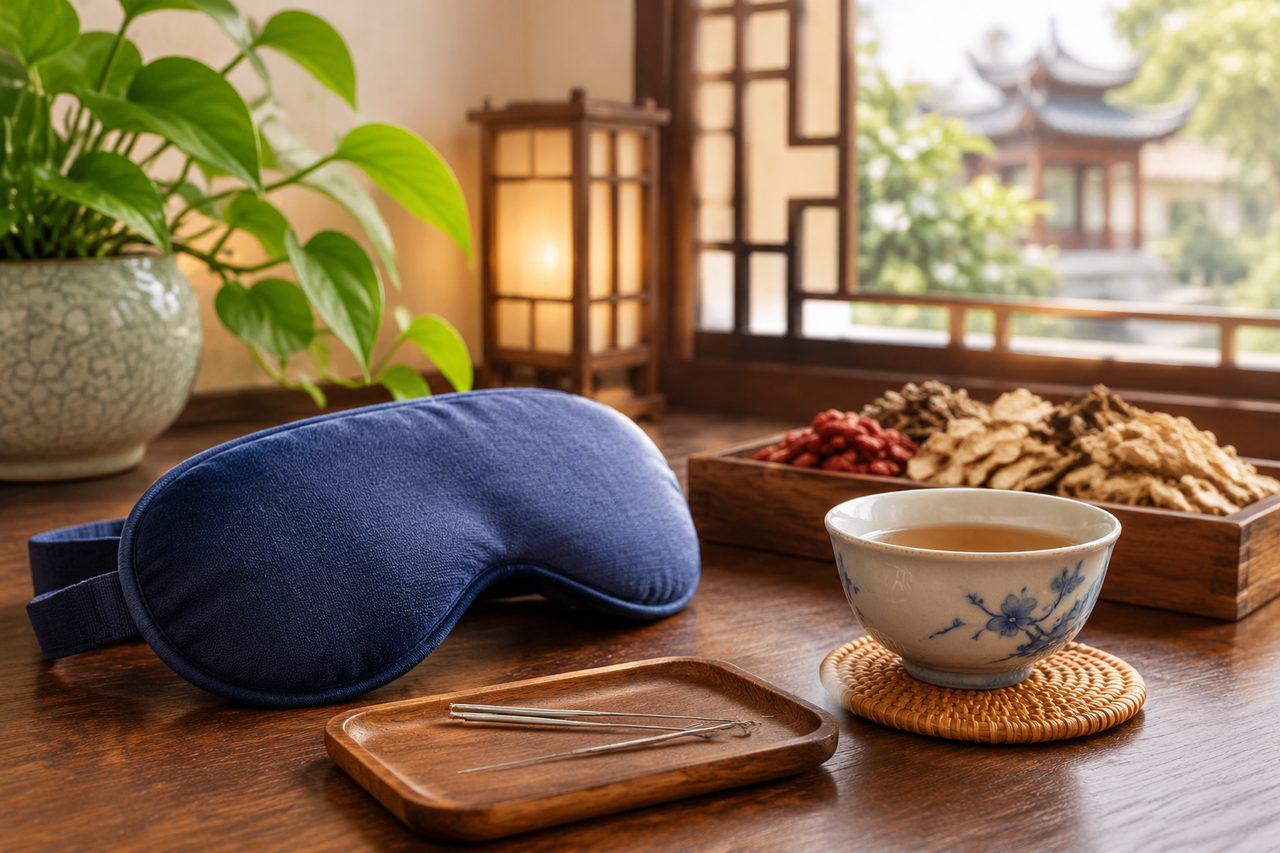
TCM for Jet Lag in China: How It Works
Traditional Chinese medicine approaches jet lag as a disruption of the body’s internal clock, and it treats that disruption with acupuncture, targeted herbal formulas, and simple sleep-hygiene coaching rather than with stimulants or prescription sedatives. If you are searching for acupuncture for jet lag China cost, the short answer is that a single session at a reputable hospital-based TCM department typically runs from roughly $30 to $120, depending on the hospital, the city, and whether you are seen in a standard clinic or an international department. The larger question — whether it works, and how to arrange it sensibly around a long-haul arrival — deserves a fuller answer.
Key Takeaways
- TCM treats jet lag as a circadian and “spirit” disturbance, addressed with acupuncture, herbal formulas, and sleep-timing advice — not with a single magic needle.
- Hospital-based TCM departments in major Chinese cities are widely available, but standard outpatient slots are generally walk-in or same-day registration; international departments are the realistic route for a pre-arranged English-language appointment.
- The honest limitation: evidence for acupuncture in jet lag specifically is thin, and no ethical practitioner should promise you will skip jet lag entirely.
- Know before you book: what a session actually involves, how pricing is structured, and which visa category applies to a short medical stay.
The Problem: Jet Lag Is Not a Minor Inconvenience
Eastbound travel across eight or more time zones is the hardest direction for the human circadian system, because the body’s internal clock naturally runs slightly longer than 24 hours and must be advanced rather than delayed. Reviews of circadian rhythm research describe adjustment rates of roughly one time zone per day for many travelers, meaning a flight from New York to Beijing can leave you out of sync for a week or more. The consequences are measurable: disturbed sleep, daytime fatigue, reduced concentration, and gastrointestinal upset. For business travelers, the first three days in a new city are often the least productive. For patients arriving for medical evaluation, poor sleep and fatigue can muddy the picture during consultations.
Most travelers reach for melatonin, caffeine, or prescription sleep aids. Each has a role, but each also has limits — melatonin timing is easy to get wrong, caffeine masks rather than resolves the mismatch, and sedatives can leave you groggy without shifting your clock. That gap is part of why interest in TCM approaches has grown among international visitors to China, where acupuncture and herbal medicine are integrated into mainstream hospital care rather than relegated to a fringe.
Why TCM Is Worth Considering for Jet Lag
TCM does not describe jet lag as a “circadian phase shift.” It describes the same experience in its own language: disturbed shen (spirit, roughly corresponding to sleep and mental calm), disharmony between yin and yang, and disrupted flow of qi through the body’s channels. The practical treatments that follow from that framework — calming acupuncture points, herbal formulas to support sleep, and advice on meal and light timing — overlap meaningfully with what modern sleep medicine recommends. That overlap is the strongest argument for trying it.
Acupuncture offers a low-risk, drug-free intervention
Acupuncture is the most commonly requested TCM treatment among international visitors, and its safety profile for healthy adults is generally favorable when performed with single-use sterile needles by a trained practitioner. It does not interact with most medications, does not cause dependence, and does not leave you sedated. For a traveler who wants help sleeping without adding a new drug to the picture, that matters. Whether acupuncture specifically helps with jet lag is a fair question — more on that below.
Herbal formulas can be tailored to your arrival pattern
A TCM practitioner will typically ask about your sleep pattern, digestion, temperature preference, and mood before prescribing. A formula for someone who cannot fall asleep but wakes refreshed is different from one for someone who sleeps long but feels unrefreshed. This individualization is the core of TCM prescribing, and it is also why you should not simply buy an off-the-shelf “jet lag tea” and expect the same result.
Hospital-based TCM in China is integrated, not alternative
This is the structural difference that surprises many Western visitors. In China, TCM hospitals are full hospitals with imaging, laboratory services, and inpatient beds, and many top-ranked general hospitals maintain substantial TCM or integrative medicine departments. You are not visiting a spa; you are visiting a clinical department within a large medical institution. That setting brings real diagnostic rigor — and real waiting rooms.
What a TCM Jet Lag Consultation Actually Looks Like
A first visit at a hospital TCM department generally follows a predictable sequence. Expect the whole appointment to take 45 to 90 minutes, longer than most Western primary care visits.
- Intake and pulse/tongue diagnosis. The practitioner asks about sleep timing, digestion, energy, and mood, then examines your pulse at several positions on each wrist and inspects your tongue. These are the core diagnostic tools of TCM and are not replaceable by a questionnaire.
- Treatment plan. You will usually be offered acupuncture, sometimes with cupping or moxibustion, and often a herbal prescription. For jet lag, the emphasis tends to be on calming points and sleep-supporting herbs rather than on dramatic interventions.
- The acupuncture session itself. Fine sterile needles are placed at selected points, typically on the hands, wrists, legs, and sometimes the scalp or ear. Needles remain in place for 20 to 30 minutes while you rest. Most people describe a mild heaviness or tingling rather than pain.
- Herbal dispensing. If a formula is prescribed, hospital pharmacies typically dispense either raw herbs to be decocted at home or concentrated granules to be dissolved in hot water. Granules are far more practical for a traveler without a kitchen.
- Follow-up. For jet lag, one or two sessions in the first few days after arrival is a common pattern, but the appropriate number depends on your symptoms and the practitioner’s assessment.
Does Acupuncture Help With Jet Lag — and What Does the Evidence Say?
This is the question that deserves the most candor. The honest position is that high-quality clinical trials of acupuncture specifically for jet lag are scarce. What exists is indirect evidence: studies of acupuncture for insomnia and for anxiety show modest but real effects in some trials, and circadian research supports the logic of timed light exposure and sleep scheduling, which TCM practitioners often advise alongside needles. A 2020 review of acupuncture for insomnia published in Sleep and related systematic reviews have reported improvements in sleep quality, though methodological limitations are common. None of this proves acupuncture resets a circadian clock.
What can be said fairly is this: acupuncture for jet lag is low-risk, may help with the sleep disturbance and irritability that accompany time-zone shifts, and is a reasonable adjunct to the basics — timed light exposure, consistent sleep hours, and avoiding late caffeine. It is not a substitute for those basics, and any practitioner who tells you a single session will erase an eight-hour shift is overselling.
A note on claims: Be cautious of any provider promising guaranteed jet-lag elimination, “detoxification,” or dramatic results. TCM is a legitimate clinical tradition, but jet lag is a physiological clock problem, and no treatment reliably abolishes it. Choose practitioners who describe realistic expectations.
What TCM Jet Lag Treatment Costs in Beijing and Elsewhere
Pricing in Chinese hospitals is transparent by international standards but structured differently from Western clinics. Acupuncture is usually charged per session, herbal medicine is charged per prescription (by weight or by number of doses), and consultation fees vary by practitioner seniority. The table below gives realistic ranges for a hospital-based TCM visit; final amounts vary by hospital, city, and case complexity.
| Service | Typical Range (USD) | Notes |
|---|---|---|
| Standard TCM outpatient consultation | $10–$40 | Registration plus consultation; senior specialists at the upper end |
| Acupuncture session (standard department) | $15–$50 | Per session; package pricing sometimes available |
| Acupuncture session (international department) | $60–$120 | English-speaking staff, shorter waits, appointment-based |
| Herbal prescription (granules, 1–2 weeks) | $20–$80 | Depends on formula complexity and number of ingredients |
| Cupping or moxibustion add-on | $10–$40 | Often combined with acupuncture |
For context on the TCM jet lag treatment price Beijing travelers most often ask about: a course of two acupuncture sessions plus a two-week herbal prescription at a reputable hospital-based department commonly falls in the $100–$300 range in total, before any interpretation or accompaniment services. Private international clinics charge more but bundle English-language service and appointment certainty. None of these figures include flights, accommodation, or translation support.
Practical Considerations Before You Book
Several logistics matter more than most travelers expect.
Appointments. Standard public hospital outpatient departments in China generally do not accept advance booking from overseas; registration typically happens on the day, in person, and queues can be long. If you need a confirmed, English-language appointment, the international or VIP department is the realistic route, and prices there run higher — often roughly 1.5 to 2 times the standard channel. Our guide to TCM hospitals in China explains how these departments differ.
Visa category. For a short medical visit, the applicable category is the S2 visa, used for medical treatment and private affairs, with supporting documents from the treating hospital; stays beyond 180 days fall under S1. The M visa is for commercial and trade activities and is not a medical visa. Requirements change, so confirm current documentation with the nearest Chinese embassy or consulate before applying. We never guarantee approval.
Payment. Public hospitals require payment at the time of service, typically by card or mobile payment; international insurance is usually reimbursed afterward rather than billed directly. Keep itemized receipts and treatment records if you plan to claim.
Language. Outside international departments, English is limited. Hospital signage and registration systems are primarily in Chinese, and a TCM intake involves nuanced symptom description. If you do not speak Mandarin, plan for interpretation rather than hoping to manage.
Timing. Because jet lag resolves on its own within roughly a week for most travelers, the window for TCM to help is short. Booking a session for your first or second day after arrival makes more sense than waiting until day five.
Frequently Asked Questions
The direct evidence is limited — there are few rigorous trials of acupuncture for jet lag specifically. Indirect evidence from insomnia and anxiety research suggests it may modestly improve sleep quality, and it is low-risk for healthy adults. It is best treated as a supportive measure alongside light exposure and sleep scheduling, not a standalone cure.
Expect roughly $15–$50 per session in a standard hospital TCM department and $60–$120 in an international department, plus $10–$40 for the initial consultation and $20–$80 for a herbal prescription. Total costs vary by hospital, city, and case complexity, and final quotes should be confirmed directly with the provider.
At standard public outpatient departments, same-day registration is the norm, but waits can be long and English support is limited. International departments accept advance arrangements and provide English-speaking staff, at higher prices. If your schedule is tight, the international route is more reliable.
Acupuncture with sterile single-use needles is generally low-risk. Herbal formulas are a different matter — some herbs interact with prescription drugs, particularly blood thinners and medications for blood pressure or diabetes. Disclose your full medication list to the practitioner and to your own physician before starting any herbal formula.
Your Next Step
If you are considering TCM for jet lag during a trip to China, the sensible approach is to treat it as one supportive tool among several: time your light exposure, protect your sleep window, and book a session in your first day or two if you want to try acupuncture. China Medical Services is a coordination service, not a hospital and not a diagnostic provider — we help international patients understand their options, connect with appropriate hospital departments through our China Medical Services network, and arrange bilingual support where language would otherwise be a barrier. If you would like help thinking through the logistics, you are welcome to start a free consultation with no obligation.
This article is for general information only and does not constitute medical advice. Always consult a qualified healthcare provider about your individual situation, and confirm visa requirements with the relevant Chinese embassy or consulate before travel.
For more medical information and treatment options in China, visit chinamedservices.com (China Medical Services).
