TCM for Period Pain in China: What Patients Ask Before Booking
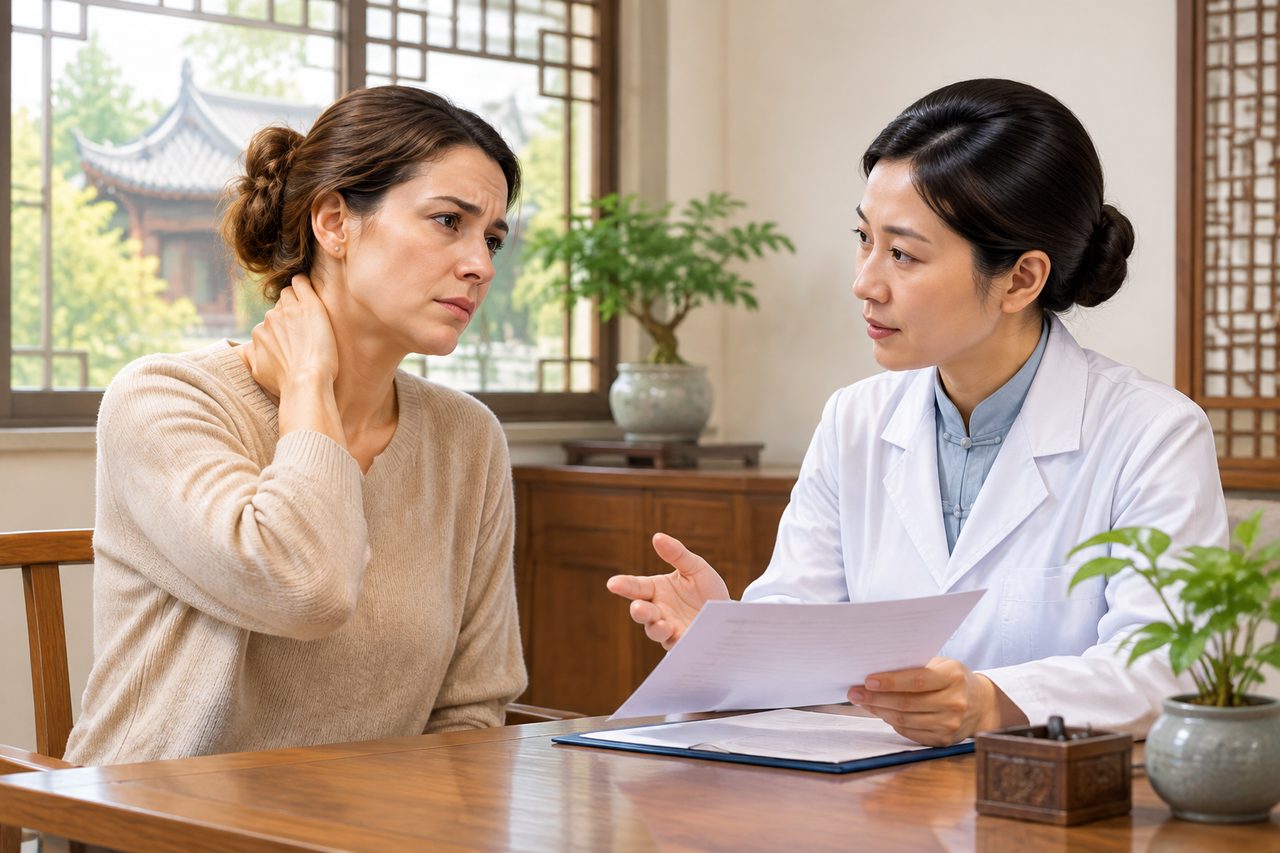
Have you ever wondered what an acupuncture course for period pain would actually involve overseas — the appointments, the herbs, the bill? This guide answers the questions international patients ask most about TCM for period pain in China, including what TCM for period pain cost China typically runs to and where to start.
TCM for Period Pain in China: The Short Answer
Traditional Chinese medicine (TCM) for period pain in China is a real, widely used outpatient service, usually delivered through hospital TCM departments and specialist TCM hospitals rather than standalone spas. A typical first visit combines a consultation with a licensed TCM physician, a diagnosis based on symptom history and pulse/tongue assessment, and a treatment plan that may include acupuncture, moxibustion, cupping, or a herbal prescription. Sessions are usually scheduled in courses — commonly several visits over a few weeks — rather than a single appointment.
The caveat: there is no single national price, no guaranteed response, and no shortcut around an in-person assessment. Period pain (dysmenorrhea) has many causes, and some — endometriosis, fibroids, pelvic infection — need gynecological investigation before any complementary treatment is appropriate. TCM in China is best approached as part of a proper diagnostic pathway, not a replacement for one.
Who This Is Right For — and Who It Isn’t
Being clear about suitability matters more than selling the idea. TCM for menstrual pain is generally sought by patients with recurrent cramps that have already been assessed by a gynecologist, who want a non-pharmacological option alongside conventional care, or who have found limited relief from NSAIDs and hormonal treatment.
Typically a reasonable fit:
- Primary dysmenorrhea with a clear gynecological workup and no red-flag findings
- Patients seeking adjunctive symptom management alongside standard care
- People already familiar with acupuncture who want a longer, supervised course
- Patients combining treatment with a broader wellness or rehabilitation trip
Not a good fit:
- Undiagnosed severe pain, abnormal bleeding, fever, or pain that has suddenly changed pattern — investigate first
- Anyone seeking TCM instead of treating a confirmed condition such as endometriosis
- Pregnancy, suspected pregnancy, or active skin infection at needle sites
- Patients on anticoagulants or with bleeding disorders, without physician clearance
- Anyone who cannot commit to follow-up visits — a single session rarely tells you much
The Options, Compared
Most international patients weigh three routes: TCM in China, TCM at home, or conventional gynecological management. The table below compares them on practical dimensions rather than claimed outcomes.
| Route | Typical structure | Language support | Cost pattern | Best suited to |
|---|---|---|---|---|
| TCM hospital in China (public TCM hospital or TCM department) | Consultation plus course of acupuncture/herbs; multiple visits | Variable; English support strongest in international departments and private hospitals | Per-visit fees plus herbal prescription; varies by hospital tier and city | Patients wanting high-volume TCM expertise and a supervised course |
| Private international hospital TCM clinic in China | Similar structure, appointment-based, English-speaking staff | Usually strong | Higher per-visit fees than public TCM departments | Short trips, tight schedules, insurance direct billing |
| TCM practitioner in your home country | Varies widely by licensing regime | Native language | Often higher per session; no travel costs | Patients who want convenience and continuity |
| Conventional gynecology (any country) | Diagnosis, NSAIDs, hormonal therapy, referral for suspected pathology | Local | Insurance-dependent | Everyone, as the diagnostic baseline |
Which column suits you depends on what you are actually buying. If you want a diagnostic answer, conventional gynecology comes first. If you want a structured, supervised course of acupuncture or herbal treatment with experienced TCM physicians, a Chinese TCM hospital offers depth that is hard to replicate elsewhere — provided you arrange language support.
What “TCM for Period Pain” Actually Involves in a Chinese Hospital
This is the part most overseas guides skip. In a Chinese public TCM hospital, the acupuncture department and the gynecology (TCM) department are separate outpatient services, and which one you are registered with shapes the whole visit.
A first consultation typically takes 15–30 minutes: symptom history, cycle pattern, pain character and timing, digestion, sleep, and cold/heat sensitivity, followed by tongue and pulse assessment. The physician then proposes a plan — for example, acupuncture twice weekly for four weeks, with or without moxibustion, and possibly a granulated herbal formula taken as a daily decoction. Herbs in China are commonly dispensed as single-dose granules, which travel better than raw herbs.
Acupuncture itself is usually 20–30 minutes of needle retention per session, sometimes with electrical stimulation. Moxibustion (warming the lower abdomen or lower back) is frequently added for pain described as cold or cramping in character. Cupping and tui na massage may be recommended as adjuncts.
What TCM for Period Pain Cost China Patients Should Budget For
China does not publish a single national price list for TCM outpatient care. Fees are set by each hospital, and they differ between public TCM hospitals, the international/VIP departments of those hospitals, and private international clinics. Rather than quote a figure that will not hold, it helps to know the components you will actually be billed for:
- Registration fee — nominal in ordinary outpatient clinics; substantially higher for expert or international-department slots
- Consultation fee — scaled by physician seniority (attending, associate chief, chief physician)
- Per-session acupuncture or moxibustion fee — multiplied by the number of visits in the course
- Herbal prescription — priced by formula and duration, typically dispensed weekly or fortnightly
- Adjunct therapies — cupping, tui na, or electroacupuncture, billed separately
- Interpretation and accompaniment, if you do not speak Mandarin
Because the course length drives the total far more than any single fee, ask the physician at the first visit for a written plan stating the number of sessions and the herbal duration. That document is what makes a realistic budget possible. For comparison, our own bilingual medical companion service starts from $300 per day and covers registration, queueing, payment, navigation and interpretation — it does not include hospital treatment fees, which are billed separately by the hospital.
As a general planning rule, expect the international or VIP department of a top hospital to cost meaningfully more than the ordinary outpatient channel for the same department, in exchange for English-language service and appointment-based scheduling. Patients who want a preliminary read on feasibility before traveling can request a written second opinion ($300–500) or a video consultation ($100–300 for a standard hospital international department) with the relevant specialty.
Practical Considerations: Choosing a Clinic and Preparing for the Visit
If your search has been for the best acupuncture clinic for menstrual cramps Shanghai offers, the honest answer is that “best” depends on what you need. Shanghai has both large public TCM hospitals with dedicated acupuncture and gynecology departments and private international clinics with English-speaking staff. The public route offers greater depth and volume; the private route offers scheduling certainty and language ease. Our TCM hospital directory lists institutions by city so you can compare before deciding.
Three practical points deserve attention:
- Bring your gynecology records. Ultrasound reports, hormone panels, and any diagnosis of endometriosis or fibroids should be translated and shown at the first visit. Chinese TCM physicians routinely ask for them, and they change the plan.
- Book through the right channel. Ordinary outpatient registration in Chinese public hospitals is generally same-day queueing and cannot be reserved from abroad in advance. Appointment-based access usually means the international or VIP department. Our team can explain which channel fits your dates through the consultation service.
- Visa category. For a short medical trip, the applicable category is the S2 visa, used for medical treatment and private affairs and subject to the latest embassy or consulate requirements and supporting hospital documents. It is not the M visa, which covers commercial and trade activities only. Allow time for the hospital invitation or appointment documentation that visa applications typically require.
On safety: is TCM safe for period pain? Acupuncture performed with single-use sterile needles by a licensed physician is generally considered low-risk, with bruising and mild soreness the most common complaints. Herbal formulas are a different matter — some interact with medications or are unsuitable in pregnancy, so disclose all medications and supplements, and ask whether the prescribed formula has been tested for heavy metals and contaminants. Reputable hospital pharmacies dispense regulated products; unregulated sources are a genuine risk.
Frequently Asked Questions
Most physicians propose a course rather than a single session, and the length depends on your presentation and response. A short trip can accommodate an assessment plus a starter course, but a full course often spans several weeks. Ask for the plan in writing at the first visit before committing to travel dates.
Most international insurers do not reimburse acupuncture or herbal medicine abroad unless a specific benefit applies, and public Chinese hospitals generally require payment upfront with reimbursement claimed afterward. Private international hospitals more often offer direct billing for covered services. Confirm with your insurer before booking, and keep itemized receipts and the physician’s plan.
That is a real possibility, and no ethical TCM physician will promise otherwise. Agree on a review point — for example, after four to six sessions — and decide together whether to continue. If pain worsens, bleeding changes, or new symptoms appear, return to gynecology for reassessment rather than extending the course.
In ordinary public TCM departments, yes — realistically. International departments and private clinics usually provide English-speaking staff, and a bilingual companion can handle registration, payment, and interpretation during the consultation itself.
Your Next Step
TCM for period pain in China can be a sensible, well-supervised adjunct to proper gynecological care — provided you arrive with records, a realistic budget built on the physician’s written plan, and clear expectations about course length. China Medical Services is a coordination service, not a hospital and not a clinical provider: we do not diagnose or prescribe, but we do help international patients compare TCM and conventional options across 340+ top-ranked hospitals in 37 cities, prepare records, and arrange bilingual support on the ground. If you would like to talk through whether a TCM course fits your situation before booking flights, start with a no-obligation conversation through our patient consultation page.
This article is for general information only and does not constitute medical advice. Always consult a qualified physician about your own symptoms before starting or changing any treatment.
For more medical information and treatment options in China, visit chinamedservices.com (China Medical Services).
