TCM and Western Medicine Combined in China: Your Coordination Service
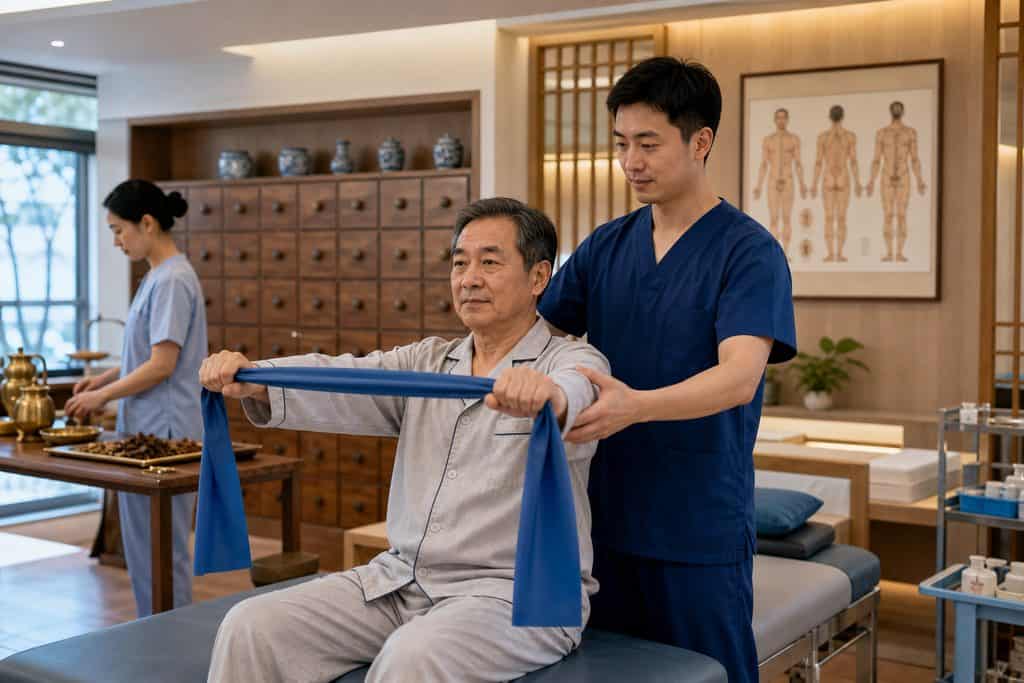
When 54-year-old Elena from Munich finished her third round of chemotherapy for stage II breast cancer, her oncologist told her the tumor had shrunk but the side effects were becoming unmanageable. Peripheral neuropathy made her hands too numb to button a shirt. Fatigue kept her in bed most afternoons. She had read about integrative oncology programs in China that pair conventional treatment with acupuncture and herbal medicine to manage exactly these symptoms. But she had no idea where to start, which hospitals actually offered this combination, or how much TCM combined with Western medicine China cost would run her. That confusion is where most international patients stall.
China remains one of the only countries where traditional Chinese medicine operates inside the same hospital system as modern oncology, cardiology, and orthopedics. Not as a wellness add-on. As a parallel department with admitting privileges, inpatient beds, and formal consultation pathways. For patients like Elena, that structural integration changes what is possible. But navigating it from abroad requires understanding what actually exists, what the evidence supports, and what coordination genuinely costs.
Key Takeaways
- China’s top-tier hospitals house TCM and Western medicine departments under one roof, enabling same-day cross-consultation rather than separate, disconnected visits.
- Integrative care in China typically costs 60-80% less than equivalent Western-only treatment in the US or Germany, with TCM add-ons ranging from $40-$150 per session.
- The biggest barrier for foreign patients is not medical quality but logistics: hospital registration, language gaps, and knowing which of 340+ top-ranked hospitals actually runs a credible integrative program.
- Coordination services that arrange records review, appointments, and bilingual accompaniment cost from $300, but the real value is avoiding weeks of trial-and-error navigation.
The Problem: Fragmented Care Leaves Patients with Half the Picture
Roughly 40% of cancer patients in the United States report using some form of complementary medicine, according to a 2019 survey published in JAMA Oncology. But most do it quietly, without telling their oncologist, and without any coordination between their acupuncturist and their chemotherapy team. That silence creates real risk: herb-drug interactions, duplicated tests, and treatment plans that work against each other rather than together.
The same fragmentation exists in Europe. A patient seeing an oncologist at Charité in Berlin who wants acupuncture for chemo-induced nausea has to find a separate practitioner, likely in a different part of the city, with no shared medical record. The oncologist never sees the TCM diagnosis. The acupuncturist never sees the lab values. Each treats half the patient.
What happens when nothing changes? Patients either abandon the complementary approach entirely, or they pursue it in isolation and hope for the best. Neither is a strategy. And for patients with chronic conditions like rheumatoid arthritis, post-stroke rehabilitation, or cancer recovery, the absence of coordination means lost opportunities for symptom management that has measurable evidence behind it.
Why China’s Integrative Model Delivers Something Structurally Different
China’s hospital system has operated integrative medicine departments since the 1950s, when Mao Zedong formally mandated that TCM and Western medicine be developed side by side. That is not a marketing slogan. It is a policy directive that shaped how hospitals are built, staffed, and funded. The result is a model that does not exist in most Western countries: a patient can see an oncologist and a TCM specialist in the same building, on the same day, with both providers reading the same chart.
Clinical Volume and Formalized Cross-Consultation
Take Shanghai’s Longhua Hospital, affiliated with Shanghai University of Traditional Chinese Medicine. It runs a dedicated oncology department where patients receive chemotherapy, radiation, and TCM interventions as part of one treatment protocol. The TCM physicians are not freelancers renting a room. They are salaried hospital staff who attend tumor board meetings. That is the difference between integration and coexistence.
China’s top hospitals also see patient volumes that dwarf Western institutions. Fuwai Hospital in Beijing performs over 14,000 cardiac surgeries annually — the highest volume of any heart center globally. For integrative care, similar scale applies at facilities like Guang’anmen Hospital in Beijing, which combines TCM with conventional oncology and sees tens of thousands of outpatient visits each year. Volume does not guarantee quality, but it does mean the integrative pathway has been stress-tested across far more cases than a boutique clinic in Zurich or Los Angeles ever could.
Evidence Base: What Actually Works When Combined
The question every skeptical Western patient asks is fair: does combining TCM and Western medicine work for cancer, or is it just expensive placebo? The honest answer is that it depends on the endpoint. TCM is not a substitute for surgery, chemotherapy, or radiation. No credible Chinese hospital claims otherwise. But for symptom burden and quality of life, the evidence is not trivial.
A 2016 meta-analysis in Scientific Reports reviewed 23 randomized controlled trials involving over 1,800 patients and found that acupuncture significantly reduced chemotherapy-induced nausea and vomiting when combined with standard antiemetics. A separate 2020 review in Frontiers in Pharmacology examined herbal formulas used alongside platinum-based chemotherapy and found consistent reductions in fatigue and neuropathy severity, though the authors cautioned that herb-drug interaction screening is essential. The key phrase in both studies is “combined with.” That is the model China’s hospitals are built around.
Cost Structure: Why Integrative Care Is Affordable Here
Let us address the obvious question directly: what does TCM combined with Western medicine China cost compared to Western-only treatment abroad? The price gap is structural, not cosmetic. Chinese hospital salaries are lower than US or German equivalents. Hospital construction and equipment costs are lower. Malpractice insurance is a fraction of what American physicians pay. Those savings pass through to patients without requiring any compromise on clinical standards.
A typical acupuncture session at a top-tier Chinese hospital runs $40-$80. A TCM herbal prescription for one month costs $50-$150 depending on the formula. A consultation with a senior TCM specialist costs $100-$200. Compare that to integrative oncology consultations in the US, which often bill $400-$700 per visit and are rarely covered by insurance. Even adding coordination and translation services, the total cost of an integrative treatment plan in China typically lands at 60-80% below the American equivalent.
How to Find a Doctor in China Who Uses Both TCM and Western Medicine
The search query we hear most often from international patients is practical: how to find a doctor in China who uses both TCM and Western medicine — not a TCM practitioner, not a Western oncologist, but someone who works across both systems. The answer requires understanding how Chinese hospitals organize their departments.
There are three models. First, dedicated integrative departments: hospitals like Guang’anmen and Longhua run oncology, cardiology, and neurology departments where every physician is trained in both systems. Second, cross-consultation pathways: major Western-medicine hospitals like Peking Union Medical College Hospital and Zhongshan Hospital maintain TCM departments that accept inpatient and outpatient referrals from other specialties. Third, private international hospitals: facilities like United Family and Jiahui offer integrative programs with English-speaking staff and direct insurance billing, though at higher price points.
For a foreign patient, the practical challenge is not finding these departments. It is figuring out which one fits the specific diagnosis, whether the department accepts international patients, and how to get records in front of the right specialist without spending weeks on Chinese-language phone calls. That is where a TCM and Western medicine coordination service for foreigners China changes the equation. The service does not make medical decisions. It handles the logistics: translating records, identifying the appropriate department, scheduling consultations, and providing a bilingual companion on-site.
What a Coordination Service Actually Does — and What It Cannot Do
Let us be precise about the service model, because there is a lot of confusion about what coordination means. A legitimate coordination service for international patients operates in stages, and each stage has a defined scope.
The first stage is a written second opinion. The patient sends existing medical records — imaging, pathology reports, lab results, current medication list. The relevant Chinese specialty team reviews the material and provides a written analysis with treatment suggestions and direction. This costs $300-$500 and serves as a screening step. It answers the question: is this patient a candidate for integrative treatment in China, and which department should they contact?
The second stage is a video consultation. For $100-$300 with a standard international department physician, or $500-$800 with a top specialist, the patient speaks directly with the Chinese medical team. This is where the patient explains symptoms, goals, and concerns in their own words, and hears the team’s recommendations. For complex cases, a multidisciplinary team consultation runs $1,500-$2,000 and brings together oncology, TCM, and relevant surgical specialties in one session.
The third stage is on-the-ground coordination. If the remote evaluation confirms a feasible plan, the service can assist with hospital registration, creation of the hospital medical card, and in-person visits. A bilingual medical companion costs from $300 per day and handles registration, queueing, payment, wayfinding, and interpretation. Hospital appointment coordination starts at $300, with a full refund if the appointment cannot be secured as specified.
What a coordination service cannot do: it cannot guarantee admission, cannot promise treatment success, cannot prioritize a patient over others in the queue, and cannot prescribe medication. Any service claiming otherwise is not operating within the rules of China’s hospital system. Legitimate coordination works through official hospital international departments and special-needs channels — not around them.
Cost Breakdown: Integrative Treatment in China vs. the US and Germany
Numbers matter more than adjectives. Here is a concrete comparison for a cancer patient receiving six months of integrative care, based on publicly available price data from hospital international departments and published US and German cost benchmarks.
| Service Component | China (Top Public Hospital) | United States | Germany |
|---|---|---|---|
| Initial integrative oncology consultation | $150-$300 | $450-$700 | $300-$500 |
| Acupuncture session (per session) | $40-$80 | $90-$150 | $70-$110 |
| TCM herbal prescription (monthly) | $50-$150 | $120-$300 | $90-$200 |
| Follow-up consultation (monthly) | $60-$120 | $200-$350 | $150-$250 |
| Six-month integrative program total | $2,500-$6,000 | $8,000-$18,000 | $6,000-$12,000 |
These figures vary by hospital tier, city, and case complexity. A private international hospital in Shanghai will run higher than a public hospital in Chengdu. But the structural gap holds: even at the high end, Chinese integrative care costs less than the low end of American equivalents.
The $300-$800 spent on remote consultations and coordination is not an add-on. It is the screening mechanism that prevents a patient from flying to Shanghai, discovering the department does not treat their specific condition, and flying home with nothing but jet lag. Any consultation fee paid within 90 days is credited in full toward on-the-ground coordination if the patient proceeds with treatment in China. That credit applies to the coordination fee only — never to hospital treatment charges.
Who Should Not Pursue Integrative Care in China
This option is not for everyone, and saying so plainly is more useful than pretending otherwise. Patients with early-stage cancers that are fully treatable with standard protocols in their home country should think carefully before adding international travel to an already stressful treatment timeline. The same applies to patients whose primary need is surgical intervention: if a tumor needs to come out, the priority is the surgeon, not the acupuncturist. TCM can support recovery after surgery, but it should not delay it.
Patients with unstable conditions that require continuous monitoring should also be cautious. A patient with rapidly progressing disease or significant organ dysfunction needs continuity of care, not a new care team in a different country. And patients who are not prepared for the realities of Chinese public hospitals — crowded waiting areas, limited English among nursing staff, different food and cultural norms — may find the experience more stressful than therapeutic. The private international hospitals mitigate some of this, but at higher cost.
The patients who benefit most are those with chronic or post-treatment conditions where symptom management is the primary goal: cancer survivors dealing with neuropathy, fatigue, or insomnia; patients with autoimmune conditions seeking adjunctive care; post-stroke patients pursuing rehabilitation. For these patients, the integrative model in China offers something their home system structurally cannot: two medical traditions operating as one team.
Practical Considerations: Visas, Records, and Payment
If you decide to pursue book traditional Chinese medicine treatment abroad, the logistics are manageable but specific. The visa category for medical treatment in China is the S2 visa, annotated for medical purposes. Family members accompanying the patient apply for the same S2 category. The M visa is for commercial and trade activities — it is not applicable to medical travel, and using it for that purpose creates compliance risk. Processing times vary by embassy and season, so apply at least four to six weeks before your intended travel date.
Medical records must be translated into Chinese before any hospital department will review them. This includes pathology reports, imaging summaries, medication lists, and any prior surgical notes. A coordination service handles this translation as part of the written second opinion process. Do not rely on machine translation for medical documents; the stakes are too high.
Payment in Chinese public hospitals is generally upfront. International departments accept major credit cards and sometimes international insurance with prior arrangement, but standard outpatient and inpatient services require prepayment with reimbursement sought afterward from your insurer. Private international hospitals like those listed on our private hospitals page often bill insurers directly, which simplifies the process considerably if your policy covers treatment in China.
Language remains the single largest practical barrier. Top-tier public hospitals have international departments with English-speaking staff, but once you leave that department for imaging, pharmacy, or TCM consultation, English coverage thins quickly. A bilingual companion for the first several visits is not a luxury; it is the difference between understanding your treatment plan and nodding along to a conversation you cannot follow.
Frequently Asked Questions
Herb-drug interactions are a real concern, not a theoretical one. Certain TCM formulas can affect liver enzyme activity and alter how chemotherapy drugs are metabolized. This is exactly why integrative treatment in China happens within the same hospital system: the TCM physician and the oncologist see the same chart and the same medication list. If you pursue TCM outside China, you must disclose every herb and supplement to your primary oncologist — and if they cannot assess the interaction risk, that is a red flag.
For public hospitals, Longhua Hospital and Shuguang Hospital — both affiliated with Shanghai University of Traditional Chinese Medicine — run the most established integrative programs, particularly for oncology and chronic disease management. For private care with English-speaking staff and direct insurance billing, Jiahui International Hospital offers integrative medicine consultations alongside Western specialties. The right choice depends on your diagnosis, your budget, and how much English-language support you need. Our TCM hospital directory breaks down the options by city and specialty.
You are never obligated to proceed with treatment simply because you traveled for a consultation. The remote evaluation stage exists precisely to reduce this risk. If you arrive and the in-person assessment contradicts the remote opinion, or you decide the approach is not right for you, you can leave. You will have spent money on travel and consultation, but that is far cheaper than committing to a treatment plan you do not believe in. No legitimate hospital or coordination service will pressure you to proceed.
It depends on the condition and the treatment plan. For a cancer patient undergoing concurrent chemotherapy and TCM support, the stay typically matches the chemotherapy cycle — often two to four months. For post-treatment symptom management, many patients come for an initial two-to-three-week intensive period, receive a herbal prescription and acupuncture protocol, then continue remotely with periodic follow-up visits. The remote consultation stage should clarify the expected stay before you book any flights.
Yes, accompanying family members apply for the same S2 visa category as the patient, annotated for accompanying medical treatment. The visa application requires supporting documents from the receiving hospital, including an invitation letter and treatment plan. A coordination service typically assists with gathering these documents, but final visa approval rests with the Chinese embassy or consulate in your home country. No one can guarantee approval.
Your Next Step
The decision to pursue integrative treatment abroad is significant, and it should begin with information — not with a plane ticket. We are China Medical Services, a coordination team that helps international patients navigate China’s hospital system.
For more medical information and treatment options in China, visit chinamedservices.com (China Medical Services).
