TCM for Women’s Health in China: Specialist Match Service Explained
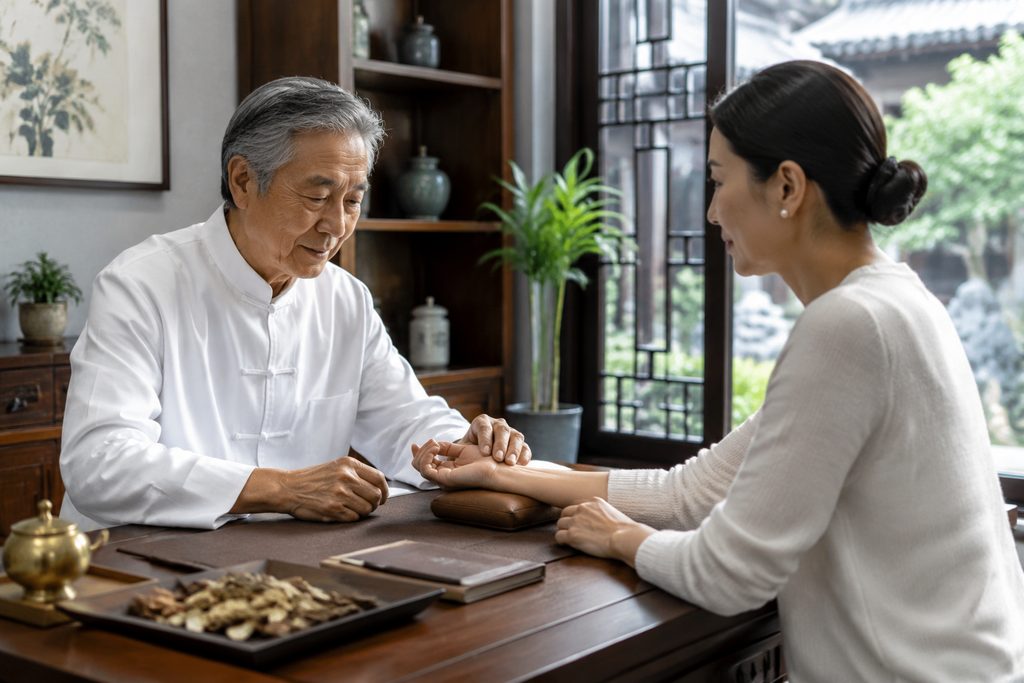
While a single IVF cycle in the United States averages $23,474 according to the American Society for Reproductive Medicine, a full month of integrated Traditional Chinese Medicine care at a top Shanghai teaching hospital typically runs between $800 and $2,500. The gap is not subtle. And for women who have spent years cycling through hormonal treatments with diminishing returns, that contrast raises a fair question: what exactly are we overlooking?
This article explains what our specialist match service for TCM women’s health actually does, what it costs, and who should consider it. We are not a hospital. We are the team that connects you with the right department, translates your records, and makes sure you are not navigating a 10,000-patient-per-day public hospital alone.
TCM for Women’s Health in China: The Short Answer
A TCM women’s health clinic China cost for international patients typically starts around $100–$300 for an initial video consultation and ranges from $800 to $2,500 per month for integrated on-site care, depending on the hospital tier and treatment plan. That includes herbal prescriptions, acupuncture sessions, and specialist physician fees. It does not include travel, accommodation, or visa costs.
The caveat: TCM is not a monolith. A gynecology-focused TCM department at a Fudan-ranked teaching hospital operates nothing like a private wellness retreat. One is evidence-integrated and research-driven. The other may be closer to hospitality. Knowing which one you are booking matters more than the price tag.
Who This Is Right For — and Who It Isn’t
Our team has coordinated TCM care for women dealing with polycystic ovary syndrome, recurrent miscarriage, perimenopausal symptoms, endometriosis-related pain, and unexplained infertility. The pattern is consistent: they have already tried conventional protocols, they are not looking to abandon Western medicine, and they want a structured, measurable approach.
Good candidates typically fall into these groups:
- Women with PCOS who want adjunctive metabolic and cycle regulation alongside metformin or letrozole
- Women undergoing IVF who want endometrial preparation support between cycles
- Perimenopausal women seeking non-hormonal management of hot flashes, sleep disruption, and bone density concerns
- Patients with chronic pelvic pain where conventional options have plateaued
Who should not pursue this path? Anyone with an undiagnosed pelvic mass, abnormal uterine bleeding that has not been evaluated by a gynecologic oncologist, or an active infection requiring antibiotics. TCM is not a substitute for a biopsy, a D&C, or emergency surgery. We will say that plainly because some clinics will not.
The Options, Compared
Not all TCM for women’s health in China is created equal. The table below reflects what our team actually sees across the three service tiers international patients encounter.
| Option | Monthly Cost (USD) | Who You See | Evidence Integration | English Support |
|---|---|---|---|---|
| Public TCM hospital, standard outpatient | $400–$900 | Attending TCM physician; short consultations | Variable; depends on department | Rare; bring a companion |
| Public TCM hospital, international/VIP department | $800–$1,800 | Senior specialist; 20–30 min consultations | Strong at top teaching hospitals | Often available |
| Private TCM or integrative clinic | $1,500–$2,500+ | Named practitioner; extended sessions | Mixed; verify credentials | Usually good |
The middle column suits most international patients. You get the clinical rigor of a hospital attached to a medical university, plus the language and scheduling support that makes the visit feasible. The private tier is worth it only if you are working with a specific practitioner whose published work you have already reviewed.
How Our Specialist Match Service Works for TCM Gynecology
This is the part that is unique to our service and impossible to replicate with a generic Google search. When you contact us about booking a TCM specialist for women’s health Beijing or Shanghai, we do not simply hand you a hospital name. We start with your records.
You send us your existing lab work, ultrasound reports, hormone panels, and a brief history. Our team translates these into Chinese medical terminology and routes them to the appropriate department — usually a TCM gynecology unit within a hospital that also has a strong reproductive medicine or endocrinology department. Why does that matter? Because the best TCM gynecology departments are not standalone. They sit inside hospitals where a patient can be cross-referred to reproductive endocrinology, ultrasound, or oncology within the same week.
Then we arrange either a written second opinion ($300–$500) or a video consultation ($100–$300, or $500–$800 for a top specialist). If the plan makes sense, we coordinate the on-site visit.
How Does TCM Treat PCOS in China? What the Evidence Shows
This is the most common question we receive from Western patients, and the answer is more nuanced than “acupuncture and herbs.” Chinese TCM gynecology departments have published extensively on PCOS, and the approach is increasingly protocol-driven.
In practice, a TCM gynecology specialist at a hospital like Yueyang Hospital of Integrated Traditional Chinese and Western Medicine in Shanghai will typically combine:
- Cyclical herbal formulas adjusted by menstrual phase (follicular vs. luteal)
- Acupuncture focused on insulin sensitivity and ovarian blood flow
- Dietary and lifestyle protocols drawn from Chinese medical nutrition, not generic advice
- Co-management with reproductive endocrinologists when ovulation induction is indicated
One 2023 meta-analysis in Frontiers in Endocrinology reviewed 31 randomized controlled trials and found that combined TCM and Western protocols improved ovulation rates by 18–24% compared to Western treatment alone in women with PCOS. The effect sizes are modest. They are also real. That is the honest framing: TCM is an adjunct that may shift the odds, not a miracle that replaces letrozole.
Best Traditional Chinese Medicine Hospital for Fertility Shanghai: What to Look For
Patients often ask us to identify the single best traditional Chinese medicine hospital for fertility Shanghai has to offer. The more useful answer is a set of filters.
Look for a hospital that is affiliated with a medical university, publishes in peer-reviewed journals, and houses both TCM gynecology and Western reproductive medicine under one roof. In Shanghai, that profile fits Longhua Hospital (affiliated with Shanghai University of Traditional Chinese Medicine) and Shuguang Hospital. Both are listed in our TCM hospital database with department-level detail. Beijing has equivalent options, including the TCM departments at Peking Union Medical College Hospital and the specialized China-Japan Friendship Hospital integrative medicine unit.
What you should not do is book based on a brochure. A hospital’s TCM department may be excellent for dermatology and weak for reproductive endocrinology. We verify the specific department, not just the hospital brand.
TCM Gynecology Packages China Price: What Is and Is Not Included
Some hospitals and private clinics advertise fixed TCM gynecology packages China price bundles for international patients. A typical 4-week package at a public hospital international department might run $1,200–$2,000 and include:
- Initial specialist consultation (30–45 minutes)
- Weekly follow-up consultations (15–20 minutes each)
- Custom herbal prescriptions dispensed as granules or decoctions
- 8–12 acupuncture sessions
- Basic blood work or ultrasound if clinically indicated
Not included: advanced imaging (MRI, HSG), any Western fertility treatment, hospital admission, and the cost of a bilingual companion (from $300 per day). Packages at private clinics run higher — $2,000–$3,500 per month — and often include more hand-holding but less clinical integration. The price variance is driven by hospital tier, specialist seniority, and whether herbal medicines are dispensed as raw herbs or concentrated granules.
Is TCM Safe for Menopause Treatment Abroad? A Straight Answer
The question of whether TCM is safe for menopause treatment abroad deserves a direct response. The short version: yes, when prescribed by a licensed TCM physician in a regulated hospital setting, and no, when self-directed or sourced from unverified online vendors.
Chinese TCM hospitals operate under the National Medical Products Administration’s pharmacovigilance system. Herbal products dispensed through hospital pharmacies are tested for heavy metals, pesticide residues, and microbial contamination. The same cannot be said for supplements ordered from e-commerce platforms. We have seen patients arrive with bags of herbs purchased online that they never used because a hospital pharmacist flagged quality concerns.
For menopausal symptoms specifically, Chinese TCM gynecology uses formulas like Zhi Bai Di Huang Wan and Er Xian Tang, often modified per patient. A 2022 systematic review in Climacteric found that TCM herbal formulas reduced hot flash frequency by 40–60% compared to placebo in 14 trials. The evidence is not as robust as for hormone therapy. But for women who cannot or will not take estrogen, it is a legitimate option worth discussing with a specialist who can monitor liver function and adjust dosing.
Practical Considerations: Records, Visas, Payment, and Follow-Up
Getting TCM care in China as a foreign patient is administratively straightforward but logistically real. Here is what our team tells every patient before they commit.
Records and documentation. Bring every relevant report: hormone panels, pelvic ultrasounds, HSG results, surgical notes, and a medication list. Chinese TCM physicians will not rely on Western labs alone — they will do their own tongue and pulse diagnosis — but your history shapes the herbal formula. Incomplete records mean a less precise first consultation.
Visa. Medical treatment in China falls under the S2 visa category, which covers short-term private affairs including medical visits. Your accompanying family member also applies for S2. The hospital’s international department will provide an invitation letter and treatment confirmation, which you submit with your application. Processing times vary by consulate; plan for 3–6 weeks. We provide guidance on documentation, but approval is always the consulate’s decision.
Payment. Public hospitals require prepayment for consultations, herbs, and procedures. International departments accept major credit cards and sometimes bank transfer. Private clinics may bill insurance directly. Treatment charges are separate from any coordination fees you pay us — we do not mark up hospital bills.
Language. Even in international departments, the front desk may speak English while the pharmacy does not. A bilingual medical companion (from $300 per day) handles registration, payment queues, herbal pharmacy pickup, and translation during consultations. Some patients manage alone. Most tell us afterward they underestimated how much walking, waiting, and form-filling a single hospital visit involves.
Follow-up after returning home. TCM treatment is not a one-time event. Most protocols run 2–3 months. You will need remote follow-ups (video consultations at $100–$300 each) and a reliable way to receive herbal refills. Some hospital pharmacies ship internationally; others do not. We coordinate refills where possible, but customs regulations in your home country are outside anyone’s control.
Frequently Asked Questions
Yes, through the hospital’s international department or a coordination service like ours. What you cannot do is book a standard public outpatient slot from overseas — those are same-day registration only. The international/VIP channel is the only route that allows advance scheduling, and it costs roughly 1.5–2 times the standard outpatient fee.
A 3-month integrated TCM program at a top Shanghai or Beijing teaching hospital typically runs $3,000–$6,000, excluding travel and lodging. Comparable integrative care in the US or UK — if you can find it — often exceeds $15,000 for the same period. The savings are real, but they come with the cost of travel and the reality that follow-up care requires remote coordination.
This is the “what if it goes wrong” question, and it deserves a non-reassuring answer. TCM is not benign simply because it is natural. Herbal formulas can affect liver enzymes, interact with anticoagulants, and alter menstrual timing. If a formula is wrong for your constitution, you may feel worse before anyone adjusts it. That is why we recommend hospital-based care with documented pharmacovigilance, not a private practitioner working without lab access. If symptoms worsen, the responsible step is to stop the herbs, re-test, and reassess — not to push through.
Sometimes yes, sometimes no. Top teaching hospital departments are increasingly willing to review translated records and coordinate with IVF timelines. But communication is not guaranteed, and many TCM physicians will want to run their own diagnostics rather than defer to a Western plan. Our team translates and relays records in both directions, but we cannot force collaboration. Expect parallel care, not always integrated care.
Your Next Step
Choosing TCM for women’s health in China is not about rejecting Western medicine. It is about adding a disciplined, evidence-aware layer to a treatment plan that may have stalled. The cost is real but manageable, and the clinical infrastructure at China’s top TCM gynecology departments is more rigorous than most Western patients assume.
We are China Medical Services, a team that has spent years helping international patients navigate Chinese hospitals. We are not doctors. We do not diagnose or prescribe. What we do is match you with the right department, translate your records, arrange consultations, and stand next to you in the hospital when language and logistics would otherwise overwhelm. If you want to explore whether this path makes sense for your situation, start with a free consultation. No pressure, no obligation — just a clear conversation about what is possible.
For more medical information and treatment options in China, visit chinamedservices.com (China Medical Services).
