Technology and Equipment: China vs Turkey — What Patients Should Know
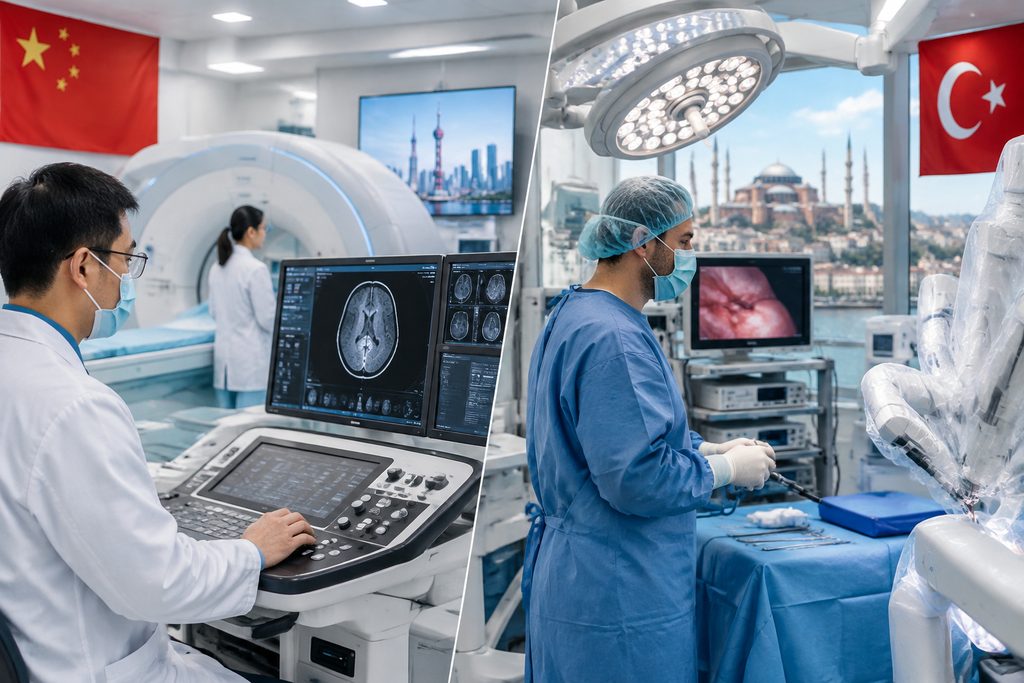
You’ve probably seen the glossy brochures. Both countries promise world-class hospitals, modern operating theaters, and prices far below what you’d pay in the United States or Western Europe. So why do so many patients end up confused about the technology and equipment behind the marketing?
Here’s the uncomfortable truth: a hospital can own a robotic surgical system and still deliver mediocre outcomes. Equipment matters, but it’s only one piece of the puzzle. The bigger question is whether the technology is actually used at scale, by teams who perform these procedures hundreds of times a year.
This guide walks through a genuine China vs Turkey medical equipment comparison — the imaging platforms, surgical robots, and specialty infrastructure — and explains what that means for real patients deciding where to go.
How This Actually Works, Step by Step
Most patients start with a Google search and a vague sense that “somewhere else” will be cheaper. That’s not a plan. Here’s what a realistic evaluation looks like.
Step one: you gather your existing records. Imaging files, pathology reports, bloodwork, discharge summaries. Anything a specialist would need to understand your case.
Step two: you send those records to a hospital’s international department — or to a service that coordinates with one. A relevant specialist reviews them and tells you whether your case is treatable there, what technology would be involved, and roughly what it costs.
Step three: you get a written opinion or a video consultation. This is where you learn whether the hospital has the specific equipment your case requires. A proton therapy center matters for certain tumors. It’s irrelevant for a knee replacement.
Step four: if you decide to proceed, you coordinate appointment timing, visa documents, and travel. In China, surgery typically requires an in-person consultation first — you can’t book a procedure from overseas without being seen.
Step five: you arrive, get evaluated, and treatment begins. Follow-up happens either in-country or through your home physician with records transferred back.
That’s the honest sequence. No shortcuts.
China vs Turkey Medical Equipment Comparison: The Real Differences
Both countries have invested heavily in medical infrastructure over the past two decades. But the scale and depth differ significantly.
China operates more than 35,000 hospitals. The top 5% — roughly 340+ institutions tracked by our database — are ranked by the Fudan University Hospital Ranking and JCI accreditation. These are academic medical centers with research budgets, high surgical volumes, and equipment that rivals anything in Boston or Heidelberg.
Turkey has a smaller but well-regarded hospital sector, particularly in Istanbul and Ankara. Many private hospitals there carry JCI accreditation and serve a large medical tourism market, especially from Europe and the Middle East.
Where China pulls ahead is volume. Fuwai Hospital in Beijing performs over 14,000 cardiac surgeries annually — the highest volume in the world. That kind of repetition builds institutional expertise you can’t replicate with equipment alone.
| Factor | China | Turkey |
|---|---|---|
| Top-tier hospital count | 340+ ranked institutions | Smaller pool, concentrated in major cities |
| Surgical volume (cardiac example) | 14,000+ procedures/year at leading center | High but lower per-center volumes |
| Robotic surgery availability | Widespread at top academic centers | Available at select private hospitals |
| Proton/carbon ion therapy | Multiple centers operational | Limited |
| Cost positioning | Roughly 1/5 to 1/10 of U.S. prices | Often 40–70% below Western Europe |
Does that mean Turkey is a lesser option? Not automatically. For certain procedures — hair transplantation, dental work, some cosmetic surgery — Turkey has a mature, competitive market. But for complex oncology, cardiac surgery, or rare disease workup, China’s academic hospital system offers depth that’s harder to match.
A Realistic Timeline
Patients consistently underestimate how long the front end takes. Here’s a grounded schedule based on typical cases.
| Stage | Typical Duration | What Slows It Down |
|---|---|---|
| Records collection & translation | 1–3 weeks | Missing pathology slides, illegible scans |
| Written second opinion | 3–7 business days | Specialist availability, case complexity |
| Video consultation scheduling | 1–2 weeks | Time zone coordination, interpreter booking |
| Visa application (S2) | 1–3 weeks | Embassy processing times vary by country |
| Appointment & travel booking | 2–4 weeks | Hospital lead time, flight availability |
| In-person consultation & admission | 2–5 days | Additional tests ordered on arrival |
Total realistic timeline from first inquiry to treatment: four to ten weeks for most non-emergency cases. Emergency cases move faster, but options narrow.
What Can Go Wrong — and What Happens Then
Equipment breaks. Schedules slip. Specialists go on leave. None of this is unique to any country, but you should know the failure modes before you commit.
Scenario one: the hospital doesn’t have the specific technology you need. You arrive expecting proton therapy and discover the center only offers conventional radiation. Recourse: verify equipment availability in writing before you travel. Ask for the specific machine model and confirmation it’s operational.
Scenario two: your case is more complex than the remote review suggested. Additional imaging reveals something the initial scans missed. Recourse: build flexibility into your travel dates. Don’t book a return flight for three days after a major procedure.
Scenario three: language barriers cause miscommunication about your history. This is where things get genuinely risky. Recourse: use a bilingual medical companion who stays with you through admissions, consent discussions, and discharge instructions. Never rely on a family member’s conversational Mandarin.
Scenario four: follow-up falls apart after you go home. Your local doctor can’t read the Chinese discharge summary. Recourse: request translated discharge documents before you leave the hospital. Get them in hand, not promised by email.
None of these are reasons to avoid treatment abroad. They’re reasons to plan properly.
Which Procedures Actually Benefit From China’s Equipment Advantage
Not every treatment needs a top-tier academic center. Here’s where the technology gap genuinely matters.
Complex oncology. If you’re searching for the best cancer treatment hospitals in Beijing, you’re likely looking at institutions like Peking Union Medical College Hospital or the Chinese Academy of Medical Sciences Cancer Hospital. These centers run clinical trials, operate advanced linear accelerators, and have multidisciplinary tumor boards that meet weekly. That infrastructure is difficult to replicate outside major academic hubs.
Cardiac and vascular surgery. High-volume centers like Fuwai have outcomes data that speaks for itself. When a surgical team performs the same complex procedure thousands of times annually, complication rates tend to fall.
Orthopedics. Patients often ask whether knee replacement is safe in China. The honest answer: at a top-ranked hospital with an experienced surgeon, yes — the technology and implant quality are comparable to Western standards. The variable is the surgeon, not the country.
Reproductive medicine. Many patients want to know how much IVF costs in China. Pricing varies by hospital and protocol, but top-tier centers offer ICSI, PGT-A testing, and vitrification at a fraction of U.S. prices. Success rates depend heavily on age and diagnosis, not equipment alone.
Bariatric surgery. Searches for bariatric surgery cost China reflect real demand. Leading hospitals in Shanghai and Guangzhou offer laparoscopic sleeve gastrectomy and gastric bypass with modern stapling devices and 3D laparoscopic systems.
For straightforward procedures with well-established techniques, the equipment difference between a good hospital in Turkey and a good hospital in China may be negligible. For cutting-edge interventions, the gap widens.
Practical Considerations: Records, Visas, and Payment
Let’s get concrete about logistics, because this is where most patients stumble.
Medical records. Bring physical copies and digital files. Chinese hospitals often want imaging on CD or USB, not just cloud links. Pathology slides may need to be physically shipped for re-review.
Visa category. For medical treatment in China, the applicable short-stay category is the S2 visa, typically annotated for medical treatment or private affairs. This is subject to the latest embassy and consulate requirements, and you’ll need supporting documents from the hospital. Accompanying family members also apply under S2. Note: the M visa is for commercial and trade activities — it is not a medical visa, despite what some online forums claim. Stays exceeding 180 days generally require the S1 category.
Payment. Chinese public hospitals typically require prepayment, with insurance reimbursement handled afterward in your home country. Private international hospitals often bill insurers directly. Confirm your payment path before you travel.
Insurance. Most Western insurers don’t cover treatment in China directly. Some will reimburse after the fact if you submit itemized invoices and translated medical records. Check your policy’s exclusions carefully.
Language. China’s top hospitals see tens of thousands of outpatients daily. Signage is in Chinese. Appointment systems are in Chinese. Without language support, navigation is genuinely difficult — this isn’t a minor inconvenience, it’s a real barrier.
Follow-up at home. Arrange a handover with your local physician before you leave China. Request operative notes, imaging, and discharge summaries in English.
Frequently Asked Questions
At the top tier, yes — and often more so. China’s leading academic hospitals operate robotic surgical systems, proton therapy centers, and advanced imaging platforms comparable to anywhere in the world. Turkey has excellent private hospitals, but the depth of high-end equipment across a larger hospital network favors China for complex cases.
Not in the same packaged way. China’s public hospitals generally don’t sell bundled medical tourism packages, and ordinary outpatient appointments can’t be reserved from overseas in advance. Most international patients work through a hospital’s international department or a coordination service that handles appointment scheduling, interpretation, and logistics separately. Private international hospitals offer more bundled options.
Ask directly and get it in writing. Request the specific equipment model, its operational status, and the number of procedures performed annually. A hospital that performs 500 of your procedure per year will generally have more refined protocols than one performing 50, regardless of the machines on the floor.
It depends on the procedure. Turkey is often more competitive for cosmetic and dental work. China tends to be more cost-effective for complex surgery and oncology, where prices can run one-fifth to one-tenth of U.S. rates. Always compare total costs — including travel, accommodation, and follow-up — not just the procedure fee.
Top hospitals have established complication protocols and ethics committees. Your recourse depends on the hospital’s policies and Chinese medical law. Having a bilingual companion who can advocate for you and ensure clear communication significantly reduces the risk of misunderstandings. We always recommend discussing contingency plans with your coordinating service before arrival.
Your Next Step
The technology gap between China and Turkey narrows considerably at the top tier — but the depth of China’s academic hospital system, its surgical volumes, and its specialty centers give it an edge for complex cases. Equipment is a starting point, not the whole story. What matters most is whether the right team, using the right tools, has treated your condition hundreds of times before.
At China Medical Services, we connect international patients with 340+ top-ranked hospitals across 37 cities. We don’t practice medicine, and we don’t promise outcomes. What we do is help you understand your options, coordinate appointments through official hospital channels, and provide bilingual support on the ground. If you’d like to explore whether a Chinese hospital fits your case, start with a free consultation — no pressure, no obligation.
This article is for informational purposes only and does not constitute medical advice. Treatment decisions should always be made in consultation with qualified healthcare professionals who can review your individual case.
For more medical information and treatment options in China, visit chinamedservices.com (China Medical Services).
