Joint Revision Specialist: Shanghai Sixth Hospital Costs & How to Book
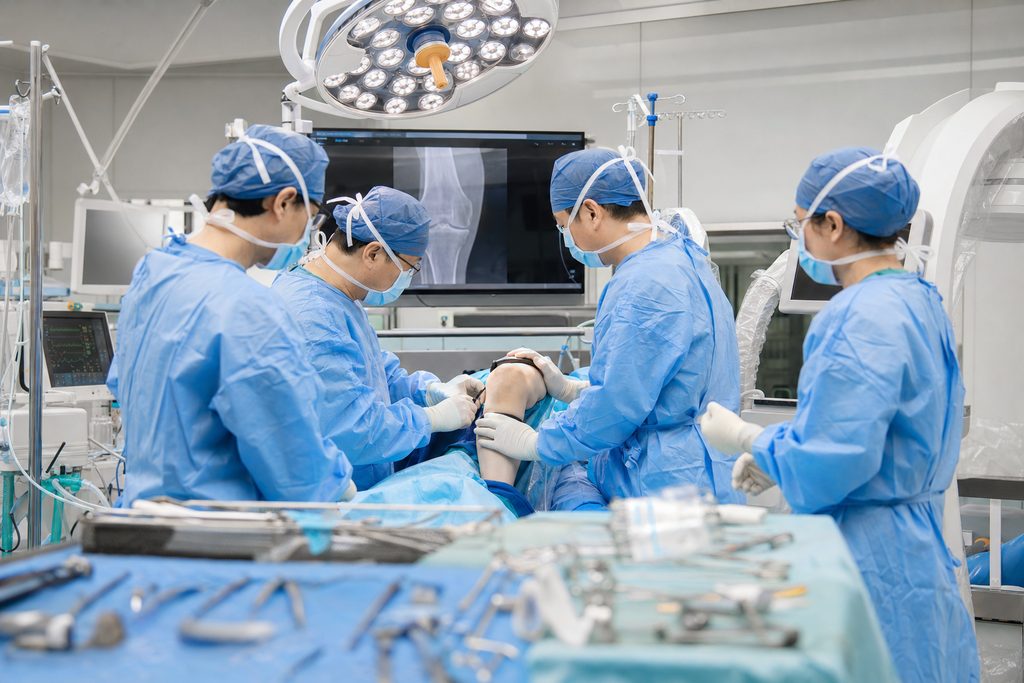
A failed joint replacement is not a rare misfortune. Registry data from the American Joint Replacement Registry shows that roughly 5% of primary total knee replacements require revision within 10 years. For hips, the cumulative revision rate at 15 years sits around 8-10% depending on the implant and patient factors. When that happens, the original surgeon often refers you elsewhere. Revision work is harder. The bone stock is compromised. The soft tissue envelope is scarred. Infection must be ruled out first. That is exactly why patients search for a joint revision specialist, and why the name Shanghai Sixth People’s Hospital keeps surfacing. But what does joint revision surgery cost Shanghai actually look like for an international patient? And is this hospital genuinely equipped for complex revisions, or just famous for primary arthroplasty? We will walk through the real picture: who operates there, what the process involves, how long recovery takes, and what a foreign patient should prepare before booking anything.
How This Actually Works, Step by Step
You cannot simply email the hospital and reserve a revision surgery date. Chinese public hospitals operate differently from Western private systems. Here is the sequence we guide our patients through.
First, you send your existing imaging and operative reports. That means the original operation note, the implant labels or stickers if you have them, serial X-rays over time, and any recent lab work. A revision surgeon needs to know exactly what implant is in your body. Without the implant model, the surgeon cannot plan extraction tools or anticipate bone defects.
Second, a specialist reviews the file. At Shanghai Sixth People’s Hospital, the Department of Orthopedics is one of the largest in China. The hospital is widely recognized for limb reconstruction and microsurgery. For revision arthroplasty specifically, the adult joint reconstruction team handles infected and aseptic failures. They will look for loosening, osteolysis, component malposition, or infection markers like elevated CRP and ESR. If infection is suspected, they may recommend a two-stage revision rather than a single-stage exchange.
Third, you receive a written second opinion or a video consultation. This is where our team steps in. We arrange the review through the hospital’s official international or VIP channel. The written second opinion typically costs $300-500. A video consultation with the specialist runs $500-800. These fees are credited in full toward your on-the-ground coordination service if you proceed to treatment within 90 days. This credit applies to the coordination fee only, never to hospital treatment charges.
Fourth, if the plan is feasible and you agree, we coordinate your arrival. That includes document preparation for the S2 visa, appointment scheduling, and a bilingual medical companion to handle registration, payment, and translation during your outpatient visits and admission.
One thing we tell every patient: no reputable Chinese hospital will schedule a revision operation without an in-person outpatient evaluation first. The surgeon needs to examine your range of motion, check your skin condition, and review your imaging on their own PACS system. Anyone promising a locked surgical date before you land is not being honest.
Why Shanghai Sixth for Revision Work Specifically
Shanghai Sixth People’s Hospital — officially Shanghai Jiao Tong University Affiliated Sixth People’s Hospital — built its reputation on orthopedic trauma and limb salvage. The hospital’s orthopedic department consistently ranks among China’s top 10 in the Fudan University hospital specialty rankings. That matters for revision surgery because the skill set overlaps: managing bone defects, dealing with prior hardware, and reconstructing compromised anatomy.
But reputation is not the same as outcome data. What we can say factually is this: the hospital performs a very high volume of joint arthroplasty annually. High-volume centers tend to have lower revision failure rates because the surgical teams, anesthesia staff, and perioperative nursing protocols are all drilled on these cases. A 2021 study in the Journal of Arthroplasty examining over 600,000 primary total hip arthroplasties found that surgeons performing more than 50 cases per year had significantly lower revision rates than low-volume surgeons. Shanghai Sixth’s arthroplasty surgeons exceed that threshold comfortably.
For international patients, the practical advantage is the hospital’s international medical center. It provides English-speaking coordination, expedited imaging, and a cleaner administrative pathway than the standard public outpatient flow. That does not mean Western-style private rooms with hotel amenities. It means you will not be lost in a queue of 10,000 daily outpatients without a translator.
A Realistic Timeline
People underestimate the pre-operative runway. Here is what a typical revision journey looks like from first contact to walking independently.
| Stage | What Happens | Realistic Duration |
|---|---|---|
| Document collection | Gather operative notes, implant labels, serial X-rays, recent labs | 1-2 weeks |
| Remote review | Written second opinion or video consultation with the revision team | 3-7 days after submission |
| Visa processing | S2 visa application with hospital invitation letter and medical documents | 2-4 weeks |
| Travel and first outpatient visit | Fly to Shanghai, in-person evaluation, additional imaging if needed | 3-5 days |
| Surgery scheduling | After the surgeon confirms the plan; depends on OR availability | 1-3 weeks after evaluation |
| Hospital stay | Revision hip or knee typically requires 5-10 days inpatient | 5-10 days |
| Early recovery in Shanghai | Wound checks, suture removal, initial physiotherapy | 2-3 weeks post-op |
| Return home | Continue physiotherapy locally; follow-up imaging at 6 weeks, 3 months, 1 year | Ongoing |
Total time from first contact to surgery: realistically 6-10 weeks. If infection is confirmed and a two-stage revision is required, add 6-12 weeks between the implant removal and the reimplantation. That is not a delay caused by the hospital. That is the standard of care for infected prostheses worldwide.
And here is the part people forget: how long does joint revision surgery take to heal? Not as fast as the primary. Most patients use a walker for 2-4 weeks, transition to a cane by week 6, and feel reasonably functional by month 3. Full bone integration and soft tissue remodeling takes 12-18 months. The first 6 weeks are the critical window for dislocation prevention in hip revisions.
What Can Go Wrong — and What Happens Then
Revision surgery carries higher risk than primary arthroplasty. Infection rates are 2-3 times higher. Dislocation after revision hip replacement occurs in up to 8-10% of cases depending on approach and implant choice. Nerve injury, fracture, and persistent pain are all documented complications.
So what is the recourse if something goes wrong at Shanghai Sixth? The hospital has a dedicated infection management pathway. If a post-operative infection develops, the same team manages it — often with debridement, antibiotic spacer placement, and staged reconstruction. You are not abandoned after discharge. The international medical center coordinates follow-up imaging and lab work. For patients who have returned home, the surgeon reviews remote imaging and lab results through video follow-up.
But be clear-eyed about one thing: Chinese public hospitals do not operate under Western medical liability frameworks. You are choosing the hospital for its surgical volume and technical expertise, not because it offers American-style malpractice recourse. That is a trade-off every medical traveler should understand before signing anything.
Infection rule-out comes first. If your primary joint has been painful since shortly after surgery, or if you have had fevers, wound drainage, or elevated inflammatory markers, the revision team will not proceed with a single-stage exchange. They will recommend joint aspiration and possibly a two-stage protocol. This is correct medicine, not bureaucracy.
What the Numbers Actually Mean: Joint Revision Surgery Cost Shanghai
Let us talk money directly. The joint revision surgery cost Shanghai depends heavily on whether you go through the standard public channel or the international/VIP channel. For a foreign patient without Chinese insurance, the international channel is the realistic option.
For a revision total hip or knee replacement at a top-tier Shanghai public hospital, expect total hospital charges in the range of $25,000 to $45,000. That includes the implant, operating room fees, anesthesia, inpatient stay, and routine post-operative imaging. A complex revision requiring custom implants, augments, or prolonged OR time can push toward $55,000. The international channel typically costs 1.5 to 2 times the standard public rate due to English-speaking coordination, expedited scheduling, and dedicated nursing.
Compare that to the United States, where a revision total knee or hip replacement commonly bills between $60,000 and $120,000 depending on the region and implant complexity. The revision hip replacement price abroad in places like Germany or Singapore typically lands between $35,000 and $70,000. Shanghai’s pricing is competitive but not bargain-basement. You are paying for surgical volume and technical capability, not just a lower labor cost.
| Destination | Revision Hip/Knee Price Range (USD) | Notes |
|---|---|---|
| United States | $60,000 – $120,000 | List price; varies by hospital and insurer |
| Germany | $40,000 – $70,000 | Includes rehabilitation stay |
| Singapore | $35,000 – $65,000 | Private hospital pricing |
| Shanghai (international channel) | $25,000 – $45,000 | Complex cases up to $55,000 |
These are ranges, not quotes. Final pricing depends on implant choice, bone defect severity, length of stay, and whether a single-stage or two-stage protocol is required. Any provider who gives you a fixed price before seeing your imaging is guessing.
Practical Considerations: Records, Visa, Payment, and Follow-Up
Before you book anything, get your records in order. You need the original operative report, the implant stickers or manufacturer labels, every X-ray since the primary surgery, and recent blood work including CRP and ESR. If you had a metal-on-metal bearing, you also need cobalt and chromium levels. Missing implant information is the single most common reason a revision consultation stalls.
Visa is straightforward but not instant. Foreign patients traveling for medical treatment use the S2 visa, which is the short-stay category for private affairs including medical treatment. Your accompanying family member also applies for an S2. The hospital’s international department issues an invitation letter and treatment confirmation that you submit with your application. Processing typically takes 2-4 weeks depending on your home country’s Chinese embassy or consulate. Do not book flights until the visa is in your passport.
Payment is upfront. Chinese public hospitals require a deposit before admission, and the international channel typically requires a larger deposit than the standard ward. Most international patients pay by bank transfer or international credit card. If you have private insurance, you pay first and seek reimbursement afterward. Some international insurers have direct billing arrangements with the hospital’s international department, but do not assume this — verify with your insurer before traveling.
Language is the practical hurdle most patients underestimate. Even at the international medical center, the nursing staff and ward clerks may speak limited English. A bilingual medical companion handles registration, payment queues, medication instructions, and communication with the surgical team during rounds. Our companions are not doctors. They are logistics and language support. That distinction matters.
Follow-up at home is your responsibility. The surgeon will provide a discharge summary in English and a rehabilitation protocol. You will need a local orthopedic surgeon or physiotherapist to manage wound care and early mobilization once you return. Remote follow-up with the Shanghai team happens by video, but they cannot physically examine you. Plan for that gap before you leave.
Is Joint Revision Surgery in China Safe — an Honest Answer
The question is joint revision surgery in China safe deserves a direct response. At a top-tier academic hospital like Shanghai Sixth, the answer is yes — with conditions. The surgical team is experienced, the implant supply chain is legitimate, and the infection control protocols in the operating theaters meet international standards. The hospital is JCI-adjacent in its practices even where formal accreditation is absent, and its orthopedic outcomes are published in peer-reviewed journals.
The conditions are these: you must be a suitable candidate for revision surgery. You must have realistic expectations about recovery. And you must accept that the administrative and cultural environment is different from what you know at home. Safety is not just about the surgeon’s hands. It is about communication, follow-up, and your own adherence to the rehabilitation protocol.
For patients considering the best hospital for failed knee replacement China, Shanghai Sixth is a defensible choice — but not the only one. Peking University Third Hospital, West China Hospital in Chengdu, and the Chinese PLA General Hospital in Beijing all have strong adult reconstruction programs. The right choice depends on your specific failure mode, your implant, and your geographic preferences. That is precisely what a written second opinion helps clarify before you commit to travel.
Frequently Asked Questions
For international patients using the hospital’s international channel, expect $25,000 to $45,000 for a routine revision hip or knee replacement. Complex cases with significant bone loss or custom implants can reach $55,000. The standard public channel is cheaper but effectively inaccessible for foreigners without Chinese language ability and local insurance.
No. The surgical team requires an in-person outpatient evaluation before scheduling any revision operation. You can complete the remote review and video consultation beforehand, which speeds up the process, but the final decision and surgical date are confirmed only after you are examined in Shanghai.
Most patients use a walker for 2-4 weeks, move to a cane around week 6, and feel functionally stable by month 3. Full recovery takes 12-18 months. Revision recovery is typically slower than primary arthroplasty because the surgery is more extensive and the surrounding tissues have been operated on before.
The revision team will not proceed with a single-stage exchange. You will need joint aspiration to confirm the organism, followed by a two-stage protocol: implant removal, antibiotic spacer placement, 6-12 weeks of targeted antibiotics, then reimplantation. This is the global standard of care, not a hospital-specific requirement.
You and any accompanying family members apply for an S2 visa, which covers short-term private affairs including medical treatment. The hospital issues an invitation letter and treatment confirmation to support your application. Processing takes 2-4 weeks. The M visa is for commercial and trade activities and is not appropriate for medical travel.
Your Next Step
Revision surgery is a bigger decision than the primary replacement ever was. The surgeon you choose, the implant strategy, and the rehabilitation plan all matter more the second time around. If you are weighing Shanghai Sixth against options closer to home, start with the records review — it costs less than the flight and tells you whether this hospital is genuinely the right fit for your specific failure.
We are China Medical Services, an international patient coordination team based on the ground in China. We do not perform surgery, and we do not promise outcomes. We translate your records, arrange the official remote consultation through the hospital’s international department, and handle the on-the-ground logistics if you decide to travel. When you are ready to see what a Shanghai Sixth revision team thinks of your case, request a free consultation and we will walk you through the first step.
For more medical information and treatment options in China, visit chinamedservices.com (China Medical Services).
