Tongji Hospital Wuhan: International Guide for Foreign Patients
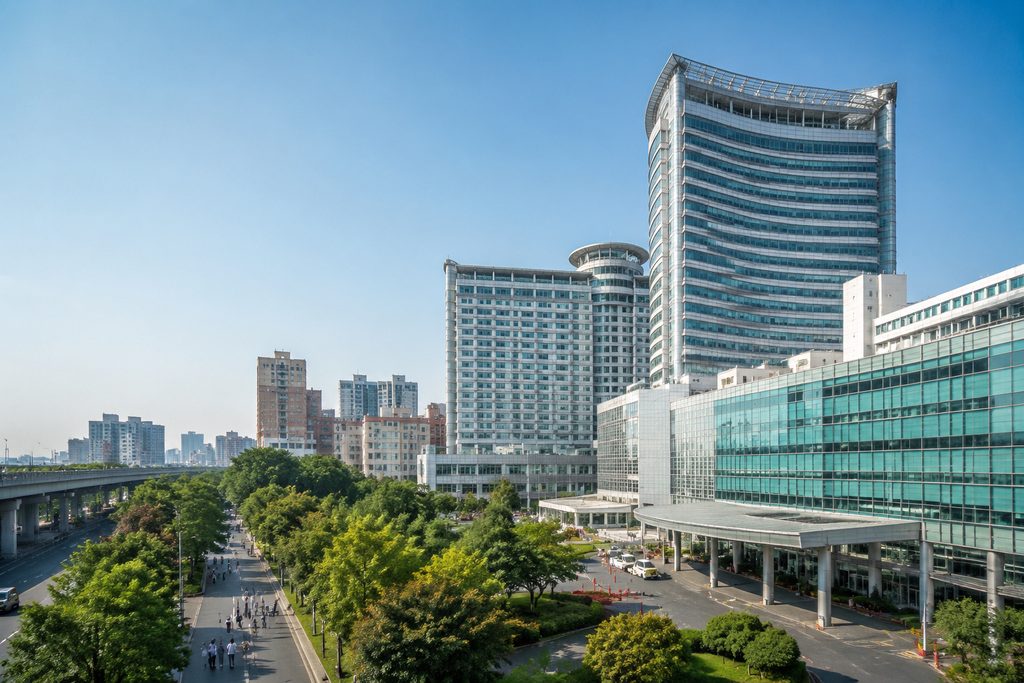
Tongji Hospital Wuhan: The Short Answer
Tongji Hospital, affiliated with Tongji Medical College of Huazhong University of Science and Technology, ranks among China’s largest and most respected academic medical centers. For Tongji Hospital Wuhan international patients, the honest answer is this: the hospital offers world-class clinical depth and specialty care at a fraction of Western prices, but navigating it without Chinese language skills or a local coordinator is genuinely difficult. There is no simple online booking portal for foreigners. Most international patients reach Tongji’s specialists through the hospital’s international department, a coordinating service, or a referral from a physician back home.
Roughly 340+ top-ranked hospitals across 37 Chinese cities sit in the same tier as Tongji — part of the top 5% of China’s 35,000+ hospitals, as ranked by Fudan University and JCI standards. Knowing which one fits your case matters more than chasing a famous name.
Is Tongji Hospital in Wuhan Good for Foreigners?
Yes, with conditions. Tongji is a public tertiary hospital — a “Grade 3A” institution — with deep specialty programs in cardiology, neurology, orthopedics, oncology, and organ-related specialties. Its scale is enormous. Daily outpatient volumes at hospitals of this size routinely exceed 10,000 visits, which tells you two things: the clinical experience is vast, and the queues are real.
What foreigners gain here is access to high-volume surgical teams and diagnostic equipment that would carry months-long waits or six-figure bills in the United States. What foreigners lose, without help, is time and clarity. Signage, registration kiosks, and most physician conversations happen in Mandarin. English-speaking doctors exist at Tongji, particularly in the international clinic and among senior specialists who trained abroad, but they are not available at every window or every hour.
The Options, Compared
International patients considering Tongji typically weigh it against three alternatives. Here is how they stack up on the factors that actually drive decisions.
| Option | Typical Cost Level | English Support | Booking Difficulty | Best For |
|---|---|---|---|---|
| Tongji Hospital (standard track) | Lowest — 1/5 to 1/10 of US prices for comparable procedures | Limited; strongest in international clinic | High — walk-in registration, no overseas booking | Cost-sensitive patients with local support |
| Tongji Hospital (international/VIP channel) | Roughly 1.5–2x the standard track | Reliable — dedicated staff, English service | Moderate — advance coordination possible | Patients who need scheduling certainty |
| Private international hospital (United Family, Jiahui, Parkway, Raffles) | Highest in China, still often below US | Excellent — English-first environment | Low — direct booking, insurance billing | Patients prioritizing comfort and direct insurance settlement |
| Staying in your home country | Highest for uninsured patients; lowest if well-insured | Native language | Low | Well-insured patients, urgent emergencies, simple cases |
Which column suits you depends on three variables: how complex your condition is, how much you value predictability, and whether your insurance travels with you. A patient with a clear diagnosis and a tight budget leans toward the standard track. A patient flying in for a major operation usually prefers the international channel, where scheduling is more controllable.
How to Book an Appointment at Tongji Hospital Wuhan
This is where most foreign patients hit a wall, so let’s be precise. Standard public outpatient registration at Tongji cannot be reserved from overseas in advance. You register on the day, in person, and you queue. Surgery cannot be scheduled until a physician has seen you face-to-face in an outpatient visit. That is the general rule across Chinese public hospitals, not a Tongji quirk.
There are two workable paths around this constraint. The first is the hospital’s international department or VIP channel, which handles senior specialists, English-language service, and advance scheduling — at roughly 1.5 to 2 times the standard fee. The second is engaging a coordination service that manages registration, medical card creation, and the in-person proxy or accompanied visit on your behalf.
If you want to understand how this fits the broader system, our overview of China’s top-ranked hospitals by city explains how the Fudan tiering works and why Wuhan’s major centers sit where they do. For specialty-specific choices — say, which hospitals lead in cardiac surgery or oncology — the department rankings are a better starting point than any single hospital name.
What It Costs: Tongji Hospital Wuhan Cost for International Patients
Concrete numbers build trust, so here are realistic ranges. A specialist outpatient consultation runs roughly $30–100 on the standard track and $150–400 through the international channel. Advanced imaging — MRI, CT, PET-CT — typically lands between $150 and $900 depending on the study. Major surgery varies enormously by procedure and complexity; cardiac and orthopedic operations that bill at $120,000+ in the United States commonly fall in the $12,000–20,000 range at top Chinese public hospitals, before complications or extended stays.
These figures are reference points, not quotes. Final pricing depends on the hospital, the department, the surgeon’s plan, and how your recovery unfolds. Public hospitals require prepayment, with insurance reimbursement handled afterward on your return home. Private international hospitals more often bill insurers directly.
English-Speaking Doctors and Language Reality
Will you find Tongji Hospital Wuhan English speaking doctors? Some, yes — particularly in the international clinic and among physicians who completed fellowships abroad. But “some” is not “everyone.” Laboratory staff, nurses, pharmacy windows, and billing counters operate in Mandarin. Even a highly competent English-speaking surgeon will hand you discharge instructions and follow-up plans that need accurate translation.
This is the single most common reason international patients underperform on their own trip. They reach the right specialist but lose days to logistics — wrong building, wrong floor, missing a test window, misunderstanding a fasting instruction. Bilingual medical companions exist precisely to absorb that friction.
Practical Considerations: Visas, Records, and Payment
For medical travel to China, the applicable short-stay visa category is S2, used for medical treatment and private affairs, subject to the latest embassy or consulate requirements and supporting hospital documentation. Stays beyond 180 days generally fall under S1. Accompanying family members typically apply under S2 as well. Note clearly: the M visa is for commercial and trade activity and has nothing to do with medical treatment.
Bring your records — imaging on disc, pathology slides if relevant, a translated summary of prior treatment. Chinese specialists work efficiently when the clinical picture is complete and lose momentum when it is not. Payment at public hospitals is prepaid; international credit cards work in some counters but not all, so confirm accepted methods before arrival. And plan your follow-up: once you fly home, continuity depends on a local physician who can receive and act on the Chinese team’s written plan.
Frequently Asked Questions
Not through the standard public registration system, which is walk-in based. Advance scheduling is realistically available through the hospital’s international or VIP channel, or through a coordination service that manages registration and the visit logistics on your behalf. Expect the international route to cost roughly 1.5–2 times the standard fee.
Packages vary widely in quality and transparency. A legitimate arrangement covers registration, interpretation, appointment sequencing, and payment assistance — not guaranteed access to a specific surgeon or a fixed surgery date. Be cautious with anyone promising a named specialist or a locked operating room slot before your records have been reviewed.
Top Chinese public hospitals have established complication-management protocols, and academic centers like Tongji handle high surgical volumes. That said, you should discuss risks, revision options, and who manages your recovery after you return home before committing to any procedure. Travel insurance and a clear written treatment plan reduce the exposure considerably.
If you speak Mandarin or travel with someone who does, and your case is uncomplicated, self-navigation is possible. For complex diagnoses, surgery, or solo travel, coordination typically saves more in time and missteps than it costs.
Your Next Step
Tongji Hospital is a serious institution with real depth, and for the right patient it delivers excellent care at a fraction of Western cost. The variable that decides your outcome is rarely the hospital — it is how well the process around it is managed. We are a medical concierge service, not a hospital; we do not diagnose or treat anyone. What we do is match your case to the right department, coordinate appointments through official international channels, and provide bilingual support on the ground. If you would like a written second opinion or a video consultation before committing to travel, you can start with a free consultation and decide from there.
This article is for general information only and is not medical advice. Treatment decisions should always be made with a qualified physician who has reviewed your individual case.
For more medical information and treatment options in China, visit chinamedservices.com (China Medical Services).
