Dr Tian Wei Spine Surgeon China: Costs, Reviews & How to Book at Beijing Jishuitan Hospital
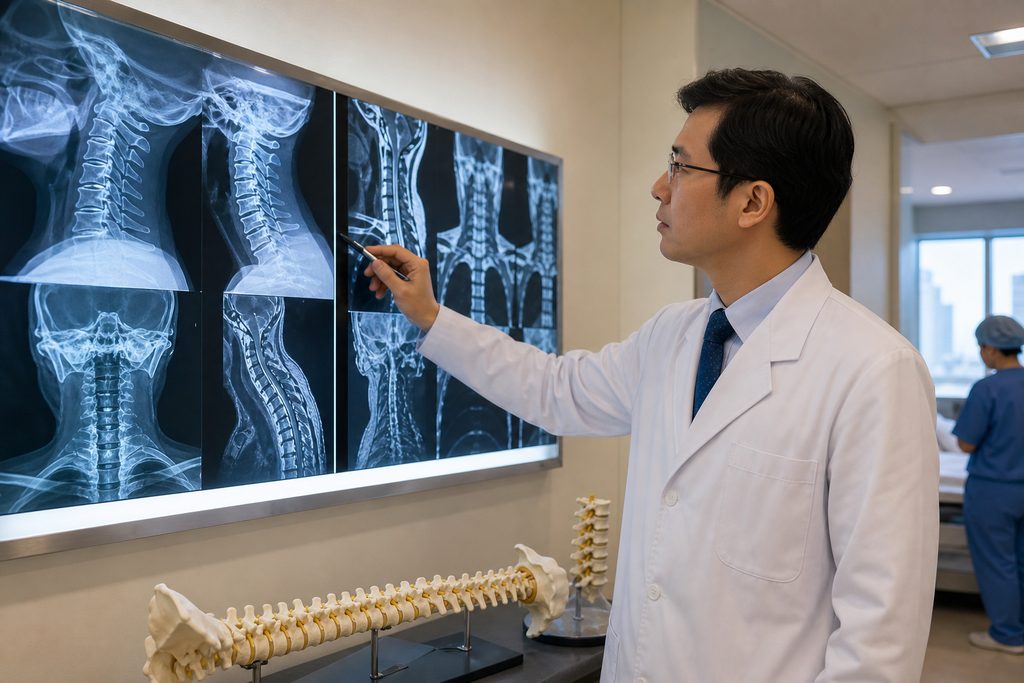
Key Takeaways
- Dr Tian Wei at Beijing Jishuitan Hospital is one of China’s most published and clinically active spine surgeons, with a practice focused on complex cervical deformity correction that draws patients from over 20 countries.
- Cervical spine surgery with a surgeon of this caliber in China costs approximately $18,000 to $35,000 — roughly 70-80% less than comparable procedures in the United States, where the same surgery often exceeds $100,000.
- Direct booking is not possible through public hospital channels. International patients must navigate a specific pathway involving the hospital’s International Medical Department, visa documentation, and in-person consultation before any surgical date is confirmed.
- Success depends on preparation: translated imaging, a clear clinical summary, and realistic expectations about the process. The surgeon’s skill is world-class. The logistics require local expertise.
The Problem: When Your Spine Surgeon Says “We Can’t Fix This”
Degenerative cervical spine disease affects approximately 1 in 3 adults over 45. Most cases respond to conservative treatment. But for a smaller group, the condition progresses into severe myelopathy, multi-level stenosis, or fixed kyphotic deformity. These patients hear something chilling: their local surgeon will not operate. The anatomy is too complex. The risk of vertebral artery injury or spinal cord damage is too high. Or the wait for a specialist who might attempt it stretches beyond 18 months.
This is not an abstract fear. In Canada and the UK, wait times for non-emergent spine surgery routinely exceed 26 weeks from referral to procedure. In the United States, the financial barrier is equally brutal. A multi-level anterior cervical discectomy and fusion (ACDF) with instrumentation averages $110,000 before insurance. Complex deformity reconstruction — the kind requiring combined anterior-posterior approaches, osteotomies, and multi-segment fixation — can exceed $250,000. Even with insurance, out-of-pocket maximums leave families facing bankruptcy.
Patients search for alternatives. They look for a surgeon who does not flinch at complex cases. Someone who sees severe deformity and sees a problem to solve, not a liability to avoid. That search leads many to one name.
Who We Are
We are China Medical Services. We are not a hospital. We do not provide medical treatment, clinical diagnoses, or surgical opinions. We are the logistical bridge between you and China’s top-tier orthopedic expertise. When a patient decides to pursue treatment with a surgeon like Dr Tian Wei at Beijing Jishuitan Hospital, our team handles everything that stands between that decision and the operating room: hospital matching, appointment coordination through the official International Medical Department, visa documentation support, bilingual medical companion services, and post-operative recovery logistics. We translate your medical records. We navigate the system. You focus on your health.
Why Dr Tian Wei at Beijing Jishuitan Hospital Delivers Results
Surgical Volume That Builds Unmatched Expertise
Beijing Jishuitan Hospital is not just another orthopedic center. The hospital performs over 45,000 orthopedic surgeries annually. Its spine surgery division alone handles more than 8,000 procedures each year. Dr Tian Wei operates within this high-volume ecosystem, where complex cervical deformity correction is not an occasional referral — it is a weekly reality.
Volume matters in spine surgery. A 2016 study published in Spine found that surgeons performing more than 50 cervical deformity procedures annually had significantly lower complication rates than lower-volume peers. The average spine surgeon in the United States performs approximately 150-200 spine surgeries per year across all types. At Jishuitan, surgeons focused on complex deformity routinely exceed 300 cases annually, with a disproportionate share being high-complexity revisions and multi-level reconstructions. This concentrated experience produces pattern recognition that cannot be taught in a textbook. It is earned in the operating room, case by case.
Pioneering Surgical Techniques for the Hardest Cases
Dr Tian Wei’s published research tells the story. His work on anterior cervical transpedicular screw fixation, cervical pedicle subtraction osteotomy for rigid kyphosis, and combined anterior-posterior approaches for severe ossification of the posterior longitudinal ligament (OPLL) appears in peer-reviewed journals including European Spine Journal and Spine. These are not routine procedures. They are the techniques you deploy when standard ACDF or laminoplasty is insufficient.
One area where this matters most: revision surgery. Patients who have had failed prior spine surgery face scar tissue, altered anatomy, and higher risk of dural tear or nerve injury. Many surgeons decline these cases. At Jishuitan, revision cervical surgery is a core part of the practice. The team has developed protocols for intraoperative neuromonitoring, 3D-printed surgical guides, and staged procedures that reduce risk in hostile surgical fields. For a patient who has been told “nothing more can be done,” this is not just a second opinion. It is a second chance.
Cost Structure That Makes Treatment Accessible
Let us address the obvious question directly. When international patients research Dr Tian Wei cervical spine surgery cost Beijing, they are comparing against quotes that feel impossible. A complex cervical deformity reconstruction in the US — think C3-C7 anterior-posterior fusion with osteotomies — can run $200,000 to $300,000. The same procedure at Beijing Jishuitan Hospital’s International Medical Department typically falls between $25,000 and $40,000. That includes surgeon fees, hospital stay, implant costs, and anesthesia.
Why the difference? Not because of lower quality. Chinese labor costs for operating room staff, nursing care, and support personnel are structurally lower. Hospital overhead is lower. Implant costs are lower when sourced from domestic manufacturers that produce FDA-equivalent devices at a fraction of the price. The clinical outcome data does not show a quality gap. What it shows is a system that delivers comparable or superior results at a price point that makes treatment possible for patients who would otherwise go without.
For patients asking how much does cervical spine surgery cost in China, the answer varies by complexity. A single-level ACDF might cost $12,000-$18,000. A multi-level corpectomy with fusion: $20,000-$30,000. Complex deformity reconstruction: $30,000-$45,000. These are all-in prices at top-tier public hospital international departments. Private international hospitals in Beijing charge more — typically 50-100% above these figures — but offer English-speaking environments and direct insurance billing.
What You Need to Know Before Going Alone
We tell every patient the same thing: the surgical expertise at Beijing Jishuitan Hospital is world-class. The logistical pathway to access it is not designed for international patients acting independently. Here is what you will face.
- Visa Requirements Are Specific and Unforgiving: Medical treatment in China requires an S2 visa with a clear treatment purpose annotation. The application demands an invitation letter from the hospital, proof of appointment, and documentation of the medical necessity. Consulates scrutinize these applications. Incomplete paperwork means rejection. An S2 visa is not the same as an M business visa. Applying for the wrong category wastes weeks and resets the clock. We have seen patients book flights only to be turned away at the visa center because their hospital documentation did not meet the consulate’s format requirements.
- Public Hospital Registration Does Not Work for International Walk-Ins: The public registration system at Jishuitan operates through a mobile app in Chinese, linked to a Chinese ID or local phone number. Foreign passport holders cannot use it. Even if you physically arrive at the hospital, the general outpatient clinics see hundreds of patients daily. You will not be directed to Dr Tian Wei’s clinic without navigating a system designed entirely for domestic patients. The International Medical Department exists specifically for this reason — but it operates on a separate appointment track that requires advance coordination.
- No Surgery Without In-Person Consultation: This is non-negotiable. Chinese public hospital policy requires that the surgeon personally examine the patient, review original imaging, and determine the surgical plan in a face-to-face consultation before any operation is scheduled. You cannot secure a surgery date remotely. You travel, you consult, the surgeon assesses, and then a date is set. For complex deformity cases, this may also require additional imaging or multidisciplinary review before clearance. Plan for a minimum of one week between consultation and surgery — often two.
How We Help You Navigate This
These barriers exist for structural reasons. They are not designed to exclude international patients. They simply reflect a system built for a domestic population of 1.4 billion. Our entire service exists to bridge that gap.
Before you travel, we handle medical record translation and formatting to Chinese clinical standards. This is not Google Translate. It is precise terminology that a spine surgeon can read and act on immediately. We coordinate with the International Medical Department at Beijing Jishuitan Hospital to secure a confirmed consultation slot. We provide the exact documentation package required for your S2 visa application, formatted to consular specifications. We arrange airport pickup and accommodation near the hospital.
During your consultation and treatment, a bilingual medical companion stays with you. This person handles registration, payment, pharmacy visits, imaging center navigation, and real-time translation during your consultation with Dr Tian Wei. When the surgeon explains the surgical plan, risks, and expected outcomes, you understand every word. When you have questions about recovery protocols or implant choices, they are asked and answered without language friction.
After surgery, we coordinate follow-up appointments, rehabilitation arrangements, and discharge documentation. If your recovery requires an extended stay in Beijing, we help arrange suitable accommodation and ongoing support. The goal is simple: you experience the clinical excellence of one of China’s best spine surgeons without the chaos of navigating a foreign healthcare system alone.
Frequently Asked Questions
Dr Tian Wei is a former director of the Spine Surgery Department at Beijing Jishuitan Hospital and a professor at Peking University Health Science Center. His publication record spans over 100 peer-reviewed papers, with a focus on cervical deformity, OPLL, and spinal trauma. International patients researching best spine deformity surgeon China reviews will find limited English-language patient testimonials — this reflects the reality that most of his patients are Chinese and share experiences on domestic platforms. What exists in the public domain is his academic track record, his surgical volume, and the institutional reputation of Jishuitan Hospital, which is consistently ranked among China’s top orthopedic centers. Independent assessment of a surgeon’s quality should always include a review of their specific experience with your condition type, complication rates, and published outcomes — all of which can be discussed during consultation.
You cannot book surgery directly. The pathway for international patients seeking to book cervical deformity correction Beijing Jishuitan Hospital works as follows: first, your medical records and imaging are submitted for preliminary review to confirm you are an appropriate candidate. Second, an in-person consultation is scheduled through the hospital’s International Medical Department. Third, Dr Tian Wei evaluates you, orders any additional tests, and if surgery is indicated, a date is set. This process typically takes 2-4 weeks from initial contact to surgery date, depending on the surgeon’s schedule and your clinical urgency. Working with a coordination service ensures each step proceeds without administrative delays.
A genuine spine surgery medical tourism package China should include hospital coordination, visa support, interpreter services, and logistical support — not just a surgery date. Be cautious of any package that promises a specific surgery date before the surgeon has reviewed your case, or that does not clearly separate hospital treatment costs from service coordination fees. At China Medical Services, we provide transparent case management: we coordinate your access to the hospital’s official international pathway, provide bilingual support, and handle logistics. The hospital bills you directly for all medical treatment. Our coordination fees are separate and clearly disclosed. Any video consultation or second opinion fee you pay is credited in full toward on-the-ground coordination if you proceed with treatment within 90 days.
Revision cervical spine surgery is one of the most technically demanding procedures in orthopedics. Scar tissue obscures anatomical landmarks. Previous implants must be removed. The risk of dural tear, nerve injury, and infection is higher than in primary surgery. Dr Tian Wei’s team at Jishuitan regularly handles revision cases referred from other hospitals. During your initial consultation, be prepared to provide all previous operative reports, implant records, and sequential imaging showing the progression of your condition. The surgeon will assess whether revision is feasible and what approach offers the best risk-benefit profile. Not every revision candidate is operable — but you will receive an honest assessment based on decades of experience with these difficult cases.
Your Next Step
Choosing to travel across the world for spine surgery is not a decision anyone makes lightly. The surgeon matters. The hospital matters. But so does the support system that surrounds you before, during, and after the procedure. Dr Tian Wei brings decades of focused expertise in cervical deformity correction. Beijing Jishuitan Hospital provides the infrastructure and volume that make complex surgery safer. What we provide is the bridge — the logistical expertise that turns a daunting process into a clear, manageable pathway.
If you are considering cervical spine surgery in China and want to understand whether Dr Tian Wei is the right surgeon for your specific condition, start with a conversation. Our team can review your case, explain the likely pathway and costs, and help you decide if this option makes sense. Visit our patient coordination page to begin. No pressure. No pitch. Just clarity about what is possible.
For more medical information and treatment options in China, visit chinamedservices.com (China Medical Services).
